
Library | Sustainable Finance Practices
Laws and regulations
Government policies, legislation, and regulatory frameworks that shape sustainable finance practice, including mandatory disclosure rules, climate law, financial regulation, and ESG-related requirements.

Refine
550 results
REFINE
SHOW: 16


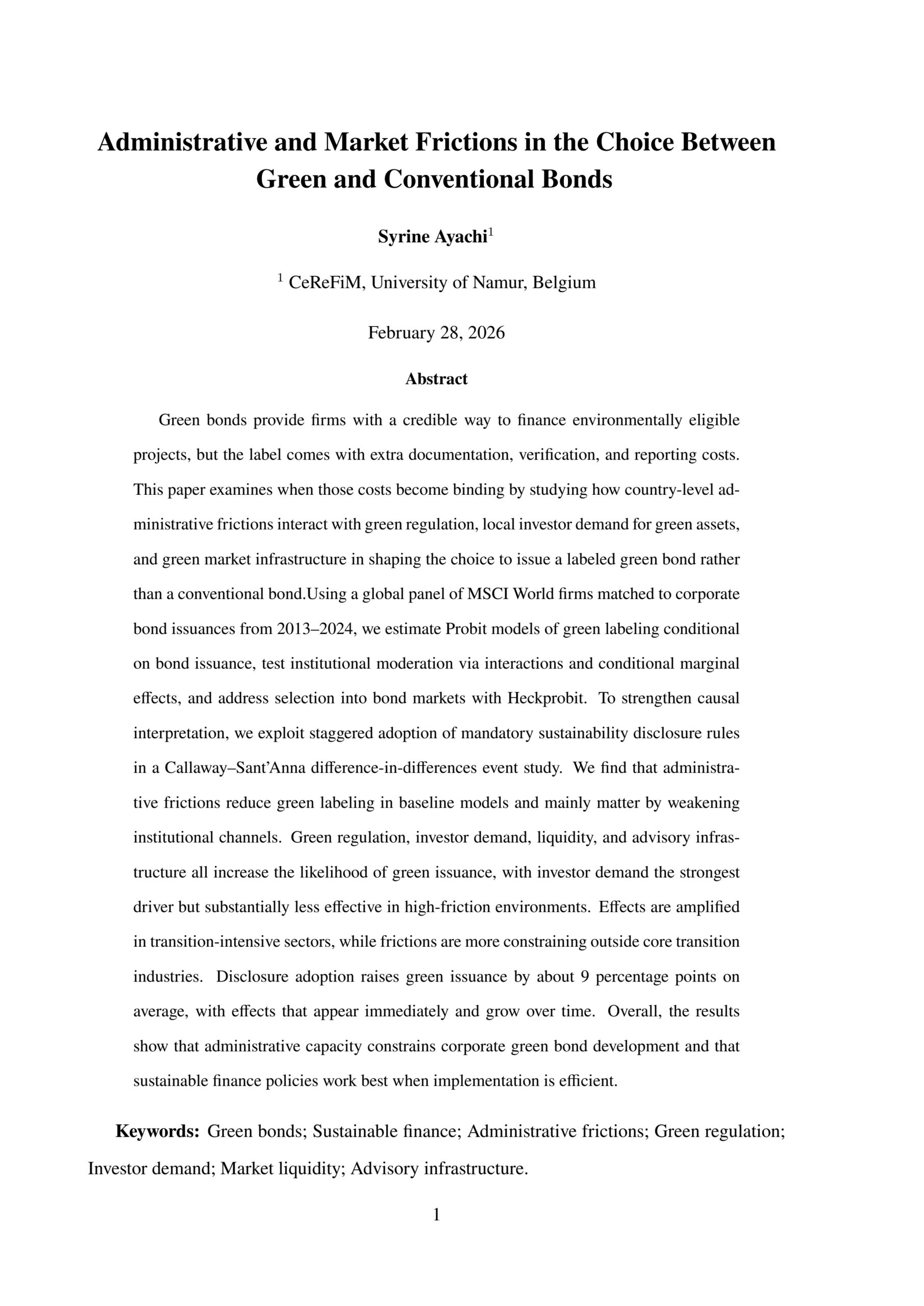
Administrative and market frictions in the choice between green and conventional bonds
This research investigates how administrative frictions and institutional environments influence corporate green bond issuance. Using global data from 2013–2024, it finds that bureaucratic complexity reduces green labelling probability, particularly outside transition-intensive sectors. Mandatory sustainability disclosure significantly increases issuance, highlighting the importance of efficient implementation for sustainable finance policies.
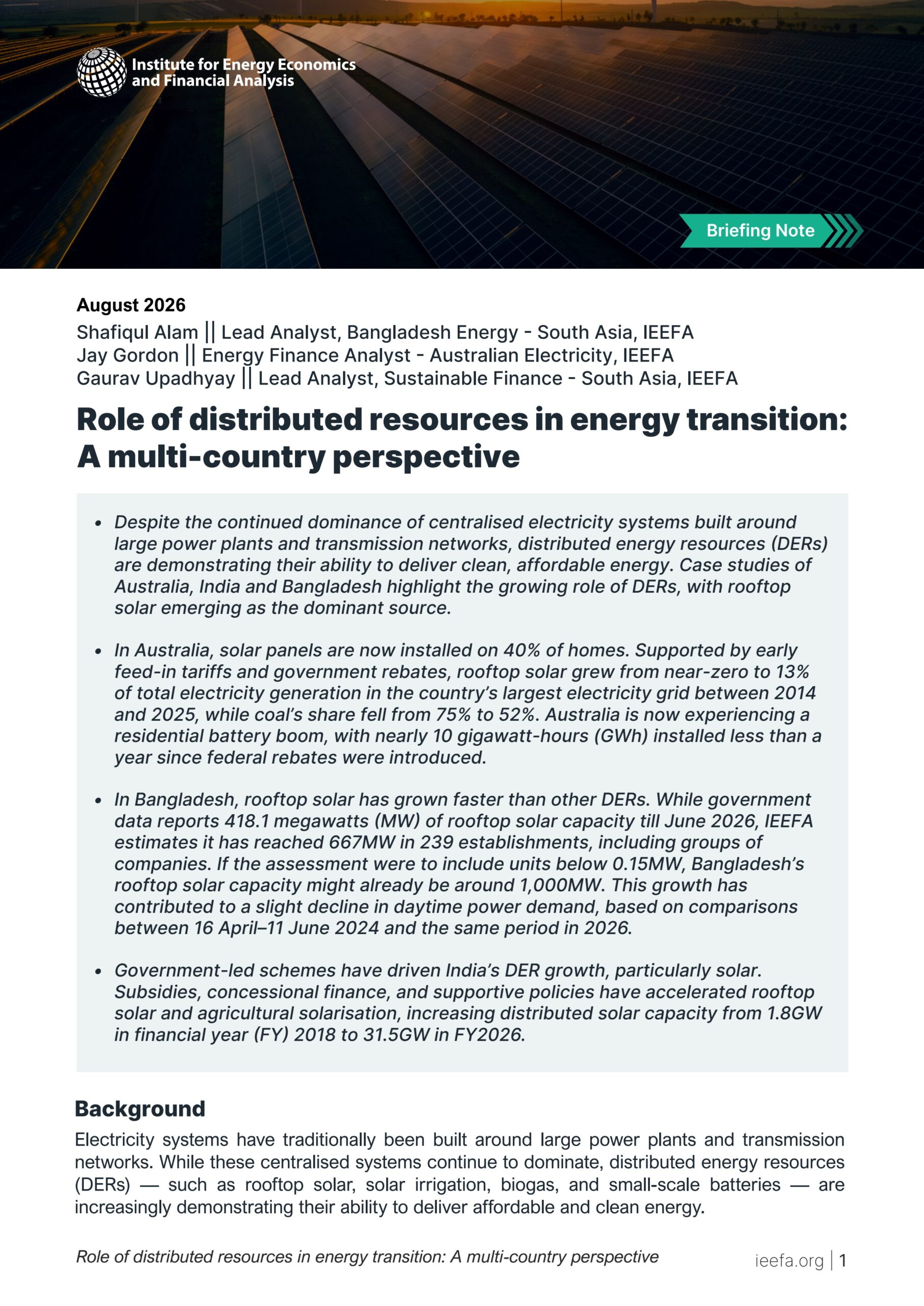
Role of distributed resources in energy transition: A multi-country perspective
This report evaluates distributed energy resources across Australia, India and Bangladesh. It examines rooftop solar and battery uptake, highlighting their role in reducing fossil fuel reliance and grid demand. The analysis provides country-specific recommendations to overcome regulatory barriers, improve financing access and ensure an equitable energy transition.
Sustainability assurance: Frequently asked questions: The application of materiality under ISSA 5000
This IAASB publication provides guidance on applying materiality under ISSA 5000. It explains concepts such as double materiality, performance materiality, and aggregation risk. The FAQs assist practitioners in planning and reporting on sustainability assurance engagements, clearly distinguishing between an entity's reporting process and a practitioner's assurance application.
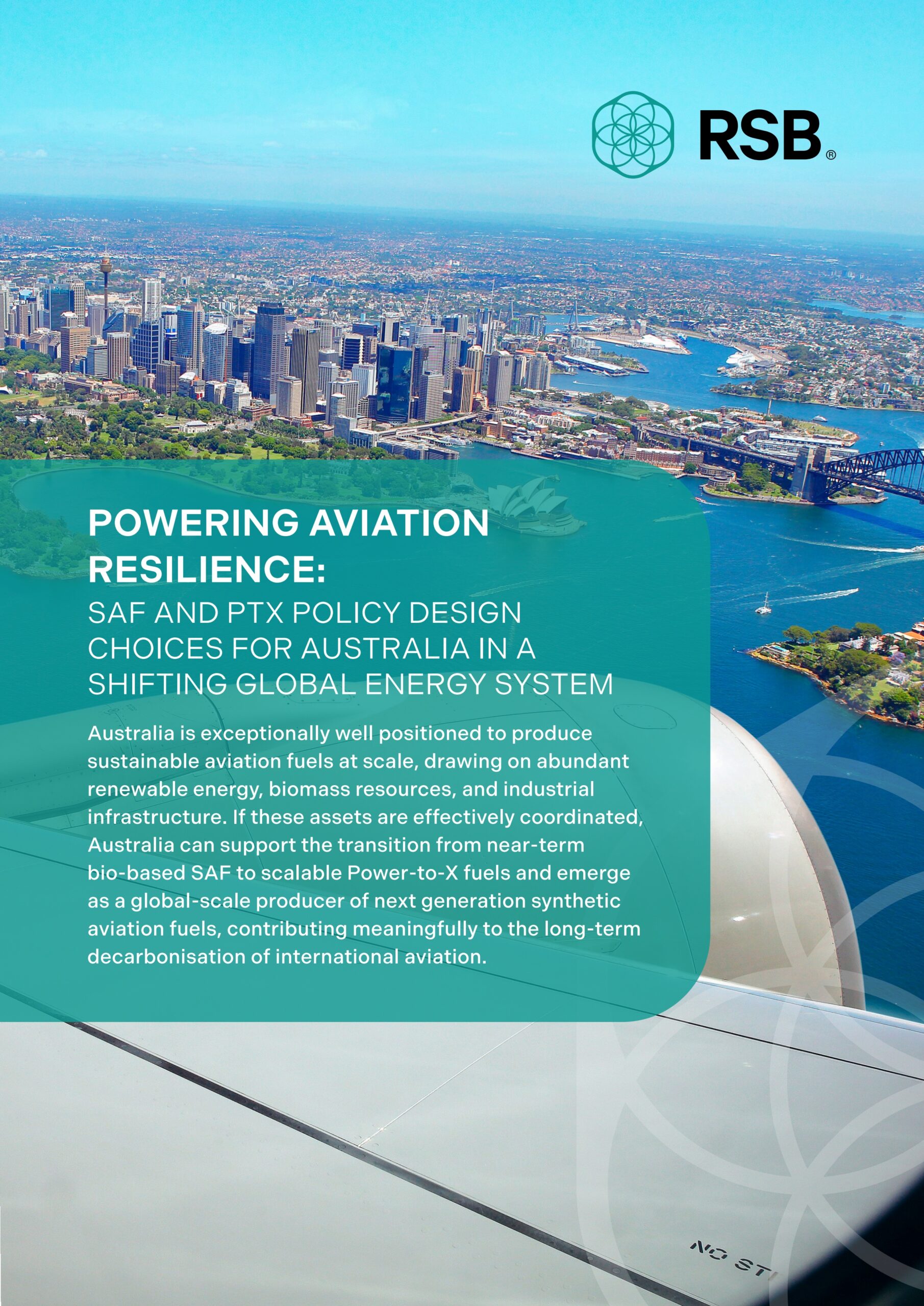
Powering aviation resilience: SAF and PTX policy design choices for Australia in a shifting global energy system
This briefing examines policy choices for scaling sustainable aviation fuels (SAF) and Power-to-X (PtX) in Australia. It highlights the need for integrated policy packages, robust sustainability certification, and cross-portfolio coordination to transition from bio-based fuels to synthetic alternatives, ensuring long-term decarbonisation and fuel security.
A price on carbon: Building towards an Asian CBAM
This report advocates for an Asian Carbon Border Adjustment Mechanism (CBAM) to harmonise carbon pricing across Asia-Pacific. Focusing on steel, aluminium, and cement, it proposes international collaboration between Australia, China, Japan, Singapore, and South Korea to accelerate industrial decarbonisation, address carbon leakage, and unlock green commodity trade.
Enabling framework conditions assessment for subnational climate finance in Indonesia
This report evaluates Indonesia's enabling framework conditions for subnational climate finance. It identifies critical gaps in institutional capacity, financial architecture, and data accessibility. Recommendations focus on expanding urban-specific incentives, leveraging blended finance, and synchronising digital platforms to improve local climate governance and bridge the national investment gap.
Pollution pricing in equilibrium: Production, reallocation, and aggregate impacts
NBER research into the EU-ETS reveals that carbon pricing reduces emissions primarily through market reallocation and long-run technology adoption, rather than short-run input substitution. Doubling permit prices reduces aggregate emissions by 31% over five years, with moderate impacts on total output and employment across the production network.

War and corruption: Corruption’s role in Russia’s full-scale invasion of Ukraine
This report examines how corruption enabled Russia’s invasion of Ukraine and explores its escalation during the conflict. It details growth in criminal convictions, systemic theft within the military, and the erosion of procurement transparency. It further analyses the impact of sanctions on Russian oligarchs and the emergence of war beneficiaries.
Disability employment quotas: Lessons for Indonesia from ASEAN and East Asia
This report analyses disability employment quota systems across Indonesia, ASEAN, and East Asia. It identifies five legal models, ranging from binding levy-subsidy architectures to voluntary incentive-based approaches. Recommendations for Indonesia include clarifying calculation methodologies, establishing structured incentive frameworks, and implementing graduated compliance pathways to improve inclusive employment outcomes.
Too little too late? Nationwide carbon trading in China
This study evaluates China's rate-based National Emissions Trading Scheme using satellite imagery. It finds high-efficiency plants increased electricity generation and carbon emissions by approximately 5% relative to low-efficiency plants. The programme incentivised production without significantly reducing emission intensity, leading to an estimated aggregate increase in carbon dioxide emissions.
Anti-woke corporate governance
This research explores the emergence of partisan corporate governance, focusing on Texas as a conservative competitor to Delaware. It examines legislative changes to limit shareholder litigation and influence, the regulation of proxy advisors, and the resulting legal and political risks for corporations navigating an increasingly politicised regulatory environment.
Stakeholder engagement and ESG in China
This research analyses China’s state-led stakeholder empowerment model for ESG integration. It identifies economic, policy, compliance, and sustainability drivers while examining channels such as shareholder activism and representative litigation. The article proposes a tiered institutionalisation framework to resolve procedural indeterminacy and strengthen collective action infrastructure within concentrated ownership structures.
Asset manager capture
This research examines "reverse capture", where government actors pressure large asset managers to advance political agendas. It analyses how expanding presidential power and market concentration enable this dynamic, using the ESG retreat as an illustration. The authors recommend narrowing fiduciary duties to insulate investment stewardship from political interference.
Corporate governance scandals in India’s banking and financial services sector
This research examines corporate governance failures in India’s financial sector, focusing on scandals at YES Bank, IndusInd Bank, and IL&FS. It analyses the impact of 'star' promoters, gatekeeper failures, and regulatory fragmentation, advocating for enhanced standards of care for directors and a wholesale reconsideration of sector-specific governance frameworks.
Regulating artificial intelligence in finance: Lessons from Singapore
This research analyses Singapore's multi-layered approach to regulating artificial intelligence in finance. It evaluates frameworks like the FEAT Principles and Project MindForge while identifying risks such as deepfakes and bias. The paper recommends establishing a dedicated regulatory sandbox and shared responsibility frameworks to manage evolving technological and third-party risks.
European employment and social outlook series
This report is part of a series providing an analysis of labour market and social developments within the European Union. It examines the relationship between job quality, productivity and economic performance, evaluating dimensions such as earnings and job security to inform evidence-based policymaking across Member States.


