

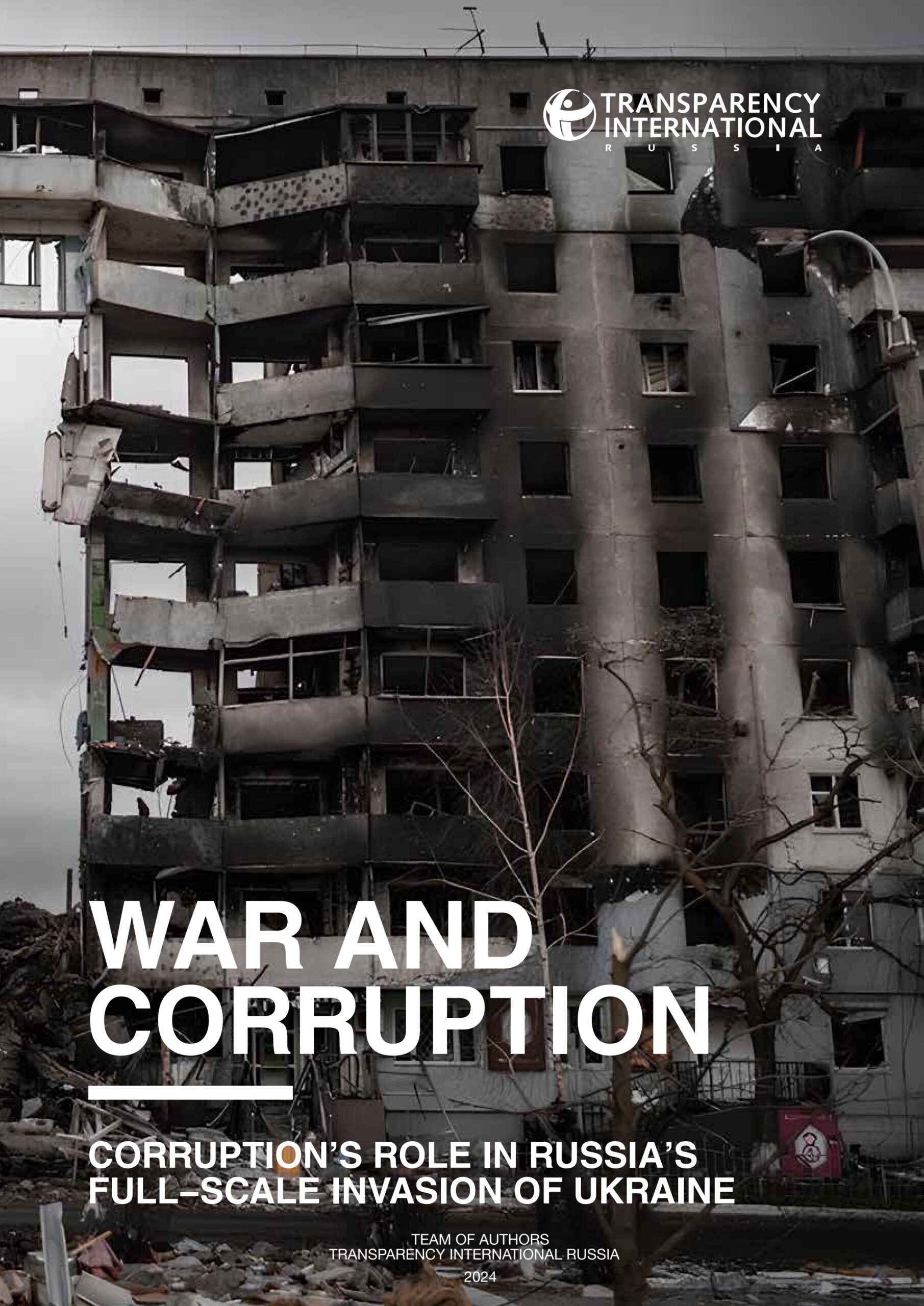
War and corruption: Corruption’s role in Russia’s full-scale invasion of Ukraine
This report examines how corruption enabled Russia’s invasion of Ukraine and explores its escalation during the conflict. It details growth in criminal convictions, systemic theft within the military, and the erosion of procurement transparency. It further analyses the impact of sanctions on Russian oligarchs and the emergence of war beneficiaries.
Please login or join for free to read more.

OVERVIEW
War, corruption and Russia
The report examines the relationship between warfare and corruption, noting that research has historically focused on civil wars rather than international conflicts. While corruption was not the primary driver of Russia’s invasion of Ukraine, the country’s highly corrupt kleptocratic system of governance acted as a significant enabling factor. This system concentrated power and resources within a small circle of beneficiaries, allowing military decisions to be made without the oversight of checks and balances. Corruption is identified as a necessary component of the Russian political regime’s functioning rather than a factor that inflicts damage upon it.
Petty corruption
Theft and embezzlement within the Russian Armed Forces are described as endemic. Between 2014 and 2022, Russian military courts delivered at least 558 sentences for the theft of property from storage facilities, involving items such as bulletproof vests, first aid kits, and rations. Statistics show a rapid growth in corruption-related convictions; 293 contract servicemen were convicted in 2019, which rose to 434 in 2022, a 48% increase. The total number of employees in the armed forces and paramilitary organisations convicted of corruption rose by 93% during this period, from 351 in 2019 to 678 in 2022.
Mobilisation has incentivised systemic bribery within military recruitment centres. Bribes for dodging the draft in Moscow are reported to range from 1 million to 1.5 million rubles (~$11,000 to ~$16,000). To avoid conscription, individuals have utilised loopholes such as enrolling in postgraduate courses, leading to a 1.5-fold increase in such enrolments (from 28,000 in 2021 to 45,000 in 2022). Additionally, bribes for medical ineligibility certificates rose from pre-war levels of approximately 200,000 rubles to as much as 500,000 rubles after the conflict began.
Administrative corruption
The transition to a “mobilisation economy” has heightened administrative corruption risks. Official data indicates an 11% increase in investigated corruption-related crimes between March and November 2022 compared to the same period in 2021. Russian state budget expenditure on national security and law enforcement increased by 60% in 2023 compared to 2021, while military spending rose by 31% in 2022 alone. Transparency has declined significantly; by November 2022, 80% of government contracts for military objects were not completed on time, and as of January 2022, military companies have ceased publishing procurement data.
The legalisation of parallel imports in July 2022 created further opportunities for corruption and the entry of counterfeit goods. The Southern Customs Administration reported 4.6 million fake items discovered in 2022, triple the number found in 2021. Property rights have also been compromised, with Article 242 of the Civil Code being used to justify the requisition of private property. In one instance, 16 land lots were seized from citizens in the Rostov Oblast for border infrastructure. Corporate accountability has also suffered, with the availability of public accounting information dropping by nearly one-third due to government restrictions.
Grand corruption and the global kleptocracy
Grand corruption involves high-ranking officials, heads of state-owned enterprises, and oligarchs who act as the direct beneficiaries of the war. Profitable state contracts serve as rewards for regime loyalty. The report highlights that 2 trillion rubles (approximately $21.7 billion) were spent on the Wagner Group and its founder, Yevgeny Prigozhin. Despite international sanctions, many of Russia’s wealthiest individuals have increased their wealth. By March 2023, 39 billionaires subject to Western sanctions added $104 billion to their combined fortunes over 12 months.
The policy of “creeping nationalisation” has allowed individuals close to the Kremlin to acquire foreign assets at substantial discounts. For example, the supermarket chain OBI was purchased for 600 rubles (~$6) before being transferred to businessmen linked to Ramzan Kadyrov. Similarly, Highland Gold acquired Kinross Gold’s Russian assets for $340 million, an 80% discount from the original price, after the Governmental Committee capped the transaction value. The report recommends that preventing and eliminating corruption must be a top priority during the post-war reconstruction of the Russian state and society.




