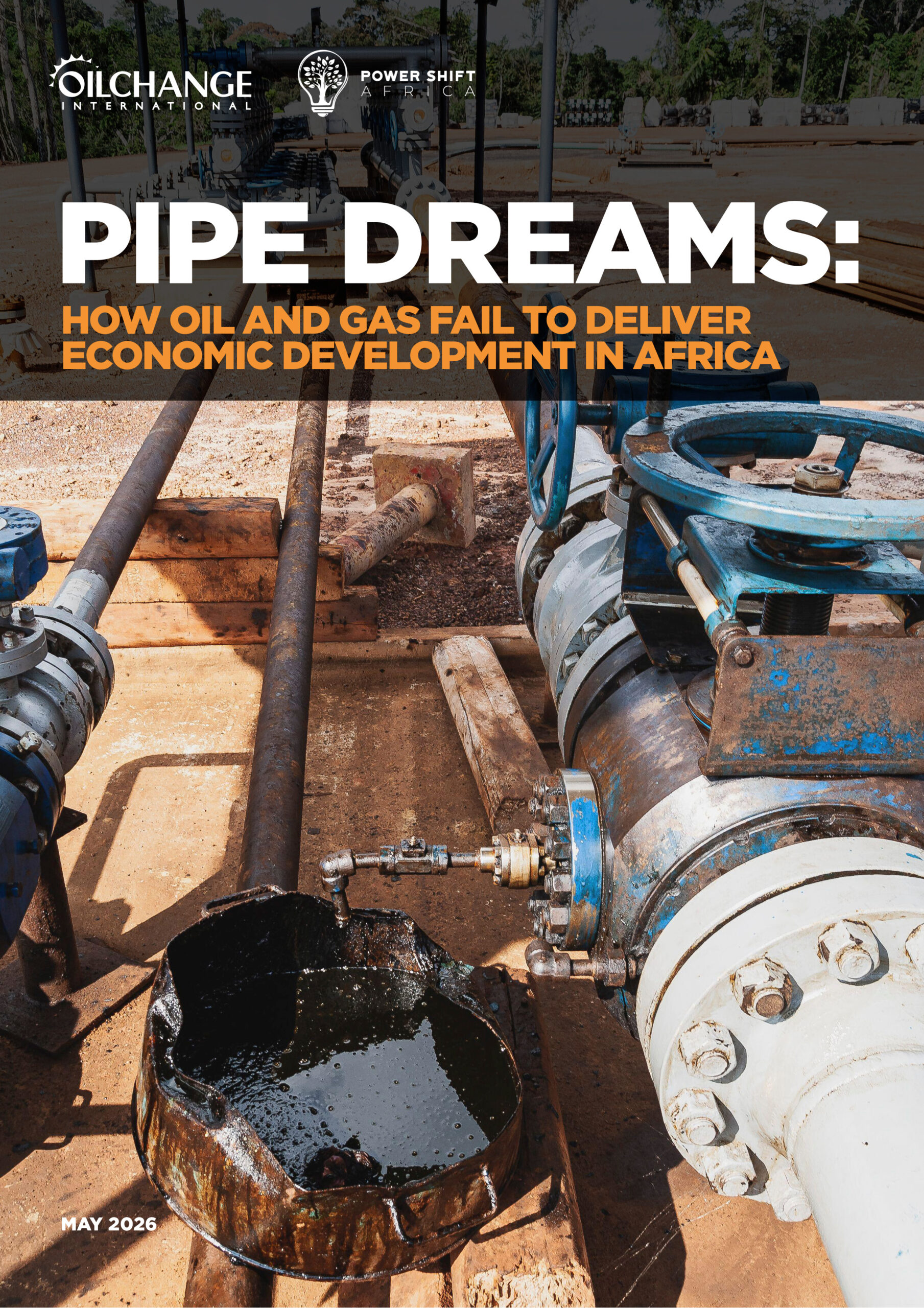
Pipe dreams: How oil and gas fail to deliver economic development in Africa
This 2026 report analyses the economic impact of oil and gas extraction across 13 African nations. Finding that fossil fuels exacerbate poverty, vulnerability, and corruption rather than delivering sustained growth, it advocates for a rapid, just transition to decentralised renewable energy to ensure future economic stability and development.
Please login or join for free to read more.

OVERVIEW
Introduction
The report examines whether fossil fuels are an effective path to economic development in Africa, noting that “less than three per cent of historical carbon dioxide emissions originated from Africa, which today is home to 19 per cent of the world’s population”. It evaluates the continent’s history with oil and gas against the context of “the global energy transition”.
A fossil fuel crisis
“Africa is in a fossil fuel crisis.” Following military attacks on Iran since February 2026, crude oil was pushed “above USD 100 per barrel for the first time since Russia’s attack on Ukraine in 2022”. This has driven up fuel prices, with average diesel prices rising “by 40 per cent in Sierra Leone, 39 per cent in Zimbabwe, and 35 per cent in Malawi” from February to April 2026. This highlights severe vulnerability, as “eight out of the twelve countries worldwide whose fossil fuel imports cost more than 10 per cent of their gross domestic product (GDP) are in Africa”.
The experience of oil and gas extraction in Africa
Despite decades of extraction, the sector has failed to deliver inclusive growth. In major producers like Nigeria and Angola, “around 40 per cent of the population remains in extreme poverty – living on less than USD 3 per day”. The report identifies five common features of the oil and gas economy across 13 producing countries: it is extractive, occurs in enclaves, weakens other economic sectors, leads to corruption, and is vulnerable to external forces. Furthermore, oil and gas extraction creates very few jobs; for instance, “in Nigeria, the oil industry employs only 0.01 per cent of the country’s workforce”.
Oil and gas prospects in the global energy transition
“Global energy markets are changing, as clean alternatives … are becoming cheaper than the incumbent oil and gas technologies”. “Most energy forecasters project a peak in global oil demand by around 2030”. Consequently, expanding oil and gas production risks leaving countries with “stranded assets and unsustainable debt”. To mitigate these economic threats, existing oil-dependent nations “should pursue economic transformation concertedly and without delay, to allow themselves enough time to escape dependence before the energy transition impacts their economies.”
Renewable energy as Africa’s real path to development, security, and resilience
Fossil fuels are “structurally ill-suited to meeting Africa’s energy and development needs”. Instead, “renewable energy offers Africa a fundamentally different development pathway.” Decentralised energy systems can “expand energy access, strengthen productive sectors, and reduce dependence on imported fuels and volatile global markets.” The International Renewable Energy Agency (IRENA) estimates that “renewables create two to three times more jobs per dollar than fossil fuels”, meaning clean energy could create “an estimated 14 million jobs in Africa by 2030”. The report recommends prioritising “people-centred, renewable-powered development”.
Conclusion
“Decades of production across major exporters have generated immense wealth in aggregate terms, yet this wealth has not translated into sustained poverty reduction”. The benefits have primarily enriched multinational corporations and elites, while communities suffer the costs of pollution. The promise that fossil fuels will deliver development has not been realised; “only a just transition to renewable energy can achieve that goal.”