
Library | Location
Europe (EU)
Refine
493 results
REFINE
SHOW: 16


Taskforce on official standards and the Green Bond Principles. Phase 1: Comparison of the Green Bond Principles and the European Green Bond Standard
This report compares the voluntary Green Bond Principles with the regulatory European Green Bond Standard. It identifies high proximity and synergy between the frameworks, providing guidance on how issuers can navigate both sets of requirements to enhance transparency and facilitate global investor recognition in the sustainable finance market.
The Omnibus I Directive and the EU sustainable finance trilemma: Sustainability, simplification and harmonization
This research analyses Directive (EU) 2026/470 (Omnibus I Directive), which simplifies the Corporate Sustainability Reporting Directive and Corporate Sustainability Due Diligence Directive. It examines how narrowing regulatory scope and removing substantive obligations impacts the balance between sustainability, simplification, and harmonisation within the European Union's financial framework.
Developing regional climate resilience investment plans and project pipelines: Implementation guidance to support regions through the Adaptation Investment Cycle
This guidance outlines the six-phase Adaptation Investment Cycle for European regions to develop Climate Resilience Investment Plans. It details how to address financing barriers, conduct economic appraisals, and structure bankable project pipelines, aiming to bridge the adaptation funding gap through strategic public and private sector engagement.
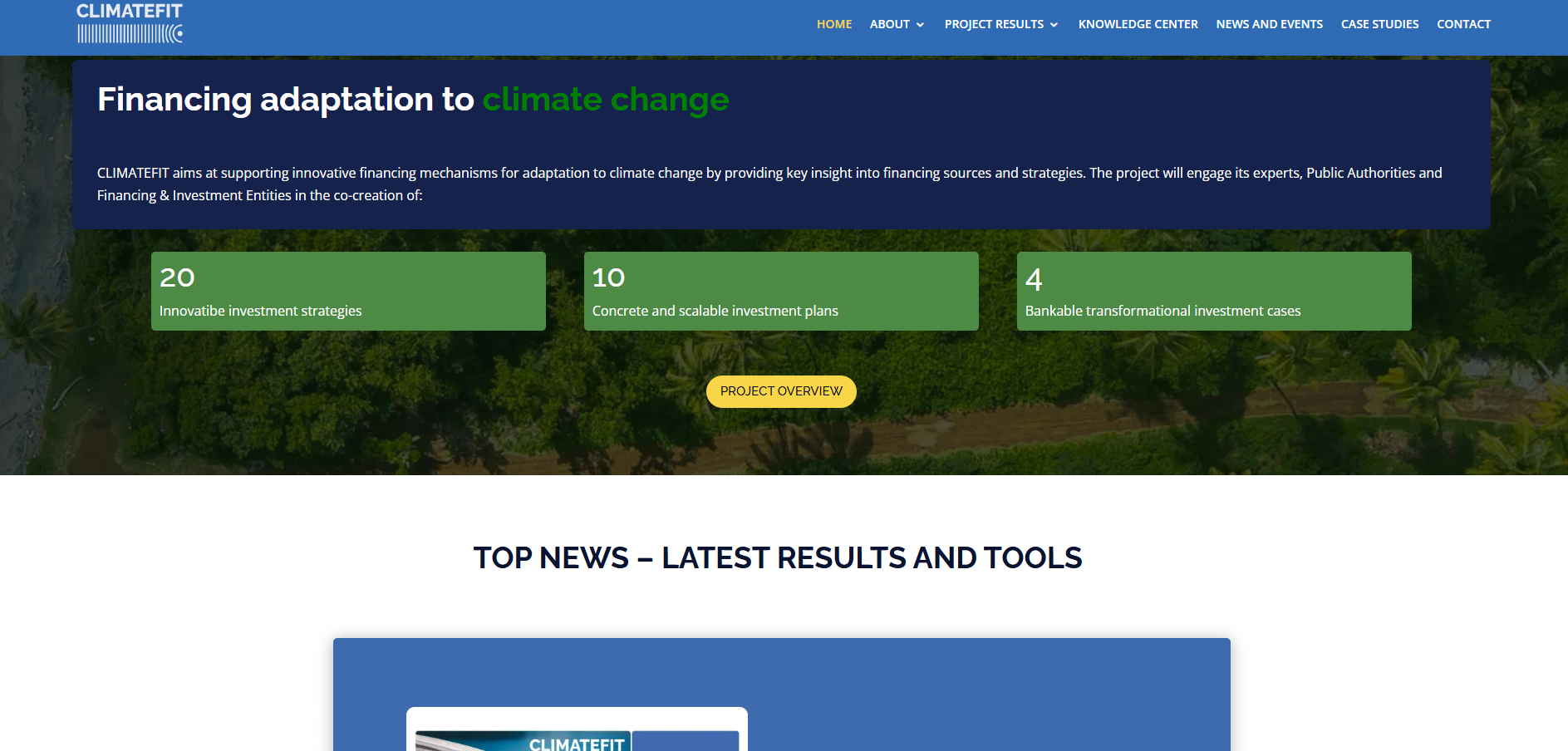
CLIMATEFIT
CLIMATEFIT is an EU-funded initiative that provides public authorities and investors with tools, databases, and methodologies to develop bankable climate adaptation projects and bridge the resilience finance gap.
CLIMATEFIT
CLIMATEFIT is a European Union-funded Horizon Europe project that bridges the gap between public authorities and financial institutions to scale up climate adaptation finance. It aims to support innovative financing mechanisms and strategies by providing expert insight and building investment capacities across Europe.
Collection of Open-Access CARMINE Publications
A comprehensive repository of open-access research and deliverables from the CARMINE project, providing advanced climate-risk assessment methodologies and case study data to support environmental resilience and informed financial risk analysis.
Climate-Resilient Development Pathways in Metropolitan Regions of Europe (CARMINE)
CARMINE is a European initiative focused on enhancing climate resilience across metropolitan regions through co-developed adaptation and mitigation frameworks. The project bridges the gap between scientific knowledge and local decision-making to support sustainable urban development.
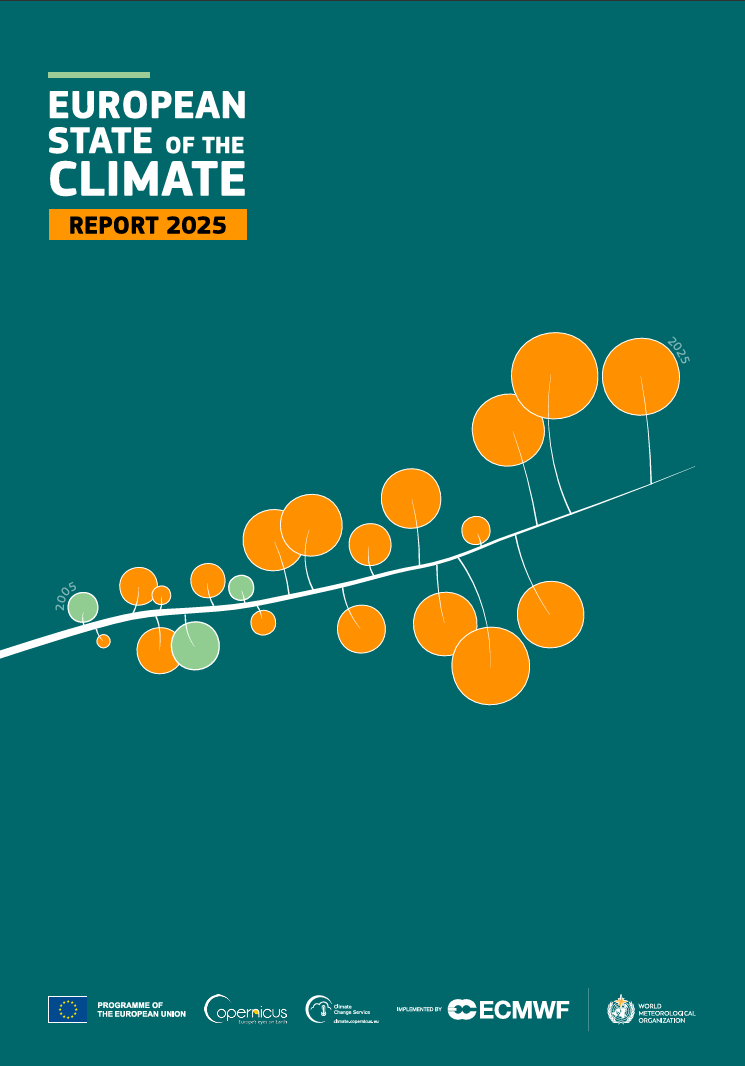
European state of the climate report series
The European State of the Climate is an annual flagship report series providing structured descriptions and analyses of climate conditions in Europe. Published by the Copernicus Climate Change Service and the World Meteorological Organization, it evaluates Earth system variables and key climate events alongside policy actions for biodiversity.
Hot summer economics: Economic effects of the hot European summer of 2026
This report examines the economic impact of the 2026 European heatwave, estimating a 1% reduction in EU-wide GDP. It details effects on labour productivity, agriculture, and energy sectors while warning of a 'doom loop' where climate damage leads to the weakening of environmental policies to protect short-term growth.

Urban planning for the circular economy: A spatial turn in theory and practice
This report examines how urban planning can operationalise the circular economy by addressing spatial dimensions. Drawing on European city experiences, it explores circular developments, infrastructure, land management and multi-level governance. It provides strategic directions for integrating circularity into core planning instruments to support systemic, territorially grounded transitions.
Templates in the EU Inc. regulation proposal
This research evaluates the European Commission’s Proposal for an optional 28th corporate law regime. It argues that proposed model articles of association fail to support venture capital-backed firms. The authors identify four shortcomings regarding scope, process, logic, and safe-harbour effects, suggesting a dedicated drafting track and broader coverage.
Geological Survey of Sweden
The Geological Survey of Sweden (SGU) is the national expert agency responsible for providing geological data on bedrock, soil, and groundwater. It supports the sustainable use of mineral resources and promotes long-term growth and entrepreneurship within Sweden.
Cyber risk stress testing for banks
This report examines cyber risk stress testing for banks, contrasting system-focused and firm-focused approaches. Drawing on exercises by the Bank of England, the Danish Financial Supervisory Authority, and the European Central Bank, it outlines scenario design, operational resilience, and the role of disclosure in establishing best practices.
EU energy and raw materials mechanism platform
EU Commission platform aggregating demand for critical raw materials to connect buyers, suppliers, and financial institutions across strategic sectors.
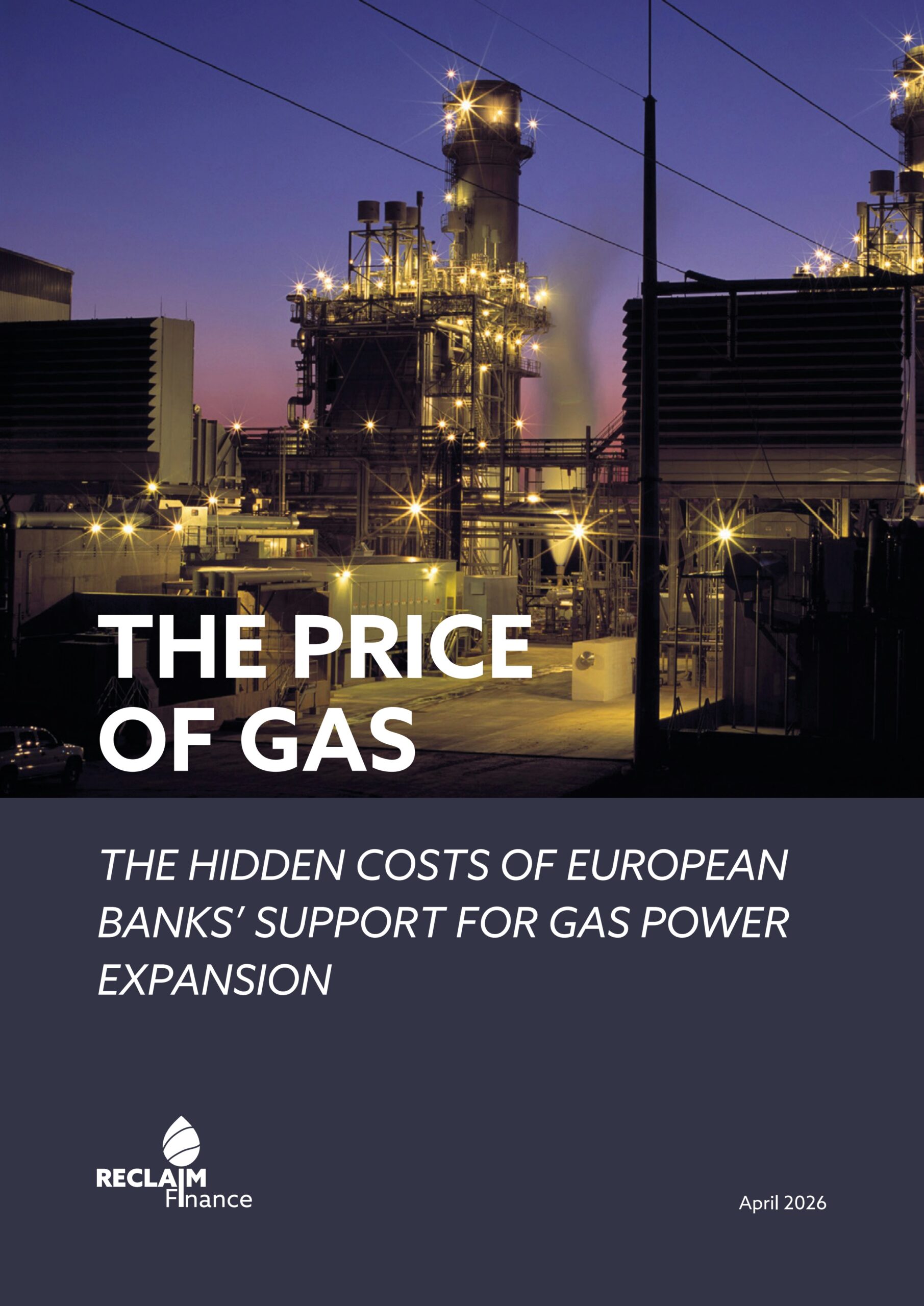
The price of gas: The hidden costs of European banks’ support for gas power expansion
This report examines how 24 European banks provided US$41.9 billion to gas power developers between 2021 and 2024. It highlights significant health impacts, including nearly 3,000 premature deaths in Europe, and warns that expanding gas infrastructure undermines global climate targets and exposes economies to price volatility.
Sustainable signals: Individual investors series
Sustainable Signals: Individual Investors is an annual survey series by the Morgan Stanley Institute for Sustainable Investing. It tracks global individual investor sentiment, portfolio allocations, return expectations, thematic priorities, and barriers related to sustainable investing across North America, Europe, Asia Pacific, and MENA.


