
Library | Location
Europe (EU)
Refine
493 results
REFINE
SHOW: 16


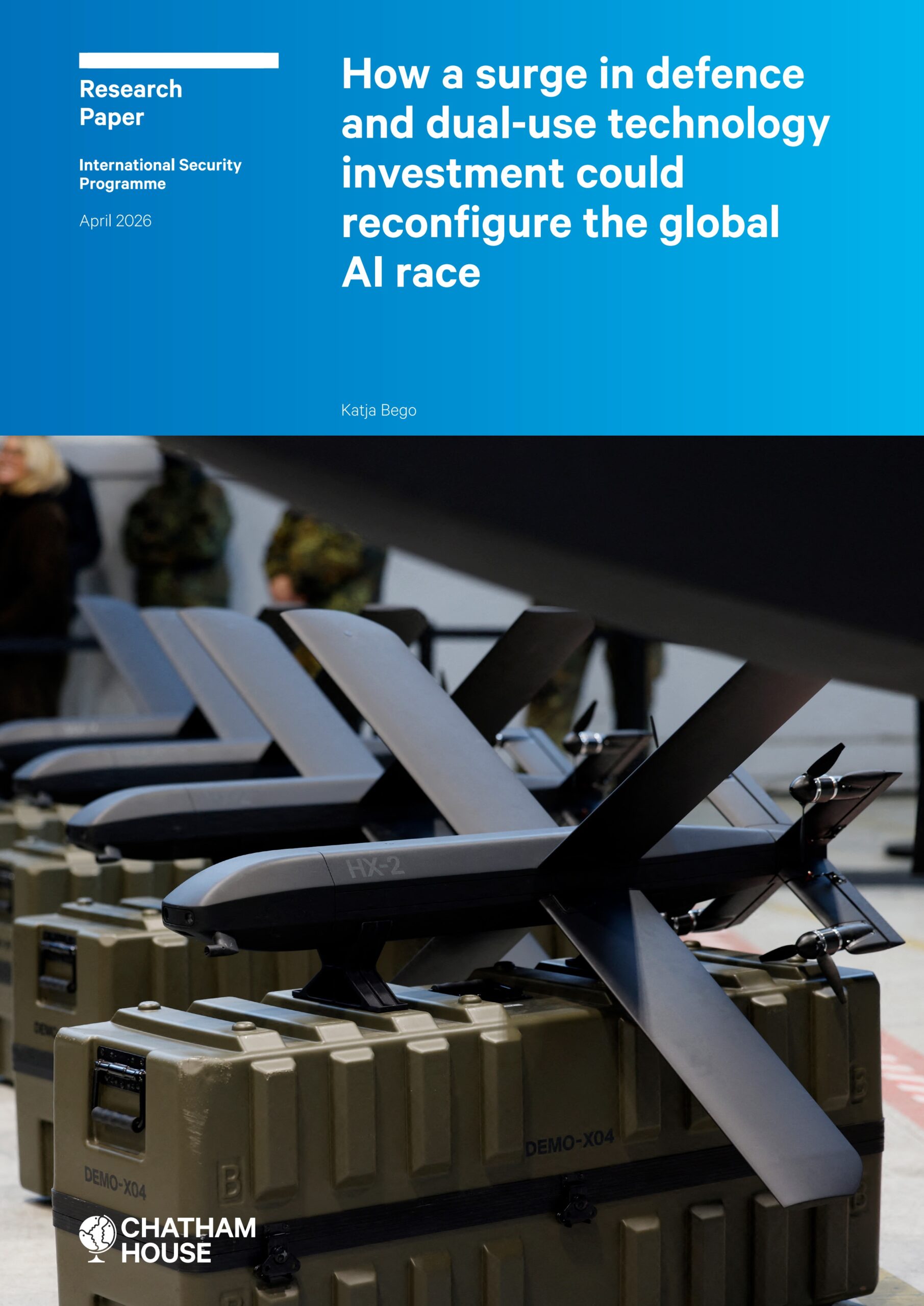
How a surge in defence and dual-use technology investment could reconfigure the global AI race
This Chatham House paper examines four trends — rising defence and dual-use investment, the growth of 'patriotic tech', the push for sovereign AI, and concerns over an AI valuation bubble — that could multipolarise the global AI race, and offers recommendations for private sector preparedness.
DAX-AEX Futureproof Index Report
The DAX-AEX Futureproof Index Report is a benchmark series that ranks DAX and AEX-listed companies using an Integrated Value framework combining financial, social, and ecological value. It produces a Futureproofing Ratio to assess long-term corporate value creation and transition risk across sectors and economies.

Futureproofing Institute
Futureproofing Institute is an independent sustainable finance organisation that develops integrated value methodologies to assess companies’ financial, social and environmental performance. Through research, publications and the Futureproof Index, it supports investors, businesses and policymakers in evaluating long-term value creation, transition risks and responsible investment using evidence-based analysis.
Final report on the amending guidelines on product oversight and governance arrangements for retail banking products to take into account products with ESG features and greenwashing risks
The EBA's final report amends the 2016 Product Oversight and Governance (POG) Guidelines to incorporate ESG features and greenwashing risks for retail banking products. Key changes include requirements for manufacturers and distributors to prevent greenwashing, extended scope to non-bank consumer credit providers, and an application date of 11 January 2027.
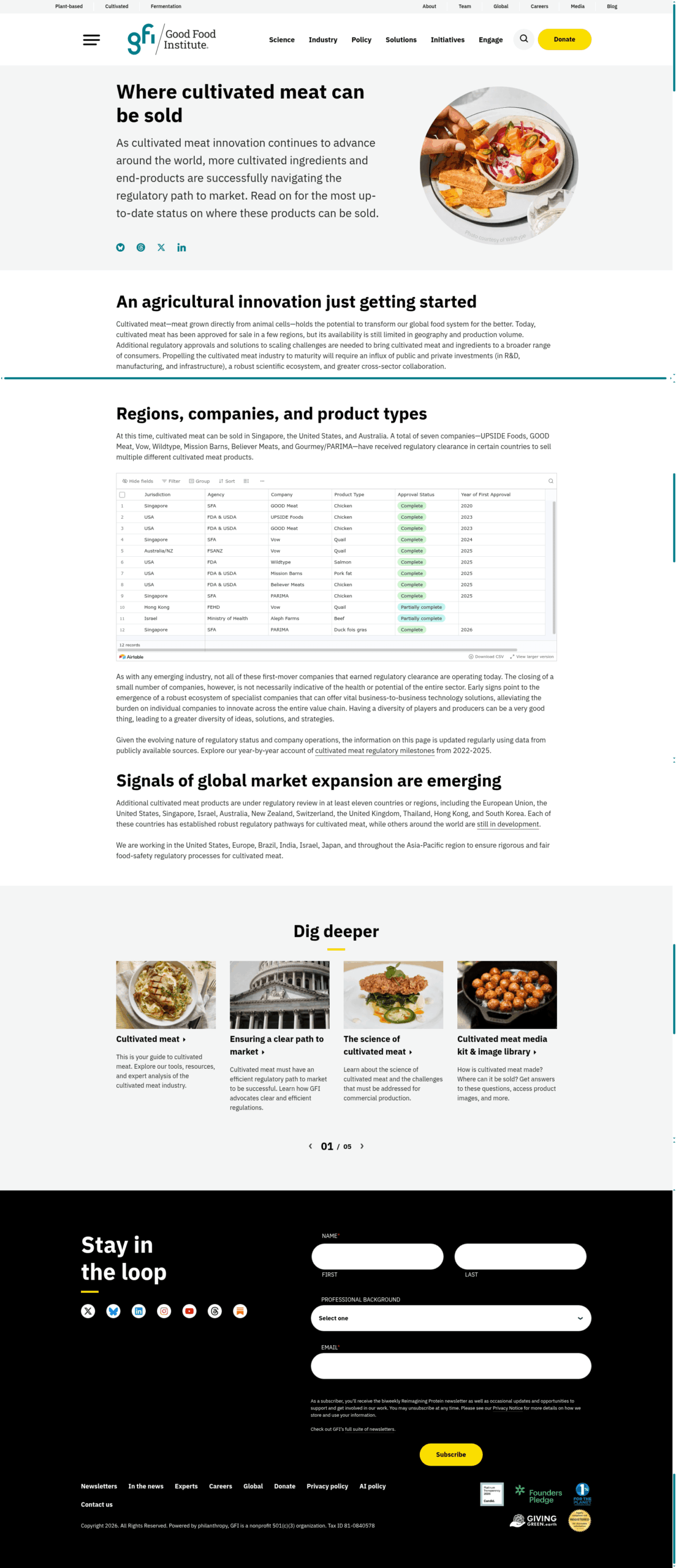
Where cultivated meat can be sold
An interactive tracker by The Good Food Institute mapping global regulatory approvals and market pathways for cultivated meat products.
Don't mess with the ETS: Priorities for the upcoming EU emissions trading system revision
Carbon Market Watch presents a 10-point plan for improving the EU Emissions Trading System ahead of its upcoming revision. The report argues against weakening the cap, free allocation phase-out, or the Market Stability Reserve, and calls for expanded coverage of aviation, shipping, and biomass, alongside eliminating fossil fuel subsidies from ETS revenues.
EU Funding Watch
EU Funding Watch curates calls, grants and opportunities across the European funding landscape for impact ecosystem practitioners.
The growth of dual-use by design research in Europe: Export control risks and challenges
This report explores how increased funding for 'dual-use by design' research in Europe blurs the line between civilian and military ecosystems. It highlights proliferation risks and identifies challenges for export controls, arguing for a broader, integrated governance framework to safeguard international research collaboration and security.
Study on national climate litigation
This report analyses strategic climate litigation trends across Europe, examining cases against states and corporations. It highlights key legal strategies, including human rights claims and polluter-pays mechanisms, while assessing the challenges of enforcing damages and the evolving obligations of governments and high-emitting businesses.
The European chemical sector's influence on biodiversity policy
This report analyses how major European chemical companies and industry associations influence biodiversity policy in the EU and US. It reveals that no assessed company aligns fully with science-based biodiversity goals, highlighting oppositional lobbying against critical regulations concerning pesticides, PFAS, and harmful chemicals.
Business models and investments for nature: Full report, 2nd edition
This report by the EU Business & Biodiversity Platform presents ten existing finance practices for investing in nature across sectors including forestry, regenerative agriculture, green infrastructure, and urban ecosystems. It explores how financial instruments such as green bonds, blended finance, and sustainability-linked loans can be structured, scaled, and replicated to help close the biodiversity finance gap.
Leaning on uncertainty: Are European countries overrelying on carbon removals to reach climate targets?
This report analyses the climate strategies of six European countries and the European Commission, revealing a risky overreliance on unproven carbon dioxide removal technologies. It highlights fragmented planning, absent feasibility assessments, and policies contradicting scientific advice, warning that current approaches threaten effective climate action.
PFAS: From non-stick to stuck in court – Dashboard
The PFAS: From Non-stick to Stuck in Court Dashboard is an online tool developed by Planet Tracker to help investors assess PFAS litigation risk. It maps facility-level exposure across publicly listed companies, supporting ESG analysis, risk assessment and investment decisions related to environmental liabilities.
Knowledge Centre for Bioeconomy
The Knowledge Centre for Bioeconomy is a European Commission platform providing curated data, tools and analysis to support evidence-based policymaking. It consolidates research, indicators and policy information on biomass-based sectors, enabling stakeholders to monitor developments and assess the sustainability and economic impacts of the EU bioeconomy.

ISEAL Alliance
ISEAL Alliance is a global membership organisation advancing credible sustainability standards and certification systems. It develops Codes of Good Practice, convenes stakeholders, and provides guidance to improve environmental and social outcomes. ISEAL supports businesses, governments and NGOs to address climate, biodiversity and human rights challenges through transparent, effective sustainability frameworks.
Sectoral roadmaps as the backbone of transition planning: Linking NDCs, finance and the real economy
Sectoral roadmaps translate national climate targets into sector-specific decarbonisation pathways, guiding policy, investment and corporate transition plans. They align real-economy activity with finance, reduce uncertainty, and support risk assessment and capital allocation, strengthening the credibility and implementation of whole-economy transition planning.


