

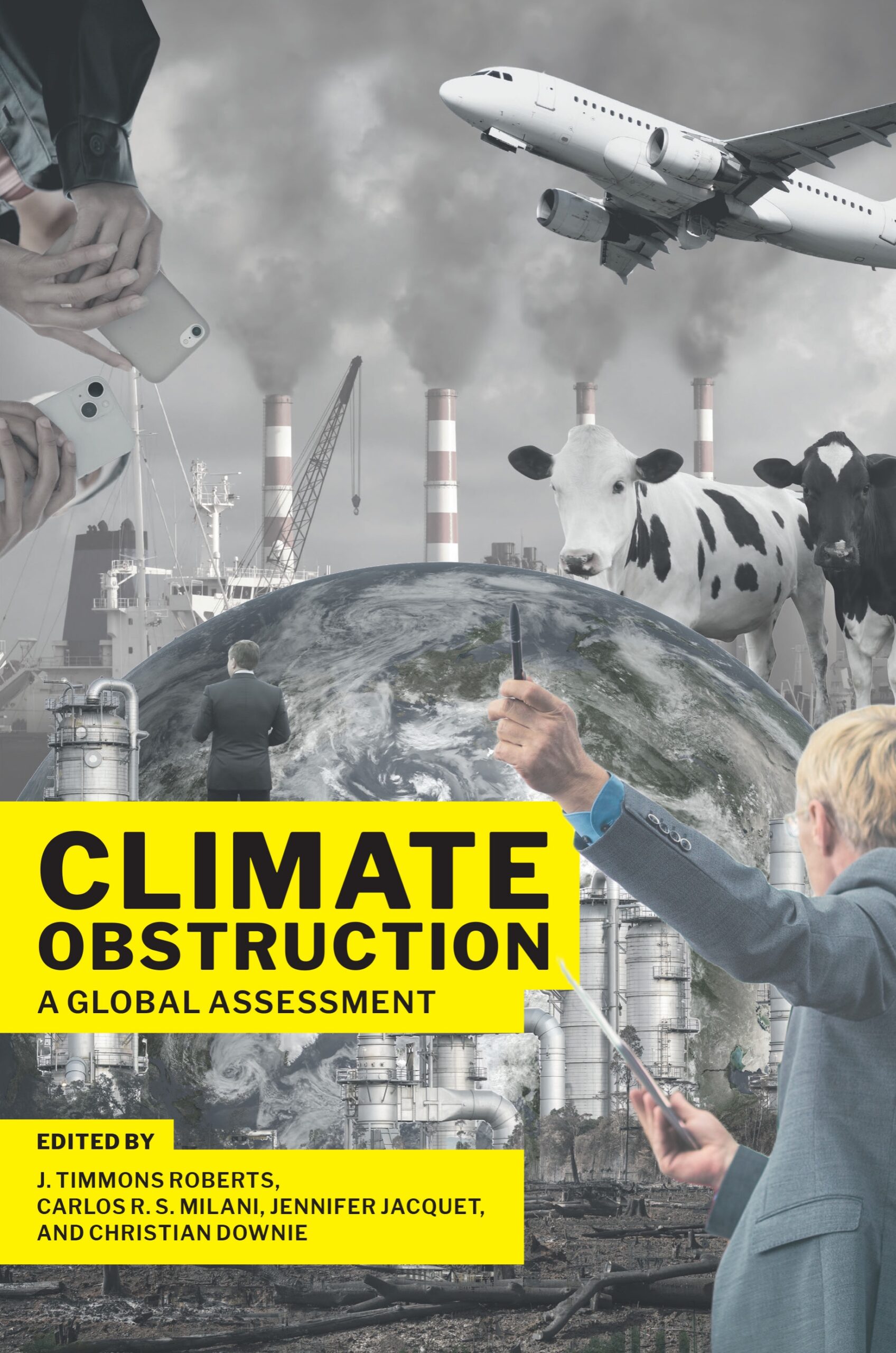
Climate obstruction: A global assessment
This report by the Climate Social Science Network analyses the actors and strategies intentionally delaying climate action. It identifies tactics including scientific denial, economic scaremongering, and “delayism” across the fossil fuel, utility, and agribusiness sectors. It also examines how these efforts manifest within the UN and at subnational levels.
Please login or join for free to read more.

OVERVIEW
Introduction: understanding obstruction of climate action
This assessment, a project of the Climate Social Science Network (CSSN), defines climate obstruction as intentional actions to slow or block policies on climate change that are commensurate with the current scientific consensus. While scientists have established the dangers of climate destabilisation, societies and economic agents have failed to respond adequately. The report argues that efforts to address climate change have been unsuccessful because of coordinated work to obstruct them and a general failure to understand and overcome this resistance.
The global role of the oil and gas industry in climate delay and denial
Oil and gas producers have deployed three distinct but interlocked tactics: denial, delay, and co-optation. Since the 2015 Paris Agreement, public denial has decreased but has been replaced by “delayism” and “greenwashing”. Internal documents reveal that companies such as BP, Shell, and ExxonMobil acknowledged global temperature rise risks in the 1970s and 1980s but pivoted to public denial in the late 1980s. More recently, the industry has moved towards “co-optation” by positioning itself as “part of the solution” through net-zero pledges and the promotion of unproven technological fixes like carbon capture and storage (CCS).
How coal, utilities, and transportation impede climate action
These sectors generate an outsized footprint; coal currently accounts for 29% of global primary energy supply and is responsible for more than 40% of annual CO2 emissions. They are prone to financial and technological “lock-in” due to the long lifespans of infrastructure. Obstruction strategies include lobbying against emissions standards and using “corporate ventriloquism” to transmit messages through astroturf organisations. In the United States, trade associations for investor-owned utilities spent $44 million on direct lobbying and $18.6 million on advertising between 2008 and 2018. One study found that companies expecting to suffer financially under the Waxman-Markey bill spent more than $700 billion lobbying against it.
The animal agriculture industry’s role in obstructing climate action
The greenhouse gas (GHG) emissions of the fifteen largest meat and dairy companies exceed those of some carbon majors. Industry actors have worked to influence public understanding and obstruct policy responses. In the United States, the American Farm Bureau Federation (AFBF) has derailed climate policy for more than four decades. Common narratives include claiming that animal agriculture’s contributions are uncertain or that climate impacts can be addressed solely through technical fixes. The sector is estimated to contribute between 11.2% and 19.6% of total global GHG emissions.
Climate policy obstruction on the right and the far right
A network of organisations and advocacy groups promotes approaches to environmental management that emphasise local control and private property. Think tanks, including the global Atlas Network, promote neoliberal policies that resist climate regulation. Far-right movements often seek to destabilise global cooperation entirely, viewing climate policy as a “Trojan horse” for global governance. These movements leverage online platforms and “metapolitical” strategies to foster skepticism.
Steering the climate discourse: legacy news, social media, advertising, and public relations
Media communications often amplify patterns of polarisation. Public relations (PR) firms play several key roles, including strategic management and industry-friendly research. Digital platforms such as Meta and Google have allowed fossil fuel companies to purchase misleading advertisements; Google received more than $23.7 million from oil majors for online advertising between 2020 and 2022. Efforts to counter this include “rapid attribution” of misleading content and “prebunking” misinformation to inoculate the public.
Blocking climate action at subnational levels
In the United States and Canada, a clear relationship exists between party leadership and the adoption or obstruction of climate policy. As of 2021, 57% of Americans believed global warming was caused by humans, but county-level variation ranged from 77% to 44%. Local obstruction also occurs through real estate developers and “not-in-my-backyard” (NIMBY) organisations blocking renewable projects.
Obstruction in the United Nations Framework Convention on Climate Change and the Intergovernmental Panel on Climate Change
Obstruction within multilateral structures occurs through procedural and substantial means. Procedural obstruction includes abusing rules of procedure or assuming positions of power to stall negotiations. Substantial obstruction involves manipulating language in report summaries, such as Saudi Arabia’s successful efforts to add the word “unabated” to sentences referencing fossil fuel emissions reductions.
Legal and state efforts to address climate obstruction
About 1,500 climate-related lawsuits have been filed around the world. A subset of these suits targets climate obstruction, particularly the historical and continuing deception of consumers. Legal actions are being intensified to address “greenwashing”, defined as acts that mislead investors or the public regarding environmental performance.
Confronting climate obstruction: the role of civil society and non–state actors
Civil society uses three main strategies to counter obstruction: social exposure, lobbying, and campaigns. Social exposure involves unveiling obstruction through research and “naming and shaming” perpetrators to revoke their social license. Lobbying efforts include disinformation rebuttal and counterbalancing.




