Overview
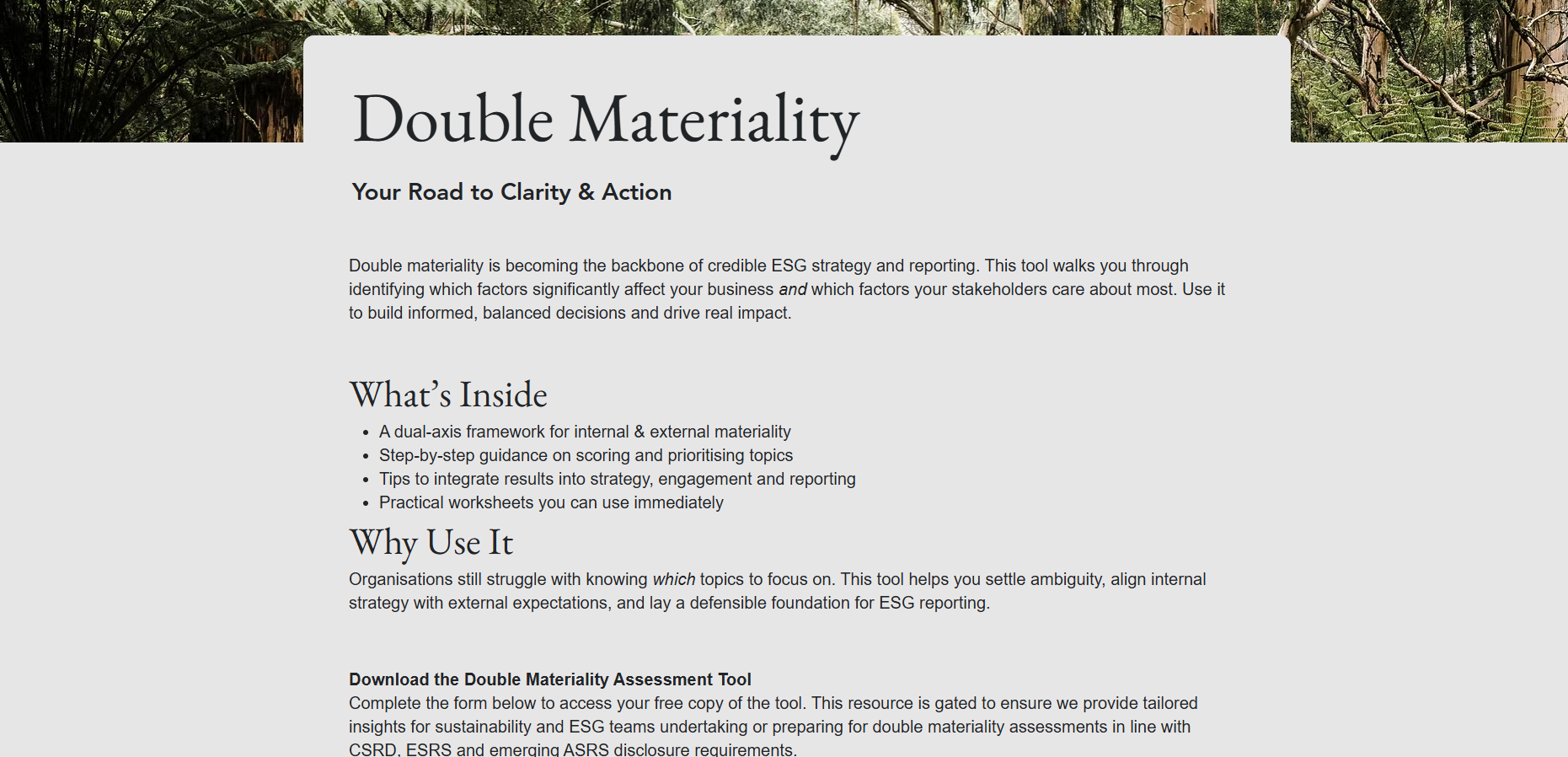
The Double Materiality Tool is an online assessment tool designed to support organisations in conducting double materiality assessments in line with the EU Corporate Sustainability Reporting Directive (CSRD) and related ESG standards. Its main purpose is to help identify, assess, and prioritise sustainability impacts, risks, and opportunities. Finance professionals may find it relevant for structured ESG risk analysis, regulatory compliance, and investment-related decision-making.
Organisation behind the tool
The tool is developed and maintained by Bloom Sustainability, a sustainability and ESG advisory firm. Bloom Sustainability focuses on supporting organisations with sustainability strategy, regulatory reporting, and ESG integration, particularly in the context of European regulatory frameworks such as CSRD and ESRS.
What the tool does
The Double Materiality Tool provides a structured framework to carry out impact and financial materiality assessments. Key functions include:
- Identification of sustainability topics aligned with ESRS and other recognised ESG frameworks.
- Assessment of impact materiality, including severity and likelihood of environmental and social impacts.
- Assessment of financial materiality, covering risks and opportunities affecting enterprise value.
- Stakeholder input functionality to incorporate internal and external perspectives.
- Scoring and prioritisation of material topics based on defined criteria.
- Documentation of assumptions, methodologies, and outcomes to support audit and assurance processes.
- Export or reporting-ready outputs that can be used in sustainability and regulatory disclosures.
Target audience
The primary users are corporate sustainability teams, ESG professionals, and compliance teams preparing CSRD-aligned disclosures. Other relevant audiences include finance teams, risk managers, consultants, and advisors supporting ESG reporting and strategy.
Relevance to finance professionals
The tool has several applications within finance contexts, including:
- Risk assessment – supports identification of financially material ESG risks and opportunities that may affect cash flows, asset values, or cost of capital.
- ESG analysis – provides structured inputs for ESG reporting, due diligence, and internal ESG scoring frameworks.
- Investment context – helps assess long-term sustainability risks and impacts relevant to corporate valuation and strategic planning.
- Regulatory alignment – assists finance teams in meeting CSRD and ESRS requirements with documented, auditable processes.
Overall, the tool offers a structured and standardised approach to double materiality that can be integrated into broader financial, risk, and sustainability analysis.