Overview
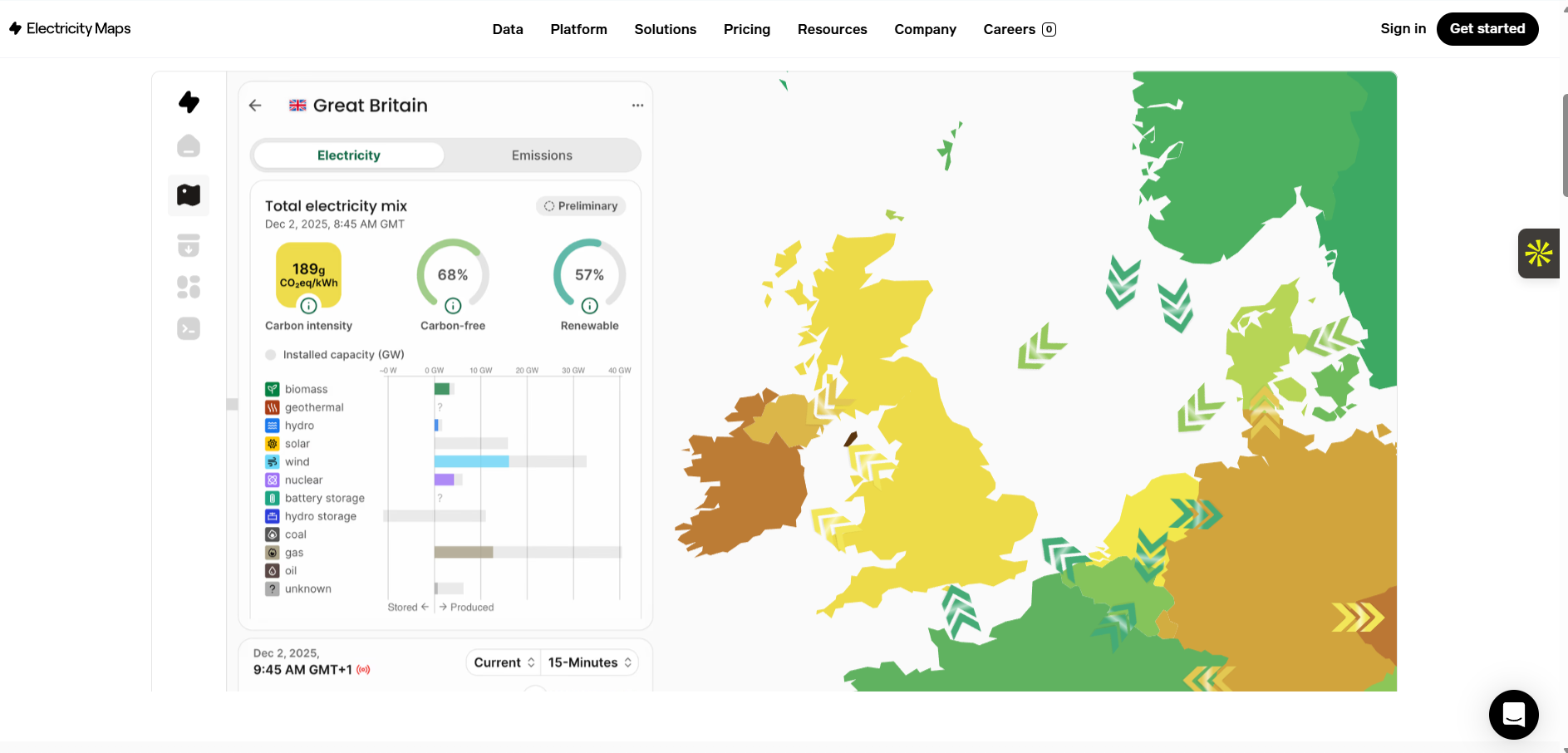
Electricity Maps is a global electricity data platform showing electricity generation mix, carbon intensity, load and price signals in real time, historically and with short-term forecasts. It offers interactive map visualisation, downloadable datasets and an API for integration. Finance professionals may use it to inform energy, emissions and risk analysis.
Organisation behind the tool
Electricity Maps is developed and maintained by Electricity Maps ApS, a Copenhagen-based organisation focused on electricity grid data and emissions transparency. It began as an open-source initiative and now provides commercial and free products.
What the tool does
- Provides real-time and historical electricity grid data for more than 190 countries.
- Shows electricity generation mix by source and associated carbon intensity.
- Displays load, day-ahead prices and cross-border electricity flows.
- Offers short-term forecasts (e.g. 72 hours ahead).
- Delivers an interactive global map visualisation of grid metrics.
- Supplies downloadable datasets for carbon accounting and analysis.
- Provides an API for programmatic access to all signals and data.
Target audience
Primary users include energy analysts, sustainability teams and developers integrating grid data. Other audiences comprise policymakers, researchers, infrastructure planners and the general public seeking electricity and emissions insights.
Relevance to finance professionals
- Risk assessment – Understand exposure to energy market volatility and grid decarbonisation trends.
- ESG analysis – Use carbon intensity and generation mix data for reporting and compliance with emissions frameworks.
- Market/commodity insights – Gain insights into electricity price trends, renewables share and cross-border flows.
- Investment context – Assess long-term energy transition trajectories and their impact on asset valuation and sectoral risk.