
Library | Resource Types
Research
We summarise credible research and reports on sustainable finance and ESG issues. Our summaries, along with our AI ChatBot saves members time reading large reports, to focus on knowledge building and action.
Refine
1831 results
REFINE
SHOW: 16


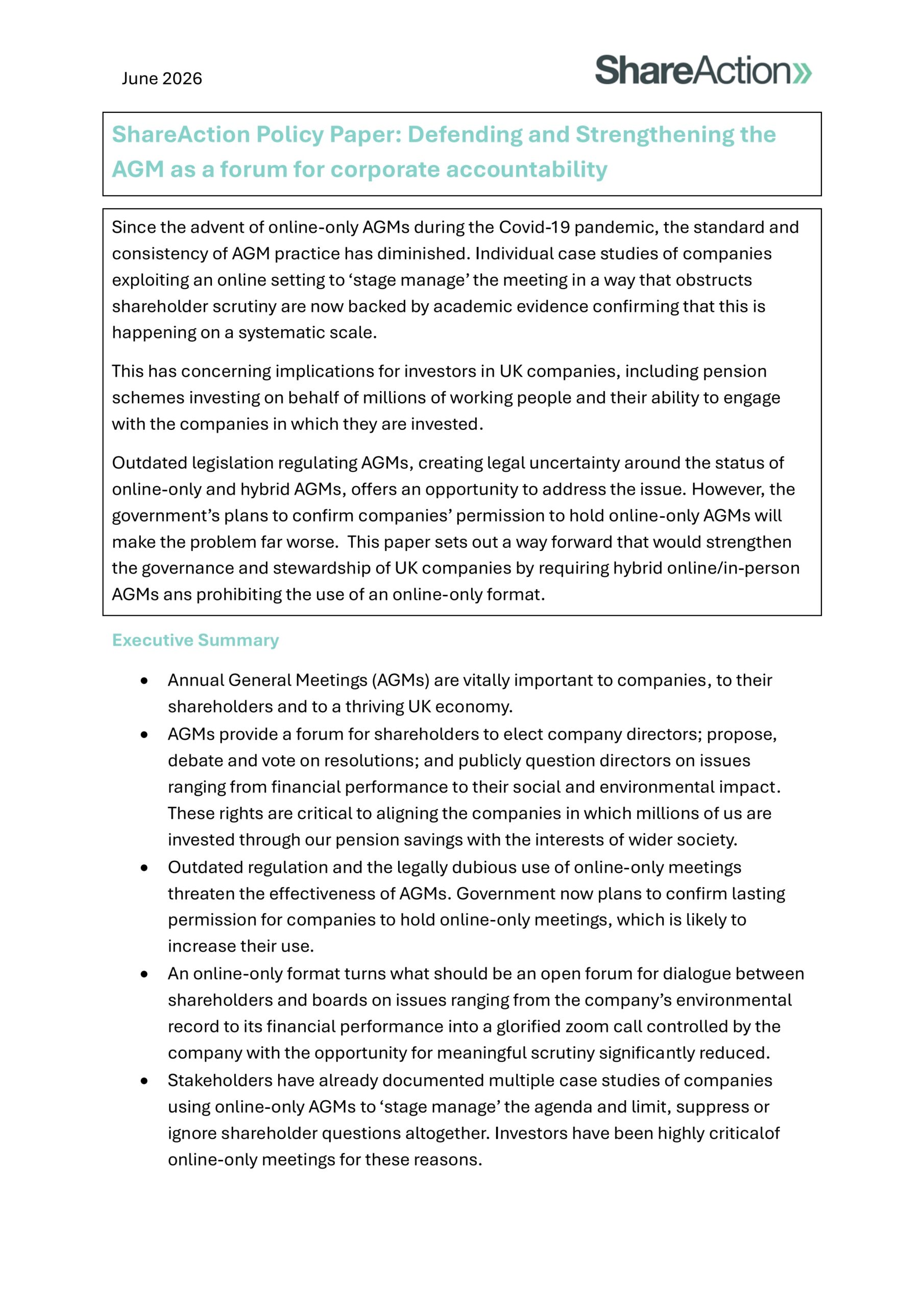
ShareAction policy paper: Defending and strengthening the AGM as a forum for corporate accountability
This ShareAction report advocates for mandatory hybrid AGMs to ensure corporate accountability. It argues that online-only formats diminish shareholder scrutiny and enable management to stage-manage proceedings. The document recommends amending the 2006 Companies Act and provides case studies of poor virtual AGM practices across several major companies.
Fragmentation of shareholder power
This research examines how fund proliferation and stewardship decentralisation affect corporate governance. It finds that supply-driven growth weakens oversight, while demand-driven expansion by incumbents can strengthen it. Competitive adoption of pass-through voting improves investor preference alignment but often reduces monitoring incentives and firm value.
Preference for explainable AI
This research investigates the demand for explainable AI in high-stakes credit settings. It finds that decision-makers strategically avoid explanations that reveal racial or gender bias to preserve moral wiggle room. Additionally, behavioural biases cause individuals to undervalue explanations even when they complement private information and improve decision accuracy.
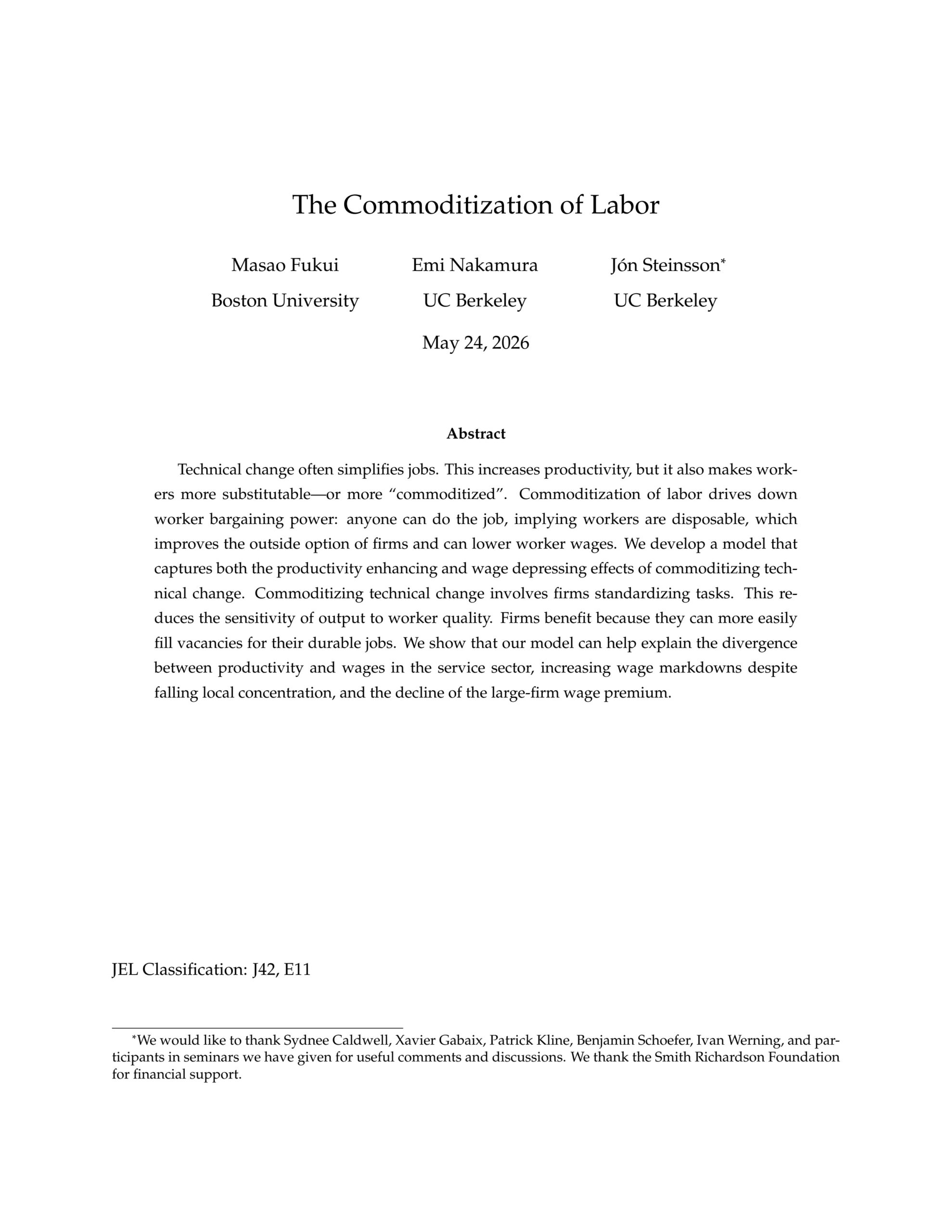
The commoditization of labor
This research examines how technological standardisation commoditises labour by making workers interchangeable. It develops a model showing that while this process increases productivity, it simultaneously reduces worker bargaining power and wages. This framework explains the declining large-firm wage premium and the divergence between productivity and pay in services.
The total portfolio approach (TPA): A practical guide for navigating the transition to TPA
The report examines the Total Portfolio Approach as an alternative to traditional strategic asset allocation. Drawing on interviews and survey evidence, it explains TPA’s investment, governance, risk, sustainability and organisational foundations, outlines a five-level transition pathway, and provides practical guidance for asset owners assessing readiness and implementation.
The current state of BRSR in corporate India 2.0
This report analyses Business Responsibility and Sustainability Reporting (BRSR) data from 300 Indian companies over three years. It identifies progress in disclosure quality, energy intensity trends, and assurance practices. Recommendations focus on standardisation and sector-specific guidance to enhance the decision usefulness of sustainability data for investors and regulators.
Environmental crime: From blind spot to business risk
This report identifies environmental crime as an illicit economy worth USD 300 billion, posing significant financial risks to global businesses. It examines how illegal goods permeate supply chains and details tightening regulations. The research provides strategic actions for organisations to improve traceability and manage exposure effectively.
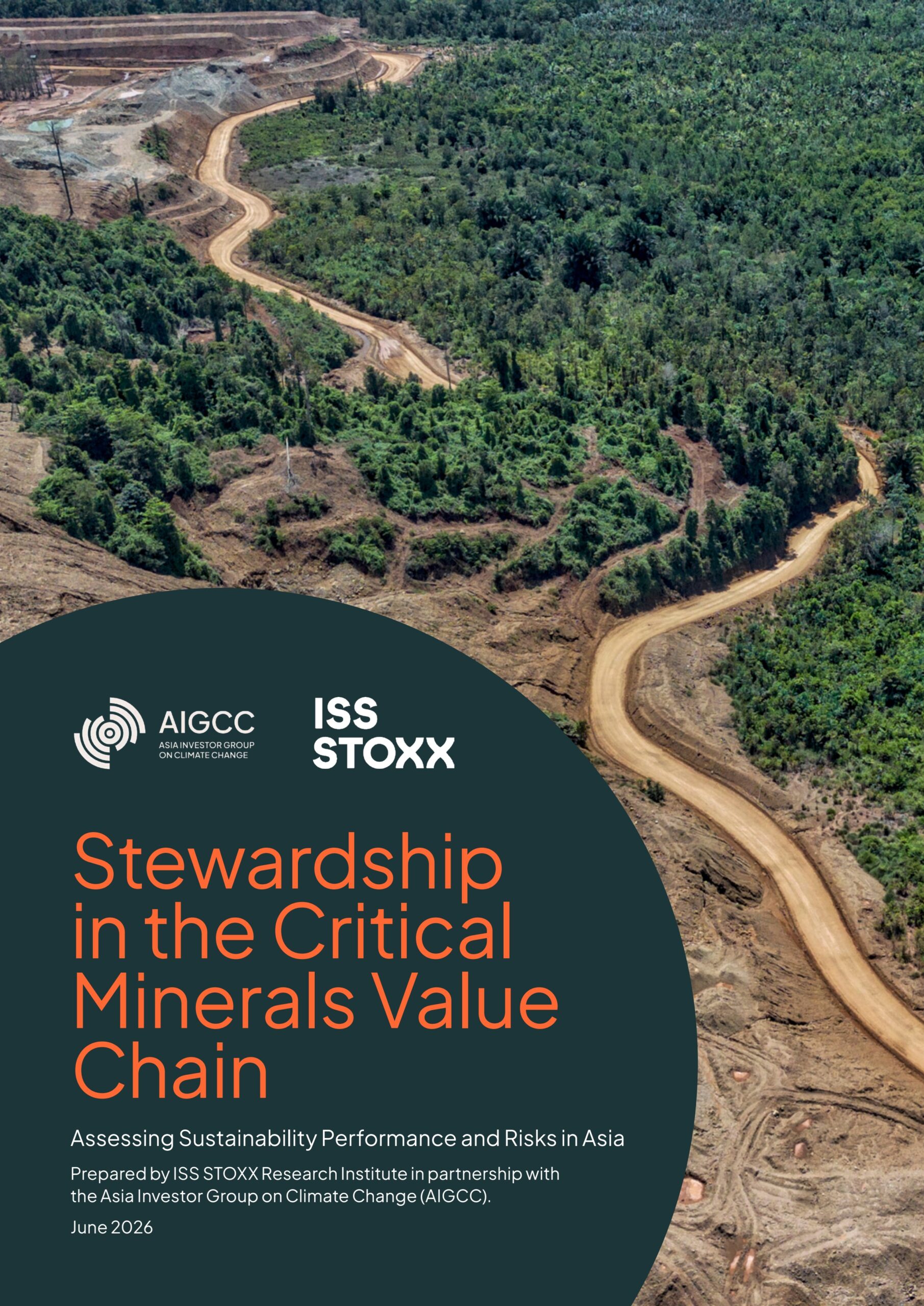
Stewardship in the critical minerals value chain: Assessing sustainability performance and risks in Asia
This research examines sustainability risks in Asia’s critical minerals value chain, focusing on nickel, cobalt and copper. Utilising IRMA-aligned assessments and geospatial data, it highlights gaps between corporate policy and implementation, intensifying physical climate risks, and nature dependencies, providing actionable stewardship priorities for institutional investors in the region.

Tropical deforestation outlook: How market trends could impact the Amazon, the Congo Basin, and Southeast Asia-Oceania
This report evaluates market drivers of tropical deforestation across the Amazon, Congo Basin, and Southeast Asia. It analyses impacts from transition minerals, food systems, and fast-turnover products. The document outlines transition pathways and provides policy recommendations to address global trade and consumer demand trends through 2035.

The hidden human cost of content moderation and data labelling
This report examines the hidden human costs of content moderation and data labelling in Colombia, Kenya, and the Philippines. It details systemic physical, psychological, and economic harms caused by lead firm power, informal employment, and intense target pressure, while identifying significant barriers to corporate accountability and worker rights.

Tiny plastics big problem: The hidden risks of plastic pouches for baby food
Greenpeace research identifies significant microplastic contamination in Danone and Nestlé baby food pouches. The report highlights the rapid market shift towards flexible plastic packaging, outstripping regulatory protections. It recommends a 75% reduction in plastic production by 2040 and urges manufacturers to prioritise non-toxic, reusable alternatives to protect infant health.
Corporate Health Check 2026: The annual state of Earth-positive business action
The CDP 2026 Corporate Health Check, produced with Oliver Wyman, demonstrates that environmental leadership aligns with financial performance. While a 15% leadership cohort achieves 4% annual emission reductions, a major gap persists in adaptation finance. The report identifies four key levers for building resilience and capturing emerging commercial opportunities.
Mobilising capital for India’s critical minerals sector
This report examines financing challenges in India's critical minerals sector across upstream, midstream, and recycling segments. It evaluates the National Critical Mineral Mission's role in addressing capital gaps and suggests de-risking projects to ensure commercial viability and support India’s energy transition goals through strategic policy and international partnerships.
FCLT Gold Standard: Information and resources
FCLTGlobal’s Gold Standard provides criteria for asset owners, asset managers and companies to support long-term value creation. It outlines recommended practices across governance, incentives, engagement, metrics and future success, including long-term performance measurement, aligned remuneration, sustainability reporting, carbon pricing, diverse decision-making and investment in innovation.
Extraction to equity: Responsible finance and trade for critical minerals in Asia
The report examines critical mineral value chains across selected ASEAN countries, highlighting downstream processing ambitions alongside environmental, human rights and governance risks. It finds trade agreements lack adequate sustainability safeguards and recommends stronger due diligence, impact assessments, benefit-sharing, local value addition, transparency and sustainable finance taxonomies.
Regenerative agriculture: Moving from ambition to credibility
This report evaluates regenerative agriculture commitments across 78 global agri-food companies. While disclosures have increased, quantified targets have declined to 28%. Significant gaps remain in financial support for farmers and pesticide reduction targets, with the pork and poultry sectors largely overlooked in transition planning.


