
Library | Things to learn
Status and relevance of environmental issues for finance and business
Refine
254 results
REFINE
SHOW: 16


Nature positive economies: Progress, lessons and next frontiers
The report titled explores a six-year global partnership aimed at embedding natural capital into economic decision-making. It highlights key lessons, including the need for systemic change, collaboration across sectors, and nature-based solutions to build resilient, sustainable economies. The report provides case studies and frameworks to guide future efforts towards nature-positive economies.
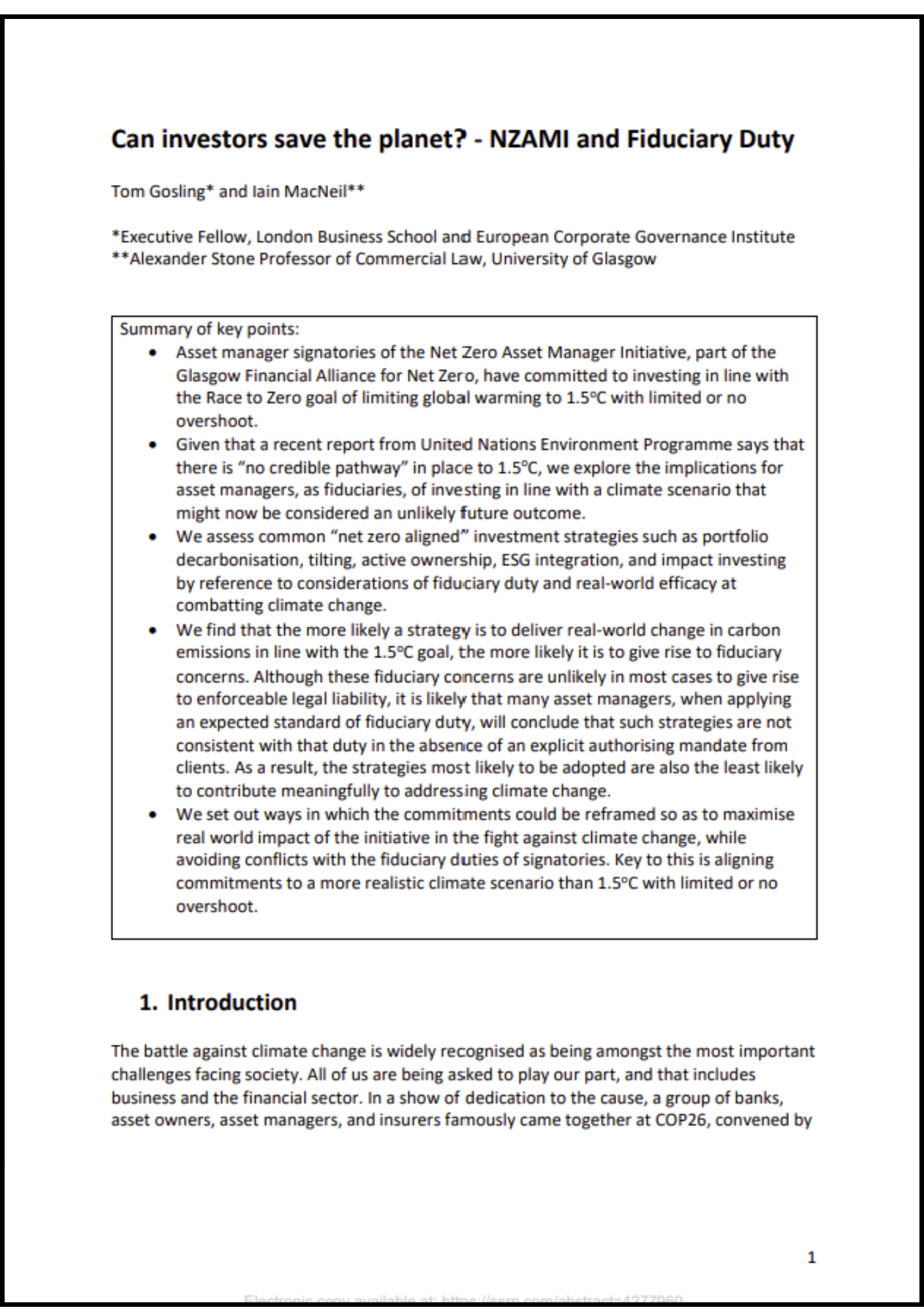
Can investors save the planet? - NZAMI and fiduciary duty
The report evaluates asset managers' strategies aligning with the Race to Zero goal of limiting global warming while considering the possibility of a different climate scenario. It finds impactful environmental approaches might pose fiduciary challenges. Authors propose revising commitments to enhance climate impact while upholding fiduciary duties.

Catalytic capital: A key to aligning infrastructure investments with climate mitigation in emerging markets
This report provides a roadmap for directing more institutional capital toward climate infrastructure financing in emerging markets. It identifies the importance of using catalytic capital and outlines four themes crucial to its effective use: targeting, speed, support, and analysis. The report offers recommendations for how to address climate challenges through targeted catalytic interventions.

The rising tide of greenwashing: Navigating ‘greenwashing’ risks in climate change targets and sustainability credentials
The report highlights the risks and challenges associated with businesses misrepresenting their sustainability credentials or strategies. The document elaborates on the subject with the help of multiple examples and practical guidelines to reduce legal and reputational exposure to businesses and corporations.
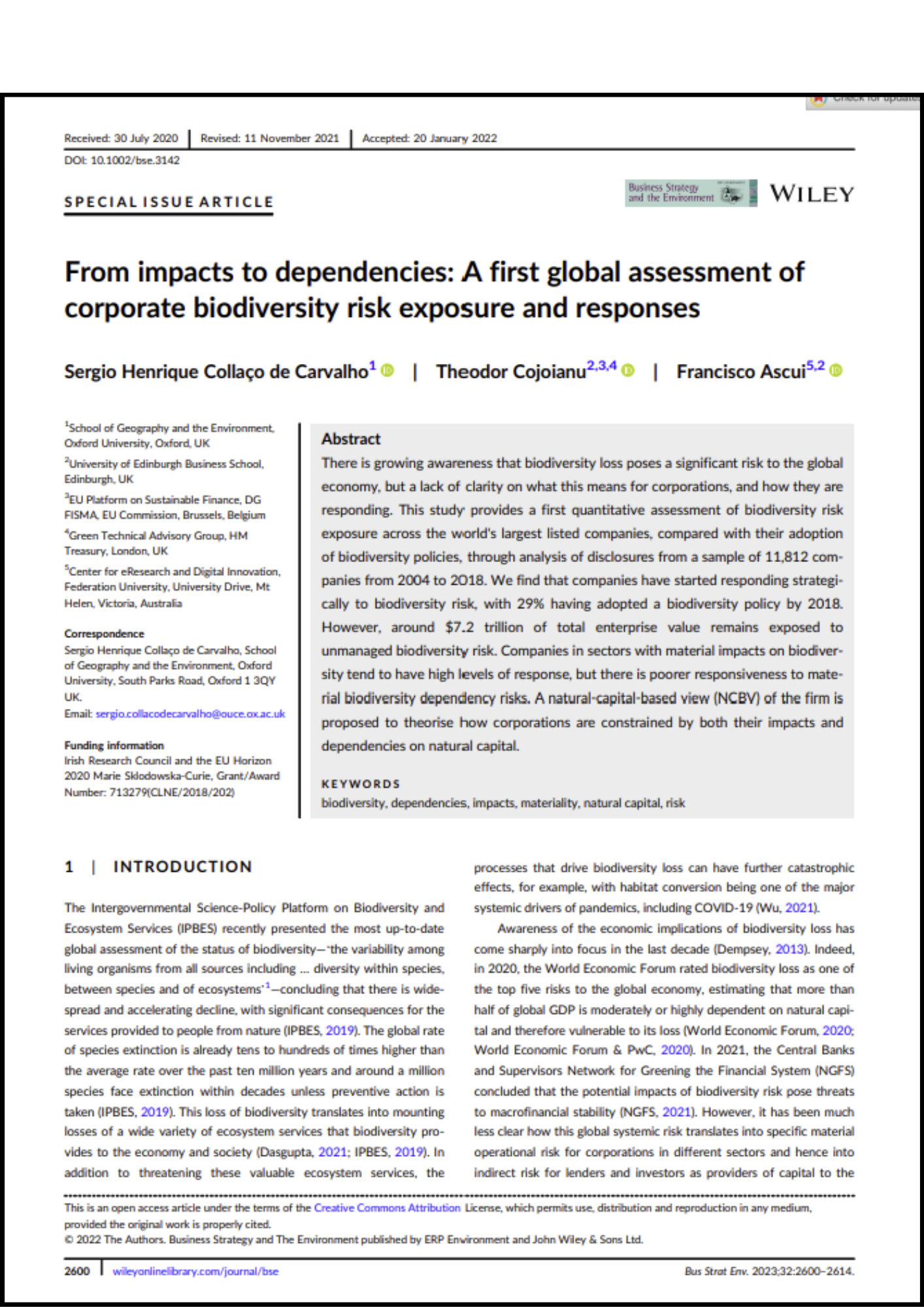
From impacts to dependencies: A first global assessment of corporate biodiversity risk exposure and responses
The report unveils a significant gap in corporate biodiversity risk management, with $7.2tn exposed despite a 29% adoption rate of biodiversity policies among 11,812 sampled companies. It emphasises the inadequate response to biodiversity risks, especially in sectors highly reliant on biodiversity.

2024 XDI gross domestic climate risk report
The 2024 XDI report ranks over 2,600 regions worldwide according to the projected damage to the built environment from extreme weather and climate change, including floods, wildfires and sea-level rises, and which of these regions are likely to see the largest escalation in damage from 1990 to 2050.

Biodiversity in the balance: Hedging portfolio risks
The report illustrates increased NGO reporting, land use, and biodiversity incidents linked to industrial firms. With 31% of companies having no official management initiatives, investors are eager to address portfolio risks from biodiversity loss and deforestation. The report connects land use and biodiversity controversies with various risks, including operational, credit, market, physical, and systemic.

Climate scorpion – the sting is in the tail: Introducing planetary solvency
The report explores the risks and impact of climate change on a global scale. The report emphasises the need for a realistic risk assessment urgently and laying out a blueprint on developing a Planetary Solvency framework.

Australian material flow analysis to progress to a circular economy
This report provides a comprehensive material flow account for Australia in 2019 to support the assessment of its circular economy progress. The report highlights key areas where policy interventions can improve material intensity, resource efficiency, and waste minimisation. It also evaluates Australia's circularity indicators and performs well on three proposed indicators.

Getting ahead of the curve on dynamic materiality: How U.S. investors can foster more inclusive capitalism
This discussion paper highlights tools and opportunities for US investors to foster sustainable and responsible value creation in order to support more inclusive and thriving economy. It also discusses the risks posed to portfolios by social and environmental risks and how diversified investors can mitigate them.

200 and counting: Global financial institutions are exiting coal
Financial institutions (FI) across the world are increasingly recognising the risks and opportunities connected to coal, and many are reducing their exposure to the industry. The number of FIs withdrawing from coal is rapidly increasing, and this report catalogues the global trend towards coal withdrawal.

Communicating the scientific consensus on climate change: Diverse audiences and effects over time
This study finds that communicating the scientific consensus on climate change increases understanding and engagement. Consensus messaging leads to updated beliefs across diverse audiences, with 40% of the original effect lasting 26 days. The treatment effect is most durable for those doubtful or dismissive of climate change.

Biodiversity risk: Legal implications for companies and their directors
The report analyses the legal obligations of company directors with regards to biodiversity risk. The report examines emerging disclosure standards, provides a jurisdictional spotlight, and includes case studies to illustrate the corporate interface with biodiversity.

Sustainable banking in ASEAN
This 2019 report analyses the sustainability strategies of 35 ASEAN banks based on environmental, social and governance indicators. This year's update highlights the increasing recognition of ESG integration into mainstream finance, although progress must be made, particularly in climate-related risk management.

The impact potential assessment framework (IPAF) for financial products
The Impact Potential Assessment Framework for financial products (IPAF) is a multi-purpose tool developed to assess products based only on their actions to generate real-life impact. Using public information, it evaluates the product's maximum impact potential through four widely documented mechanisms.

Environmental sciences, sustainable development and circular economy: Alternative concepts for trans-disciplinary research
This report discusses the challenges and opportunities of trans-disciplinary research in environmental sciences. It explores three alternative environmental concepts: "environmental sciences", "sustainable development", and the increasingly popular "circular economy". The article clarifies their meaning and inter-relationship, helping trans-disciplinary researchers to understand the opportunities and challenges of each.


