
Library | ESG issues
Climate Change
Climate change, driven by human-induced greenhouse gas (GHG) emissions, is increasing global temperatures and extreme weather events. Major GHGs like carbon dioxide and methane primarily come from burning fossil fuels, deforestation, and agriculture. Key sectors contributing to emissions include energy, industry, transport, buildings, and land use, making mitigation and adaptation essential for environmental and economic stability.
Team Altiorem recommends

Refine
976 results
REFINE
SHOW: 16


How corporate climate change mitigation actions affect the cost of capital
This study explores how corporate climate change mitigation actions influence the cost of capital for Japanese firms from 2017-2021. It finds that higher carbon intensity increases the cost of equity, debt, and overall capital. Climate-related disclosures lower the cost of equity and overall capital, despite raising debt costs.

GRESB
GRESB (Global Real Estate Sustainability Benchmark) is an organisation providing ESG data and insights for the financial sector. It helps investors and managers evaluate ESG performance, enhance sustainability practices, and improve transparency in real estate and infrastructure investments.

Making things (that don’t exist) count: A study of Scope 4 emissions accounting claims
This report investigates the implications of 'Scope 4' emissions accounting claims, which refers to greenhouse gas emission reductions or removals due to a decision or action. This study suggests that extant Scope 4 assessments do not fit the established framework for scope-based emissions accounting, and calls for cautious claims of this nature and the need for more research.

Capital for kilowatts: The (non)-inflationary impacts of the green transition
The report examines Australia's need for significant investment in renewable energy infrastructure. It argues that despite high costs, the green transition's inflationary effects will be minimal and manageable, contributing to long-term macroeconomic stability and a more sustainable future.

Can investors curb greenwashing?
This report analyses the phenomenon of greenwashing in companies due to investors' pro-environmental preferences and their penalties for exposing past environmental controversies. The study presents the optimal communication, abatement policies, and greenwashing strategies of corporations, highlighting how investment decisions can clamp down on this practice. Policymakers can make use of these tools to reduce greenwashing and promote environment-friendly policies.

An innovation pathway to decarbonization: Circular economy solutions for policymakers and industry in the US
The US has a significant opportunity to decarbonise its industrial sector and boost its economy by transitioning to a circular economy. This report explores the economic and environmental benefits of circular solutions in key industries, such as batteries, construction, and electronics. It also analyses current US policies that support a circular economy and provides recommendations for further policy interventions to accelerate this transition.

Big oil reality check: Aligned in failure
Big oil and gas companies’ climate pledges lack ambition and integrity, resulting in continued exploration and extraction. They fail to align with the Paris Agreement, relying on misleading accounting and greenwashing. Immediate action from governments and investors is essential to catalyse a socially just and equitable phase-out of fossil fuels.
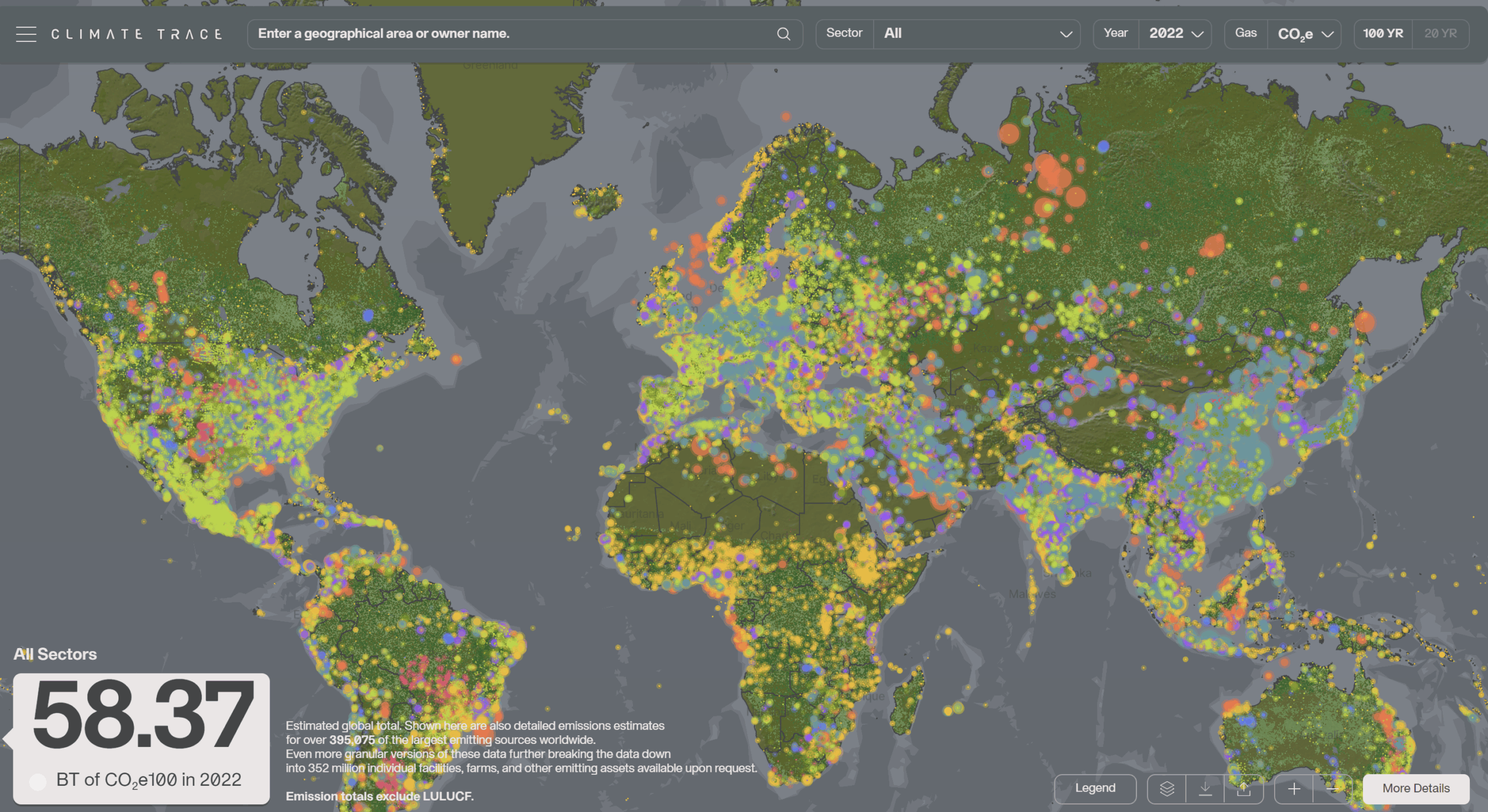
Climate TRACE
Climate TRACE is a comprehensive tool for tracking global greenhouse gas emissions. Utilising satellite data and AI, it provides real-time insights, helping finance professionals assess environmental impacts and make informed decisions. This tool supports ESG integration and sustainability in financial practices.

2024 XDI Asia-Pacific real estate investment trust physical climate risk report
This benchmark report assesses the vulnerability of 2,134 assets across 20 APAC REITs to climate risks. By 2050, nearly 10% of properties face high risk, particularly from coastal inundation and flooding, highlighting significant financial implications for investors and the urgent need for adaptation strategies.

Energy transition risks and opportunities initiative's series
Energy Transition Risk and Opportunities Initiative (ET Risk) provides finance professionals with tools to assess energy transition risks and opportunities. The project focuses on sustainable finance, ESG impacts, and climate change, helping users make informed investment decisions.

BCCM's national mutual economy reports
This annual report provides comprehensive analysis of the economic and social contributions of Australia's co-operatives and mutual enterprises (CMEs). It highlights the financial performance of the top 100 CMEs, discusses their impact on both national and international economies, and includes case studies.

Exploring the cooperative economy report 2023
The 2023 World Cooperative Monitor Report provides rankings of the top 300 global cooperatives by turnover and GDP per capita. It highlights the economic impact and member benefits of cooperatives, offering insights into their performance, sustainability, and contribution to local communities and development goals.

Mutuals industry review 2023: Challenges for a purposeful future
This report shows that the mutuals industry increased net assets by 4.2% to AUD$11.7 billion, largely driven by increased interest rates and continued loan growth. The report also highlights key insights into the industry's future, including pathways to a sustainable and customer-centric future, managing the cyber threat, closing the gap on sustainability reporting, AI risks and opportunities, and CPS 230 Operational Risk Management.
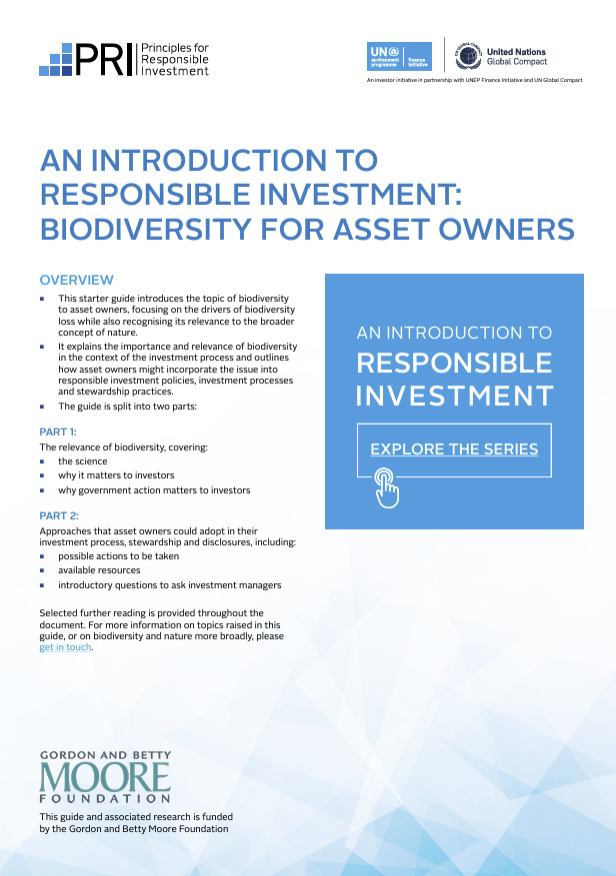
An introduction to responsible investment: Biodiversity for asset owners
This introductory guide for asset owners explores the financial risks and opportunities associated with biodiversity loss. It explains the relevance of biodiversity to investment processes and outlines how asset owners can incorporate biodiversity considerations into their responsible investment policies, stewardship practices, and disclosures.

Human rights and climate change: A guide for institutional investors
This guide examines the relationship between climate change and human rights. It highlights the responsibilities of institutional investors to recognise and act on climate-related human rights risks. It also identifies crucial areas of risk for investors and provides an action plan to support investors to integrate the management of climate-related human rights risks into their existing frameworks.

ShareAction's voting matters series
Voting Matters are benchmark-series reports by ShareAction evaluating the proxy voting behaviour of asset managers on environmental and social issues. This report analyses the voting patterns of major asset managers to determine their commitment to responsible investment practices.


