
Library | ESG issues
Environmental
The environmental pillar in ESG (environmental, social, and governance) assesses an organisation’s impact on the planet. It includes issues such as climate change, biodiversity, waste management and water management. Strong environmental practices help businesses reduce risks, comply with regulations, and drive long-term sustainability.
Refine
1899 results
REFINE
SHOW: 16


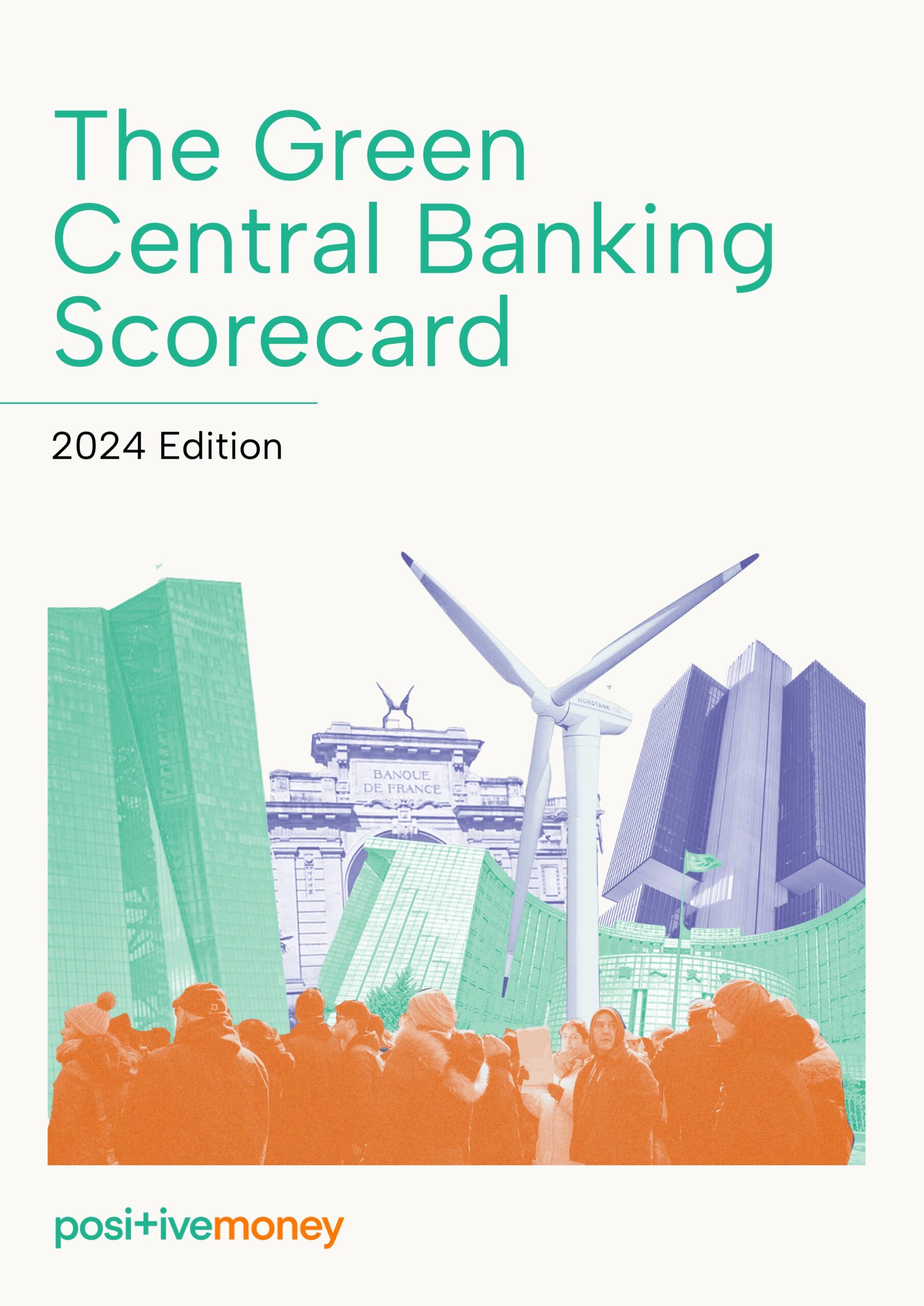
The green central banking scorecard series
The Green Central Banking Scorecard is a benchmark series that ranks G20 central banks and financial regulators on their progress in integrating environmental considerations into their operations. It assesses institutions across research and advocacy, monetary policy, financial policy, and leading by example categories to encourage a just green transition.
SBTi Corporate Net-Zero Standard version 2.0
The SBTi Corporate Net-Zero Standard Version 2.0 provides a framework for science-based target setting and implementation. It introduces an implementation hierarchy, transition planning requirements, and a voluntary Ongoing Emissions Responsibility programme. The standard focuses on context-specific targets and best-efforts delivery to reach net-zero by 2050.
Rust in motion: The political environmental trap of vehicle tax exemptions
This research examines Brazil's vehicle tax exemptions, finding that lower age thresholds increase fleet age, pollution and infant health risks. It identifies a 'political environmental trap', where raising exemption ages leads to significant electoral penalties for incumbents, despite the policies resulting in a net welfare loss.

Oxford-GlobeScan global corporate affairs survey series
This benchmark series provides an overview of opinions, trends, and challenges within the corporate affairs function. Produced annually, the research captures insights from senior professionals globally to track the evolution of the corporate affairs agenda, focusing on reputation, sustainability, geoeconomics, and stakeholder engagement.
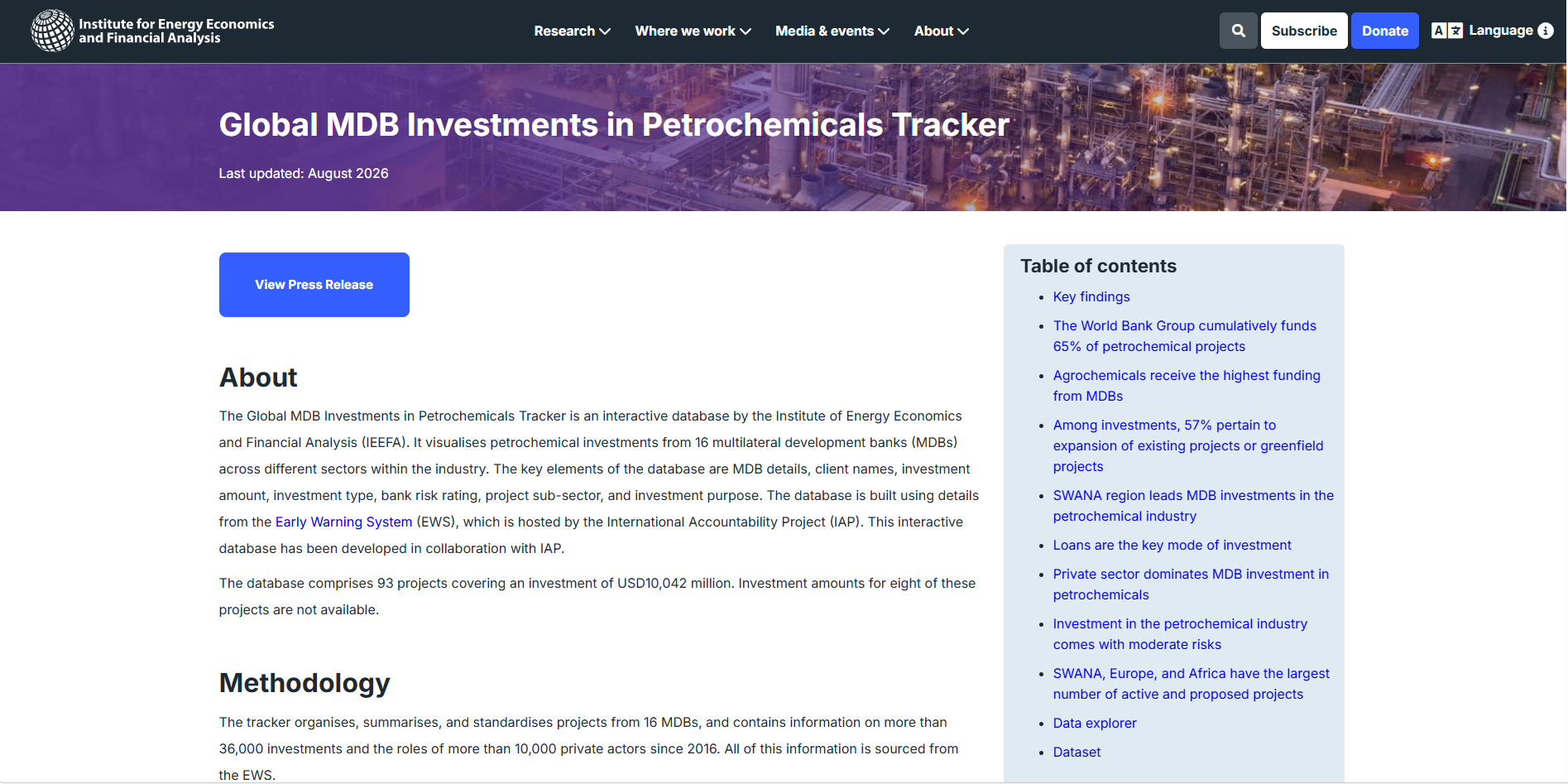
Global MDB Investments in Petrochemicals Tracker
An interactive database and map developed by IEEFA and IAP that tracks over USD 10 billion in petrochemical investments from 16 multilateral development banks, highlighting institutional exposure to fossil-fuel-intensive projects.
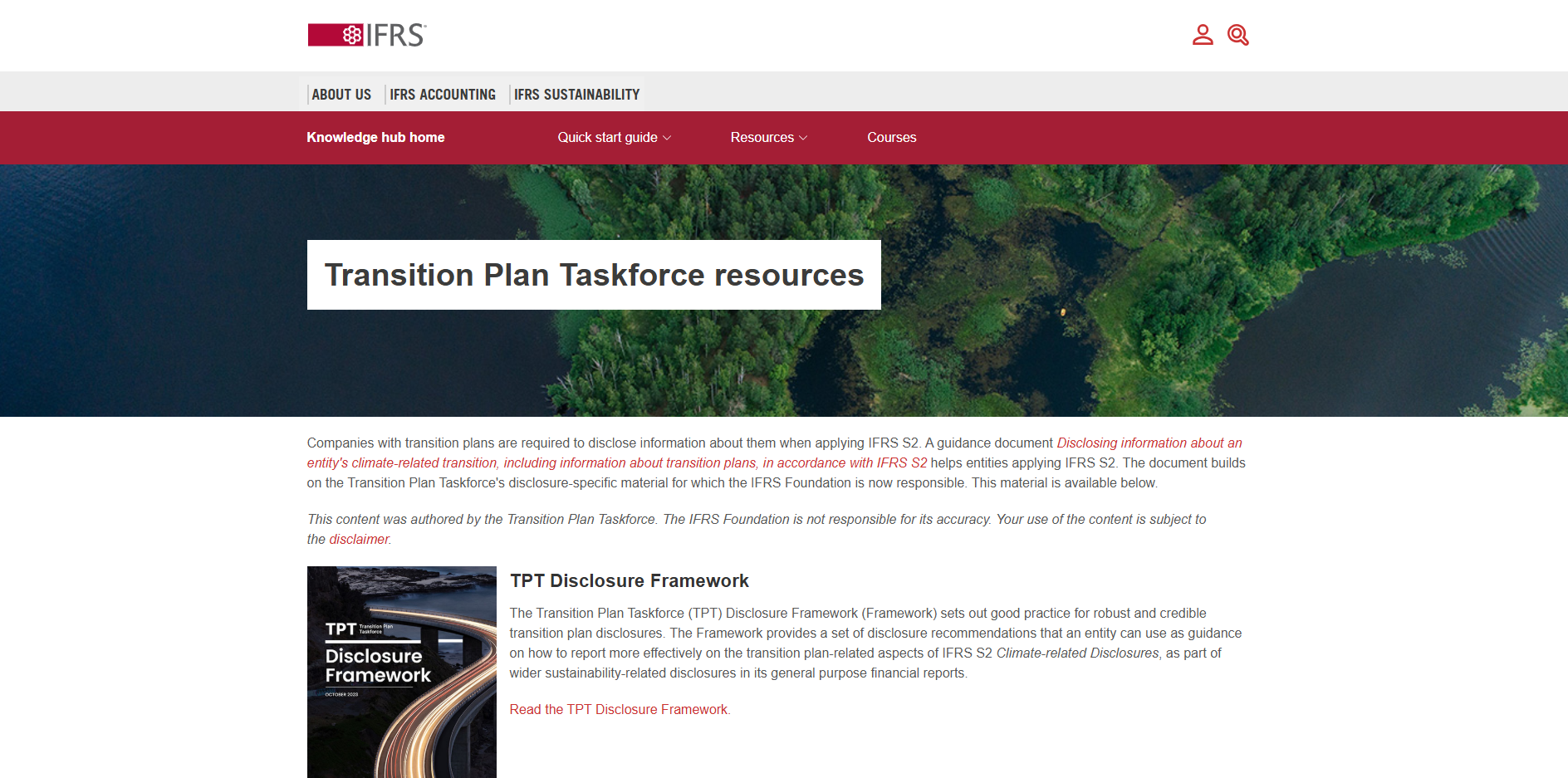
Transition Plan Taskforce Resources
A suite of guidance materials, including the TPT Disclosure Framework and sector-specific guides, designed to help organisations create and disclose robust climate transition plans in alignment with IFRS S2.
DERA Preismonitor
Published by the German Mineral Resources Agency (DERA), the Preismonitor provides monthly price tracking for over 80 mineral raw materials and 15 recycling materials. It serves as a vital tool for monitoring commodity market trends and assessing supply chain risks.
The Big Fix Resource Collection
The Big Fix is a resource hub from Resilience.org and the Post Carbon Institute focused on systemic resilience. It provides curated research and news to help professionals understand and navigate the interconnected ecological and economic challenges of the 21st-century polycrisis.
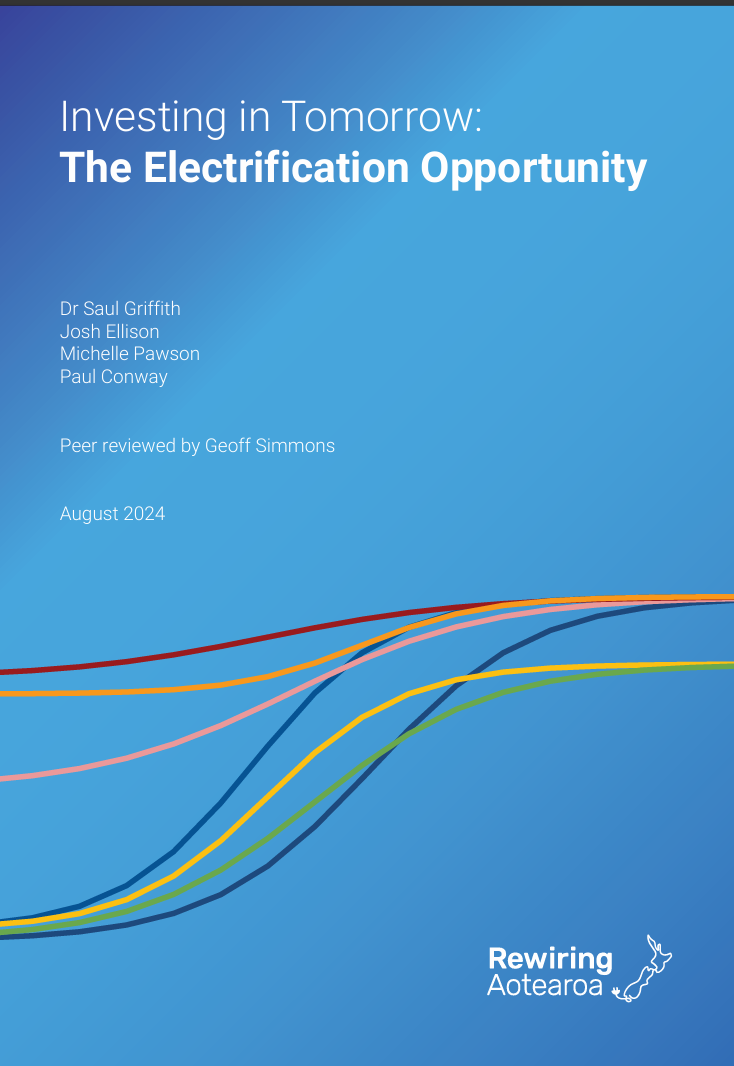
Investing in tomorrow: The electrification opportunity
New Zealand households and businesses could save $10.7 billion annually by 2040 through electrification. This report details how replacing fossil fuel appliances and vehicles with electric alternatives, supported by solar and batteries, reduces total energy use by 70% and provides cumulative national savings of $95 billion while substantially cutting emissions.
Hot summer economics: Economic effects of the hot European summer of 2026
This report examines the economic impact of the 2026 European heatwave, estimating a 1% reduction in EU-wide GDP. It details effects on labour productivity, agriculture, and energy sectors while warning of a 'doom loop' where climate damage leads to the weakening of environmental policies to protect short-term growth.

Super-duper El Nino and the bigger problem
This report analyses the 2026 super El Nino, identifying it as the strongest in the modern record. It discusses accelerating human-made global warming, the doubling of Earth’s energy imbalance, and severe health implications. Findings highlight that rising temperatures significantly increase mortality risks for vulnerable populations across Europe and Asia.

Urban planning for the circular economy: A spatial turn in theory and practice
This report examines how urban planning can operationalise the circular economy by addressing spatial dimensions. Drawing on European city experiences, it explores circular developments, infrastructure, land management and multi-level governance. It provides strategic directions for integrating circularity into core planning instruments to support systemic, territorially grounded transitions.

Weekly cat report: Review of global catastrophe activity
This series provides a weekly review of global catastrophe activity, covering meteorological events and preliminary financial loss estimates. It tracks natural disasters such as severe convective storms, flooding, and landslides across multiple regions to assist in risk assessment. This report is part of a regular series.

Oil market report series
This monthly series provides a comprehensive analysis of global oil market fundamentals, including supply, demand, refinery throughputs, and price developments. Produced by the International Energy Agency, it offers detailed data and forecasts to support evidence-based decision-making. This document is part of a benchmark series.
Optimal flood insurance in a second-best world: Fiscal spillovers, reclassification risk and moral hazard
This report evaluates the U.S. National Flood Insurance Program's transition to risk-based pricing. It finds that unintended consequences, such as increased ex post disaster spending and household exposure to climate uncertainty, outweigh moral hazard costs. The authors conclude that an optimal premium subsidy of 52% is required.
Systems stewardship: Managing interconnected climate risks for lasting value
This report examines how Australian investors apply systems stewardship to manage interconnected climate risks. It identifies key practices, such as collaborative engagement and policy advocacy, while highlighting barriers like resource constraints. Six recommendations are provided to help investors safeguard long-term returns and support a net-zero transition.


