
Library | ESG issues
Governance
The governance pillar in ESG (environmental, social, and governance) refers to the systems, policies, and practices that ensure an organisation is managed responsibly and ethically. It includes issues such as board structure, reporting & disclosures, shareholders & voting, and risk management. Strong governance reduces risks, enhances trust, and supports long-term business sustainability.
Refine
1881 results
REFINE
SHOW: 16


Bank for International Settlements
Bank for International Settlements (BIS) is an international financial institution owned by sixty-three central banks, which seeks to foster cooperation of central banks by conducting banking services and publishing research on monetary and financial stability.

Getting to green: Showcasing leading approaches to climate change within the European banking sector
Banks are affected by climate change and have the ability to make an impact through their support and finance of certain industries. Banks must start setting precedent for ambitious climate disclosure. This paper provides recommendations on how banks can align their business models with the goals of the Paris Agreement.

Financial Standard
Financial Standard is a media organisation focusing on providing trade news, investment analysis and education for finance industry professionals in Australia. They explore issues affecting various actors and professionals in the investment industry.
The European commission action plan: Financing sustainable growth
The report provides an explanation of the ten reform areas included in the European Commission Action Plan (2018), as well as possible impacts for investors. Four of these actions: taxonomy, disclosure and duties, benchmarks and investment advice were submitted as regulatory proposals to the European Parliament in 2018.

Commonwealth Climate and Law Initiative
Commonwealth Climate and Law Initiative (CCLI) is a research, education and outreach project focused within four Commonwealth countries: Australia, Canada, South Africa and the United Kingdom. It examines the legal basis and obligations that directors and trustees have in response to climate change risk.

Directors' liability and climate risk: Comparative paper - Australia, Canada, South Africa and the United Kingdom
The report provides a high-level legal analysis of directors' duties that relate to climate risk in four major Commonwealth countries: Australia, Canada, South Africa and United Kingdom. It captures the evolving priorities of organisations and their need to provide greater transparency on climate risks.
Australian Institute of Health and Welfare
Australian Institute of Health and Welfare produces authoritative statistics and information which is publicly accessible. The data is widely used by government, researchers, policymakers and the community to improve policies and services around Australia’s health and welfare.

Clean Energy Council
The Clean Energy Council is the peak body for the clean energy industry in Australia. It is a not-for-profit, membership-based organisation, that represents and works with Australia's leading renewable energy and energy storage businesses, as well as rooftop solar installers, to further the development of clean energy in Australia.

Investing with an LGBTQI lens: Rethinking gender analysis across investing fields
Produced with the support of Dreilinden gGmbH, a German Lesbian, gay, bisexual, transgender, queer, and intersex (LGBTQI) funder and impact investor, this guide sets out a theoretical grounding demonstrating why LGBTQI lens is germane to investment decision making and providing the tools needed to conduct financial analyses.

Investor toolkit: Human rights with focus on supply chains
The purpose of this toolkit is to help investors to engage constructively with the intention to encourage better practice from companies, thereby reducing human rights risks in supply chains. This toolkit focuses on practical engagement points with a business rationale.
In pursuit of deep impact and market-rate returns: KL Felicitas Foundation's journey
The report is an update of NPC’s 2015 review of the KL Felicitas Foundation, Investing for impact: Practical tools, lessons, and results. It explores how the KL Felicitas Foundation’s impact investing portfolio balances social impact with financial return.

New Philanthropy Capital
New Philanthropy Capital (NPC) is a consultancy think tank dedicated to helping the social sector make the most of its resources to help donors make more informed decisions on how to achieve the greatest possible impact.

Measuring the economic impact of short-termism
Measures corporate long- and short-termism systematically. Assesses and quantifies the effects of each approach on corporate financial performance and microeconomic growth. Findings show that long-term approaches outperform short-term companies on key economic and financial metrics.
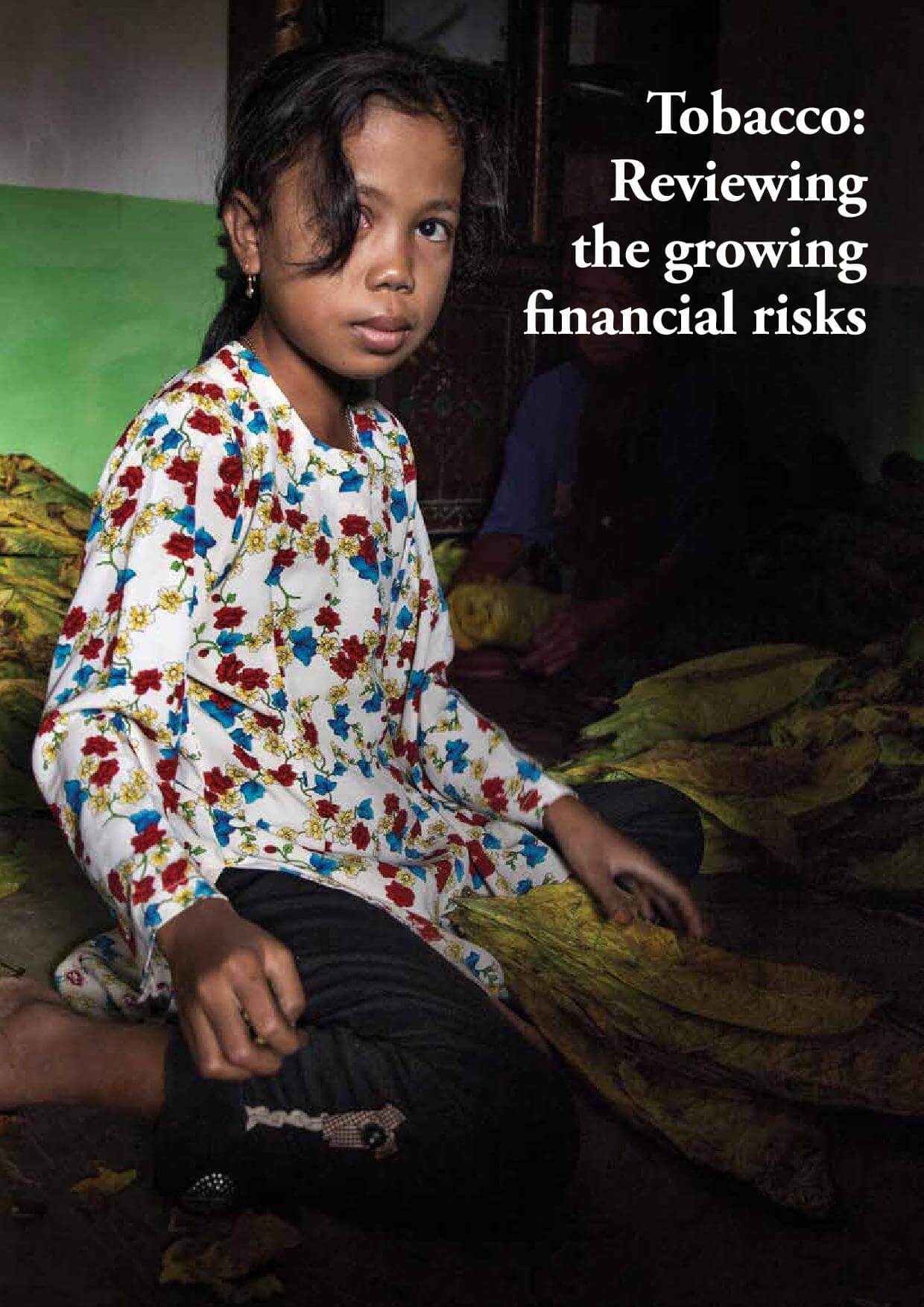
Tobacco: Reviewing the growing financial risks
Addresses the performance declines in the tobacco industry and presents evidence of how it can be a financial risk for investors. It examines industry trends and outlooks in the context of varying future scenarios and provides recommendations to support future investment decisions.

Scaling finance for the Sustainable Development Goals
Explores the role of corporate partnerships and financial intermediaries that can scale finance and increase capital and activities in regions that are key for the realisation of the Sustainable Development Goals (SDGs). Through case studies, it illustrates various pathways for capital markets to maximise SDG investments at acceptable risk levels.

Paris Agreement
The Paris Agreement is an agreement between Parties to the United Nations Framework Convention on Climate Change that recognises the need to address climate change through adaptation and mitigation measures as a nationally and internationally collaborative effort. Parties agreed to keep global temperature rises to below 2°C above pre-industrial levels.


