
Library | ESG issues
Risk Management
Risk management is the process by which organisations identify, assess, prioritise and respond to threats to their objectives. In sustainable finance it extends conventional financial risk to cover environmental, social and governance exposures, including physical and transition climate risk, nature dependencies, human rights liability and conduct risk. Many of these are long dated, systemic and poorly captured by traditional models. Sound practice connects risk identification to governance, disclosure and capital allocation rather than treating it as a reporting exercise.
Team Altiorem recommends


Refine
328 results
REFINE
SHOW: 16


Flood risk, insurance, and housing in the United States
This research provides household-level estimates of flood risk exposure across socioeconomic groups in the US. It reveals that high-income households own a disproportionate share of floodplain property wealth, whilst a vulnerable subset of low-income, uninsured homeowners faces severe financial risks from flood damage and rising insurance premiums.

Frontier AI auditing: Toward rigorous third-party assessment of safety and security practices at leading AI companies
This report proposes a rigorous framework for third-party auditing of frontier AI systems to verify safety and security claims. Addressing the opacity of current self-assessments, it advocates for structured AI Assurance Levels, deep access to non-public information, and continuous monitoring to enable confident deployment and standardisation across the industry.
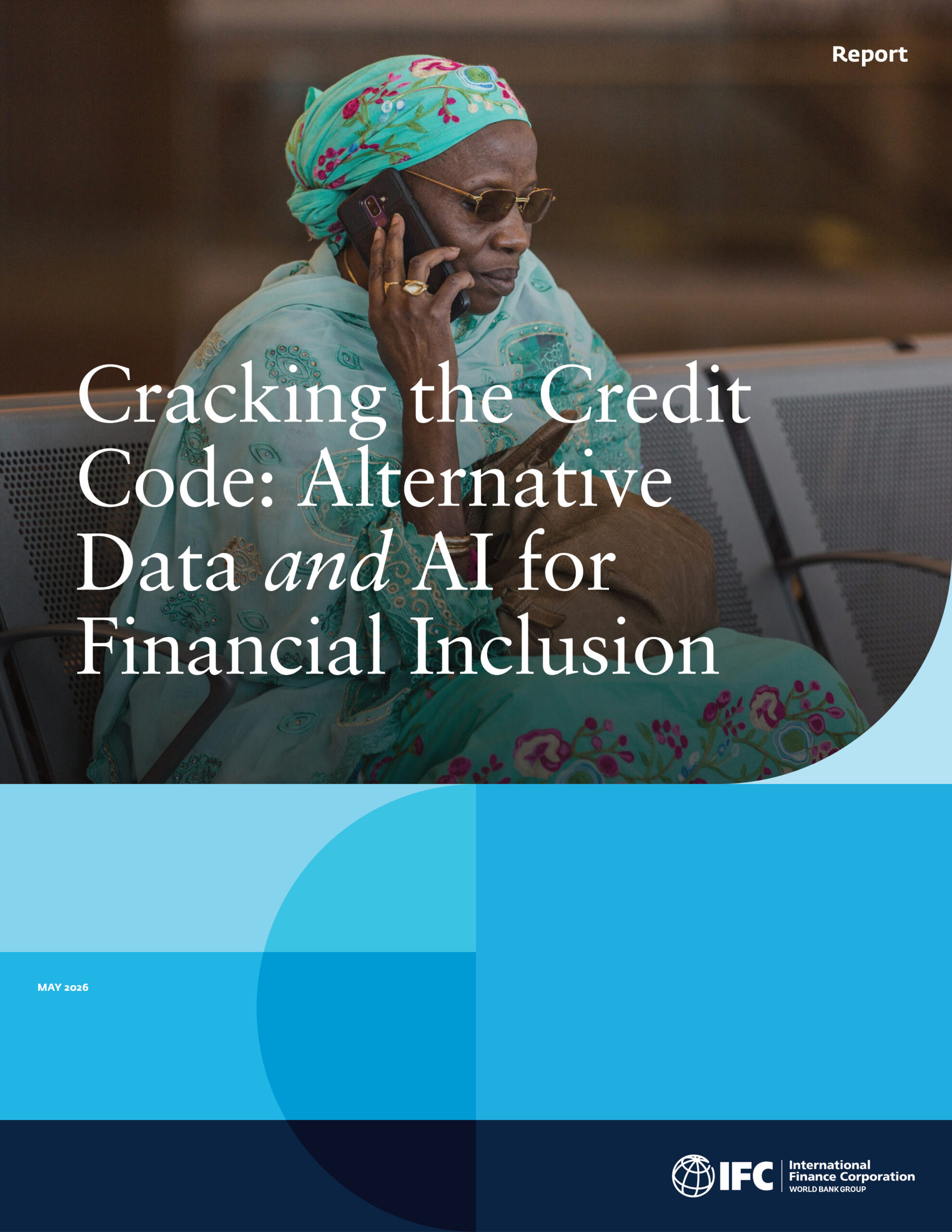
Cracking the credit code: Alternative data and AI for financial inclusion
This report explores how alternative data and artificial intelligence are redefining credit scoring to enhance financial inclusion for women and underserved borrowers. It analyses market trends, evaluates the risks of algorithmic bias, and provides actionable recommendations to scale responsible, inclusive credit access across emerging markets.
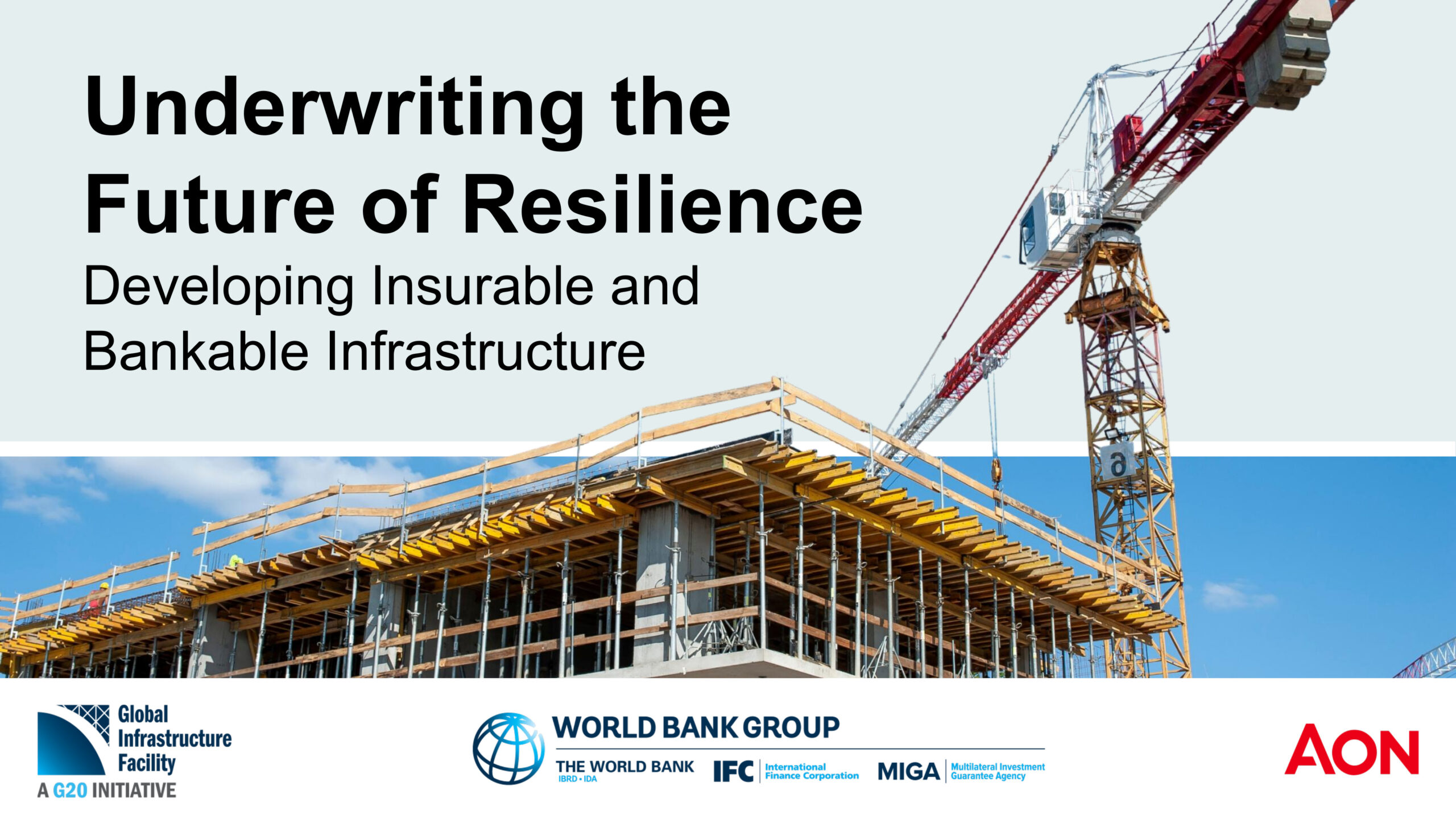
Underwriting the future of resilience: Developing insurable and bankable infrastructure
This report explores how the insurance industry assesses physical climate risks for new social infrastructure projects. It identifies five key enablers to integrate climate resilience across project lifecycles, advocating for early stakeholder engagement and forward-looking risk assessments to ensure long-term asset insurability, bankability, and value in a changing climate.
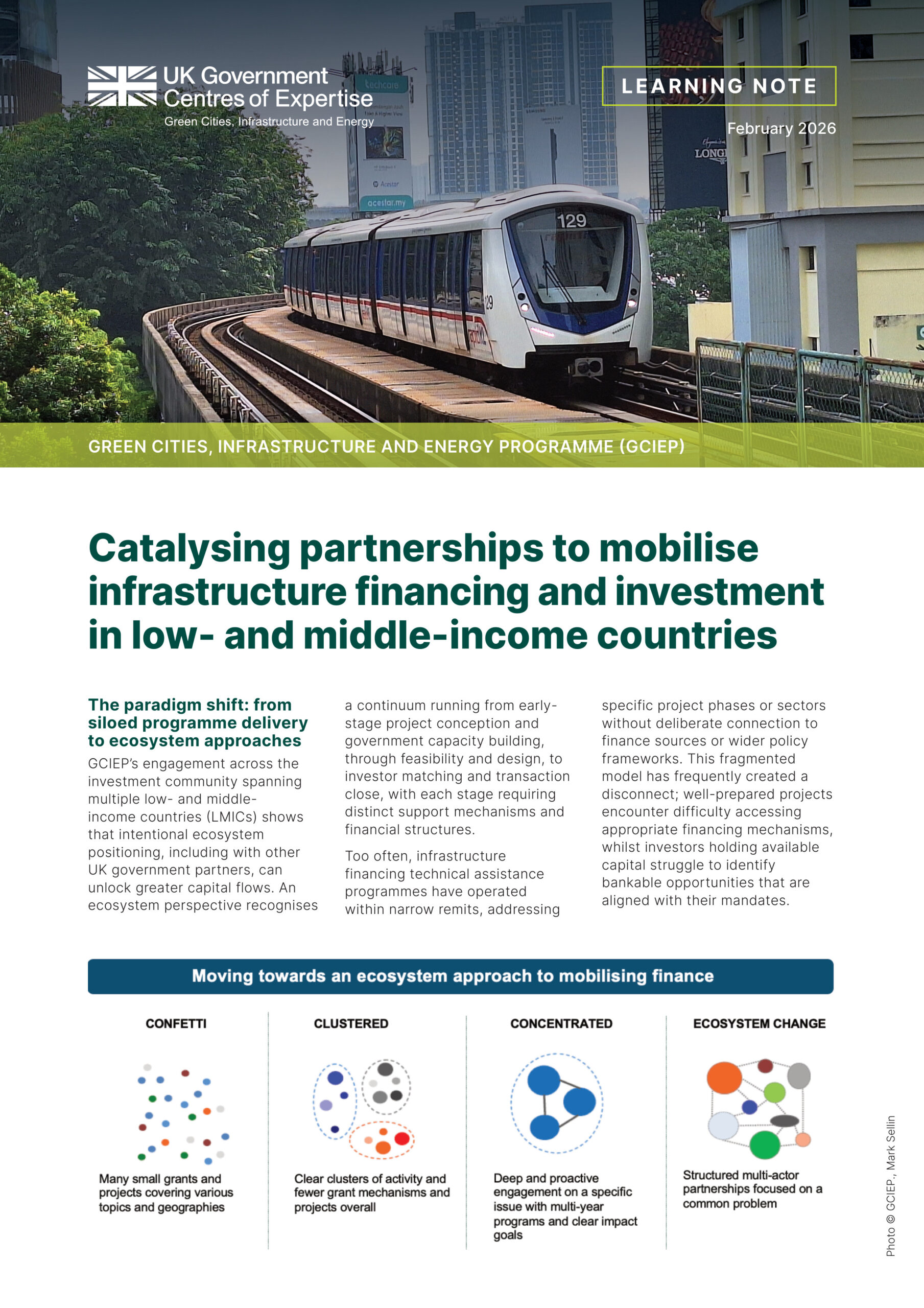
Catalysing partnerships to mobilise infrastructure financing and investment in low- and middle-income countries
This learning note explores how an ecosystem approach to infrastructure financing can mobilise capital in low- and middle-income countries. It highlights the importance of early finance engagement, de-risking mechanisms, and integrated partnerships to transform technically sound projects into commercially viable investments.
What can investors do about climate change?
This report explores the evolving role of investors in addressing climate change. Drawing on insights from major asset managers, it advocates shifting from market-led targets to a policy-led approach. Investors are advised to focus on realistic stewardship, pragmatic objective-setting, and policy advocacy to effectively manage climate-related financial risks.

Climate Financial Risk Forum (CFRF)
Climate Financial Risk Forum (CFRF) is a UK financial services industry initiative, jointly established by Financial Conduct Authority (FCA) and Prudential Regulation Authority (PRA) in 2019. CFRF brings senior leaders together to develop practical climate-related financial risk management guidance, tools and case studies for banks, insurers and asset managers.

KPMG Australia
KPMG Australia (KPMG) is a professional services firm delivering audit, tax and advisory solutions across sectors including government, mid-market, and private business in Australia. With over 10,000 people and more than 600 partners, KPMG combines integrity-led service with digital-driven expertise in strategy, consulting and risk management.

DBS Bank
DBS Bank India is a digital-led universal bank offering personal, SME, corporate and wealth management services. Features include resident and non-resident (NRI) savings and fixed deposit accounts, remittance, loans, digital payments and credit/debit card solutions. Positions as Asia’s safest bank with a wide India branch network.

Government of Singapore Investment Corporation (GIC)
GIC (Government of Singapore Investment Corporation) is a global long-term sovereign investor managing Singapore’s foreign reserves. Established in 1981, it delivers disciplined, diversified portfolio management across equities, fixed income, real estate and infrastructure. Committed to preserving and enhancing long-term purchasing power, GIC emphasises risk management and sustainable investing.

Howden Group
Howden Insurance Brokers Australia is a global insurance intermediary offering tailored insurance and risk management solutions for businesses and individuals. With offices across Australia and access to international markets, Howden provides services in corporate risks, people risk, private clients, and alternative risk solutions. Their employee-owned model fosters a client-focused approach, delivering personalised service backed by global expertise.
Drova’s ESG stakeholder materiality assessment
Drova’s ESG Stakeholder Materiality Assessment is a digital tool designed to identify and prioritise environmental, social, and governance issues relevant to an organisation and its stakeholders. Aligned with frameworks such as the Global Reporting Initiative (GRI), it facilitates stakeholder engagement and produces a materiality matrix to inform sustainability strategy. The platform streamlines the assessment process, reducing time and cost compared to traditional methods.
UNEP FI's human rights screening and risk assessment: investment and lending operations
The UNEP FI Human Rights Screening and Risk Assessment tool provides financial institutions with a structured framework to identify and evaluate human rights risks at both portfolio and transaction levels. It aligns with the UN Guiding Principles and OECD guidance, promoting integration of human rights considerations into investment and lending operations.
Accountability Framework
The Accountability Framework guides financial institutions on how to establish policies for responsible lending and investment in the food, agribusiness, and forestry sectors. It also helps financial institutions to screen and engage their clients and portfolios to fulfil these policies. It also assists with assessing environmental and social risk and performance in investment portfolios, and supports company engagement.
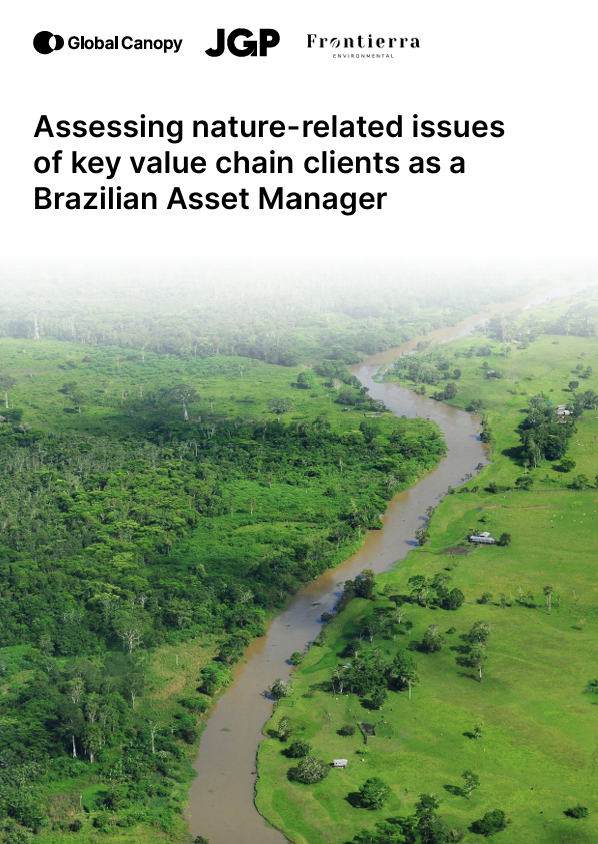
Assessing nature-related issues of key value chain clients as a Brazilian Asset Manager
This case study details JGP's participation in piloting the Taskforce on Nature-related Financial Disclosures (TNFD) LEAP approach. The study focuses on assessing JGP's exposure to tropical deforestation through companies connected to the agriculture sector in its investment portfolio.
Environmental Finance's biodiversity insight series
This series explores the evolving role of biodiversity in sustainable finance, investment strategies, and regulatory developments. It examines biodiversity risk, natural capital investment, reporting frameworks, and financial instruments supporting conservation efforts. The series provides insights into emerging market mechanisms, data challenges, and the integration of biodiversity considerations into financial decision-making.


