
Library | ESG issues
Risk Management
Risk management is the process by which organisations identify, assess, prioritise and respond to threats to their objectives. In sustainable finance it extends conventional financial risk to cover environmental, social and governance exposures, including physical and transition climate risk, nature dependencies, human rights liability and conduct risk. Many of these are long dated, systemic and poorly captured by traditional models. Sound practice connects risk identification to governance, disclosure and capital allocation rather than treating it as a reporting exercise.
Team Altiorem recommends


Refine
482 results
REFINE
SHOW: 16


Achieving effective AI governance: From theory to practice. An investor perspective on managing AI risks
This report provides a framework for investors to manage AI-related risks in portfolio companies. It outlines material risks, categorises company significance, and introduces the AI Governance Framework. The document encourages collective action through engagement, voting, and policy advocacy to promote responsible AI development across various industrial sectors.
Climate risks are economic risks: Adaptation outcomes for Financial Institutions
A resource from Climate Policy Initiative designed to help financial institutions track progress and assess the quality of adaptation and resilience finance while managing physical climate risks.
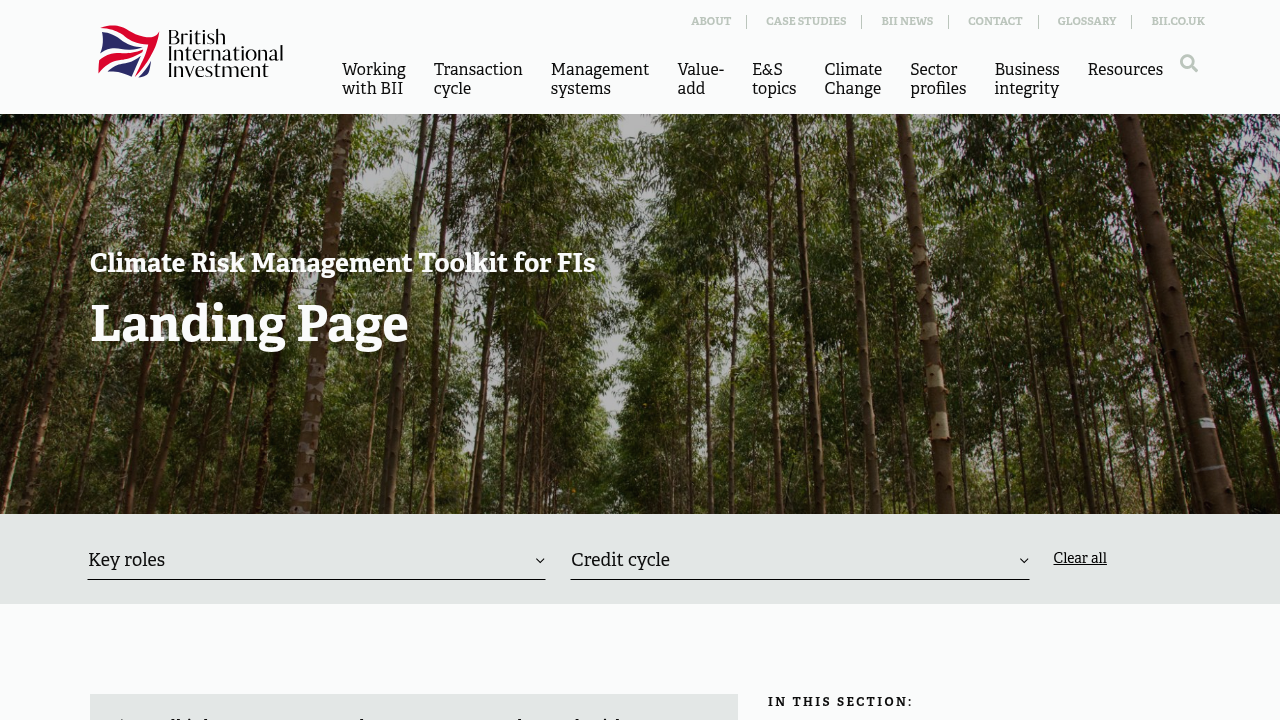
Climate Risk Management Toolkit for Financial Institutions
Developed by British International Investment, this toolkit helps financial institutions in emerging markets embed climate risk management into governance, lending, and portfolio monitoring in alignment with TCFD standards.
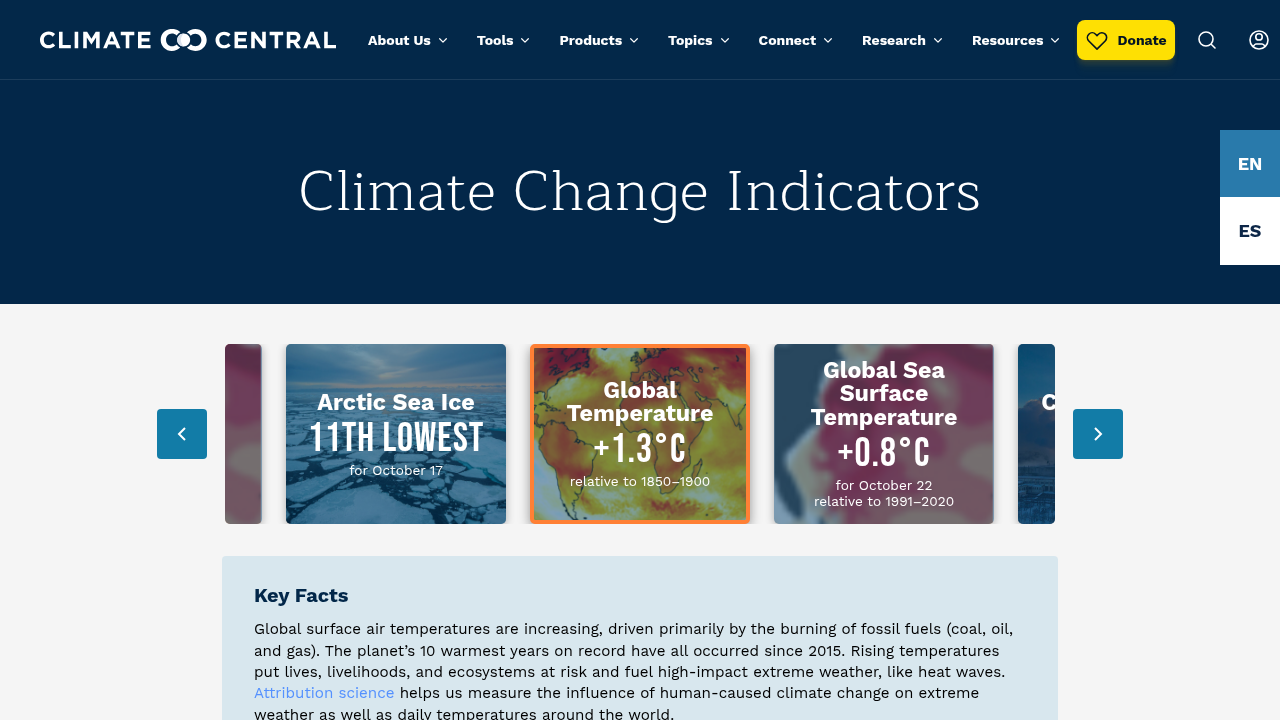
Climate Change Indicators Dashboard
A real-time global dashboard from Climate Central providing data visualisations on key climate indicators, attribution science, and extreme weather impacts to help professionals assess environmental risks and infrastructure vulnerability.
MIT AI Risk Repository
The MIT AI Risk Repository is a comprehensive database of over 1,600 AI risks and real-world incidents. It provides frameworks and data to help finance professionals and organisations identify, prioritise, and manage technical, social, and regulatory risks associated with artificial intelligence.
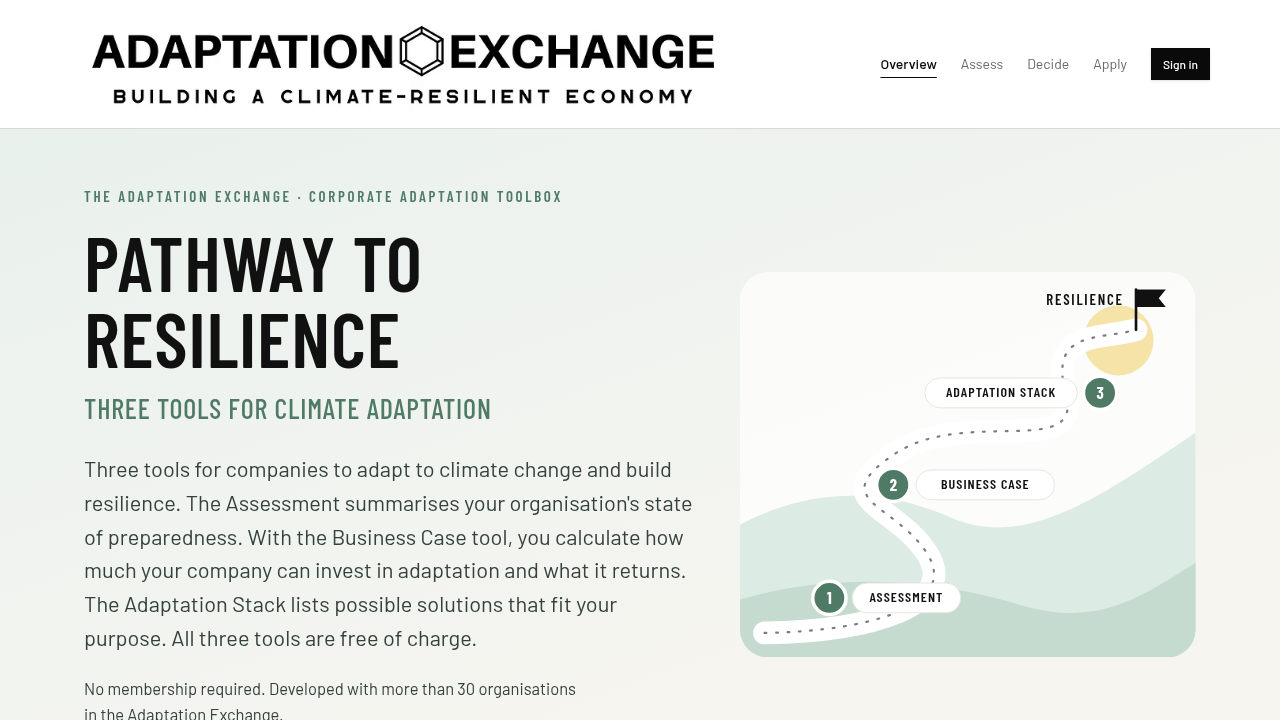
Adaptation Toolbox
The Adaptation Toolbox, developed by The Adaptation Exchange, provides three free tools to help companies assess climate preparedness, quantify the financial business case for adaptation, and discover technical resilience solutions for physical climate risks.
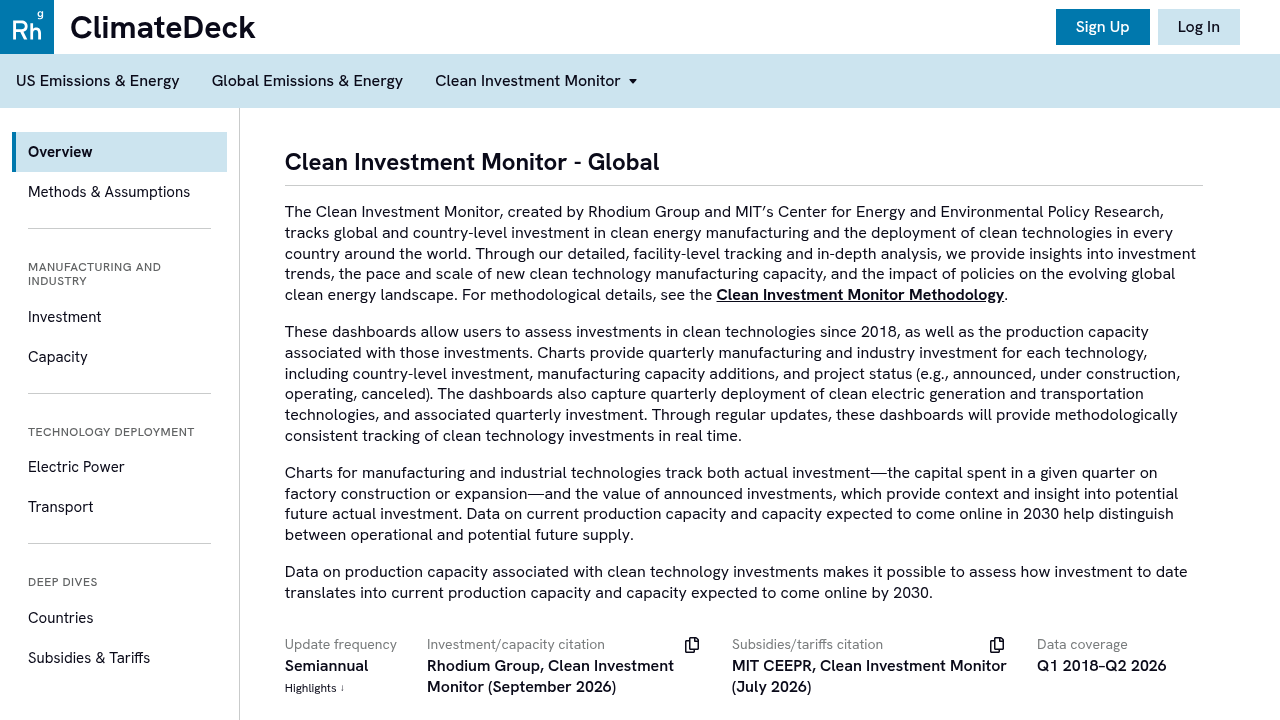
ClimateDeck
ClimateDeck is a data platform by Rhodium Group providing global clean energy investment tracking, greenhouse gas emissions inventories, and energy market forecasts to support climate risk analysis.
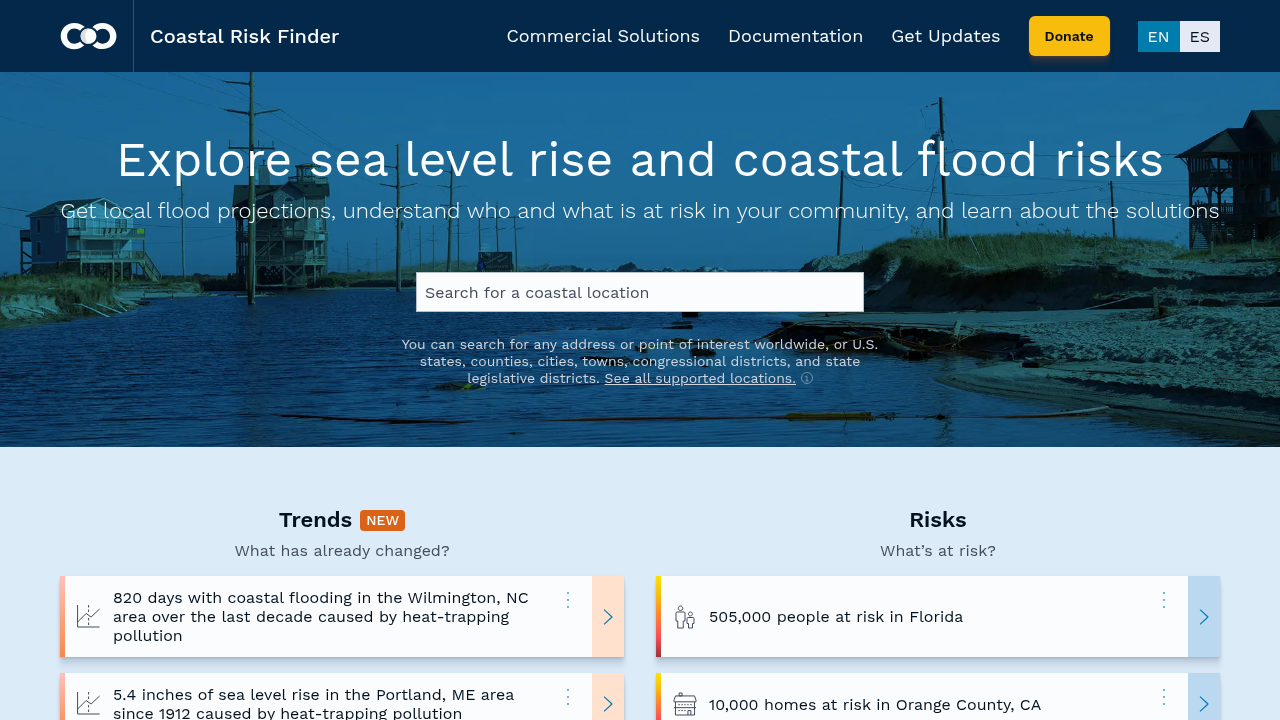
Coastal Risk Finder
Coastal Risk Finder is an interactive mapping tool by Climate Central that provides localized sea level rise and flood risk projections. It helps users assess geographic vulnerability and population exposure through 2100.
Global climate investing survey series
Robeco’s Global Climate Investing Survey is an annual research series examining institutional and wholesale investors’ approaches to climate change and sustainable investing. It explores climate-related risks and opportunities, net-zero commitments, portfolio decarbonisation, investment strategies, active ownership and climate transition finance, alongside evolving regulatory and market conditions.
Too hot to work? How rising heat affects companies, productivity and economic output
This MSCI research explores the economic impact of rising temperatures on labour productivity. It estimates global annual losses of USD 3.9 trillion under current conditions, potentially reaching 3.3% of global GDP. Asia-Pacific and the real estate sector face the highest risks, while company adaptation remains inconsistent across global markets.
Investing in a climate resilient Australia: The role of the Australian Sustainable Finance Taxonomy
This report explores expanding the Australian Sustainable Finance Taxonomy to include climate adaptation and resilience. It outlines the economic necessity of strategic investment to mitigate rising climate costs and provides detailed use cases for financial institutions, corporates, and government to mobilise private capital and enhance Australia's economic stability.
State of blended finance series
State of Blended Finance is a research series examining how public, philanthropic and private capital combine to finance sustainable development in emerging markets. It analyses transaction structures, investor participation, capital mobilisation, development impact, market trends and barriers to scaling blended finance.
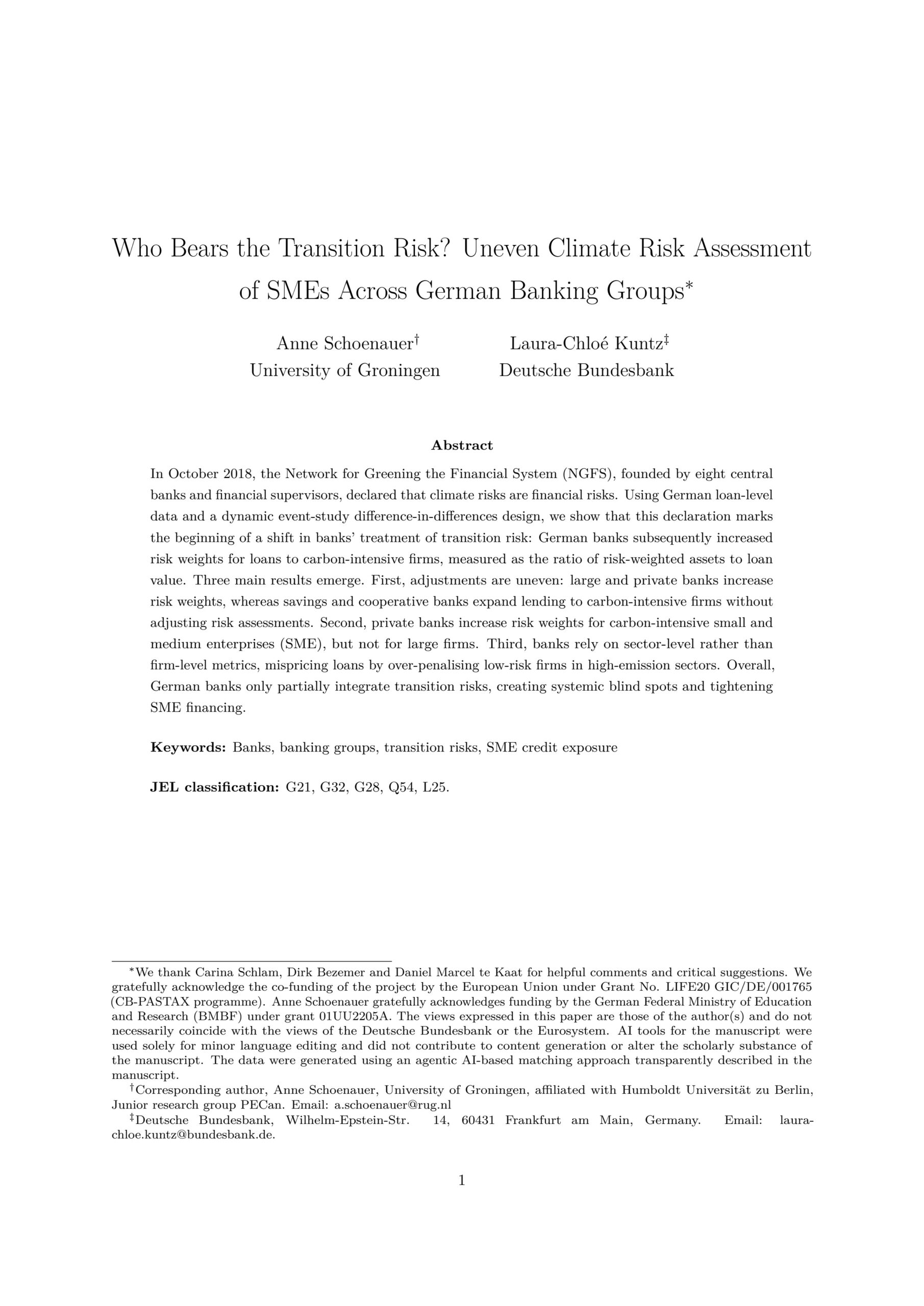
Who bears the transition risk? Uneven climate risk assessment of SMEs across German banking groups
This report examines how German banks assess climate transition risks, specifically for SMEs. It finds that private banks significantly increased risk weights for carbon-intensive firms after 2018, while cooperative and savings banks did not. The reliance on sector-level metrics suggests potential loan mispricing and systemic risks within regional banking groups.
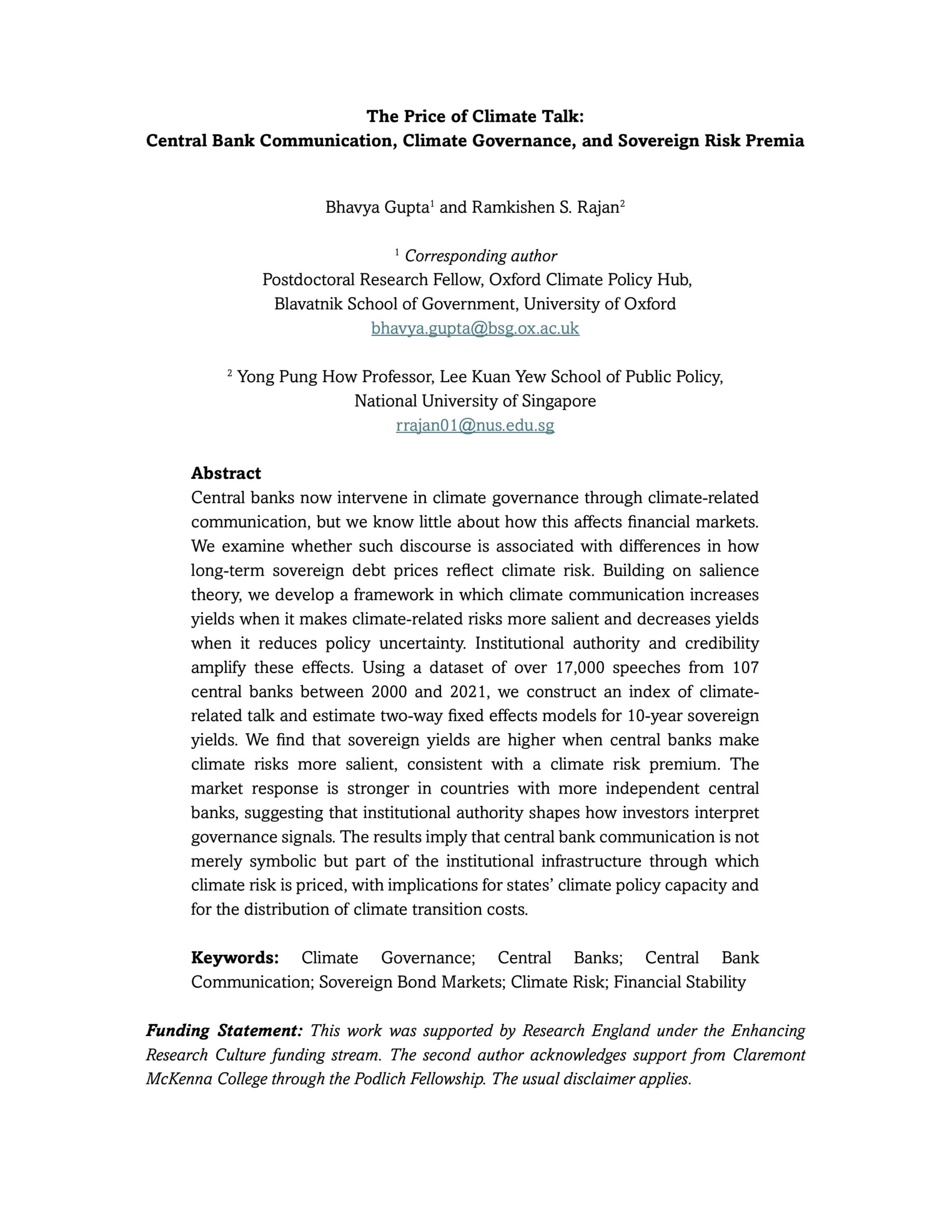
The price of climate talk: Central bank communication, climate governance, and sovereign risk premia
This research examines how central bank climate communication affects 10-year sovereign bond yields. Using a dataset of over 17,000 speeches, it finds that climate-related discourse increases yields by making risks more salient. This effect is stronger in countries with independent central banks, reflecting the role of institutional credibility.
Climate governance under pressure: The Anti-ESG movement’s impact on Canadian institutional investors
This report analyses the impact of the US anti-ESG movement on Canadian institutional investors. It examines governance challenges in integrated markets, shifts in proxy voting, and regulatory changes. Despite political spillover, the analysis highlights the resilience of Canadian legal frameworks and the ongoing commitment to climate-risk oversight.
From catch to cash: Four seafood giants could increase operating profit by 2% to 9% via improved traceability
This report analyses the financial benefits of digital traceability for seafood giants Nissui, Umios, Thai Union, and Nomad Foods. It finds that investing in full-chain, interoperable systems could increase operating profits by 2% to 9% by reducing costs, mitigating regulatory risks, and enhancing brand reputation through improved sustainability data.


