
Library | ESG issues
Systemic Risk Management
Systemic risk refers to the possibility that an event at the company level could trigger severe instability or collapse in an entire industry or economy. It extends beyond individual failures, encompassing large-scale threats such as climate change, natural disasters, inflation, geopolitical crises, and pandemics. Effective systemic risk management requires proactive monitoring, regulatory safeguards, and resilience strategies to mitigate risks and ensure financial stability in an increasingly complex and uncertain global landscape.

Refine
390 results
REFINE
SHOW: 16


Bridging climate and credit risk: Current approaches and emerging trends for climate-related credit risk assessment methodologies—insights from a global survey
This report examines findings from a survey of 32 global banks on climate-related credit risk assessment. It highlights progress in probability of default modelling and widespread adoption of NGFS scenarios, while identifying persistent challenges in data reliability, technical expertise, and the quantification of financial impacts on capital requirements.
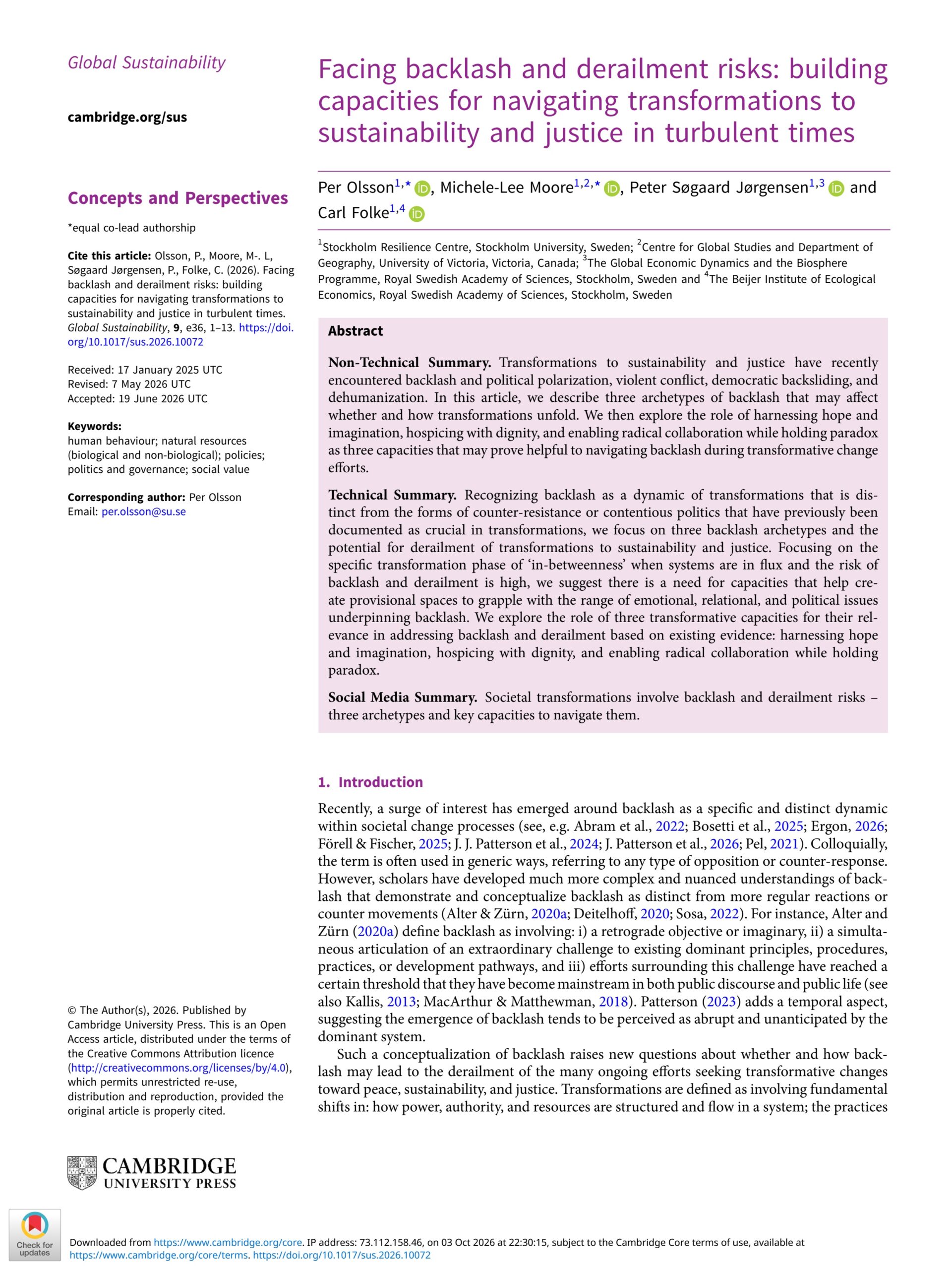
Facing backlash and derailment risks: Building capacities for navigating transformations to sustainability and justice in turbulent times
This research article identifies three backlash archetypes that threaten to derail sustainability and justice transformations during critical transition phases. To navigate these risks, the authors propose developing three transformative capacities: harnessing hope and imagination, hospicing with dignity, and enabling radical collaboration while holding paradoxes.
Ocean investment protocol: A multi-stakeholder plan to enable funding for the sustainable ocean economy
This report outlines a multi-stakeholder framework to accelerate funding for a sustainable ocean economy. It provides specific recommendations for financial institutions, insurers, and governments to manage systemic risks and mobilise the estimated one trillion dollars in additional finance required by 2030 to meet global climate and biodiversity targets.
First Street Research Library
The First Street Research Library provides transparent, peer-reviewed reports and climate risk data focused on flooding, fire, and heat. It helps finance professionals quantify physical risks and their economic impacts.
Collaboration in action: How to collectively work towards systems change
This report examines how diverse capital providers collaborate to achieve systems change. It identifies catalytic capital as a pivotal tool for de-risking investments and mobilising private funds. Key findings highlight the necessity of trust, long-term partnerships, and shared metrics to overcome structural barriers and address the $4 trillion SDG financing gap.
UDB Currency Risk-Sharing Facility: Instrument design report
The UDB Currency Risk-Sharing Facility manages foreign exchange risks for climate lending in Uganda. By combining partial hedging with tail-risk guarantees, it offers a cost-effective alternative to traditional instruments. This facility enables affordable local-currency financing while protecting the bank's balance sheet against significant Ugandan shilling depreciation.
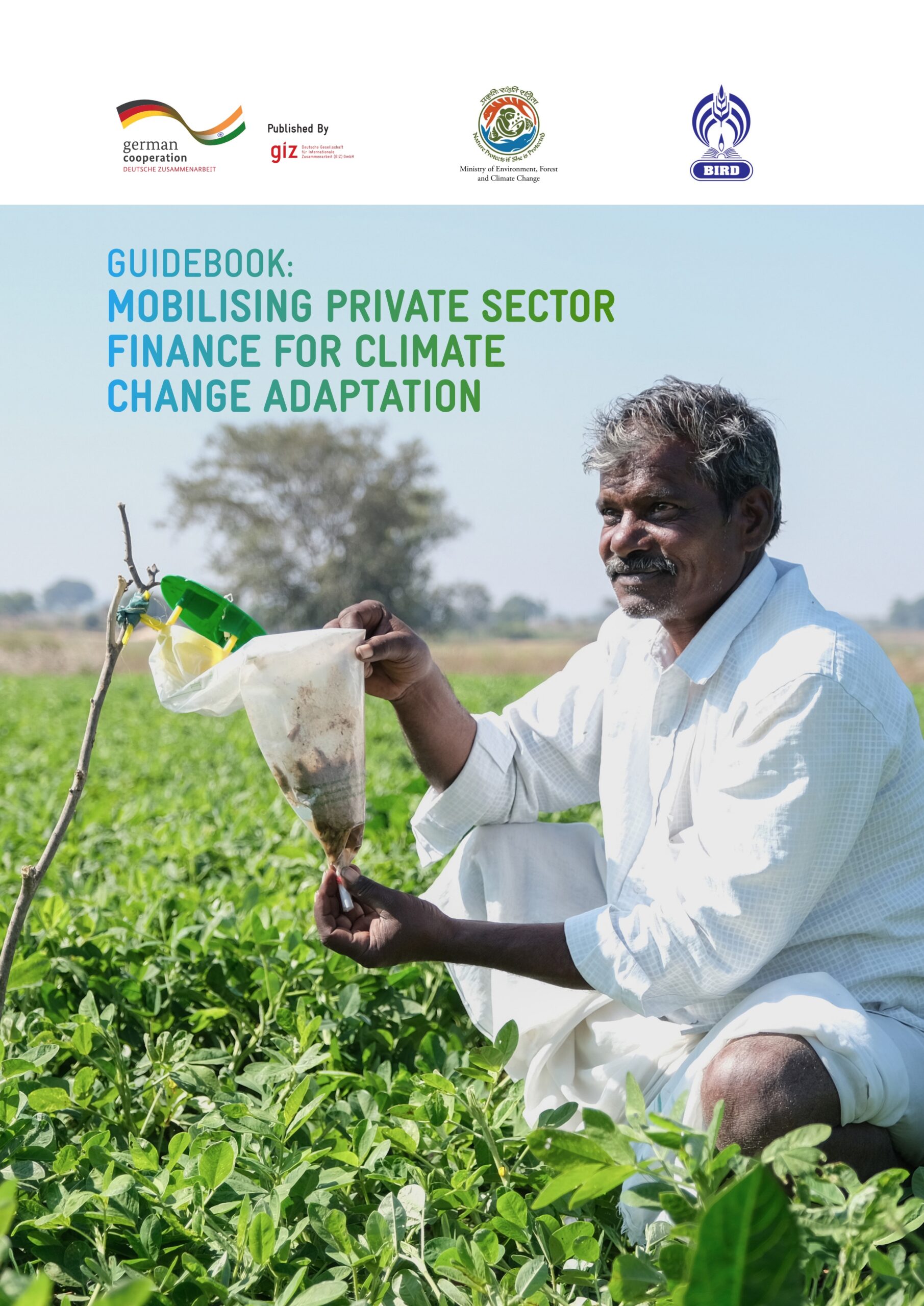
Guidebook: Mobilising private sector finance for climate change adaptation
This guidebook provides a structured framework for designing and financing climate change adaptation projects in India. It addresses barriers to private sector participation, offers methodologies for risk and impact assessment, and explores diverse funding mechanisms, including blended finance, green bonds, and catastrophe insurance, to bridge the significant adaptation funding gap.
From planetary hazard to financial stability: Disentangling climate risk and institutional responsibility
This report identifies the misalignment between institutional mandates and climate risk expectations. It distinguishes between planetary, economic and financial risks, outlining six distinct responses. The authors argue that current frameworks distract from real-economy decarbonisation and shift climate costs onto public balance sheets, requiring clearer policy distinctions and instruments.
Sovereign risk ceilings: Rethinking methodology through risk disaggregation
This report critiques sovereign ceiling practices in credit ratings for emerging market infrastructure. It proposes a disaggregated framework to assess eight specific transmission channels and mitigants, arguing that empirical data shows high survival rates for well-structured projects during sovereign crises, contrary to current blanket rating caps.
The age of interconnected risks: How interdependencies are shaping the next generation of systemic crises
This report examines rising systemic vulnerabilities driven by interconnected financial, digital, natural, and socio-economic risks. It highlights the gap between market pricing and actual risk, noting how AI, climate change, and geopolitical fragmentation amplify potential crises. It proposes collaborative monitoring and expanded risk-transfer capacity to strengthen global resilience.
Reframing financial markets as complex systems: Tools for systemic risk analysis, portfolio management, and system-level investing
This report explores financial markets as complex adaptive systems, advocating for modelling techniques like agent-based models and network theory. It highlights how these tools improve systemic risk analysis and portfolio management by capturing non-linear behaviours, herding, and interconnectedness, providing a framework for more resilient and adaptive global financial systems.
Expanding the investible market for adaptation: The value and path for institutional investors
This report examines the business case for institutional investors to prioritise climate adaptation. It identifies a multi-billion dollar annual financing gap and outlines how resilience expertise enhances investment performance. A framework of recommendations is provided to help investors navigate asset, network, and economy-level resilience within the Australian context.

Collection of Open-Access CARMINE Publications
A comprehensive repository of open-access research and deliverables from the CARMINE project, providing advanced climate-risk assessment methodologies and case study data to support environmental resilience and informed financial risk analysis.
Reconsidering supply chains and industrial policy from the economic security perspective
This report analyses supply chain resilience and industrial policy through the lens of economic security. It evaluates market failures in supply chain investment, examines cases of Chinese economic coercion, and assesses Japanese semiconductor subsidies for TSMC and Rapidus, emphasizing the roles of diversification, existing industrial clusters, and international research collaboration.
Role of Japanese firms in the East Asian electronics industry: A supply chain network perspective
This research analyses Japan's position in the East Asian electronics supply chain using network science. While Japan remains a vital upstream supplier of components and equipment, its dominance in mainstream semiconductors has declined. Conversely, Japanese firms maintain strong leadership within automotive clusters and unique electronics-automation-utilities ecosystems.
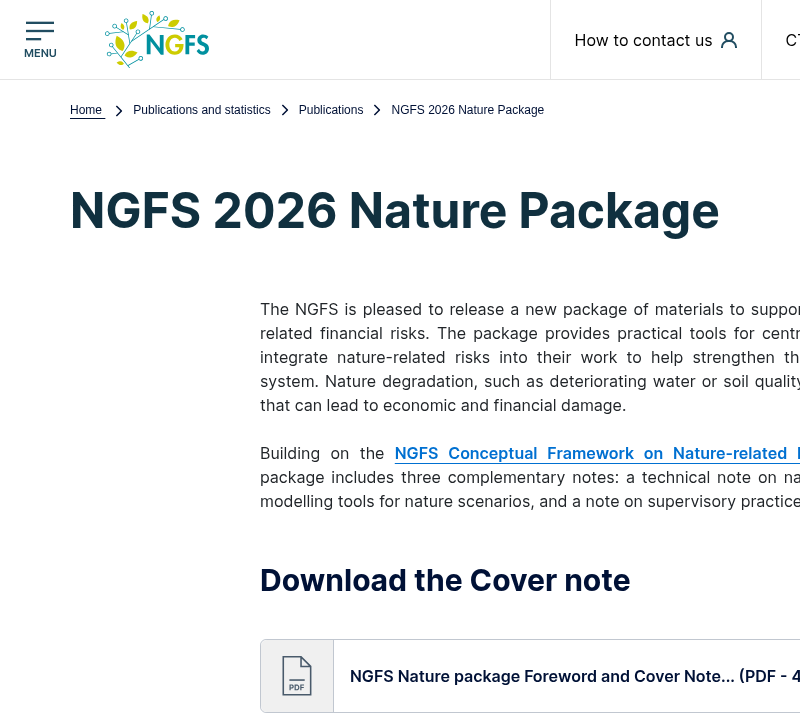
NGFS 2026 Nature Package
The NGFS 2026 Nature Package offers central banks and supervisors practical tools to integrate nature-related risks into financial stability assessments and macroeconomic modelling.


