Introduction
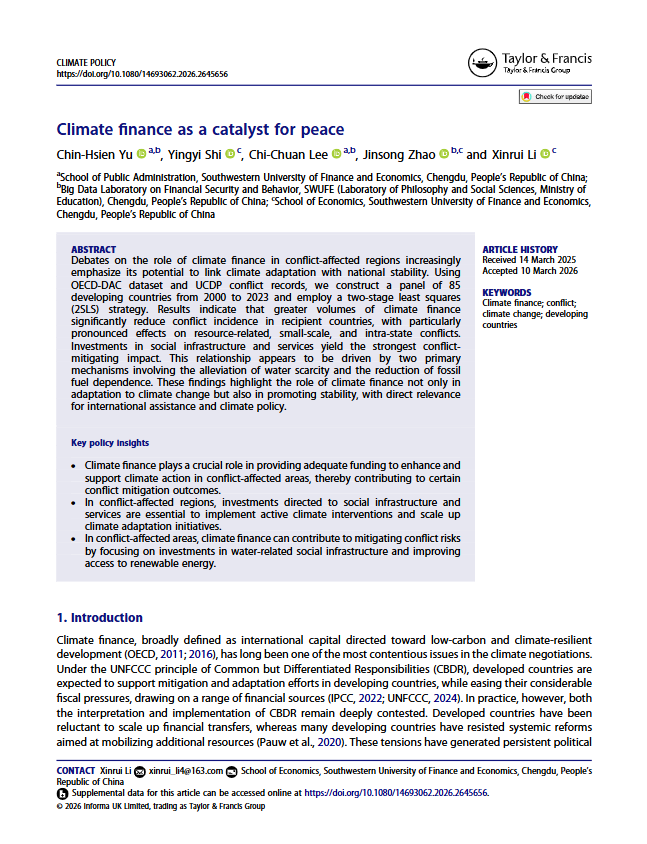
The paper examines whether climate finance can reduce conflict risk in developing countries. Climate finance is framed as funding for low-carbon and climate-resilient development, with relevance beyond adaptation due to links between climate stress, resource scarcity and instability.
Literature review
The study positions climate change and resource scarcity as conflict “threat multipliers”. Prior evidence on aid and conflict is mixed, as external funding can either ease pressures or intensify competition. The authors argue climate finance differs from reactive aid because it can reduce vulnerabilities before shocks escalate.
Data and identification strategy
The analysis uses OECD-DAC climate finance data and UCDP conflict records across 85 developing countries from 2000 to 2023. A two-stage least squares approach is applied to address endogeneity, including reverse causality and omitted variables.
Empirical results and discussion
Higher climate finance volumes are associated with significantly lower conflict incidence in recipient countries. Effects are strongest for resource-related, small-scale and intra-state conflicts. Finance directed to social infrastructure and services has the largest conflict-mitigating effect, suggesting project design and sector allocation are central to outcomes.
Mechanism analysis
Two main channels explain the results: easing water scarcity and reducing fossil fuel dependence. Climate finance that supports water-related infrastructure can reduce competition over scarce resources, while renewable energy investments can improve access to energy and reduce pressure linked to fossil fuel systems.
Conclusion and policy implications
Climate finance can support adaptation and stability when targeted effectively. The paper suggests funders should prioritise conflict-sensitive climate investments, especially social infrastructure, water resilience and renewable energy access, while strengthening recipient countries’ capacity to plan, implement and monitor projects in fragile settings.