
Library | ESG issues
Systemic Risk Management
Systemic risk refers to the possibility that an event at the company level could trigger severe instability or collapse in an entire industry or economy. It extends beyond individual failures, encompassing large-scale threats such as climate change, natural disasters, inflation, geopolitical crises, and pandemics. Effective systemic risk management requires proactive monitoring, regulatory safeguards, and resilience strategies to mitigate risks and ensure financial stability in an increasingly complex and uncertain global landscape.

Refine
390 results
REFINE
SHOW: 16


ERM SustainAbility Institute
Sustainability Institute by ERM helps businesses navigate the complexities of sustainability. They offer thought leadership, research, and practical tools to accelerate progress towards a sustainable future. Their insights cover environmental, social, and governance (ESG) issues, helping companies create positive impact and improve performance.

Palladium Group
Explore Palladium's website for insights into this global impact firm. Specialising in sustainable development, Palladium leverages business solutions to address complex challenges. Discover their innovative projects, diverse expertise, and commitment to creating positive societal impact across sectors, shaping a sustainable future.

Institute and Faculty of Actuaries (IFoA)
The Institute and Faculty of Actuaries (IFoA) is a professional body for actuaries, supporting and representing members globally. As experts in risk management and financial modelling, IFoA members contribute to various sectors, including insurance, pensions, and investment. Explore our site for insights into actuarial science and professional development.

Integrity matters: Net zero commitments by businesses, financial institutions, cities and regions
As the global community faces a climate crisis, the report recommends setting standards and criteria for achieving net zero emissions, addressing concerns about greenwashing, and calling for a just transition for developing countries. The report advocates for a collaborative 'ambition loop' to accelerate global efforts toward a sustainable future.

Integrating nature: The case for action on nature-related financial risks
The Cambridge Institute for Sustainability Leadership (CISL) has written this paper to equip senior management within financial institutions to integrate nature-related risks into financial decisions. The paper details why action needs to be taken and the steps to accelerate the integration of nature into finance.
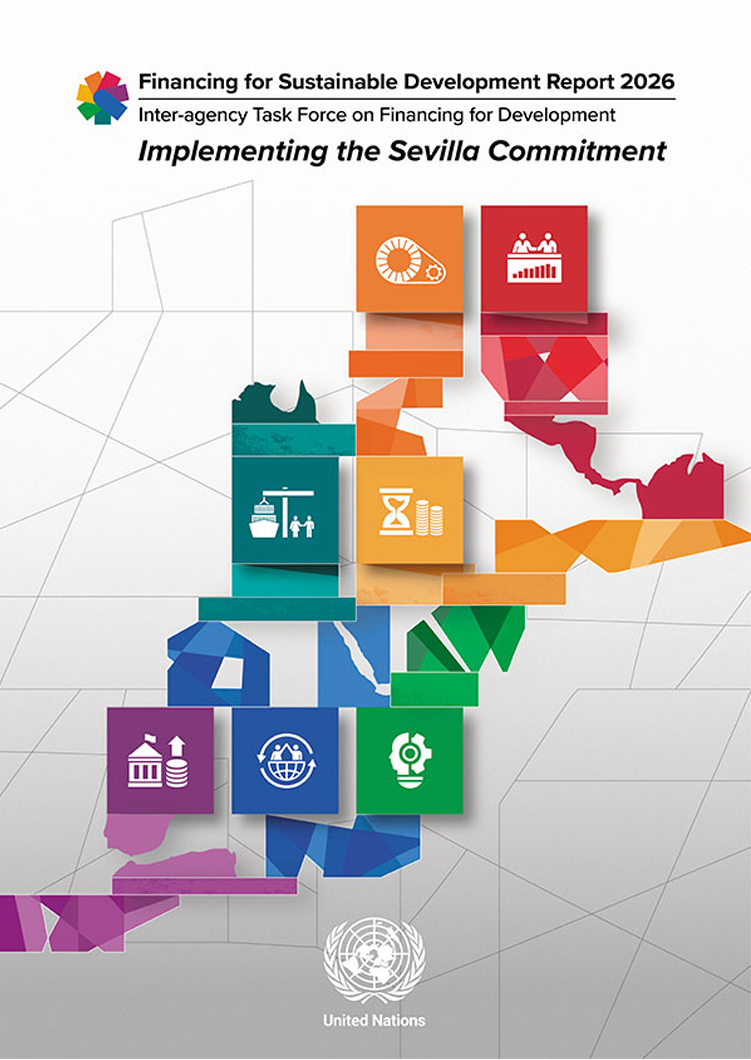
Inter-agency Task Force on Financing for Development's financing for sustainable development report series
The Financing for Sustainable Development Report is an annual series produced by the United Nations Inter-agency Task Force. It provides a comprehensive assessment of global financing trends, policies, and frameworks supporting sustainable development, tracking progress across key areas such as public finance, private investment, debt, and international cooperation.

Taking the carbon out of credit: An integrated approach to removing climate emissions from lending
This report makes a complete case for banks and lending institutions to avoid further damaging of the climate. It provides both justification for why this is an important financial undertaking, and principles for how to go about and do it.

Oliver Wyman
Oliver Wyman is a global management consulting firm that services other firms, governments and society. They offer multiple capabilities in areas such as risk management, strategy, climate and sustainability. Their services cover a wide variety of industries including automotive, energy and nature resources, industrial products, financial services and education.

Tracking the transition
This report examines the impact of China’s coal-fired power companies, and their inaction in responding to climate change. The report presents China’s six largest listed power companies and their associated CO2 emissions, as well as recommendations for investors to act on.

Collaborative for Frontier Finance
Collaborative for Frontier Finance (CFF) is a multi-stakeholder initiative that aims to increase access to capital for small and growing businesses in emerging markets. CFF works with diverse stakeholders- including local capital providers and institutional investors to accelerate financing solutions that target Small and Growing Businesses.
Changing colours: Adaptive capacity of companies in the context of the transition to a low carbon economy
Over the coming decades economies will transition towards a low carbon economy. This paper explores the adaptive capacity of firms to financial risks that may arise in the context of this transition, while detailing the risk of a "too sudden too late scenario of sweeping legal, social and environmental change".

A status report on financial institutions’ experiences from working with green, non green and brown financial assets and a potential risk differential
This 2020 report presents the results from a survey that assesses whether a risk differential can be detected between green, non-green and brown financial assets (loans and bonds). Based on information obtained by 49 banks, it presents a snapshot of current practices among financial institutions in their asset allocation.

Finance Earth
Finance Earth is a mission-driven social enterprise, working in partnership with world-leading environmental organisations to protect and restore nature by utilising market-based mechanisms and implementing bespoke financial tools. They help create projects – and the investment vehicles to fund them – that balance positive outcomes for nature, communities and investors.

ESG 2.0: Measuring and managing investor risks beyond the enterprise-level
This paper discusses how current institutional investing practices and asset allocation strategies conflict with ESG objectives. It encourages institutional investors to review their systematic risk-management practices and recommends the diversification of asset allocation to more regenerative investment structures and asset classes.

The Predistribution Initiative
The Predistribution Initiative is a non-profit multi-stakeholder effort to co-create improved investment practices and structures which share more wealth and influence with workers and communities. It has the ultimate aim of addressing systemic and systematic risks in markets and investors’ portfolios, such as inequality, climate change and biodiversity loss.

International Corporate Governance Network (ICGN)
International Corporate Governance Network (ICGN) is an investor-led global member organisation which advances the highest standards of corporate governance and investment stewardship worldwide. ICGN achieve this through long-term value creation and frameworks that contribute to sustainable economies, society, and the environment.


