
Library | SDGs
General Sustainable Development Goals
Refine
333 results
REFINE
SHOW: 16


EU Funding Watch
EU Funding Watch curates calls, grants and opportunities across the European funding landscape for impact ecosystem practitioners.
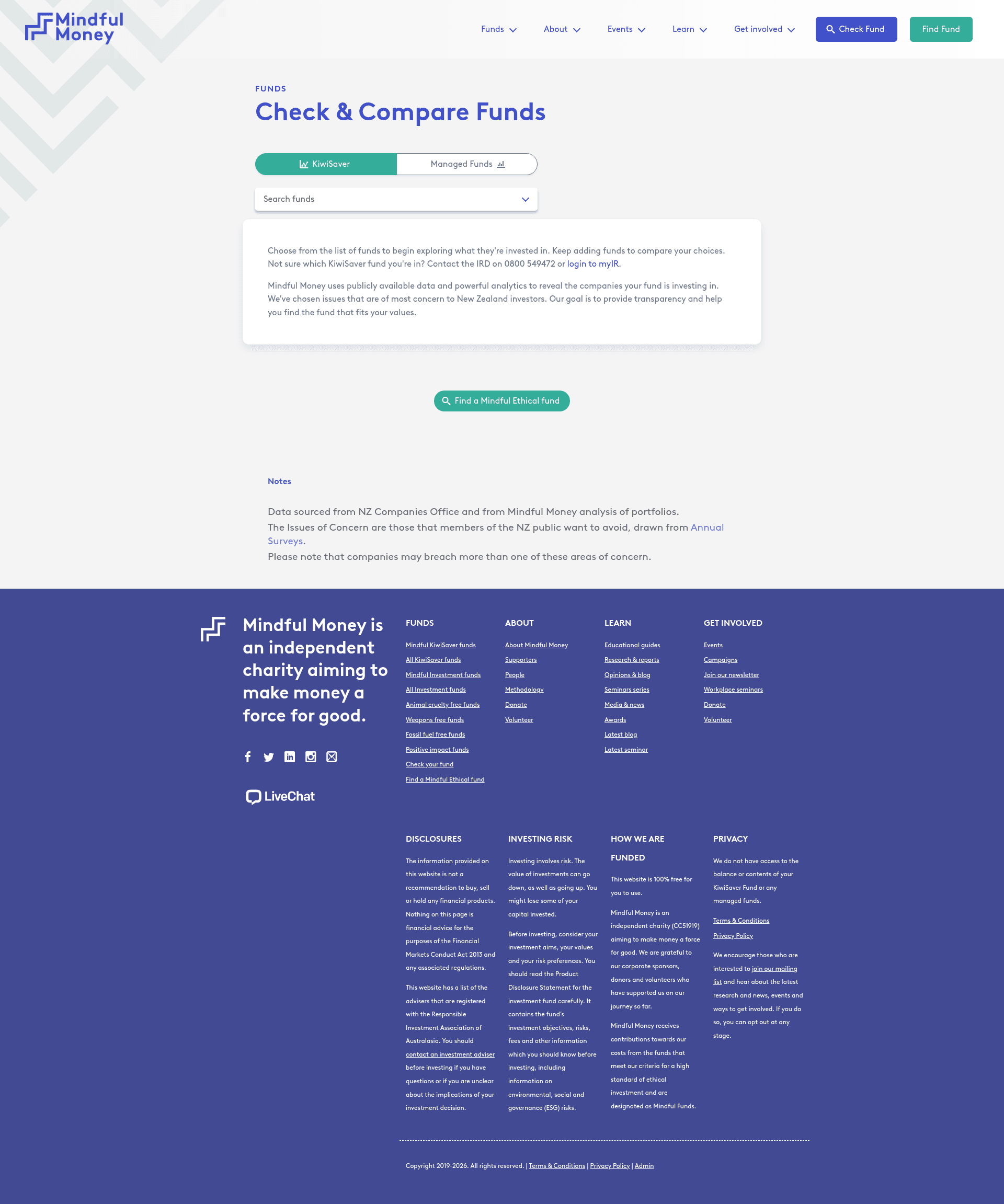
Mindful Money Fund Checker
Free NZ tool to check and compare KiwiSaver funds against ethical issues of concern using publicly available data and portfolio analytics.

Passing the baton: Creating value through CEO succession at family businesses
This McKinsey report analyses CEO succession at family-owned businesses, drawing on 200 publicly traded and 170 private FOBs globally. It finds that succession on average erodes shareholder value, but top-performing FOBs can achieve the opposite by applying 11 critical practices spanning five foundational and six distinctive areas.
Sustainability-related disclosure guidance
New Zealand's Financial Markets Authority guidance on sustainability-related disclosure for financial product issuers. Covers fair dealing obligations under the Financial Markets Conduct Act 2013, addressing greenwashing and greenhushing risks, with practical guidance on clear claims, substantiation, consistent messaging and third-party management.
From fragmentation to insight: Why data convergence matters for scaling impact
This report examines the need for data convergence in impact investing to address fragmentation. It advocates adopting a structured, Theory of Change-based data model to standardise information across portfolios. Such a structure enhances interoperability, streamlines data management, and enables advanced analytics, ultimately improving decision-making and scaling impact effectively.
Socially-minded investors and corporate behavior
This report examines whether socially-minded investors influence corporate behaviour through voting, managerial incentives, or identity investing. It concludes that existing channels offer limited impact and evaluates potential legal reforms, such as binding shareholder votes and mandatory disclosures, to better align corporate actions with these investors' preferences.

Rankings of America's Most Just Companies
The Rankings of America's Most Just Companies evaluate the largest publicly traded US corporations on stakeholder performance and ethical behaviour.
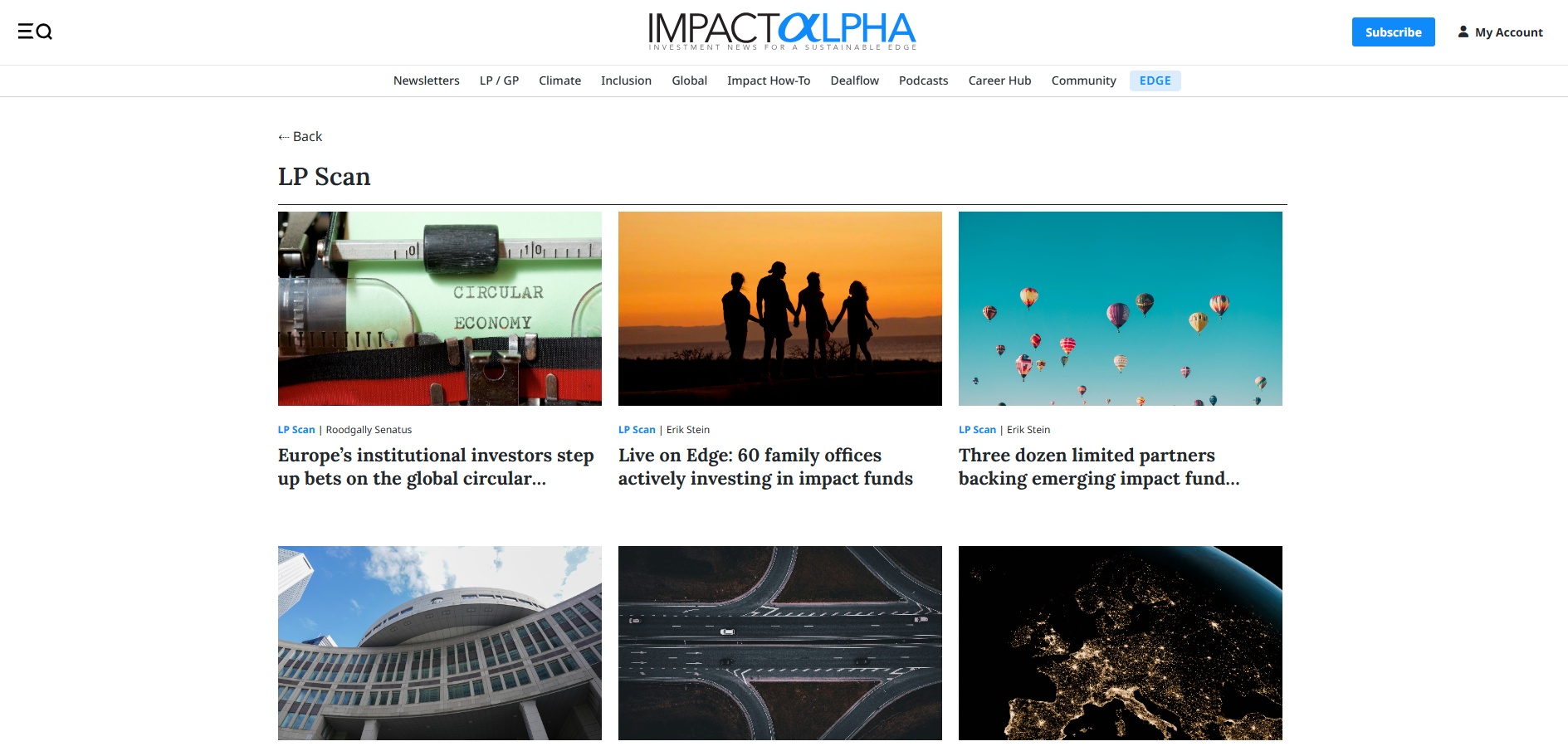
LP Scan
ImpactAlpha’s LP Scan is a dealflow and market intelligence resource that tracks limited partner (LP) activity, fund allocations and investment trends across impact investing. It provides insights into institutional investors, capital flows and fundraising activity to help market participants identify opportunities and understand developments in sustainable and impact finance.
Counting what counts: A compass of progress for people and planet
This report presents a new framework and a dashboard of 31 indicators proposed by the UN High-Level Expert Group to measure societal progress beyond GDP. It emphasises equitable, inclusive and sustainable well-being, offering actionable recommendations for global adoption and enhanced statistical capacity by 2027.
The state of sustainable finance (2025-2030) global architecture, jurisdictional approaches and emerging trends
This report examines global sustainable finance architecture and institutional shifts from 2025 to 2030. It assesses regulatory approaches across nine major jurisdictions, highlighting the European Union as the benchmark. The analysis identifies structural trends, including transition finance scaling, nature risk integration, and the harmonisation of sustainability reporting.
The state of private impact investing in Canada
This report analyses the Canadian private impact investing market, which targets CA$17.7 billion in capital across 218 products. It examines market size, geographic distribution, and primary impact areas, noting a concentration in venture capital and highlighting the need for aggregation strategies and blended-finance models to scale investments.
Acceleration is not a strategy: A framework for directing AI towards public value before it's too late
This report outlines a framework for European governments to steer artificial intelligence towards public value rather than just accelerating sector growth. It recommends implementing AI directionism by targeting high-impact uses, preparing priority sectors for adoption, curbing big tech monopolies, and ensuring the economic benefits are broadly shared.
Reforming investment contracts: Why policy - makers must act now — and how
This policy brief highlights the urgent need to reform investor–state contracts to support sustainable development. It explores how fragmented frameworks, outdated stabilisation clauses, and tax incentives undermine national laws. The report recommends strengthening interministerial coordination, assessing existing contracts, and developing national model agreements to improve transparency and policy coherence.
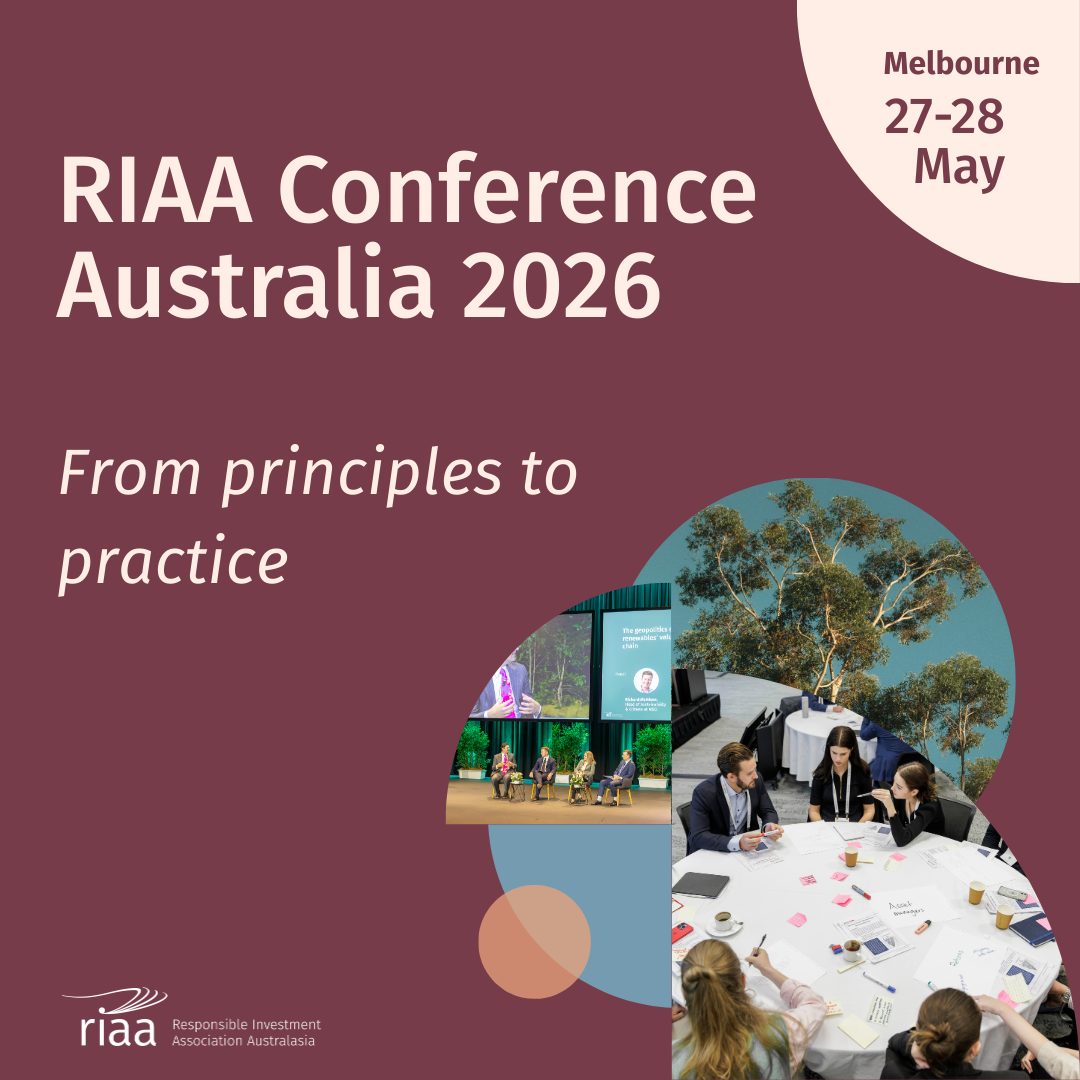
RIAA Conference Australia 2026 - Companion Resources
Responsible investment has moved well beyond principles and pledges. Today’s challenges require practical capability and informed judgement. The RIAA Conference is a must-attend event for finance, sustainability and industry practitioners who want to focus on the key themes for responsible investment in 2026 and what implementation really looks like. Designed as an immersive, hands-on experience, the program focuses on the systems that underpin strong financial performance, and will help you understand how climate, nature, technology, governance and regulation intersect.
These specially curated companion resources have been recommended by the conference speakers and Altiorem team.
These specially curated companion resources have been recommended by the conference speakers and Altiorem team.
Impact statement framework: Valuing, accounting and reporting societal impact
Framework for impact statements, valuing organisations’ societal effects across natural, human and social capital using eQALY. It outlines scope, data, modelling, reporting, governance and case studies to support comparable, decision-useful impact valuation.


