
Library | SDGs
GOAL 08: Decent Work and Economic Growth
Refine
477 results
REFINE
SHOW: 16


Providing decent work for young workers, parents and caregivers
Provides guidance for companies to fulfil their responsibility to support the decent work of young workers, parents and caregivers across their supply chains. Includes a case study on IKEA’s approach to supporting children’s rights and a second case study on Wipro’s approach to gender diversity.
Relationship-to-profit: A theory of business, markets, and profit for social ecological economics
Supporting post-growth transformation, this doctoral thesis posits a new theory: relationship-to-profit theory. This explains the social and ecological implications of how businesses relate to profit, and argues that for economies to be sustainable businesses and markets should treat profit as a means rather than an end-in-itself.

The future of tobacco stocks: a scenario analysis
This report identifies drivers of change within the tobacco industry and the potential risk factors that may arise as a result. The report conducts a scenario analysis that maps out three potential outcomes for the industry and the relative impact on the share price of the world’s largest tobacco companies.

From poor working conditions to forced labour: what's hidden in your portfolio? A guide for investor engagement on labour practices in agricultural supply chains
This guide provides a comprehensive tool for engaging food and beverage companies on labour standards. It incorporates learnings from collaborative investor-company engagement focused on supply chain reporting and third-party resources. Outlining seven expectations for investors to focus on supported by relevant resources and case studies.

Financial inclusion: What have we learned so far? What do we have to learn?
Introduces financial inclusion as a dimension of financial development by presenting main findings and key insights from a micro and macroeconomic standpoint. Examines trends and provides insights into the effects of financial inclusion initiatives on the economy with a focus on household and micro, small and medium-sized (MSMEs) enterprise outcomes.

Australia's welfare 2019: Data insights
This 14th biennial welfare report of the Australian Institute of Health and Welfare, presents an overview of the welfare data landscape and explores selected welfare topics - including intergenerational disadvantage, income support, future of work, disability services, elder abuse and child wellbeing - in eight original articles.

Investor toolkit: Human rights with focus on supply chains
The purpose of this toolkit is to help investors to engage constructively with the intention to encourage better practice from companies, thereby reducing human rights risks in supply chains. This toolkit focuses on practical engagement points with a business rationale.
In pursuit of deep impact and market-rate returns: KL Felicitas Foundation's journey
The report is an update of NPC’s 2015 review of the KL Felicitas Foundation, Investing for impact: Practical tools, lessons, and results. It explores how the KL Felicitas Foundation’s impact investing portfolio balances social impact with financial return.
An investor briefing on the apparel industry: Moving the needle on responsible labour practices
This report highlights why responsible labour practices in the apparel industry matter for investors. Drawing on investor case studies, the report explains how to implement effective strategies that address risks and negative human rights impacts in investee companies and their supply chains.

A blueprint for mobilizing finance against slavery and trafficking
The blueprint is the final report of the Liechtenstein Initiative Financial Sector Commission on Modern Slavery and Human Trafficking. The report covers goals and implementation strategies to strengthen the role of the financial sector in the global effort to end modern slavery and human trafficking, and accelerate action in line with the 2030 Agenda.
Commonwealth Modern Slavery Act 2018: Guidance for reporting entities
Australian Government guidance to entities reporting under the Modern Slavery Act 2018. The guidance provides information on what is modern slavery, how it might impact on reporting entities, what obligations entities have under the Act, and how to report against mandatory criteria using case studies as illustrations.
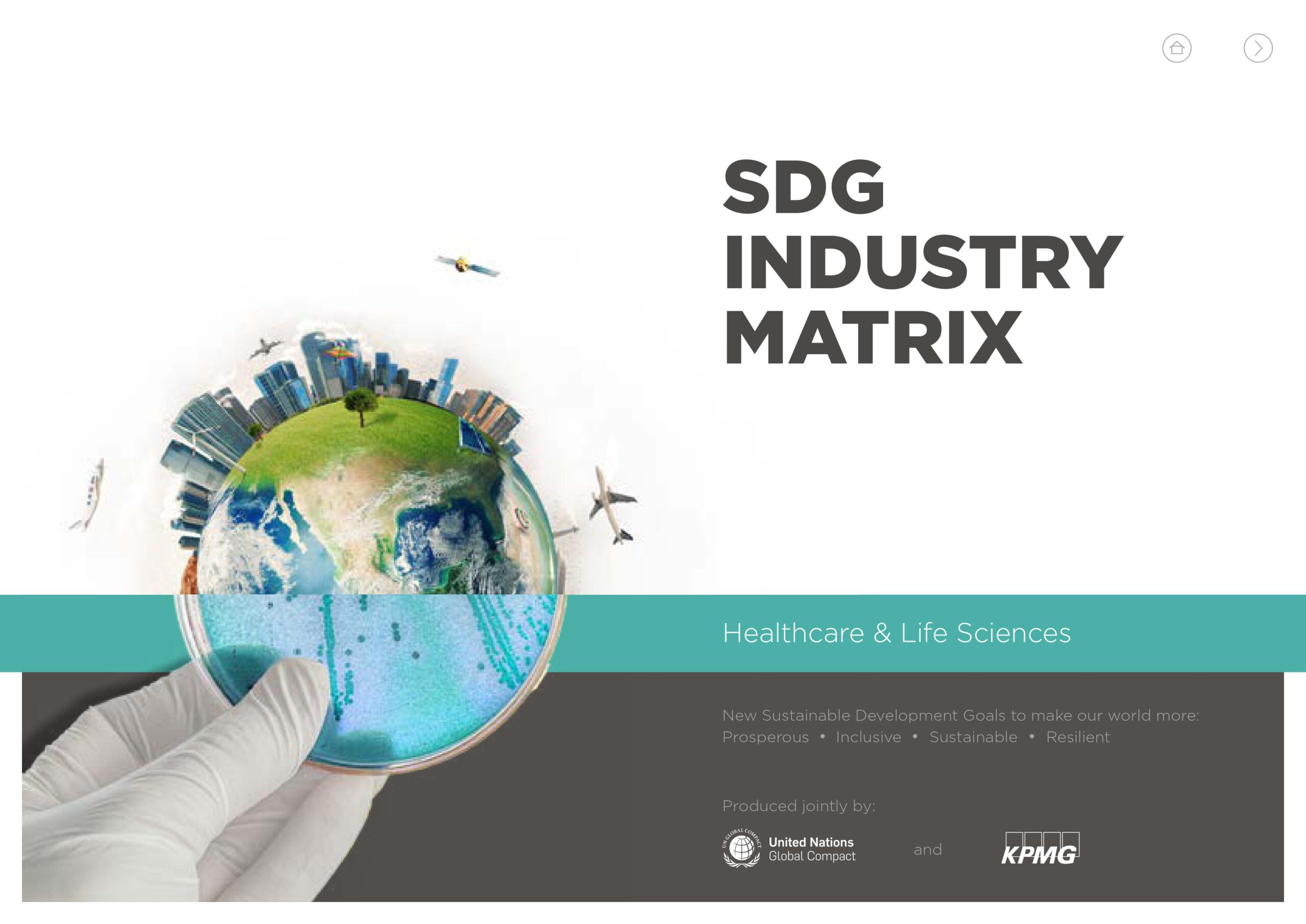
SDG Industry Matrix: Healthcare and life sciences
Compiled by the UN Global Compact and KPMG, the SDG Industry Matrixes focus on the opportunities, principle-based initiatives, and opportunities for collaboration across seven sectors. This matrix applies to companies and initiatives in the healthcare and life sciences sector, highlighting the nexus between sustainability and value.

States of the apes: The impact of infrastructure development on biodiversity
The impact of infrastructure projects on biodiversity are examined, using apes to illustrate how investors can contribute to biodiversity protection. A sustainable approach to infrastructure development, which mitigates environmental, financial and reputational risks of investment, is presented.
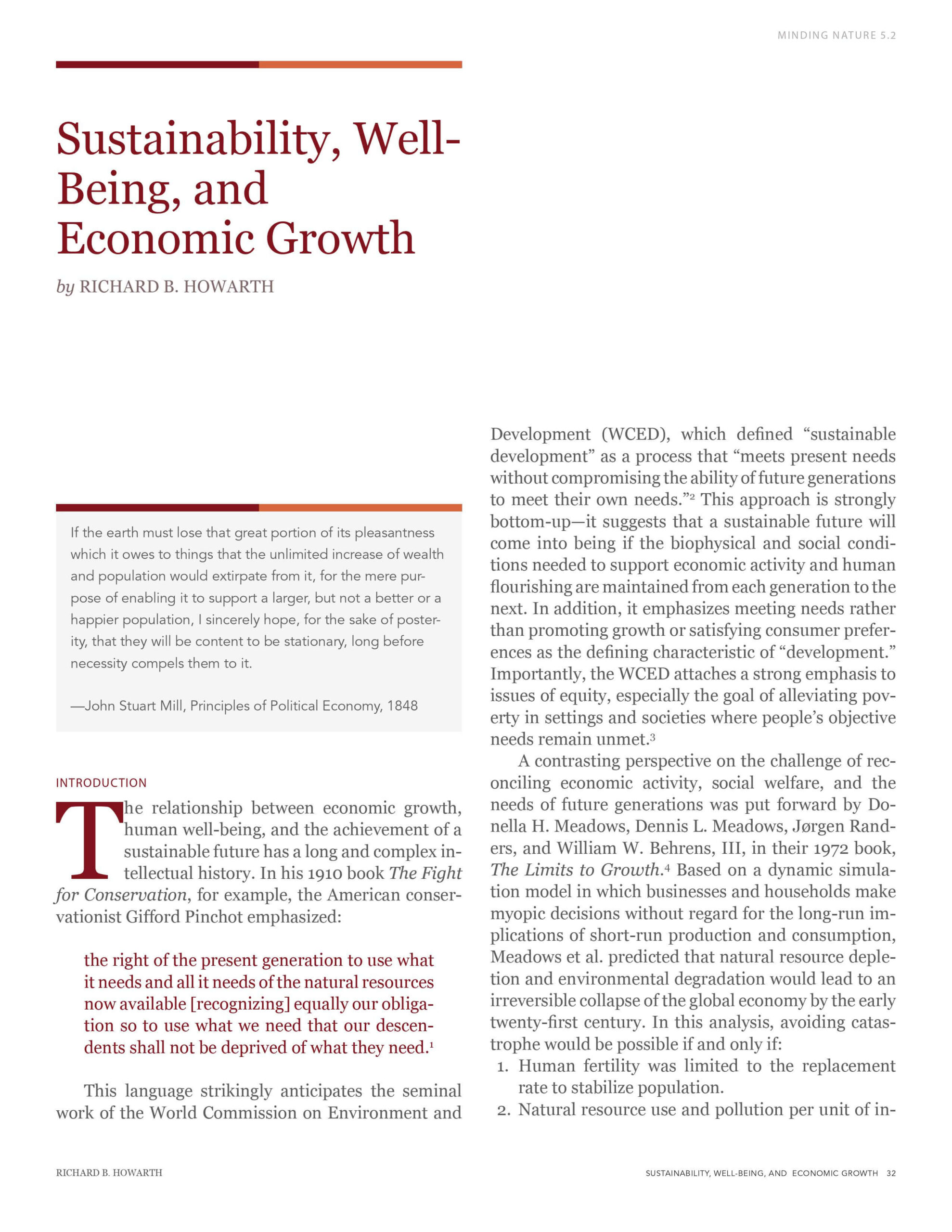
Sustainability, well-being, and economic growth
Substantial reductions in economic growth for environmental and social sustainability may be unnecessary. Policies and market signals are required to conserve natural resources, equally distribute wealth and mitigate the impacts of climate change. It is argued that environmental and social goals are of greater importance in meeting the needs of society than economic development.
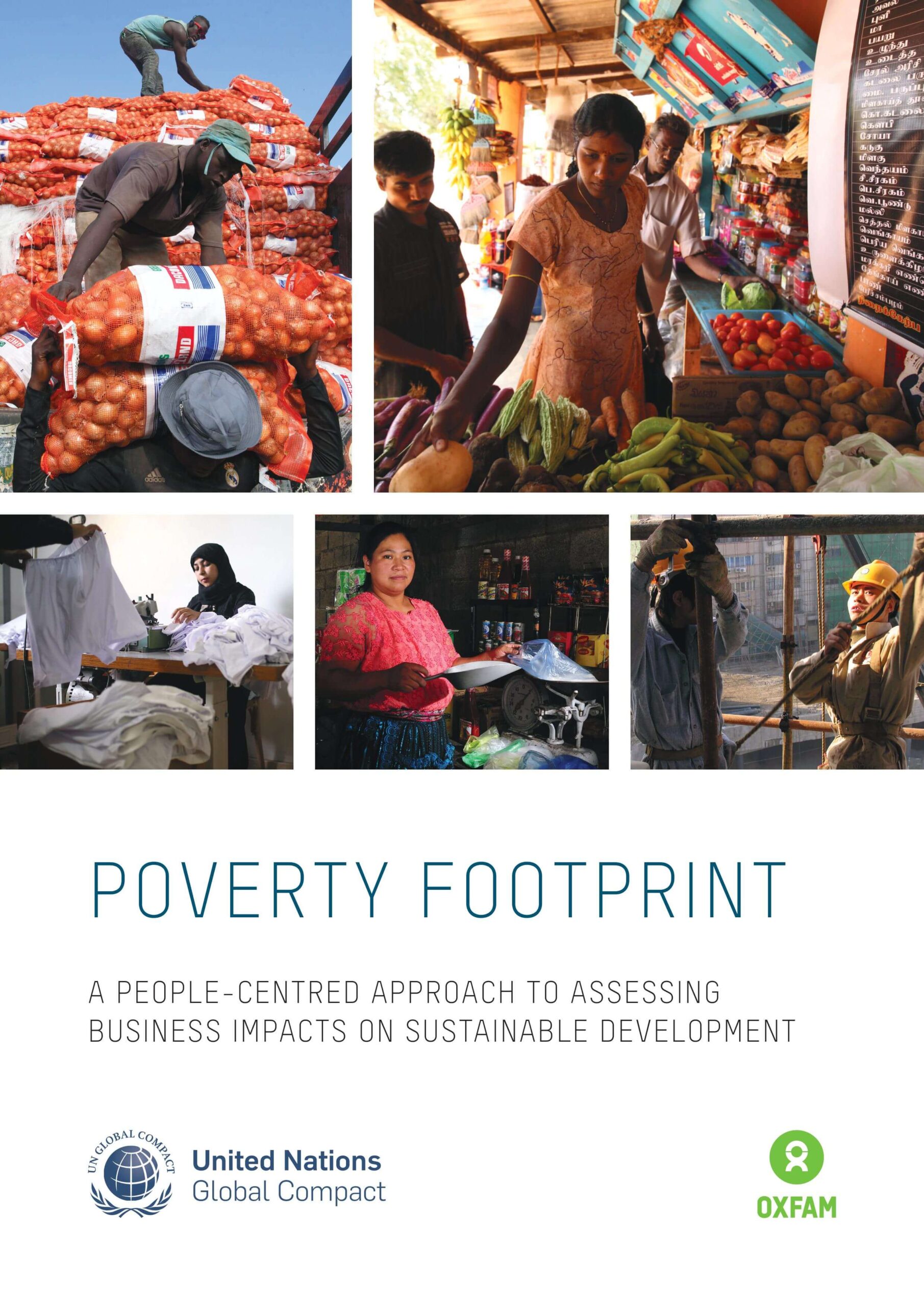
Poverty Footprint
The Poverty Footprint is a tool that enables companies and partners to implement a people-centred assessment of corporate impacts on poverty. The report is used to better understand the impacts of operations and value chain on people and poverty, and to turn this learning into action.
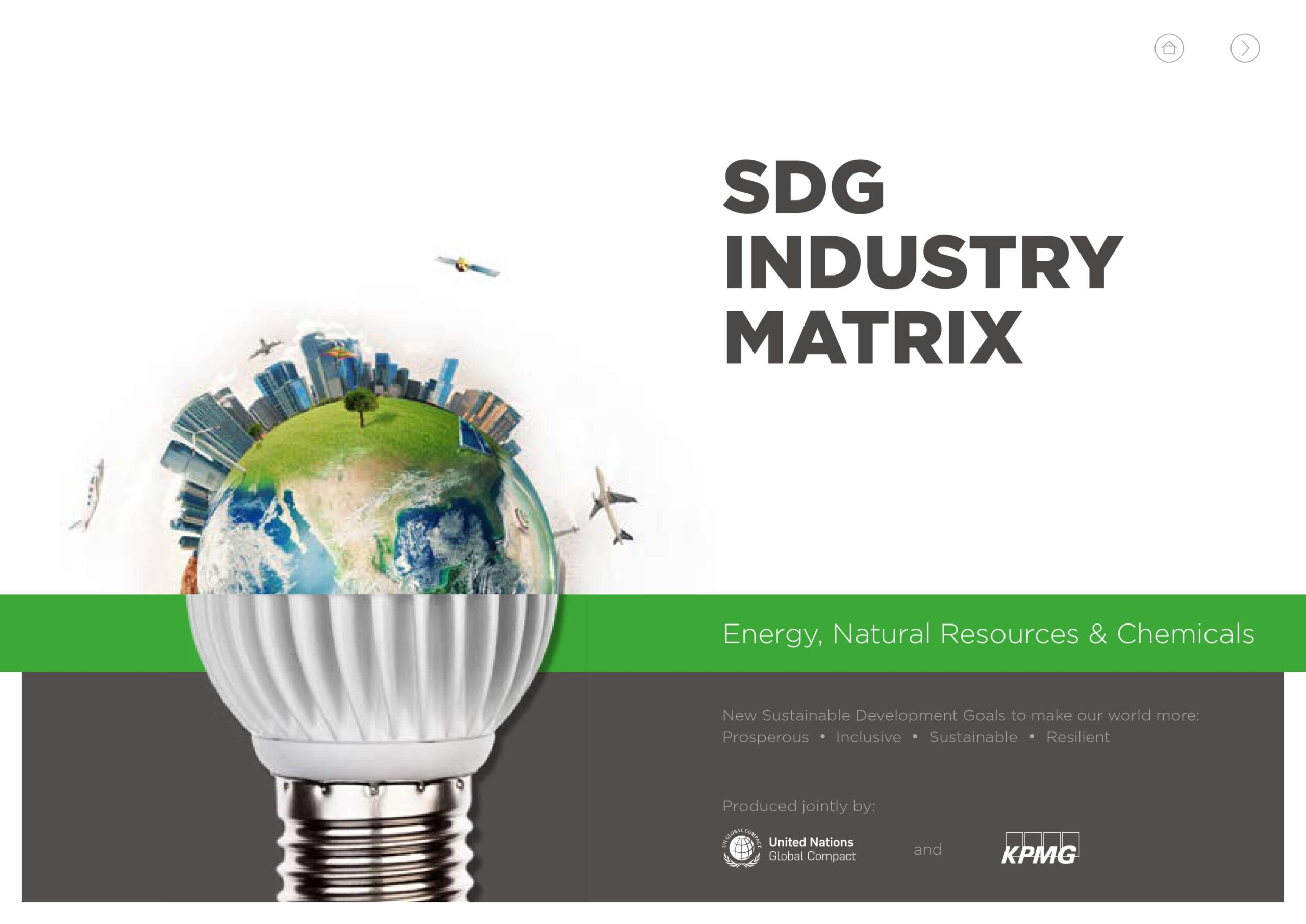
SDG Industry Matrix: Energy, natural resources and chemicals
The Industry Matrix aims to inspire and inform the private sector, driving it towards inclusiveness and sustainable prosperity by identifying opportunities for greater social and environmental change. This Matrix applies to industries involved in energy, natural resources and chemicals, outlining ways that companies can create value for shareholders as well as society.


