
Library | SDGs
GOAL 16: Peace and Justice Strong Institutions
Refine
374 results
REFINE
SHOW: 16



The ICJ's advisory opinion on climate change
This edited volume analyses the ICJ's July 2025 advisory opinion on climate change obligations, examining its legal framework, due diligence standards, human rights implications, and statehood findings. Contributing authors also assess the opinion's notable silences on historical responsibility, military emissions, and differentiated obligations.
Ethical & impactful usage of AI
This report by Do Harvey outlines an ethical framework for AI usage, highlighting environmental impacts, security risks, and bias concerns. It advocates for transparent, client-opt-in adoption underpinned by human oversight, and summarises five modes of AI use to guide teams in making values-aligned, informed decisions.

Stuck on you: How to make social media good again
This IPPR paper examines how social media platforms have shifted from user-led spaces to algorithm-driven, influencer-dominated environments through 'sticky gatekeeping'. A UK survey found only 18 per cent of feed posts were personal content. The report recommends regulatory reform, algorithmic transparency, and development of a public social media platform.

How a surge in defence and dual-use technology investment could reconfigure the global AI race
This Chatham House paper examines four trends — rising defence and dual-use investment, the growth of 'patriotic tech', the push for sovereign AI, and concerns over an AI valuation bubble — that could multipolarise the global AI race, and offers recommendations for private sector preparedness.

Retreat or respect? Diverging corporate paths on human rights in a time of turbulence
This BHRC report examines how top US companies are responding to mounting pressure on human rights standards. It identifies three corporate pathways: active deregulatory lobbying by Big Oil and Big Tech, quiet retreat from human rights commitments, and continued adherence. Survey data from April 2026 reveals significant reductions in human rights staffing and budgets.

Social performance measurement: Practical insights and tips for financial institutions
This report by Shift distils insights from practitioner clinics for financial institutions on social performance measurement. It identifies key challenges and misperceptions, and provides eight practical tips for building more effective human rights due diligence measurement approaches, covering HRDD maturity assessment, theory of change, and quantification at scale.

Responsible AI in practice: 2025 global insights from the AI Company Data initiative
This report analyses publicly disclosed data from 2,972 companies across 11 sectors, revealing a significant gap between AI adoption and governance maturity. Only 13 per cent align their strategy with a formal framework, and few demonstrate adequate worker protections, ethical impact assessments, or training data oversight.

Weapons, dual use tech and financial institutions
This Shift briefing examines how financial institutions should approach human rights due diligence in relation to weapons and dual-use technologies. It identifies four key challenges, six anchors grounded in international humanitarian law, and six practical approaches to support responsible defence-related lending and investment decisions.
SIPRI Military Expenditure Database
SIPRI's open-access database providing annual military expenditure data for countries worldwide from 1949 to 2025, across multiple metrics.
Community engagement, nature and financial materiality: An evidence review on the financial effects of engagement with indigenous peoples and local communities on nature-related issues
This Shift report reviews the financial effects of corporate engagement with Indigenous Peoples and local communities on nature-related issues. Drawing on over 1,200 cases and approximately 40 publications, it finds that engagement quality is financially material, with poor engagement linked to significant operational, legal, and reputational costs.
Ranking digital rights: The 2025 big tech edition
The 2025 RDR Index Big Tech Edition ranks 14 major technology companies on governance, freedom of expression, and privacy. Microsoft leads overall with 50%, followed by Alphabet at 49% and Meta at 47%. Scores are also assessed across eight thematic lenses, including algorithmic transparency, security, and targeted advertising.
Ranking digital rights: The 2026 Telco giants edition
Ranking Digital Rights' 2026 Telco Giants Edition scores 12 major telecom companies on governance, freedom of expression, and privacy. Telefónica leads overall with 57%, while Ooredoo ranks lowest at 14%. Historical data from 2017 to 2026 shows varied progress, with scores dipping in 2020 due to new indicators.
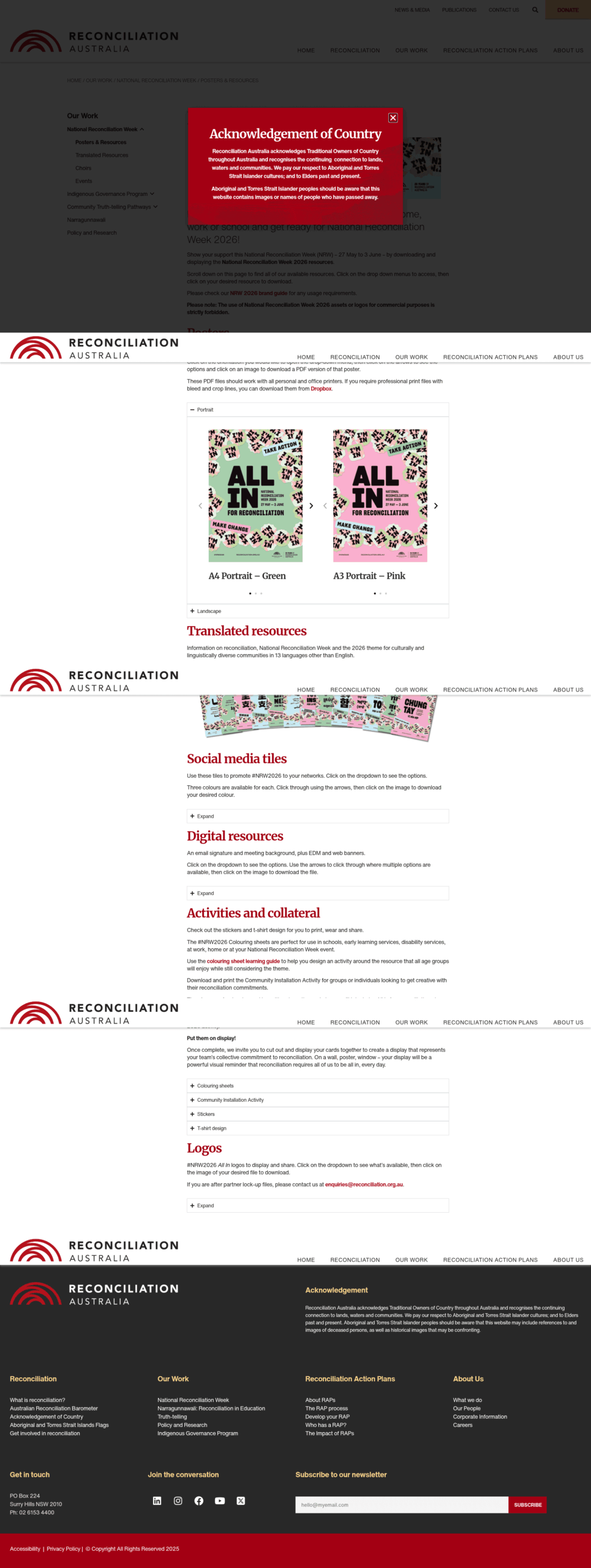
Posters & Resources - Reconciliation Australia
The Posters & Resources portal by Reconciliation Australia offers downloadable assets to support National Reconciliation Week 2026.

Financial secrets of the forests: How secrecy fuels deforestation in Brazil and Cameroon
This report examines illicit financial flows linked to deforestation in Brazil and Cameroon, estimating trade mispricing losses at US$289 million per year in Cameroon and US$214 million in Brazil. It finds that financial and land ownership secrecy enables illicit deforestation and recommends public beneficial ownership registries and supply chain transparency measures.
The Swiss investors in the ICE system
This BreakFree Suisse research note examines Swiss institutional investors — including UBS, SNB, Zurich Insurance, and others — holding billions of dollars in US ICE contractors Palantir, AT&T, Geo Group, and CoreCivic. The report argues these investments conflict with the investors' stated human rights policies and ESG commitments.

Stablecoins in Africa: Translating global principles into local regulatory practice
This paper is the African Chapter of GDF's Global Stablecoin Regulatory Playbook. It examines how global stablecoin regulatory principles can be applied across Africa's diverse markets, addressing reserve management, consumer protection, AML/CFT compliance, and cross-border coordination, while accounting for local financial infrastructure, dollarisation risks, and varying supervisory capacity.


