
Library | SASB Sustainability Sector
All industries
Refine
837 results
REFINE
SHOW: 16


Workforce heat resilience: An actionable framework to close the execution gap
This report provides a framework for businesses to address workforce heat risks. It details a seven-step roadmap to assess climate impacts, design tailored interventions, and scale resilience. With heat-driven productivity losses projected to reach $2.4 trillion by 2030, the document highlights the strategic necessity of protecting workers.
The age of interconnected risks: How interdependencies are shaping the next generation of systemic crises
This report examines rising systemic vulnerabilities driven by interconnected financial, digital, natural, and socio-economic risks. It highlights the gap between market pricing and actual risk, noting how AI, climate change, and geopolitical fragmentation amplify potential crises. It proposes collaborative monitoring and expanded risk-transfer capacity to strengthen global resilience.
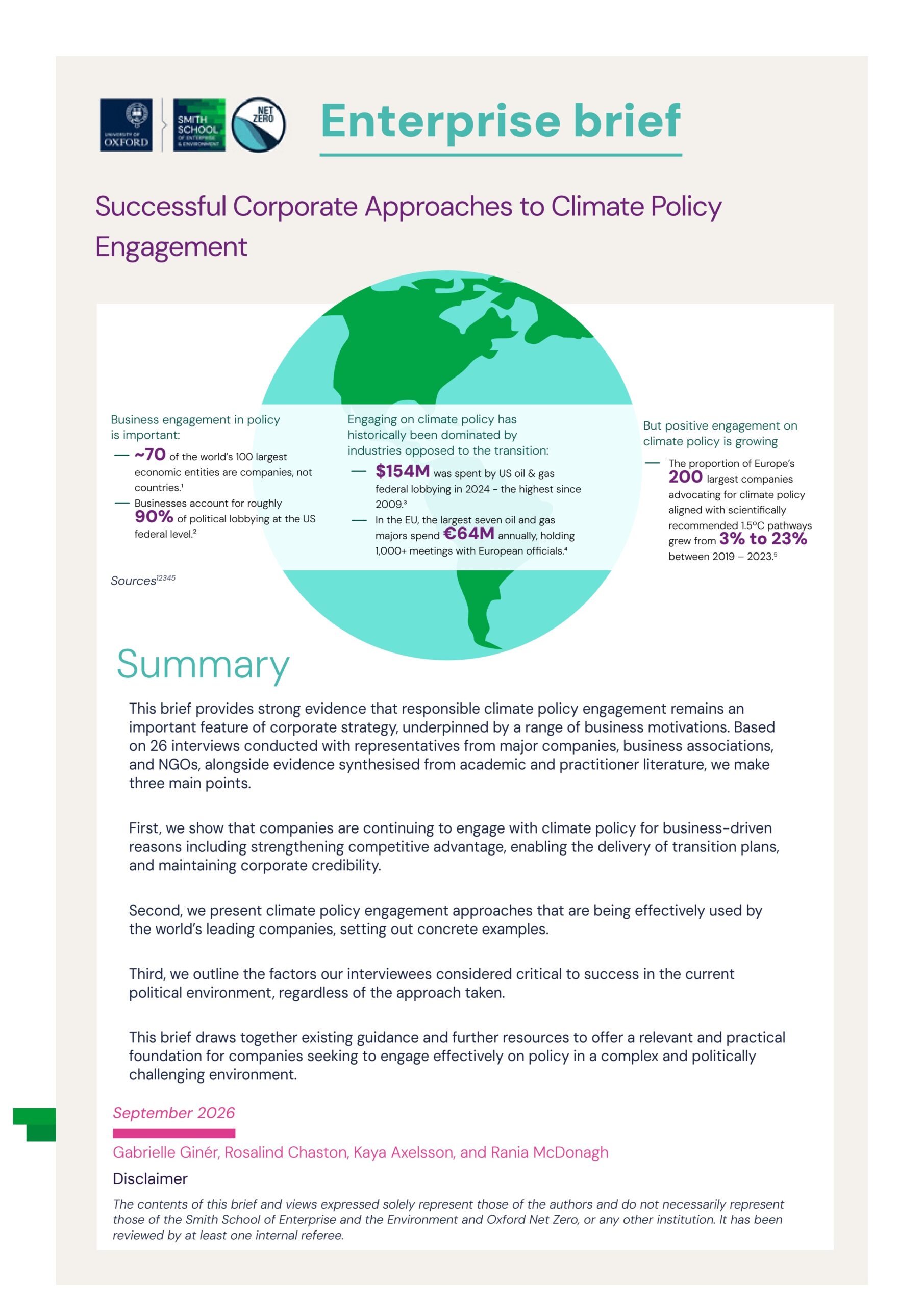
Successful corporate approaches to climate policy engagement
This research examines how leading companies maintain climate policy engagement despite geopolitical challenges. It identifies three core approaches—direct engagement, trade association influence, and coalition forming—driven by business motivations such as competitive advantage and transition plan delivery. Success depends on timing, transparency, and alignment with corporate decarbonisation goals.
Governing climate credibility: Reviewing the governance of climate and sustainability standards
An independent review of governance across five leading climate standard-setters: GHGP, GRI, ISO, ISSB, and SBTi. The report evaluates structures, finance, and independence, identifying strengths and transparency gaps. It offers recommendations to enhance accountability, resource governance effectively, and ensure long-term credibility for net zero objectives.
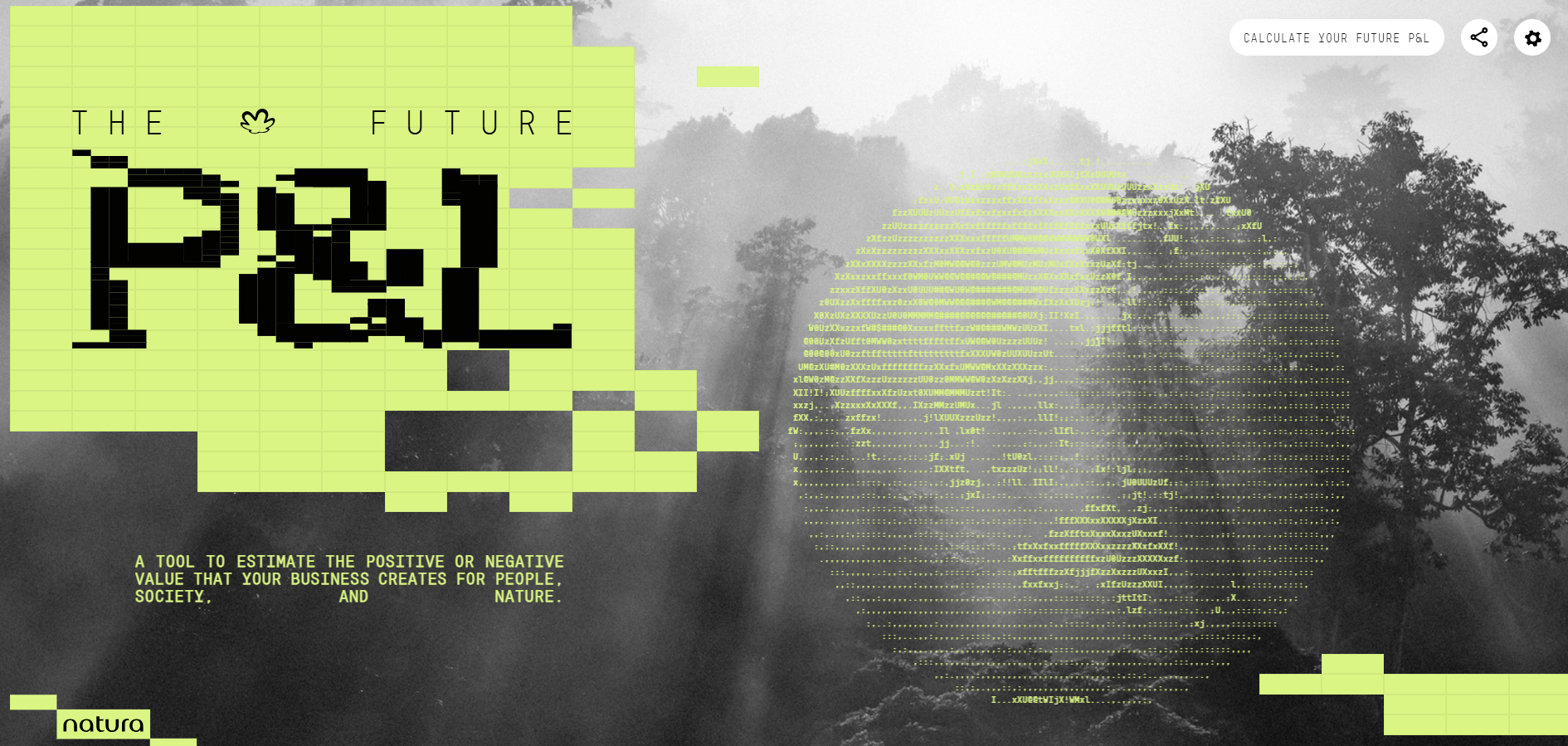
Natura Future P&L Tool
The Natura Future P&L Tool is a free digital platform that enables businesses to measure and monetise their environmental, social, and human impacts. It helps finance professionals integrate ESG externalities into traditional financial analysis to assess a company’s total value creation.
Greenwashing as aspirational signaling: From burden to benefit?
This research analyses the transition of sustainability disclosures from voluntary practices to mandatory legal frameworks in the US and EU. It examines the 'greenwashing enforcement gap' and argues that aspirational signalling, despite inaccuracies, can drive institutional change and attract a prosocial workforce to improve corporate conduct.
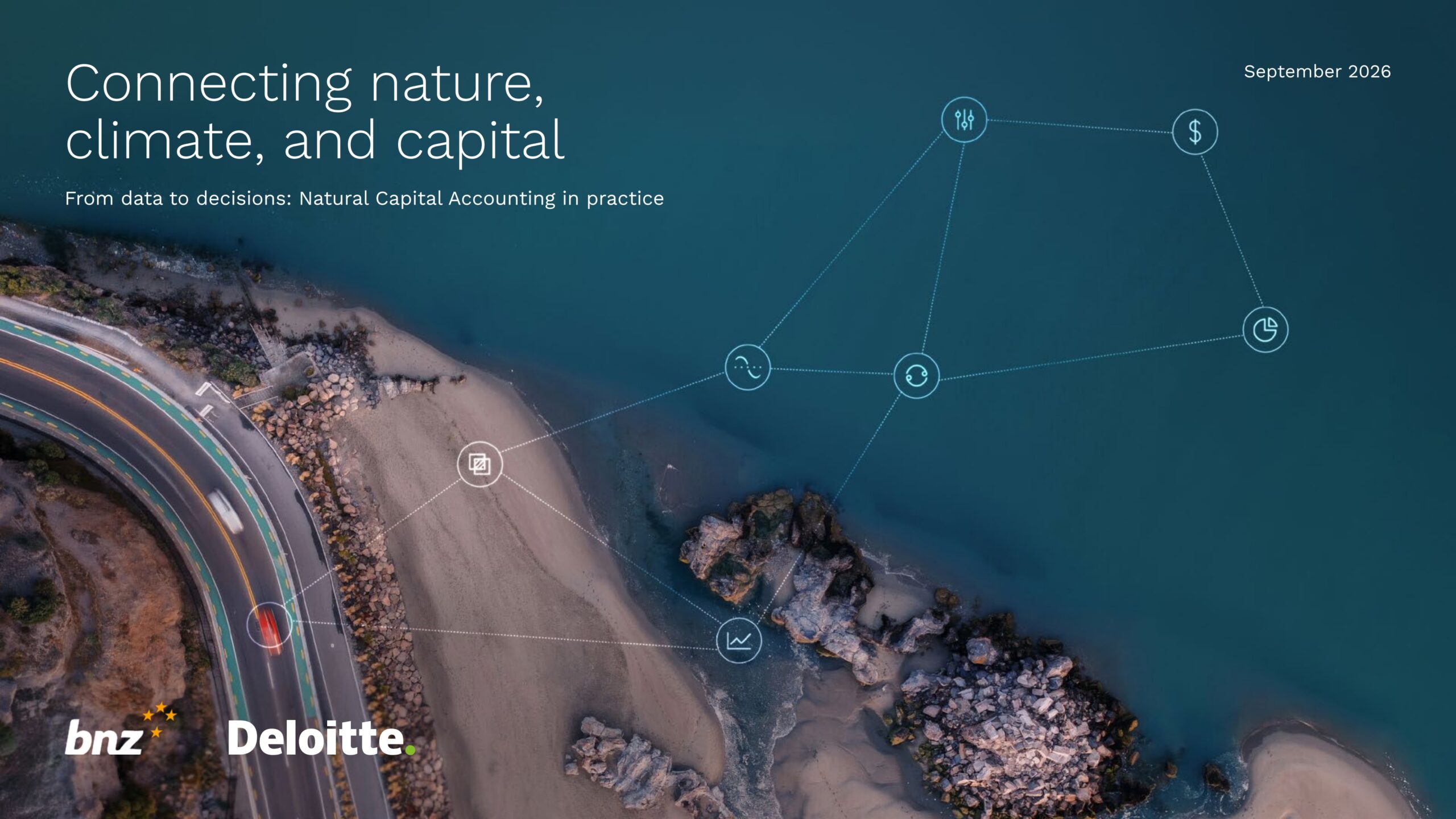
Connecting nature, climate, and capital: From data to decisions: Natural capital accounting in practice
This research explores Natural Capital Accounting in New Zealand, focusing on the SEEA EA framework. It provides practical steps for businesses to quantify nature-related risks and dependencies. Through case studies, it demonstrates how environmental data informs investment, lending, and strategic management to enhance organisational resilience and long-term value.
Asking better questions on nature: For chief financial officers
This guide helps Chief Financial Officers integrate nature-related issues into financial decision-making. It outlines how to identify dependencies, assess risks and opportunities, and respond to evolving disclosure expectations. The report emphasises nature as a core driver of performance, resilience and long-term value creation within the TNFD framework.
Leveraging technological solutions for human rights due diligence
This report distils lessons from 25 organisations on leveraging technology to strengthen human rights due diligence in value chains. It categorises various tools, provides case studies, and outlines practical steps for responsible AI adoption, emphasising that technology must complement, rather than replace, human judgement and meaningful stakeholder engagement.
International Ethics Standards for Sustainability Assurance (including International Independence Standards) and other revisions to the Code relating to sustainability assurance and reporting
IESBA’s final pronouncement establishes ethics and independence standards for sustainability assurance by introducing Part 5 to the Code. It outlines five fundamental principles and a conceptual framework to address threats, alongside requirements for tax planning, responding to non-compliance, and leader rotation for public interest entities.
Guidance for voluntary climate change mitigation
This guidance outlines expectations for voluntary climate change mitigation in New Zealand. It details six core principles for high-integrity carbon credits, including additionality and permanence. It distinguishes between contribution and exclusive-use claims and clarifies the role of the New Zealand Emissions Trading Scheme and Nationally Determined Contributions.
Reframing financial markets as complex systems: Tools for systemic risk analysis, portfolio management, and system-level investing
This report explores financial markets as complex adaptive systems, advocating for modelling techniques like agent-based models and network theory. It highlights how these tools improve systemic risk analysis and portfolio management by capturing non-linear behaviours, herding, and interconnectedness, providing a framework for more resilient and adaptive global financial systems.
Beyond commitments: Assessing real capital deployment for net zero across 26 high-emitting companies, against the IGCC Capital Allocation Alignment Framework
This research assesses capital allocation alignment with net-zero commitments across 26 high-emitting companies using the IGCC Framework. It finds that while climate strategies are strong, capital sourcing and fossil fuel phase-down plans lag. European companies lead in performance, while the Americas and oil and gas sectors trail significantly.
Legal liability vs. proportional representation: What works in improving poor investor protection?
This research evaluates Korean governance reforms, comparing director legal liability with proportional representation. Findings indicate that markets react positively to increased director liability, especially for undervalued firms. Conversely, mandated proportional representation triggers negative reactions, as investors fear boardroom conflicts may hinder strategic decision-making and reduce board cohesion.
Expanding the investible market for adaptation: The value and path for institutional investors
This report examines the business case for institutional investors to prioritise climate adaptation. It identifies a multi-billion dollar annual financing gap and outlines how resilience expertise enhances investment performance. A framework of recommendations is provided to help investors navigate asset, network, and economy-level resilience within the Australian context.
Just adaptation: An introduction for institutional investors
This report introduces institutional investors to 'just adaptation', highlighting the financial materiality of fair and equitable climate resilience. It outlines how incorporating social equity into adaptation strategies protects long-term returns, maintains social licence, and identifies priority actions for investors to support vulnerable communities while managing systemic climate risks.


