
Library | SASB Sustainability Sector
Alternative Energy
Refine
204 results
REFINE
SHOW: 16


Policy and action standard: An accounting and reporting standard for estimating the greenhouse gas effects of policies and actions
The Policy and Action Standard provides a consistent framework for estimating and reporting the greenhouse gas (GHG) impacts of policies and actions. It outlines methods for ex-ante and ex-post assessments, defines principles of GHG accounting, and offers guidance on defining policy boundaries, estimating baseline emissions, and assessing uncertainty to support transparent, accurate decision-making.
Starting up: Responsible investment in venture capital
This report examines how environmental, social, and governance (ESG) factors are being adopted in venture capital. It outlines current practices, challenges, and industry-specific considerations, and highlights the need for tailored guidance, collaboration, and early-stage engagement to advance responsible investment across the venture capital ecosystem.
Plastics bank tracker
The Plastic Banks Tracker evaluates banks' roles in financing the plastics lifecycle, focusing on single-use plastics. It assesses banks across three phases—acknowledgement, policy development, and implementation—using 21 criteria aligned with international standards. The tool aims to encourage banks to reduce financing for harmful plastic production and support sustainable alternatives.
Australian sustainable finance taxonomy (Version 1 - 2025)
The Australian Sustainable Finance Taxonomy (2025) provides a framework classifying economic activities aligned with environmental sustainability goals, particularly climate mitigation. It includes performance-based criteria for key sectors such as agriculture, mining, energy, construction, and transport, facilitating sustainable capital allocation, consistent reporting, and transition planning, thus supporting Australia’s transition to a net-zero emissions economy.

IEEFA's Australian gas and LNG tracker
The IEEFA Australian Gas and LNG Tracker is an interactive tool offering bi‑annual updates on Australia’s LNG infrastructure, demand forecasts, export capacity and trade flows. It integrates data from sources such as Kpler, AEMO and IEEFA’s own analysis to enhance transparency in gas and LNG market dynamics.
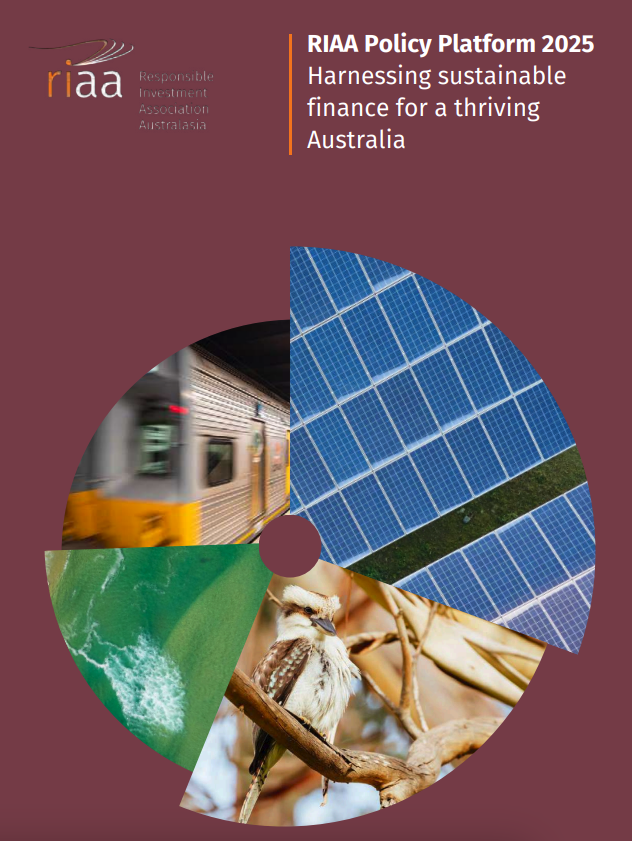
RIAA Policy Platform 2025: Harnessing sustainable finance for a thriving Australia
The RIAA Policy Platform 2025 outlines nine policy priorities and two principles to align Australia’s finance system with sustainability goals. It recommends regulatory reforms, improved data, Indigenous inclusion, and stronger accountability to mobilise capital for a net zero, nature-positive economy that supports long-term economic resilience and societal wellbeing.
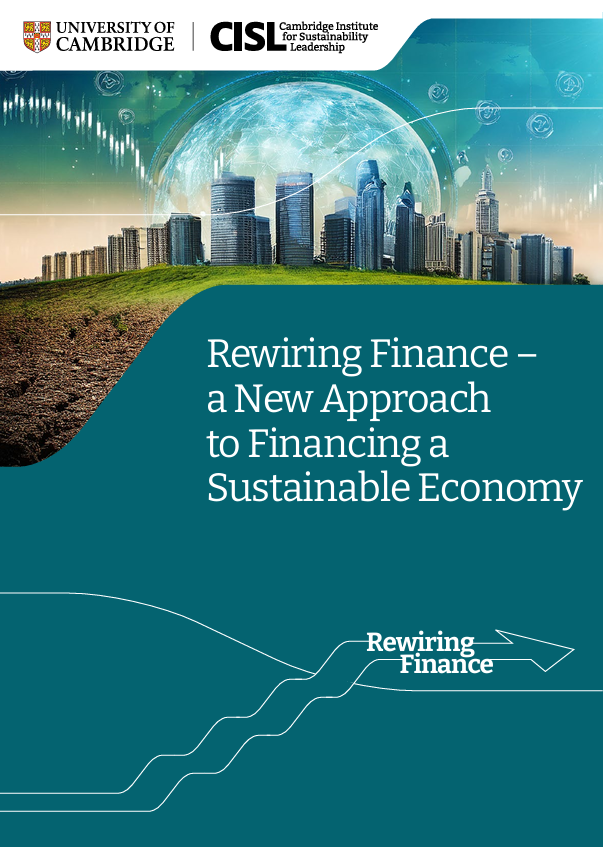
Rewiring finance – a new approach to financing a sustainable economy
This report outlines three systemic shifts needed to align finance with sustainability: policy reform to drive market incentives, mindset changes to embrace long-term value, and structural financial changes to embed environmental and social risks. It highlights barriers and proposes actions to support an inclusive, sustainable economic transition.
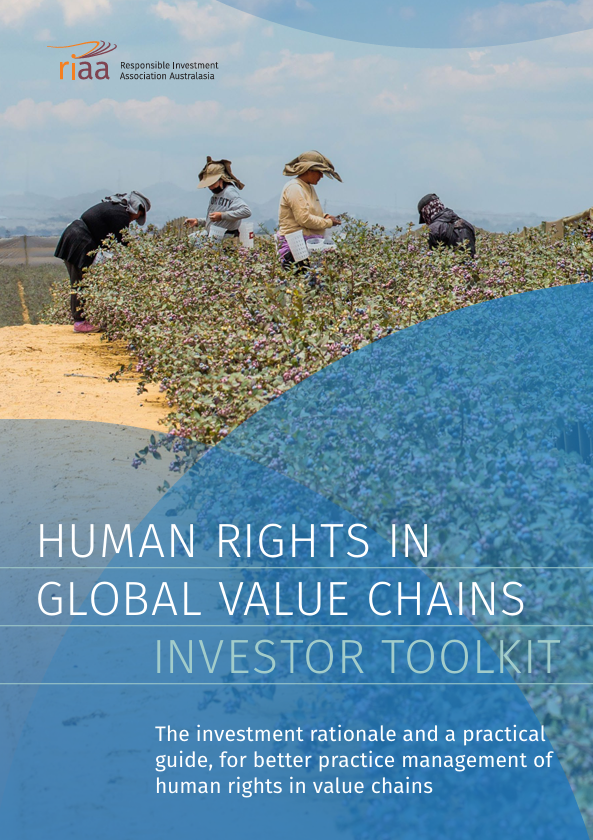
Human rights in global value chains investor toolkit
This toolkit guides investors in addressing human rights risks in global value chains. It outlines regulatory developments, risk identification practices, and engagement strategies to improve corporate accountability. Practical steps include audits, grievance mechanisms, collaboration, and traceability to mitigate modern slavery and labour abuses, enhancing long-term investment and operational resilience.
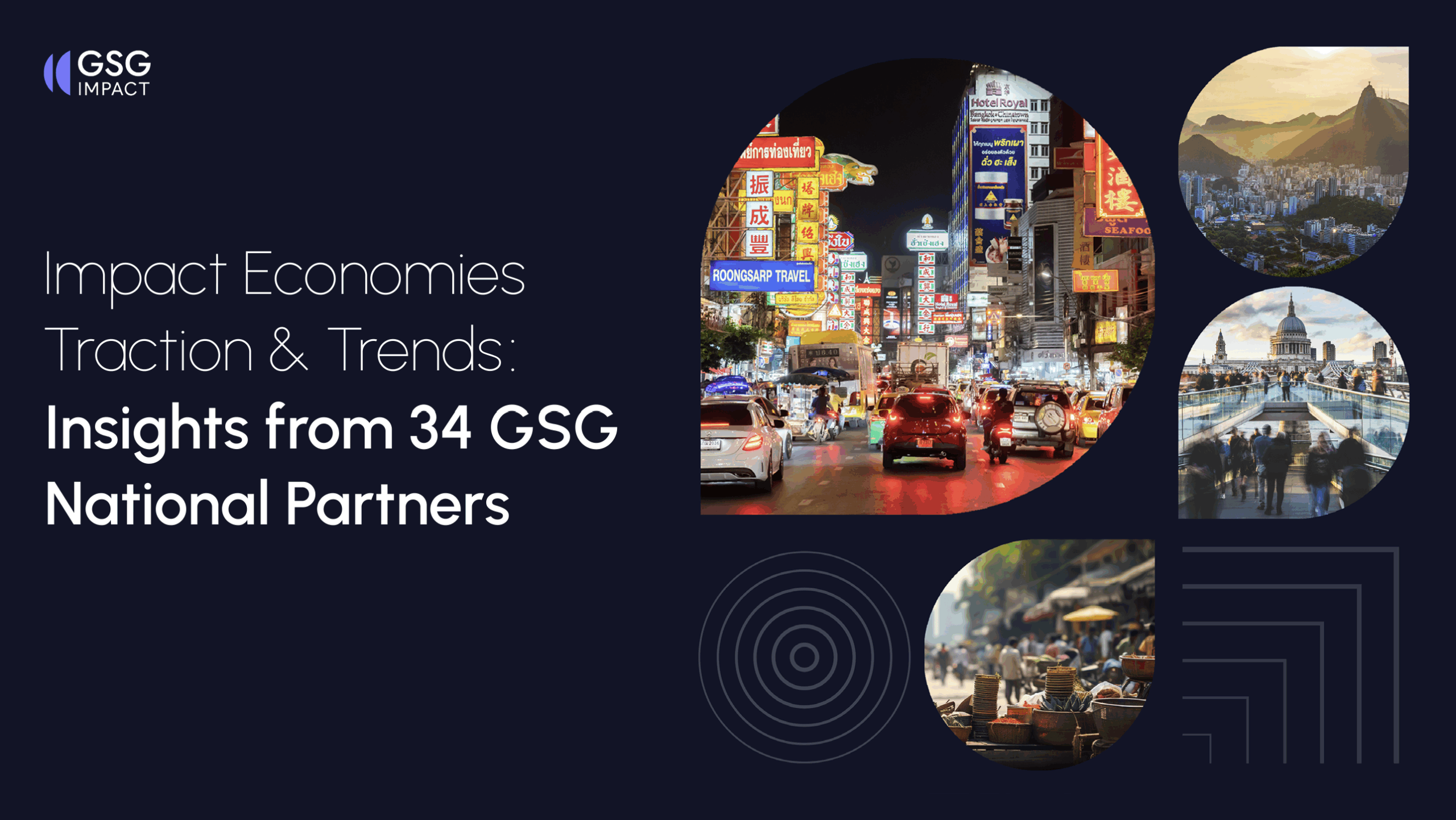
Impact economies tractions and trends: Insights from 34 GSG National Partners
This report presents insights from 34 national ecosystems advancing impact investing. It highlights trends in policy, capital mobilisation, and transparency, showing governments and institutions integrating social and environmental outcomes into investment strategies. It tracks growth in green finance, outcome-based funding, and investment readiness across emerging and developed economies.

How just transition can help deliver the Paris Agreement
This report outlines how embedding just transition principles in climate strategies supports equitable decarbonisation. It presents trends, case studies, and a UNDP framework guiding countries to integrate socio-economic considerations into their Nationally Determined Contributions and Long-Term Strategies, promoting inclusive, sustainable development in line with the Paris Agreement.
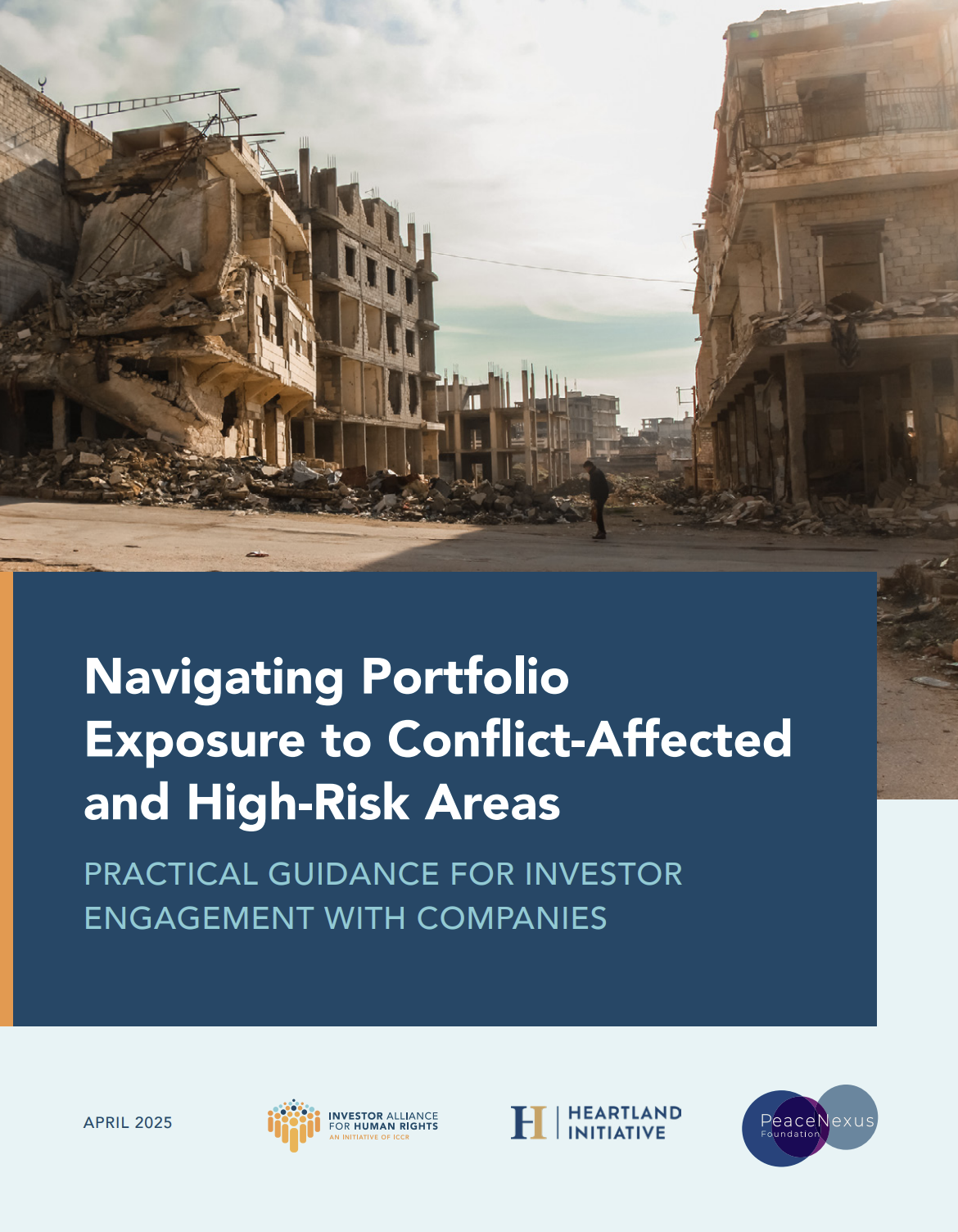
Navigating portfolio exposure to conflict-affected and high-risk areas: Practical guidance for investor engagement with companies
This report offers practical guidance for investors engaging companies on managing conflict-affected and high-risk area (CAHRA) exposure. It highlights legal obligations, best practices in heightened human rights due diligence, and governance strategies, drawn from pilot dialogues with tech and renewable energy firms. Recommendations target risk mitigation aligned with global standards.
PRI's human rights due diligence tool for infrastructure investors
The PRI Human Rights Due Diligence Tool assists infrastructure investors in identifying, assessing, and managing human rights risks throughout the investment lifecycle. It provides practical guidance aligned with international standards to support responsible investment practices in infrastructure and other real assets.
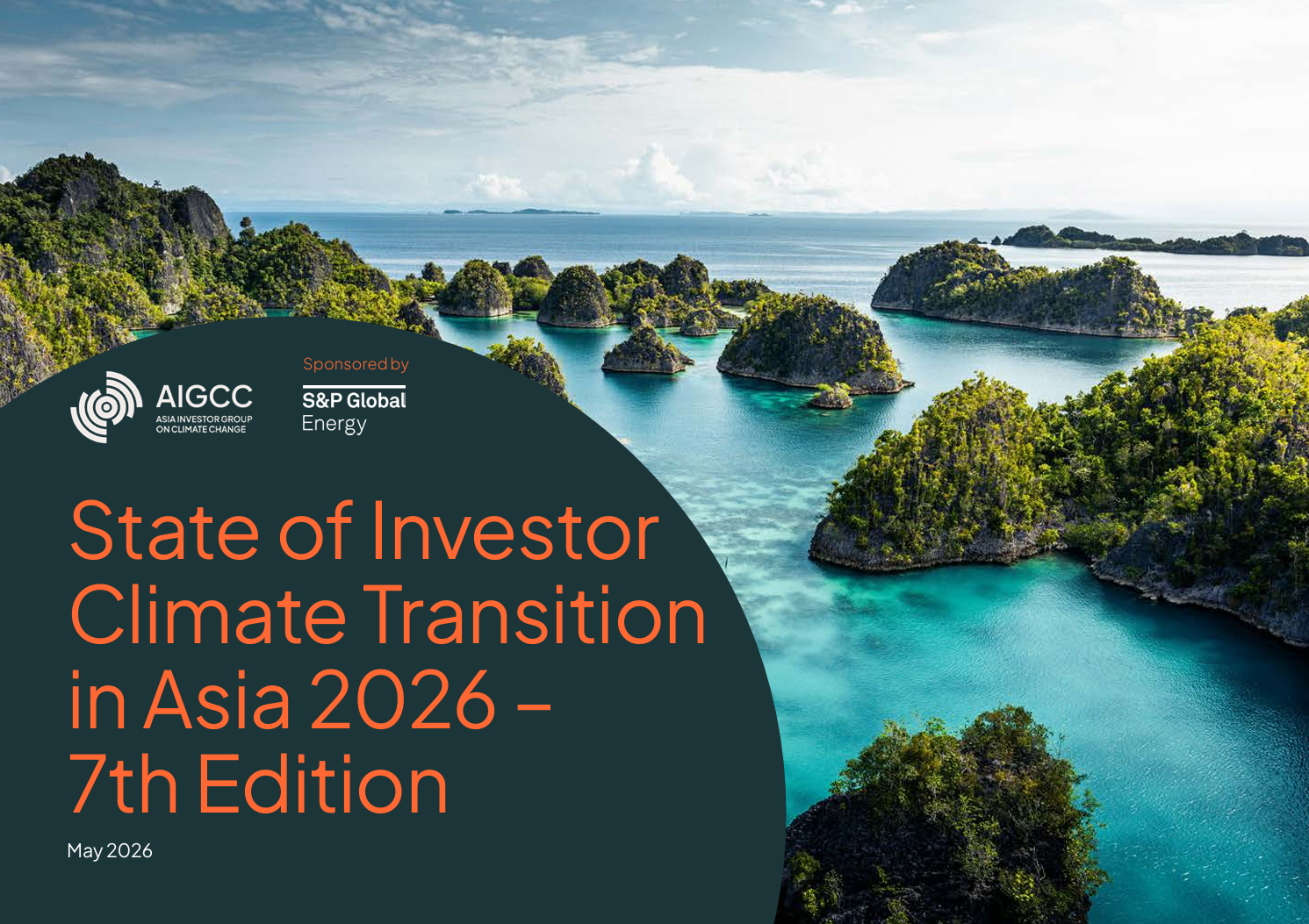
AIGCC's the state of investor climate transition in Asia benchmark series
This benchmark series examines how Asian investors are approaching net zero and climate-aligned investment, including target setting, portfolio alignment, climate risk assessment, stewardship, investment strategies and barriers to implementation across asset classes and markets in Asia.
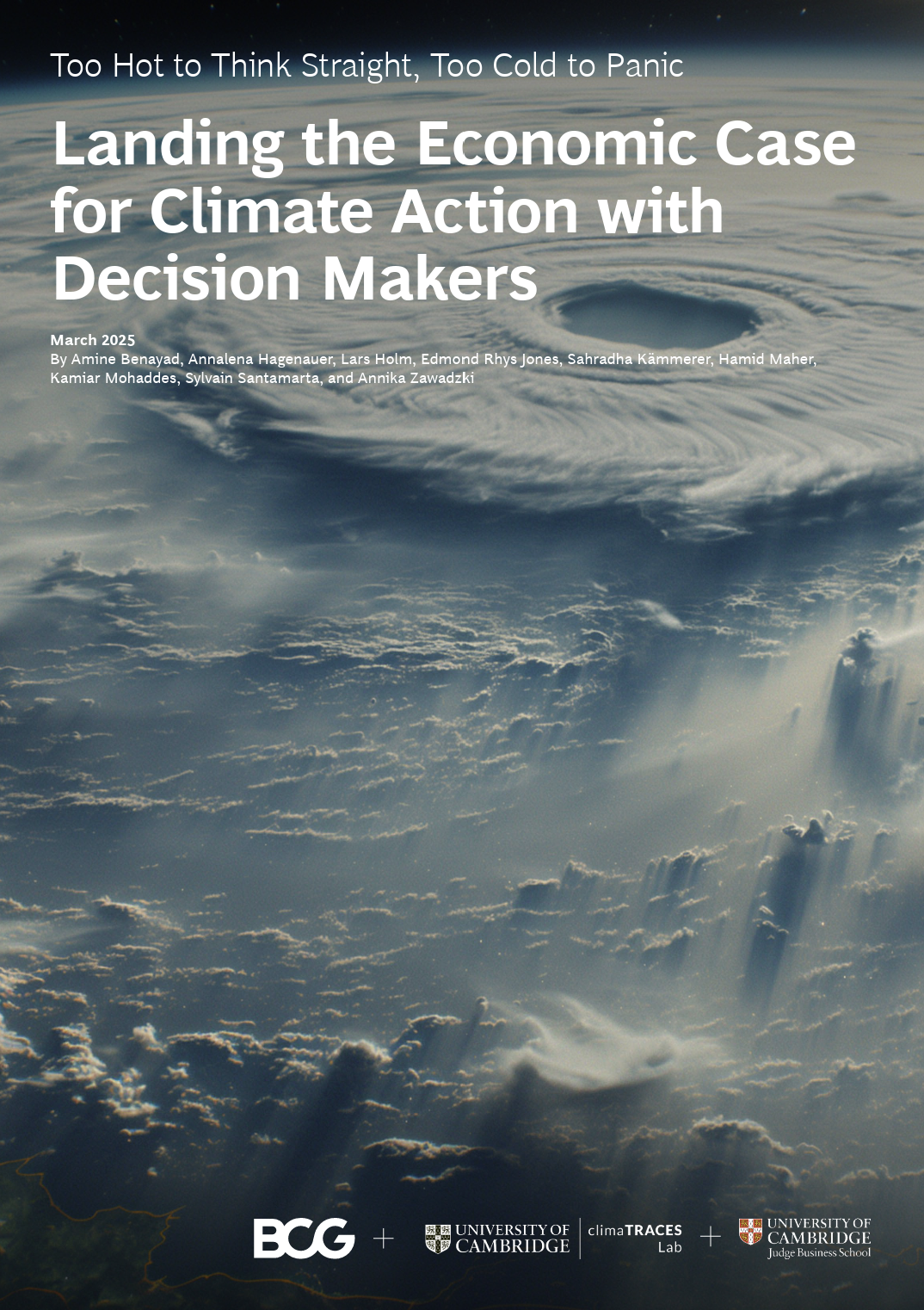
Landing the economic case for climate action with decision makers
The report outlines strategies to better communicate the economic rationale for climate action to decision makers. It examines barriers, including limited capacity and political constraints, and recommends clearer economic framing, stronger narratives, and alignment with national development goals to drive engagement and support for climate policies.
First Nations investment screening approach
This document provides a clear and concise example of how to screen investments for potential financed impacts to Indigenous Peoples, including both positive and negative impacts. The screening approach described was developed in consultation with First Nations representatives.
Australian Impact Investments (Aii)
Australian Impact Investments (Aii) is a specialist asset consulting firm dedicated to mobilising capital for positive social and environmental impact alongside financial returns. Established in 2014, Aii collaborates with charitable trusts, foundations, family offices, wealth advisors, and institutions, offering bespoke impact strategies, rigorous investment analysis, and comprehensive portfolio management. With a focus on responsible investing, Aii assists clients at every stage of their impact journey.


