
Library | SASB Sustainability Sector
Alternative Energy
Refine
204 results
REFINE
SHOW: 16



MDPI
MDPI (Multidisciplinary Digital Publishing Institute) is a Swiss-based publisher of open access, peer-reviewed journals, established in 1996. MDPI publishes over 470 academic journals across science, technology and medicine, with authors covering article processing charges to enable unrestricted global access.

Rockefeller Capital Management
Rockefeller Capital Management (RockCo) delivers wealth management, asset management and investment banking services grounded in the Rockefeller legacy. Serving individuals, families and institutions, RockCo emphasises bespoke financial solutions, generational wealth planning and strategic advisory — combining innovation with long-standing trust.

Grantham Foundation
Grantham Foundation for the Protection of the Environment supports climate innovation, environmental research and impact investing. Through its grant and investment programmes (such as its venture arm, Neglected Climate Opportunities), it backs early-stage technologies in carbon capture, clean energy, soil health and ecosystem conservation globally.

Drawdown Explorer
Drawdown Explorer is an interactive platform that catalogues climate mitigation solutions, ranking them by their emissions impact, cost, and readiness.
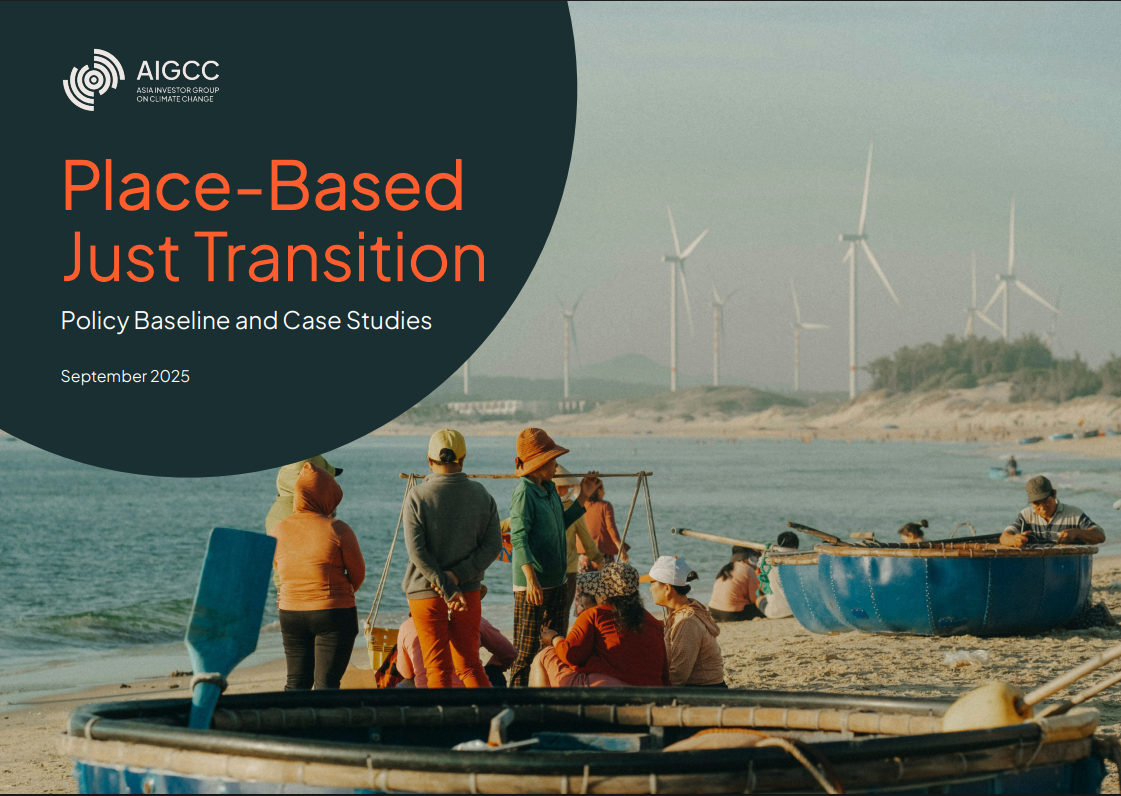
Place-based just transition: Policy baseline and case studies
This report from the Asia Investor Group on Climate Change analyses place-based just transition policies in India, Indonesia, Malaysia and Japan. It outlines market-specific policy baselines, labour and social dynamics, financing needs and case studies, providing investors and policymakers with insights into ensuring equitable low-carbon transitions in Asia.
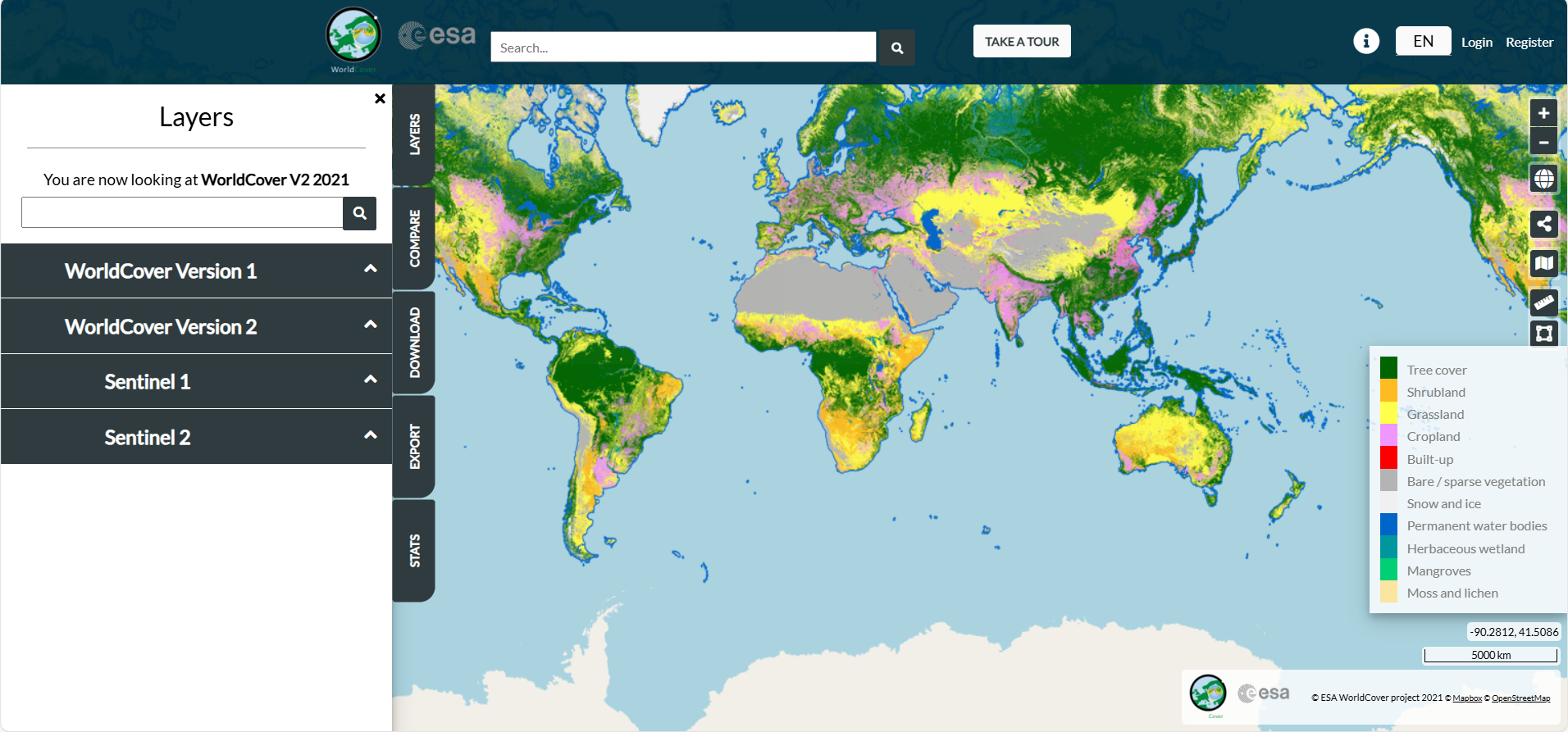
ESA WorldCover
The ESA WorldCover viewer offers an interactive web-map of global land cover at 10 m resolution, enabling overlay of Sentinel-1/2 composites, statistics by region, and download of data tiles, all without software installation.

Federal Institute for Geosciences and Natural Resources (BGR)
Federal Institute for Geosciences and Natural Resources (BGR) is Germany’s national geological survey, advising the federal government on geoscience and raw materials. It undertakes research in earth sciences, resource management, geodata systems and sustainability. Located in Hannover, BGR coordinates national geoscientific data infrastructure and policy.
Federal Ministry of Economic Affairs and Climate Action (BMWK)
Federal Ministry for Economic Affairs and Climate Action (BMWK) is a German government body responsible for economic policy, industrial strategy, energy transition, digitalisation, and climate action. It develops regulations, promotes innovation, supports businesses, and coordinates international cooperation to strengthen Germany’s economic growth while advancing sustainability and climate neutrality goals.
Climate finance
This report reviews research on climate finance, focusing on how climate risks affect financial markets. It discusses theoretical models and empirical evidence on pricing climate risk in equities, bonds, housing, and mortgages, and explores portfolio strategies for hedging. Future research directions in modelling, measurement, and financial stability are highlighted.
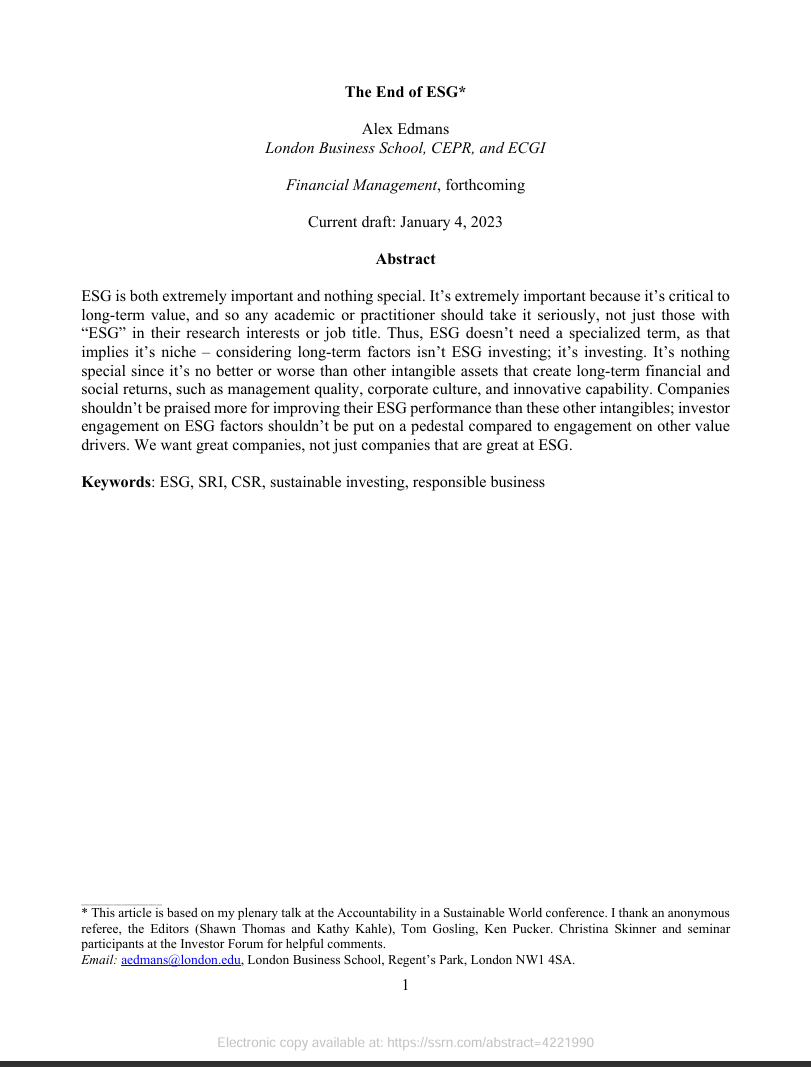
The end of ESG: Financial management, forthcoming
This report argues that ESG is both essential and ordinary: vital as a driver of long-term value but not unique compared to other intangibles such as culture or innovation. It cautions against over-emphasising ESG metrics, politicisation, and superficial classification, advocating instead a broader focus on overall sustainable value creation.

IMPACT2C web-atlas
The IMPACT2C web‑atlas is an interactive, open‑access platform that visualises the projected impacts of a +2 °C global warming across Europe and key vulnerable regions. It presents harmonised, model‑based findings—via maps, texts, and storylines—across sectors such as climate, water, energy, health, agriculture and coasts.
Just transition, environment and social considerations for the aviation fuel transition: An investor guide
This guide outlines environmental, social, and just transition considerations for investors in aviation’s fuel shift. It compares biofuels and e-fuels, highlights regulatory and biodiversity risks, and provides engagement questions to assess companies’ transition strategies, ensuring alignment with climate goals while safeguarding communities and long-term financial stability.

Oxford Programme for Sustainable Infrastructure Systems (OPSIS)
Oxford Programme for Sustainable Infrastructure Systems (OPSIS) delivers research and education on resilient, sustainable infrastructure across energy, transport, water and digital systems. Based at the University of Oxford’s Environmental Change Institute, OPSIS develops system‑of‑systems models to assess climate risks and support data‑driven decision‑making for infrastructure resilience.

Mobilising institutional capital towards the SDGs and a just transition
This report outlines pathways for mobilising institutional capital towards the Sustainable Development Goals and a Just Transition. It focuses on investment vehicles, emerging markets, and private asset classes, providing practical recommendations, case studies, and frameworks to integrate environmental, social, and community considerations into scalable, impactful financial strategies.

Guidelines for quantifying GHG reductions from grid-connected electricity projects
These guidelines provide a standardised, policy-neutral framework for quantifying greenhouse gas (GHG) reductions from grid-connected electricity projects. They cover both generation and electricity reduction activities, using simplified methods to estimate baseline emissions and avoided emissions. Intended for project developers and programme designers, the guidelines emphasise accuracy, transparency, and conservativeness.

Estimating and reporting the comparative emissions impacts of products
This report outlines a neutral framework for estimating and reporting the greenhouse gas impacts of products, both positive and negative. It advocates the use of consequential methods for decision-making, highlights methodological challenges in attributional approaches, and recommends transparency and completeness in emissions assessments and corporate reporting.


