
Library | SASB Sustainability Sector
Capital Markets
Refine
618 results
REFINE
SHOW: 16


The state of private impact investing in Canada
This report analyses the Canadian private impact investing market, which targets CA$17.7 billion in capital across 218 products. It examines market size, geographic distribution, and primary impact areas, noting a concentration in venture capital and highlighting the need for aggregation strategies and blended-finance models to scale investments.
What can investors do about climate change?
This report explores the evolving role of investors in addressing climate change. Drawing on insights from major asset managers, it advocates shifting from market-led targets to a policy-led approach. Investors are advised to focus on realistic stewardship, pragmatic objective-setting, and policy advocacy to effectively manage climate-related financial risks.
Climate litigation as a financial risk: Evidence from a global survey of equity investors
This report surveys 811 global equity investors to assess perceptions of climate litigation as a financial risk. It finds that investors view climate lawsuits as financially material, with effects often manifesting early, such as upon media coverage or filing, and affecting both carbon majors and other sectors.
Equity in principle, misalignment in practice: Adaptation finance governance in the adaptation fund and green climate fund
The report argues that adaptation finance through the Adaptation Fund and Green Climate Fund formally prioritises equity, vulnerability and country ownership, but remains constrained by voluntary funding, access barriers and project-based delivery, limiting alignment with Global South priorities.
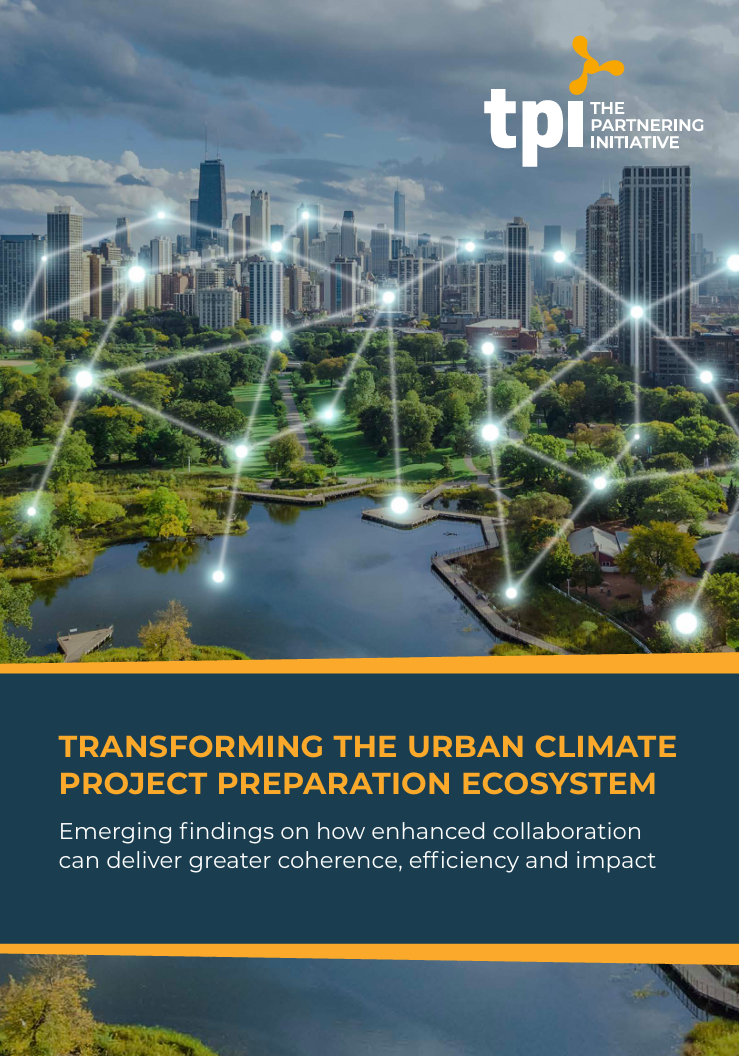
Transforming the urban climate project preparation ecosystem: Emerging findings on how enhanced collaboration can deliver greater coherence, efficiency and impact
The report examines weaknesses in urban climate project preparation and argues that stronger coordination between cities, financiers and support organisations could improve coherence, efficiency and project impact. It identifies structural and operational barriers and proposes collaborative reforms to strengthen climate finance delivery.
Physical climate risk in the United States equity market: Quantifying state–sector heterogeneity
The report presents an NGFS-aligned framework for assessing physical climate risk in U.S. equities. Using state-level GDP damage projections and sector-specific adjustments, it estimates a roughly 4.0% valuation loss for a U.S. equity benchmark under current policies, highlighting substantial variation across states and sectors.
The EU Inc.: Half European, fully digital, and genuinely innovative
The paper analyses the European Commission’s proposed “EU Inc.” framework, a harmonised digital-first company structure for EU start-ups and scale-ups. It assesses governance, financing, codetermination, digital registration and cross-border legal integration within existing EU and national company law frameworks.
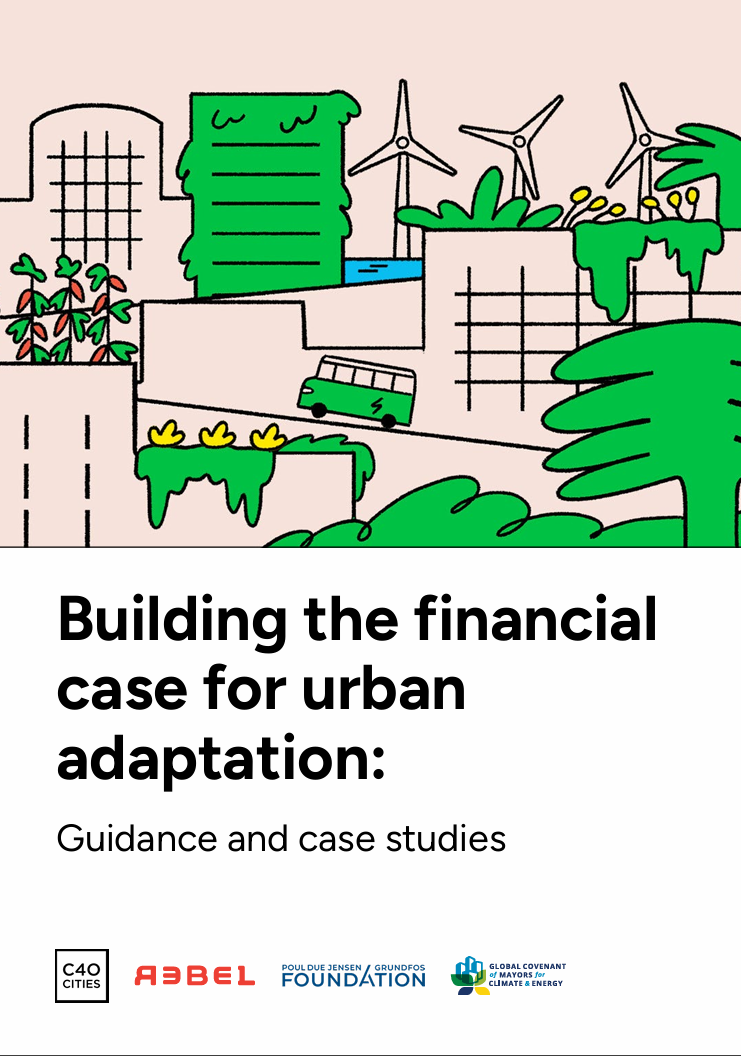
Building the financial case for urban adaptation: Guidance and case studies
C40 and Rebel outline how cities can structure urban adaptation projects to attract private finance, using ten case studies. Bankability depends on revenue logic, risk allocation, public de-risking, early financier engagement and credible monitoring.
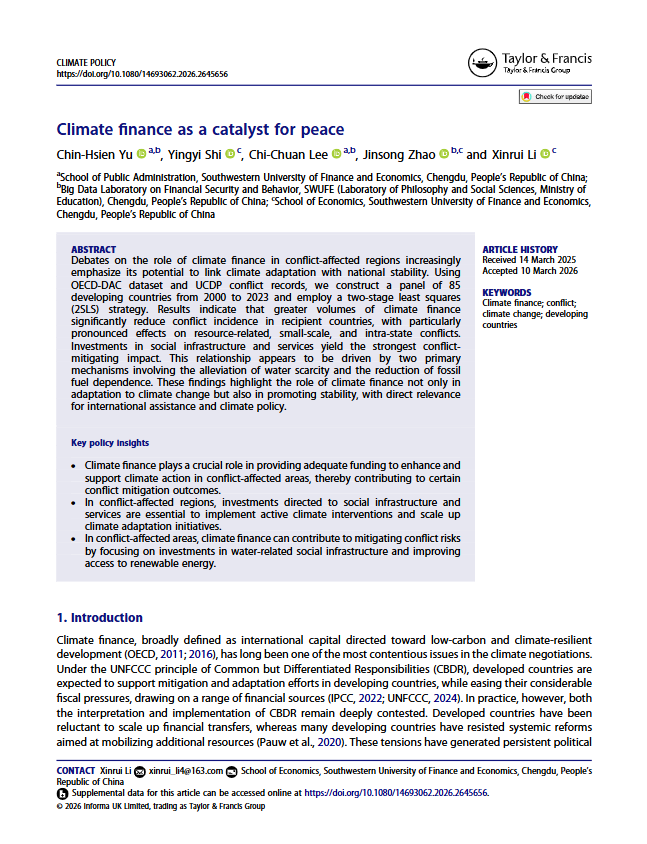
Climate finance as a catalyst for peace
Research across 85 developing countries found climate finance was associated with lower resource-related conflict risk, particularly through reduced water scarcity and greater renewable energy access. The study suggests climate finance may support stability in fragile regions, with stronger effects observed where higher funding levels were directed towards adaptation and social infrastructure.
AI in your portfolio: Risks & opportunities
Briefing paper outlining AI investment opportunities alongside systemic risks including bias, privacy, workforce disruption and environmental impacts. It highlights governance frameworks, due diligence tools and investor engagement strategies to support responsible AI investment practices and long-term portfolio resilience.
Hedging ambiguity with pro-social preferences: An illustration from green finance
The paper argues that pro-social preferences can offset ambiguity aversion in green finance by acting as a behavioural hedge. Using ambiguity-based investment models, the authors show socially motivated investors may accept uncertain green assets, lowering effective hurdle rates and supporting private capital flows into sustainable projects.
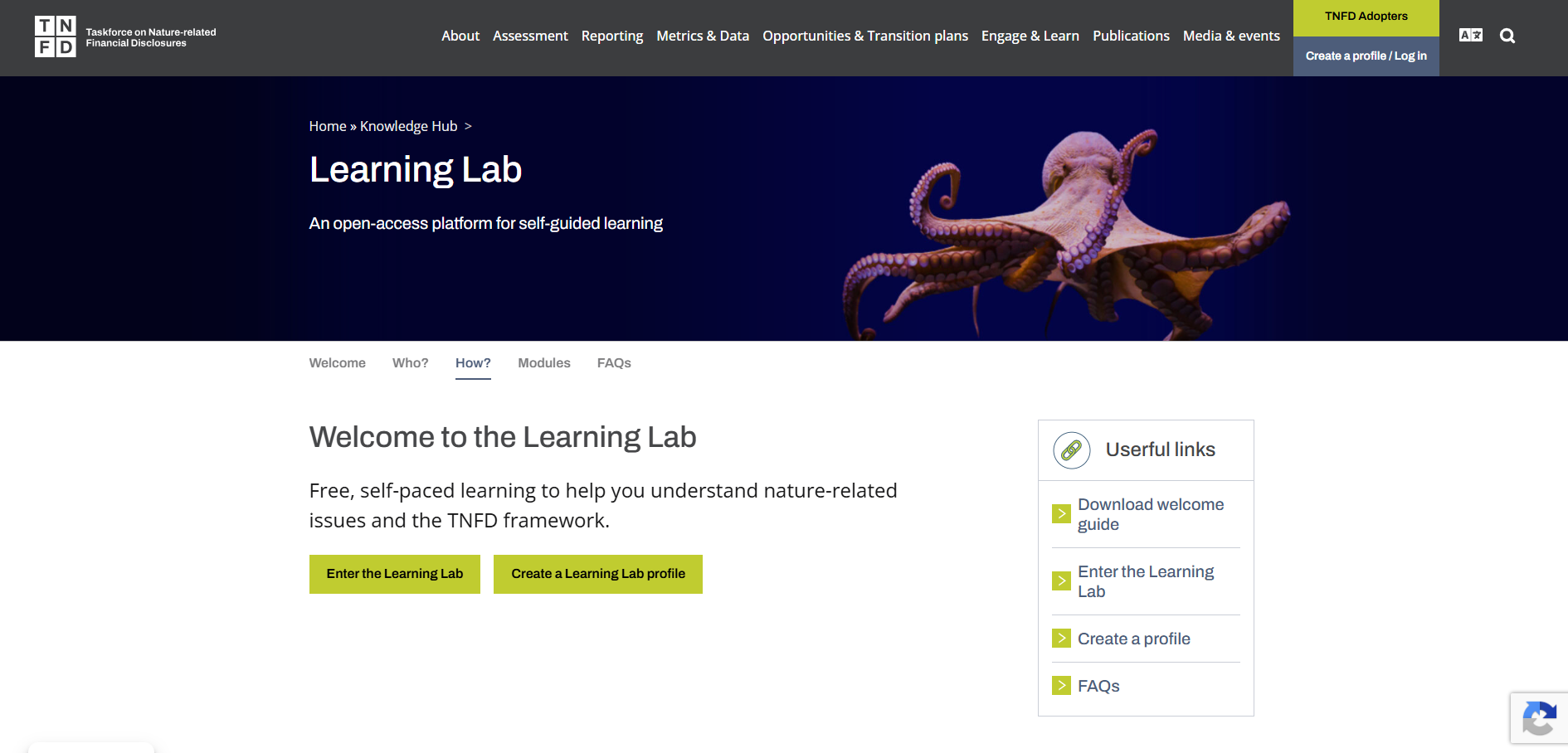
TNFD Learning Lab
TNFD’s Learning Lab is a free, open-access platform offering self-paced modules on nature-related issues and the TNFD framework. It provides videos, webinars, case studies and practical guidance to help finance and business professionals build capability in nature-related assessment, reporting and decision-making.
Systematic stewardship on the waterbed
Tröger argues corporate governance tools, including stewardship, say-on-climate votes and ESG-linked pay, cannot replace broad climate regulation. Firm-level interventions may trigger “waterbed effects”, shifting emissions rather than reducing them. Carbon pricing or comprehensive emissions caps are presented as more effective.
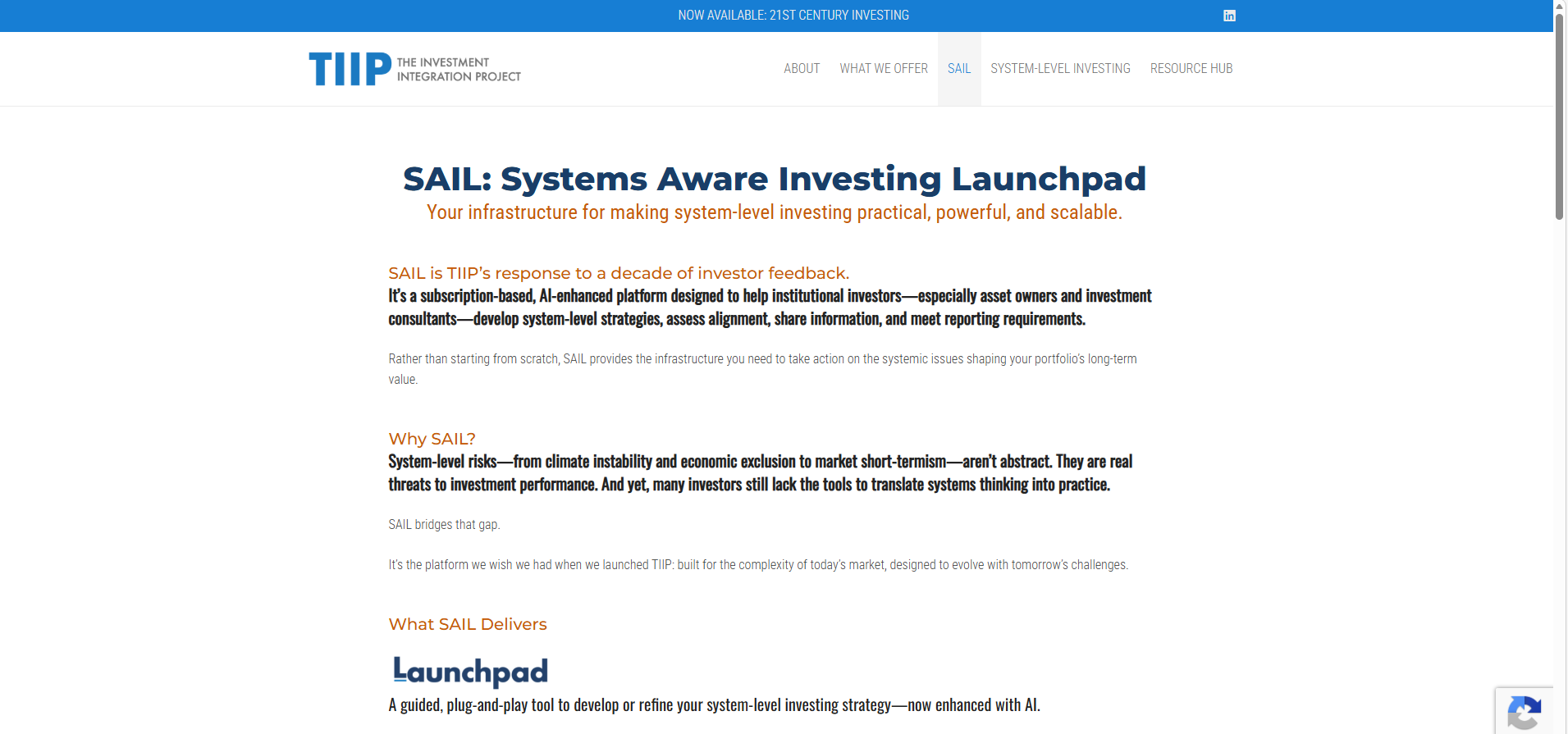
SAIL: Systems Aware Investing Launchpad
SAIL (Systems Aware Investing Launchpad) is an AI-enhanced platform developed by TIIP to support institutional investors in implementing system-level investing strategies. It provides tools for strategy development, benchmarking, reporting and collaboration, helping users assess and manage systemic environmental, social and financial risks.
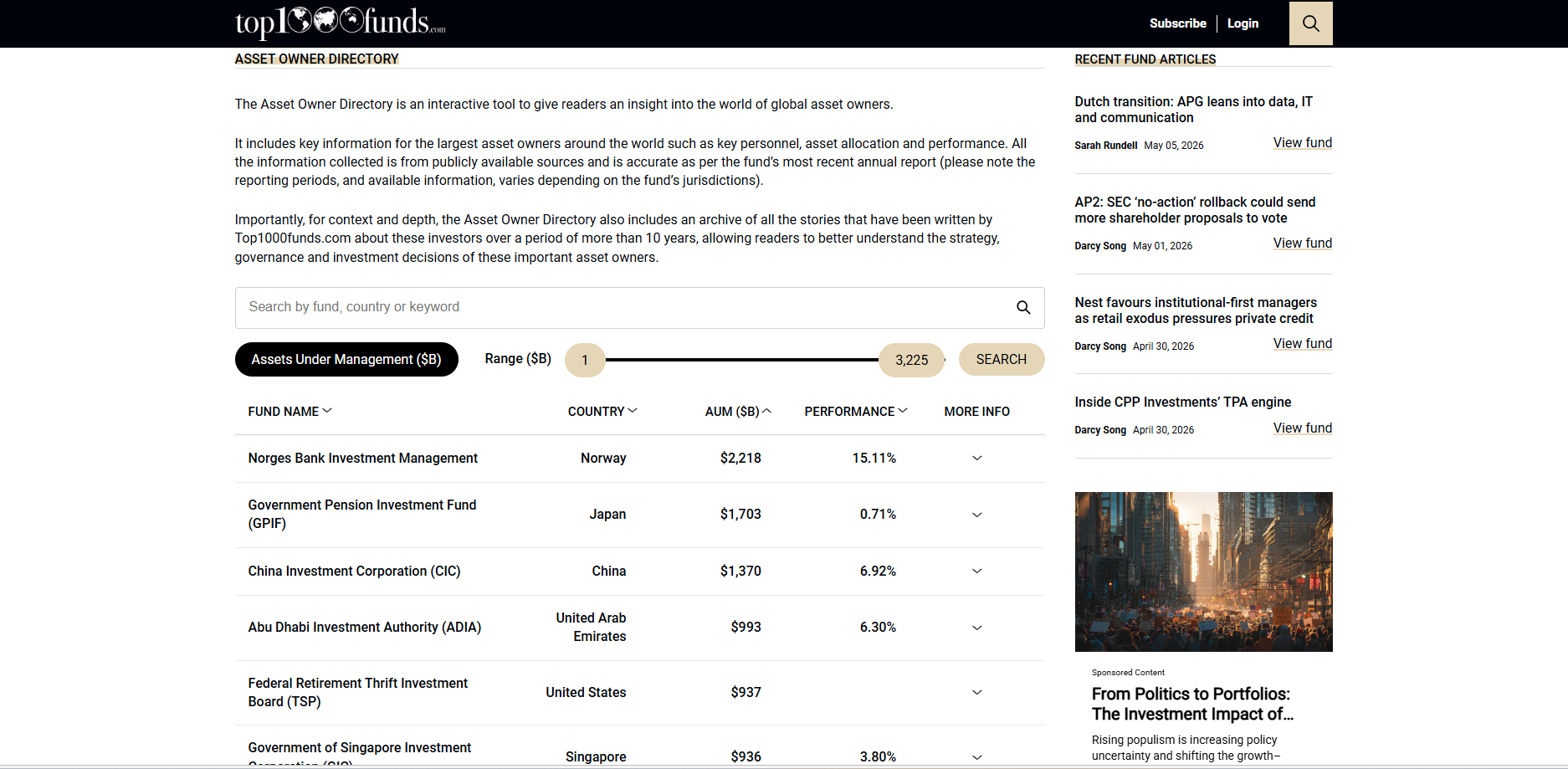
The Asset Owner Directory
The Top1000funds.com Asset Owner Directory is an interactive database of global asset owners. It provides publicly sourced information on key personnel, asset allocation and performance, alongside an archive of related articles covering investors’ strategy, governance and investment decisions.


