
Library | Finance relevance
General / All finance professionals
Refine
1353 results
REFINE
SHOW: 16


Renewable electrification as a means of transitioning away from fossil fuels: From commitment to implementation at COP31
This report evaluates renewable-based electrification as a pillar for transitioning away from fossil fuels. It proposes the ‘35 by 35’ target, analyses progress in five key countries, and outlines action priorities for COP31. The focus is on integrating renewables, efficiency, and equitable finance to accelerate global decarbonisation.
Mobile internet and employment: Evidence from 52 countries
This report analyses the impact of 3G expansion on employment across 52 countries from 2004 to 2023. It finds that while connectivity increases participation in low-income regions, it is associated with declining employment in mature economies. Gender gaps remain persistent, particularly regarding youth disengagement in poorer contexts.
Using firm-level and integrated data sources for enterprise policy development: With illustrative country analysis of firm resilience
This report examines the use of firm-level and integrated data sources, including enterprise surveys, household surveys, and administrative records, for enterprise policy development. It features case studies from Colombia, Ecuador, and Brazil, analysing firm resilience during the COVID-19 pandemic through various indicators such as productivity, informality, and workforce restoration.

Survey of Aotearoa New Zealand investors: Climate policies and actions series
This benchmark series examines the climate-related investment policies and actions of institutional investors in Aotearoa New Zealand. It monitors progress in embedding climate risks into financial decision-making, target setting, and investment in climate solutions, providing transparency and accountability across the local investment sector.
Regulating artificial intelligence in finance: Lessons from Singapore
This research analyses Singapore's multi-layered approach to regulating artificial intelligence in finance. It evaluates frameworks like the FEAT Principles and Project MindForge while identifying risks such as deepfakes and bias. The paper recommends establishing a dedicated regulatory sandbox and shared responsibility frameworks to manage evolving technological and third-party risks.

European employment and social outlook series
This report is part of a series providing an analysis of labour market and social developments within the European Union. It examines the relationship between job quality, productivity and economic performance, evaluating dimensions such as earnings and job security to inform evidence-based policymaking across Member States.
Facing backlash and derailment risks: Building capacities for navigating transformations to sustainability and justice in turbulent times
This research article identifies three backlash archetypes that threaten to derail sustainability and justice transformations during critical transition phases. To navigate these risks, the authors propose developing three transformative capacities: harnessing hope and imagination, hospicing with dignity, and enabling radical collaboration while holding paradoxes.
The Sustainable Development Goals Report 2026
This 2026 report evaluates global progress towards the Sustainable Development Goals. It reveals that only 36 per cent of targets are on track, with progress hindered by financing gaps and climate crises. The document also highlights the critical role of data and AI in future monitoring.
Estimating the date of Earth Overshoot Day 2026
Global Footprint Network identifies Earth Overshoot Day 2026 as 30 July. While the date appears later than in 2025, underlying ecological overshoot is at record levels. The report details nowcasting methodologies using proxy data to overcome UN data lags and highlights significant updates to carbon and trade accounting.
Understanding young news audiences at a time of rapid change
This report examines the shifting news consumption habits of audiences aged 18–24. It highlights a definitive move towards social-first, audiovisual content and individual creators. Furthermore, it explores the growing role of generative AI in navigating complex stories, emphasising the need for publishers to adapt to these evolving digital preferences.
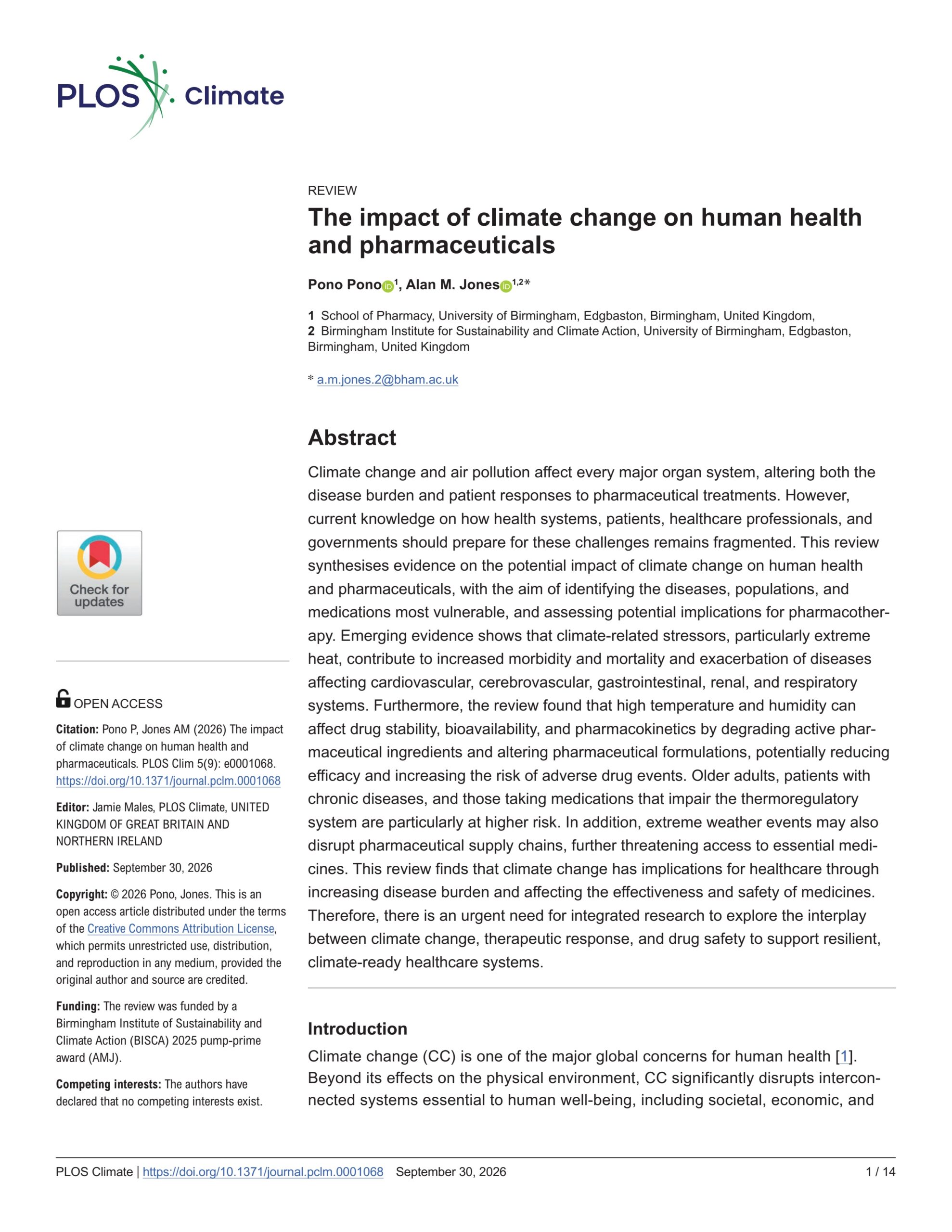
The impact of climate change on human health and pharmaceuticals
This research review examines how climate change and extreme weather increase morbidity across major organ systems. It highlights how rising temperatures and humidity compromise pharmaceutical stability and efficacy, particularly for vulnerable populations. The report calls for updated clinical guidelines and climate-resilient pharmaceutical regulations to safeguard public health.
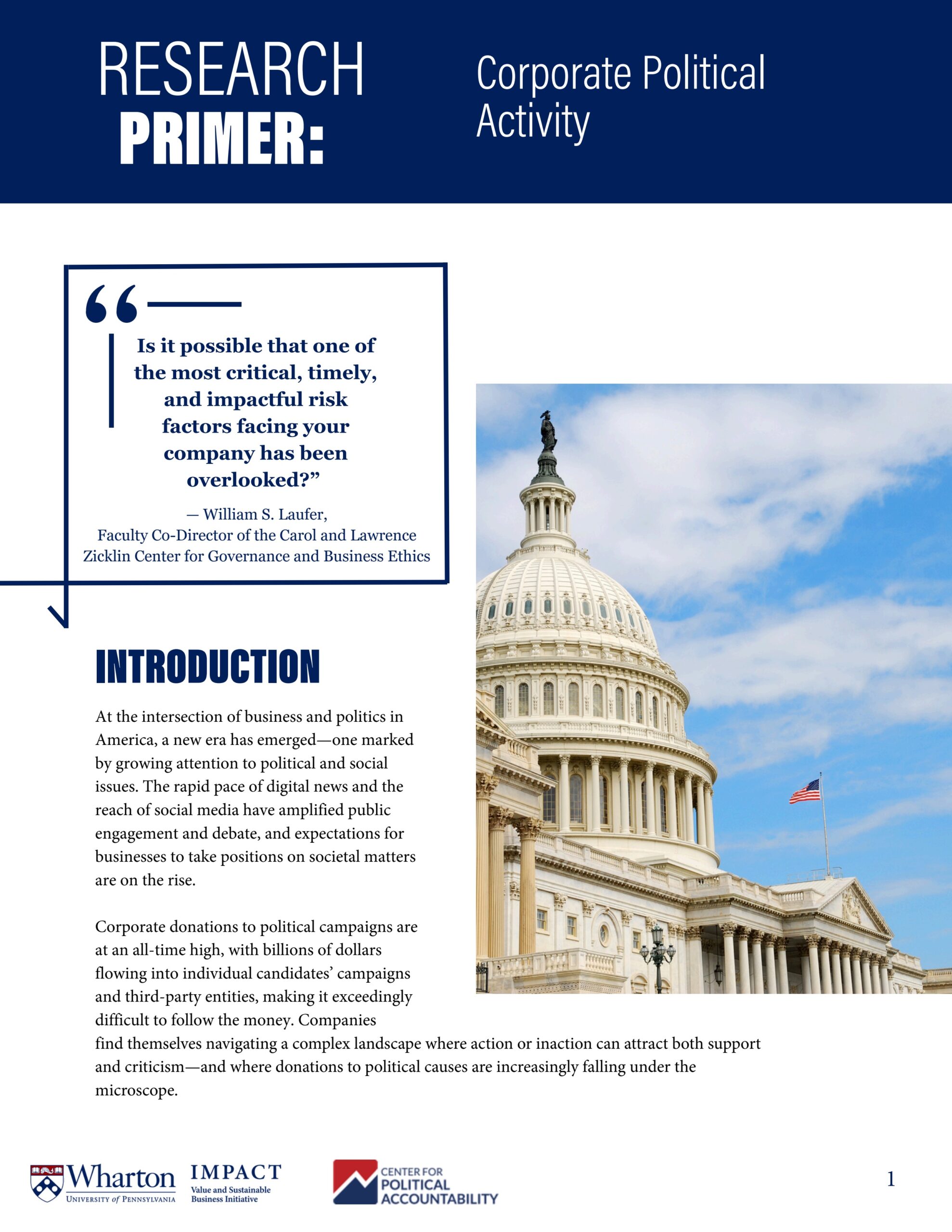
Research primer: Corporate political activity
This research primer examines the risks and motivations behind corporate political activity. It highlights how indirect donations through third-party groups can lead to reputational misalignment and potential corruption. The report advocates for robust board oversight and transparency, recommending the CPA-Zicklin Framework to align political spending with core values.

Poison plastics: How chemicals in everyday plastics are harming your health
This Environmental Justice Foundation report examines the health risks associated with chemicals in everyday plastics. It reveals that 92.8% of assessed chemicals pose high risks, including cancer and hormone disruption. The document calls for a Global Plastics Treaty to reduce production and eliminate hazardous substances through a precautionary approach.

Financing Nature: A mid-decade update: From isolated progress to implementation at scale
This report updates the global biodiversity financing landscape, identifying a US$1.317 trillion annual funding gap. It highlights that nature-negative flows reach US$7.3 trillion annually. Key recommendations include urgent subsidy reform, scaling nature-based solutions, and leveraging technological innovation to transition from isolated progress to large-scale implementation.
Climate-related risks, opportunities and impacts – Identification to quantification: An approach for identifying and assessing climate-related risks and opportunities and their associated anticipated impacts and anticipated financial impacts
This guidance for New Zealand climate reporting entities details a five-phase framework to identify and assess climate-related risks and opportunities. It provides a structured approach for moving from qualitative impact assessment to the quantification of financial impacts, supporting compliance with climate standards and strengthening strategic resilience.
State of sustainable business 2026
This 2026 research identifies a shift toward a pragmatic era in corporate sustainability, dominated by regulatory compliance. Key findings reveal a disconnect between sustainability teams and executives, stagnant budgets, and a focus on direct operations. AI adoption is rising for reporting, though formal governance remains nascent.


