Library | Finance relevance
Investment managers / asset managers
Refine
1407 results
REFINE
SHOW: 16


The battle over energy security: Challenging the fossil fuel playbook
This report by InfluenceMap analyses how the fossil fuel industry uses geopolitical instability to promote energy security narratives. It highlights the industry's historical playbook of delaying the renewable transition and outlines current counter-arguments from renewable sectors advocating for electrification to ensure genuine energy independence and affordability.
Establishing risk-based resilience indicators for hard-to-abate industries
This report develops a Resilience Indicator for hard-to-abate sectors, evaluating transition and physical climate risks. It offers a transparent, risk-based tool for investment decisions, focusing on cash-flow stability and adaptive capacity, to provide more actionable insights than generic ESG scores.
Socially-minded investors and corporate behavior
This report examines whether socially-minded investors influence corporate behaviour through voting, managerial incentives, or identity investing. It concludes that existing channels offer limited impact and evaluates potential legal reforms, such as binding shareholder votes and mandatory disclosures, to better align corporate actions with these investors' preferences.
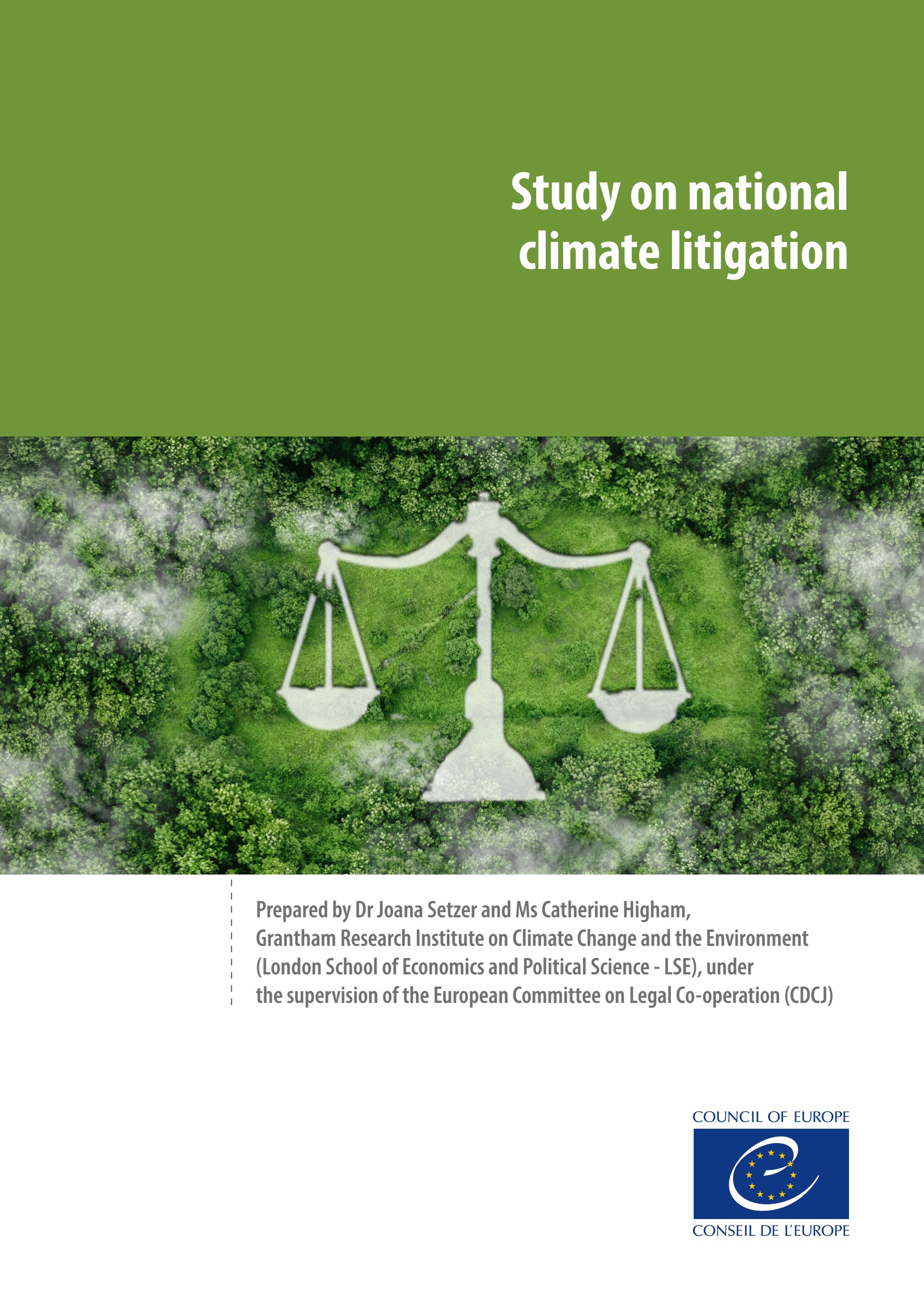
Study on national climate litigation
This report analyses strategic climate litigation trends across Europe, examining cases against states and corporations. It highlights key legal strategies, including human rights claims and polluter-pays mechanisms, while assessing the challenges of enforcing damages and the evolving obligations of governments and high-emitting businesses.
AI corporate governance and Ben & Jerry’s risk
This report analyses the governance structures of OpenAI, Anthropic, and Ben & Jerry’s. It examines the risks of appointing independent guardians to prioritise social missions over shareholder profits. The findings highlight how fully insulated guardians can harm investors and undermine their own missions without proper accountability mechanisms.
The European chemical sector's influence on biodiversity policy
This report analyses how major European chemical companies and industry associations influence biodiversity policy in the EU and US. It reveals that no assessed company aligns fully with science-based biodiversity goals, highlighting oppositional lobbying against critical regulations concerning pesticides, PFAS, and harmful chemicals.
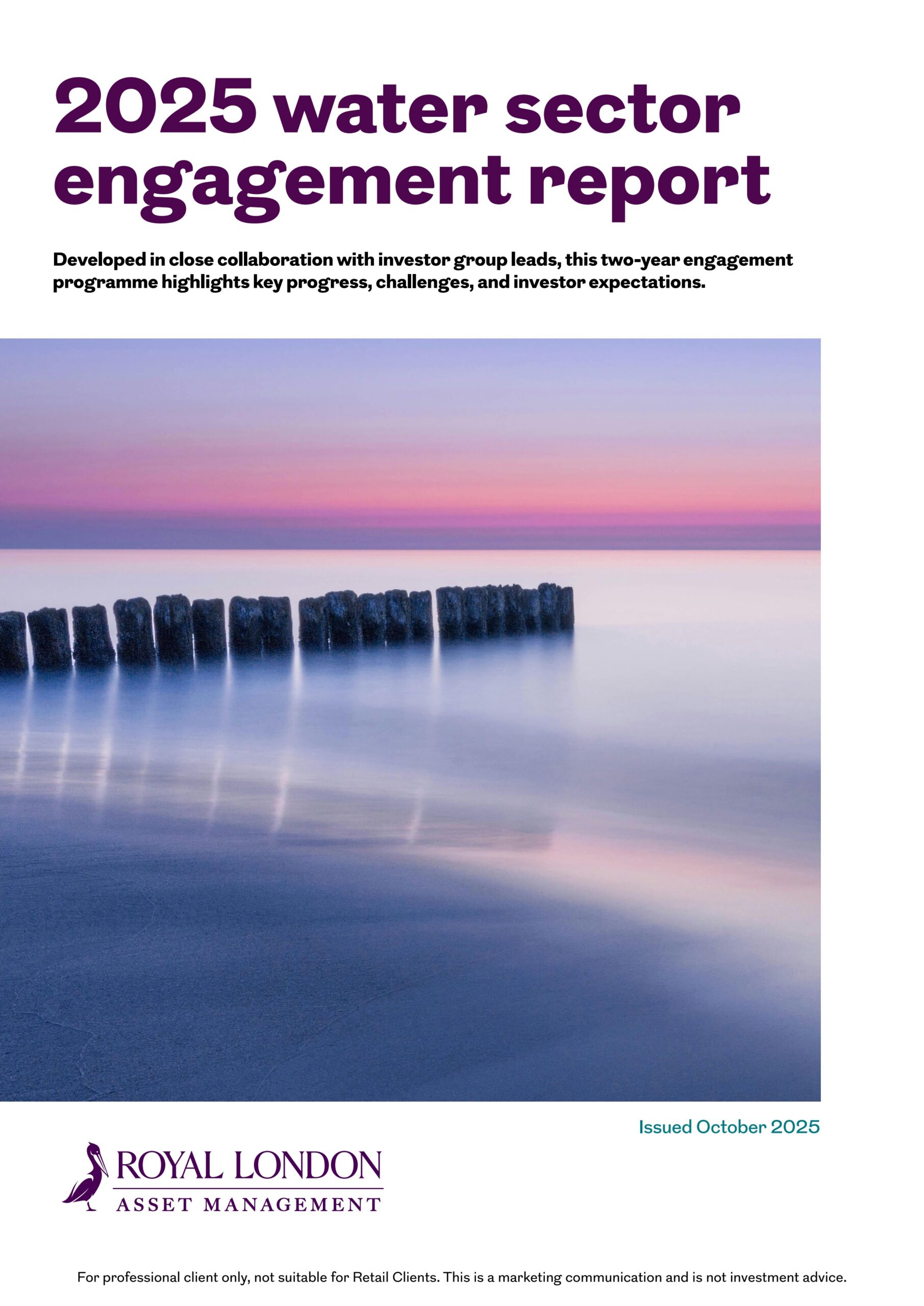
2025 Water sector engagement report
Royal London Asset Management's 2025 report presents findings from a two-year engagement programme with 11 UK water utility companies across four pillars: climate change adaptation, biodiversity, affordability, and antimicrobial resistance. Nearly all companies showed improvement from baseline scores, with biodiversity recording the most notable progress.
Optional shareholder voting
This paper examines optional shareholder voting by institutional managers (IMs) using newly available SEC data on say-on-pay votes. Only 44% of IMs vote, yet their aggregate voting footprint is twice that of mutual funds. IMs use voting as a monitoring tool, with larger positions associated with greater opposition to management.
Business models and investments for nature: Full report, 2nd edition
This report by the EU Business & Biodiversity Platform presents ten existing finance practices for investing in nature across sectors including forestry, regenerative agriculture, green infrastructure, and urban ecosystems. It explores how financial instruments such as green bonds, blended finance, and sustainability-linked loans can be structured, scaled, and replicated to help close the biodiversity finance gap.

Rankings of America's Most Just Companies
The Rankings of America's Most Just Companies evaluate the largest publicly traded US corporations on stakeholder performance and ethical behaviour.

Cracking the code: Using nature data to understand the impact of the ASX200
This report analyses the nature-related impacts of Australia's ASX200 companies. It finds that utilities, energy, and materials sectors exert the highest direct environmental pressures, whereas financials and retail sectors possess significant supply chain impacts. The report advocates for TNFD-aligned disclosures and proactive investor stewardship to mitigate systemic risks.
Reining in big tech corporations: Why platform governance requires structural regulation
This paper argues that big tech platform corporations function as state-empowered artificial legal entities rather than private contractual arrangements. Highlighting their structural and governance power, the author suggests that these organisations require structural regulation and democratic oversight to recalibrate the delegated powers granted by states.
DBSA: Financial instrument design for an effective carbon market in South Africa
The Development Bank of Southern Africa details two proposed financial instruments to support the domestic voluntary carbon market: a carbon credit-backed bond and a repurchase facility. These tools aim to mobilise private capital, address early-stage funding shortages, and improve liquidity for carbon reduction projects.
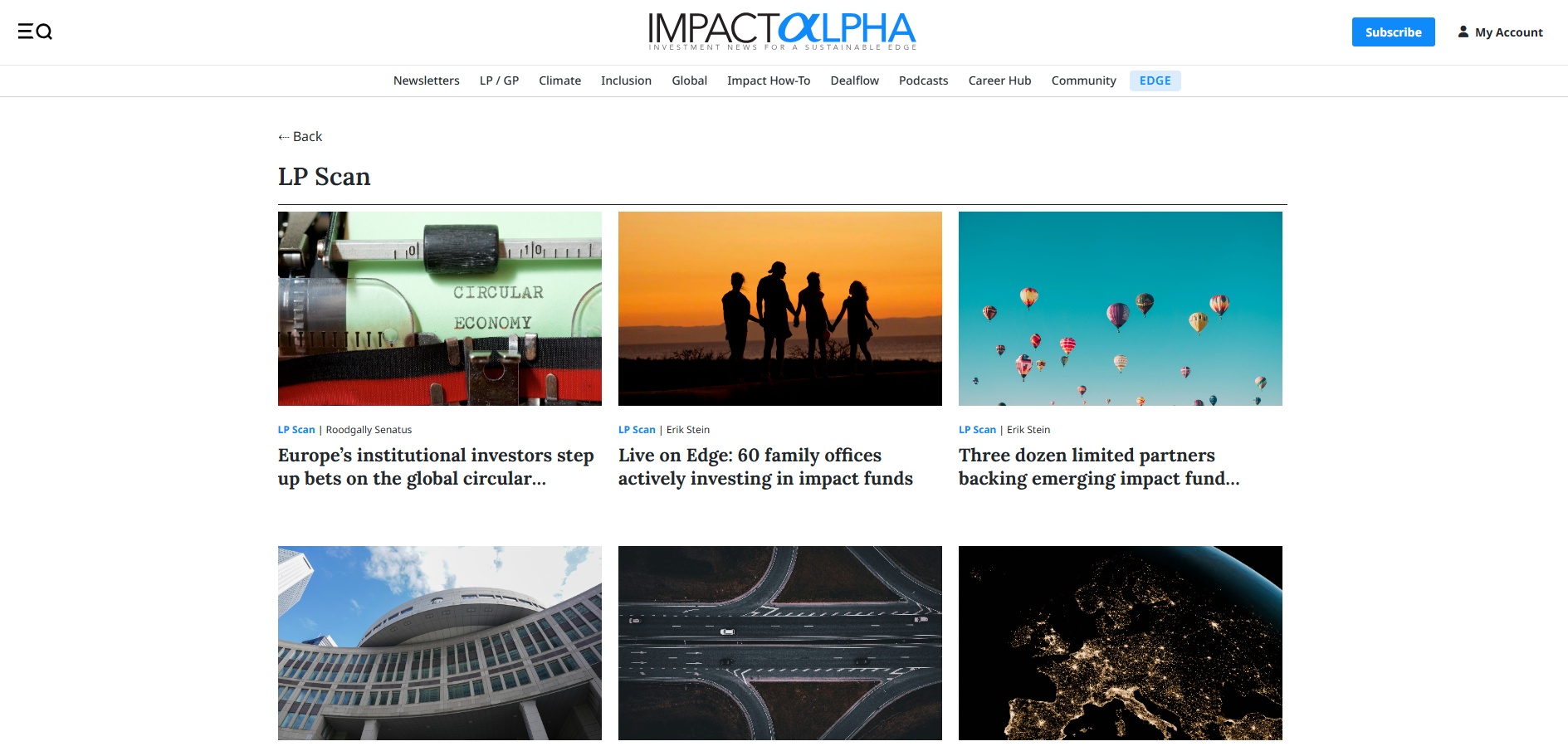
LP Scan
ImpactAlpha’s LP Scan is a dealflow and market intelligence resource that tracks limited partner (LP) activity, fund allocations and investment trends across impact investing. It provides insights into institutional investors, capital flows and fundraising activity to help market participants identify opportunities and understand developments in sustainable and impact finance.
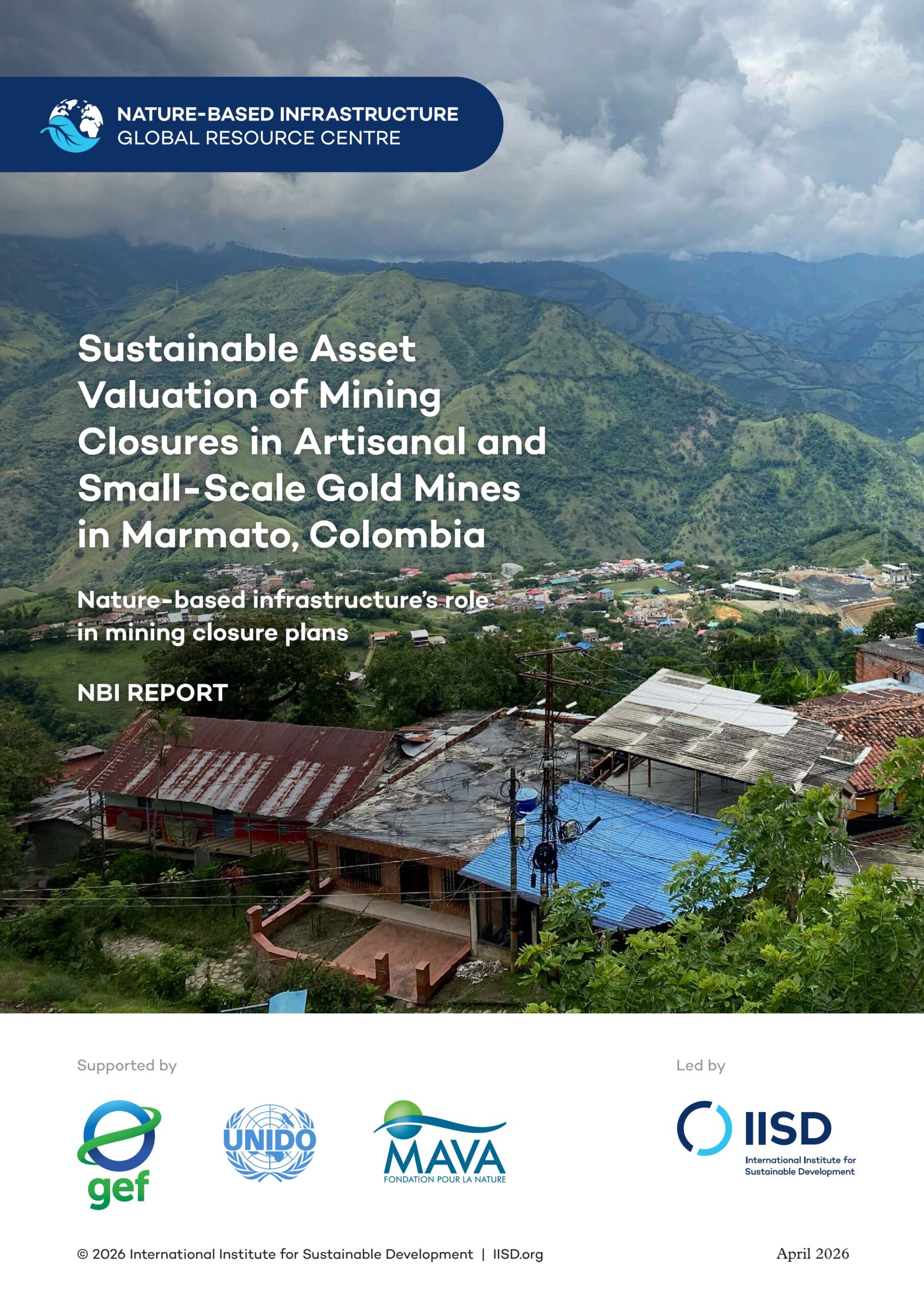
Sustainable asset valuation of mining closures in artisanal and small-scale gold mines in Marmato, Colombia: Nature-based infrastructure’s role in mining closure plans
This report assesses mine-closure strategies for artisanal and small-scale gold mining in Marmato, Colombia. Applying a systems-based valuation methodology, it highlights the economic and environmental benefits of progressive formalisation and closure, emphasising early risk reduction, physical stabilisation, and ecosystem rehabilitation to improve territorial safety.