
Library | Finance relevance
Investment managers / asset managers
Refine
1407 results
REFINE
SHOW: 16


OHCHR Knowledge Gateway
The OHCHR Knowledge Gateway provides access to human rights knowledge, practices, and resources to support implementation of international standards.
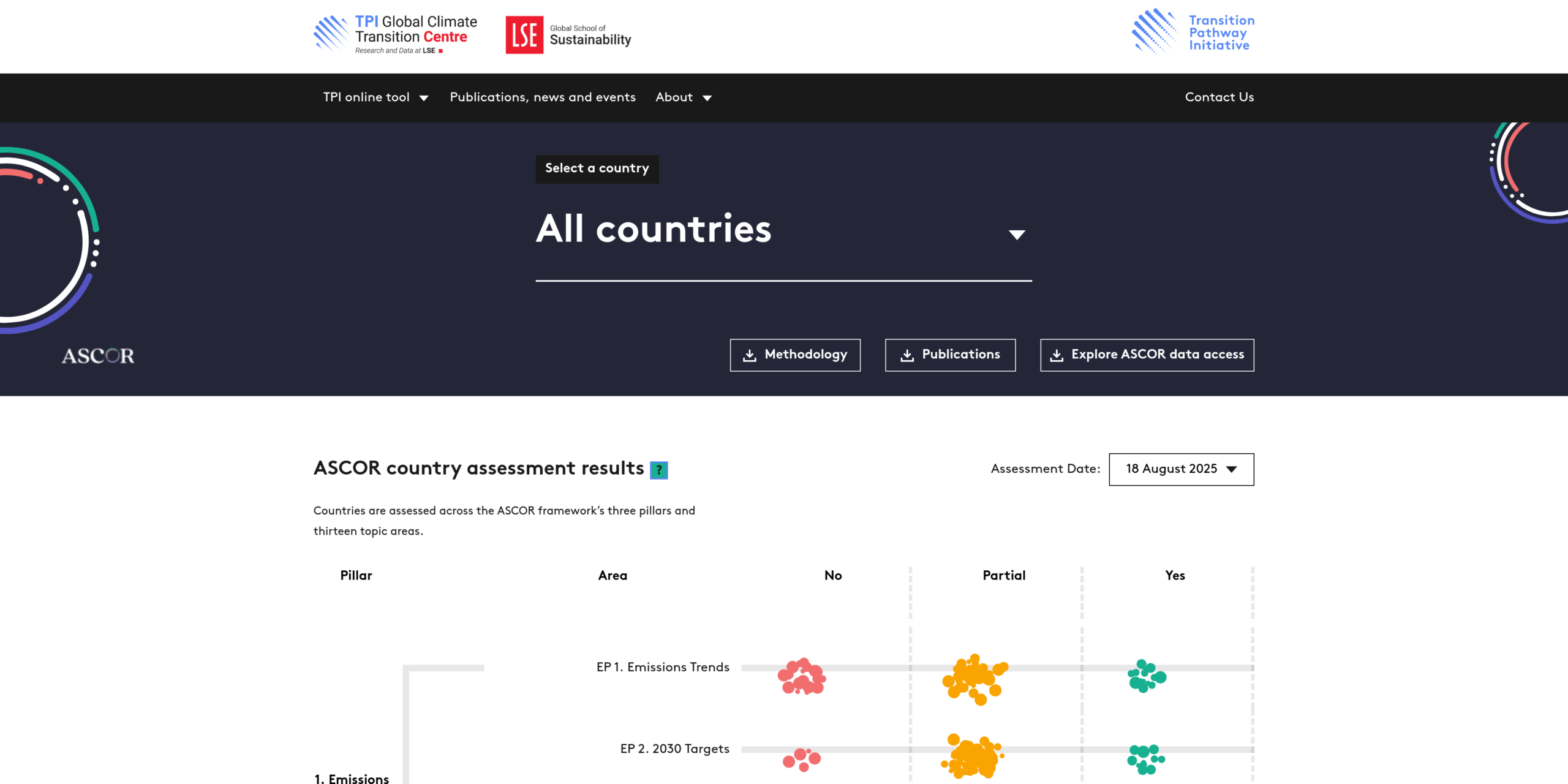
ASCOR Tool
The ASCOR Tool is an investor-led framework for assessing how countries manage the low-carbon transition and the impacts of climate change.
Finance for biodiversity data catalogue
The FfB Biodiversity Data Catalogue is an online tool designed to help financial institutions navigate the nature-related data landscape.
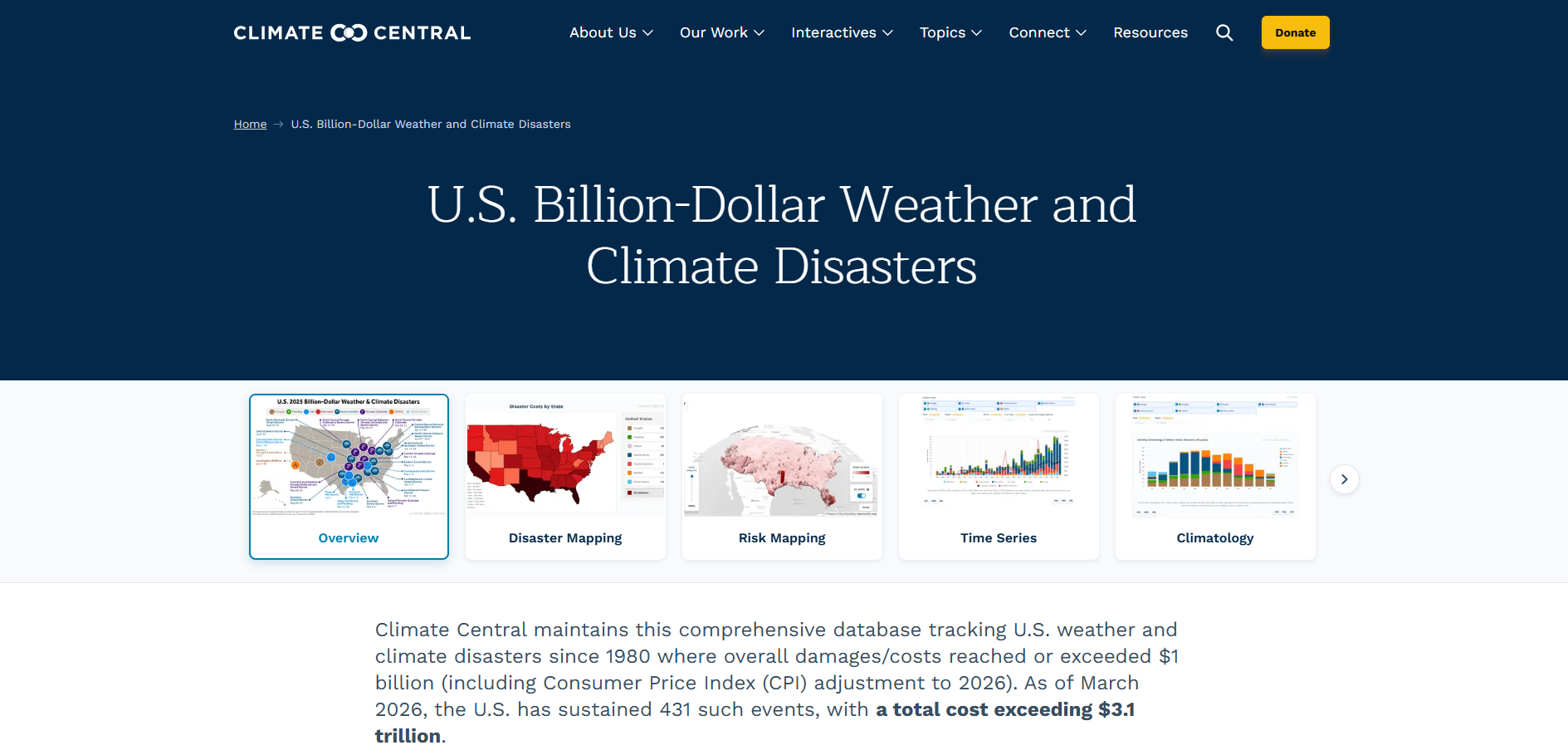
U.S. billion-dollar weather and climate disasters database
Climate Central’s database tracks the most costly U.S. weather and climate disasters since 1980, providing data on events causing $1 billion in damage.
CARE for women: Investing in care delivery to improve women’s lives and livelihoods
This report examines the 34% of the global women's health gap caused by care delivery failures. Focusing on cardiovascular risk and perinatal depression, it outlines the CARE framework to standardise screening and referral pathways, demonstrating that preventative care investments yield a three- to six-fold return.
The state of sustainable finance (2025-2030) global architecture, jurisdictional approaches and emerging trends
This report examines global sustainable finance architecture and institutional shifts from 2025 to 2030. It assesses regulatory approaches across nine major jurisdictions, highlighting the European Union as the benchmark. The analysis identifies structural trends, including transition finance scaling, nature risk integration, and the harmonisation of sustainability reporting.
The state of private impact investing in Canada
This report analyses the Canadian private impact investing market, which targets CA$17.7 billion in capital across 218 products. It examines market size, geographic distribution, and primary impact areas, noting a concentration in venture capital and highlighting the need for aggregation strategies and blended-finance models to scale investments.
Leaning on uncertainty: Are European countries overrelying on carbon removals to reach climate targets?
This report analyses the climate strategies of six European countries and the European Commission, revealing a risky overreliance on unproven carbon dioxide removal technologies. It highlights fragmented planning, absent feasibility assessments, and policies contradicting scientific advice, warning that current approaches threaten effective climate action.
Mobilising trade associations as a force for good: A playbook for companies
This playbook outlines a five-step framework for companies to manage their indirect policy engagement through trade associations. It provides guidance on articulating science-based climate policy priorities, assessing association alignment, engaging to drive improvement, and rigorously reviewing memberships to ensure they support corporate sustainability targets.
Corporate engagement guide: Addressing deforestation in Australia
This corporate engagement guide provides institutional investors with a step-by-step pathway to address deforestation within Australia's largest listed supermarkets and banks. It evaluates the current progress of major companies and offers actionable guidance to implement robust deforestation-free commitments, safeguard financial stability, and mitigate systemic economic risks.
Tax Incentives in national investment laws: Bridging the gap between tax and investment policy-makers
This report analyses how tax incentives are embedded and governed within national investment laws across emerging markets and developing economies. It highlights coordination gaps between investment and tax authorities, the dominance of tax holidays, and the need for stronger anti-cumulation safeguards to prevent unintended revenue losses.
Off the books: Inside Australia's hidden system of migrant worker exploitation
This report analyses the systemic underpayment of temporary migrant workers in Australia. Surveying almost 10,000 individuals, it reveals two-thirds receive less than their legal entitlements. Employers frequently utilise insecure structures, such as misclassified independent contracting and casual work, to evade their responsibilities under the Fair Work Act.
Underwriting the future of resilience: Developing insurable and bankable infrastructure
This report explores how the insurance industry assesses physical climate risks for new social infrastructure projects. It identifies five key enablers to integrate climate resilience across project lifecycles, advocating for early stakeholder engagement and forward-looking risk assessments to ensure long-term asset insurability, bankability, and value in a changing climate.
Value of nature: The investment case for nature-based solutions
This report examines how Ecosystem Service Valuation (ESV) can scale finance for Nature-based Solutions (NbS). By revealing the distribution of socio-economic benefits and costs across stakeholders, ESV provides a standardised framework to inform financial mechanisms and structure effective public-private partnerships.
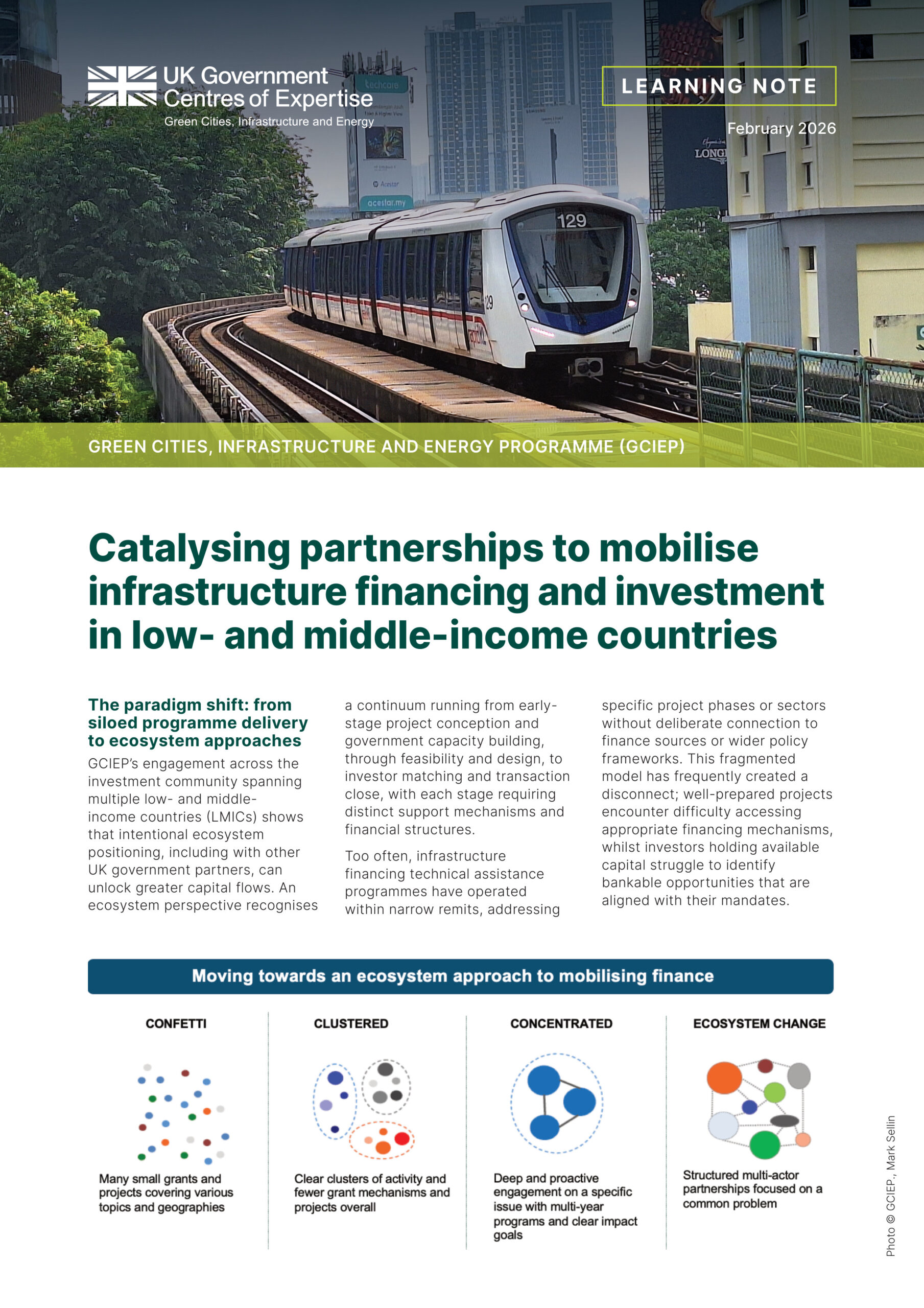
Catalysing partnerships to mobilise infrastructure financing and investment in low- and middle-income countries
This learning note explores how an ecosystem approach to infrastructure financing can mobilise capital in low- and middle-income countries. It highlights the importance of early finance engagement, de-risking mechanisms, and integrated partnerships to transform technically sound projects into commercially viable investments.
Who is behind the nicotine industry in Europe? Leading players and their financiers
This research maps the key players in Europe's nicotine product industry and their financial backers. It examines ten companies, their supply chains, and specific nicotine-related financing. Findings reveal that major tobacco multinationals receive the vast majority of financing, predominantly from North American and European institutions.


