
Library | Finance relevance
Investment managers / asset managers
Refine
1407 results
REFINE
SHOW: 16


What can investors do about climate change?
This report explores the evolving role of investors in addressing climate change. Drawing on insights from major asset managers, it advocates shifting from market-led targets to a policy-led approach. Investors are advised to focus on realistic stewardship, pragmatic objective-setting, and policy advocacy to effectively manage climate-related financial risks.
Climate litigation as a financial risk: Evidence from a global survey of equity investors
This report surveys 811 global equity investors to assess perceptions of climate litigation as a financial risk. It finds that investors view climate lawsuits as financially material, with effects often manifesting early, such as upon media coverage or filing, and affecting both carbon majors and other sectors.
Reforming investment contracts: Why policy - makers must act now — and how
This policy brief highlights the urgent need to reform investor–state contracts to support sustainable development. It explores how fragmented frameworks, outdated stabilisation clauses, and tax incentives undermine national laws. The report recommends strengthening interministerial coordination, assessing existing contracts, and developing national model agreements to improve transparency and policy coherence.
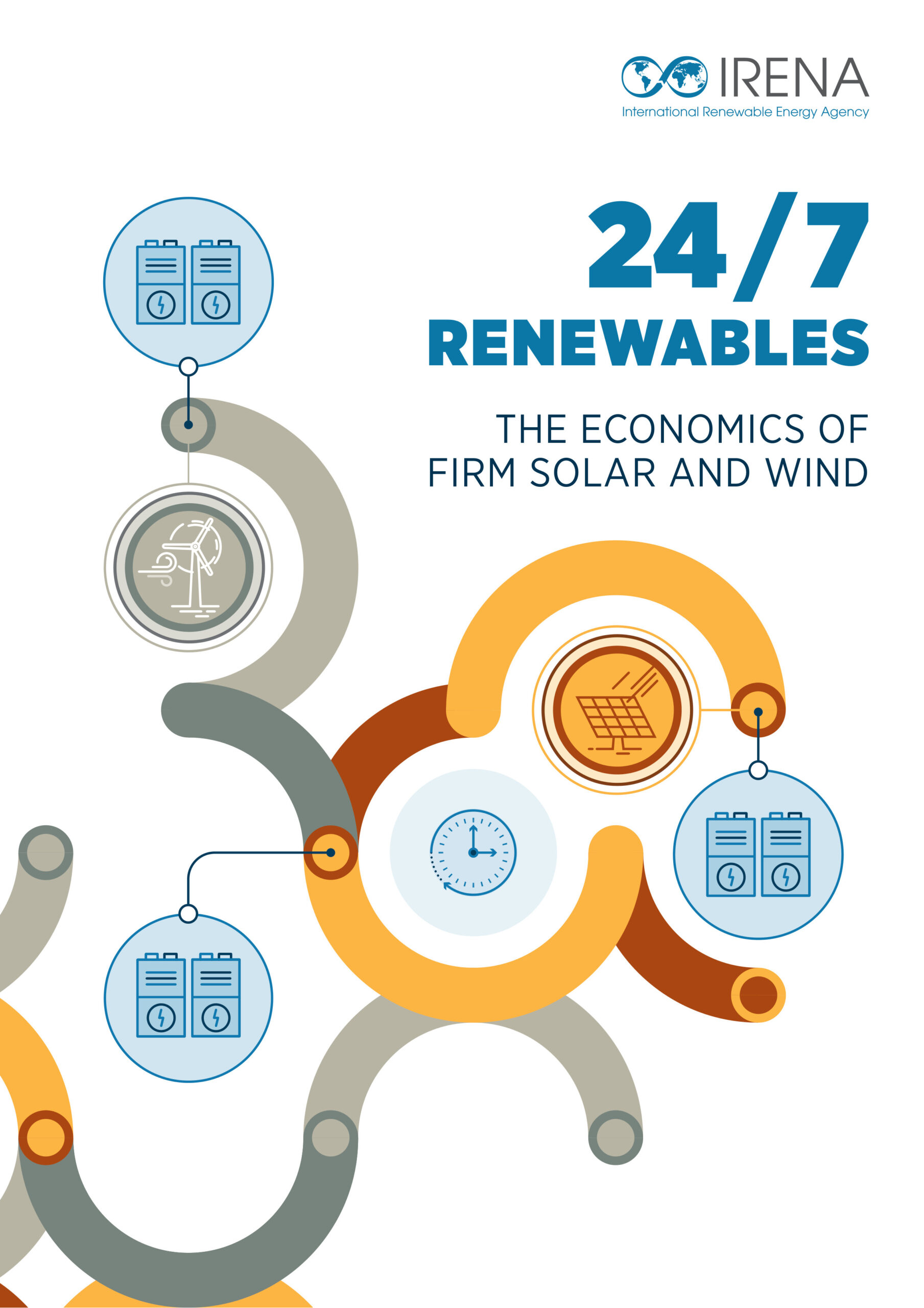
24/7 renewables: The economics of firm solar and wind
This report analyses the transition to reliable, round-the-clock renewable energy through solar, wind, and battery storage. Introducing the firm levelised cost of electricity (F-LCOE), it evaluates the cost-competitiveness of hybrid systems against fossil fuels and outlines the necessary policy reforms to support widespread deployment.
Energy and AI in East Asia
This report examines the intersection of artificial intelligence and energy in East Asia. It highlights how AI optimises renewable energy integration and grid management, whilst addressing rising data centre electricity demand. It recommends accelerating digitalisation, updating regulatory frameworks, and promoting clean energy procurement to ensure sustainable development.
Governance: Hard to build, easy to erode: Global trends, business implications and the role of employer and business membership organizations
This report analyses global governance trends from 1996 to 2024, revealing widespread stagnation and persistent risks of backsliding. It highlights the critical link between stable institutional governance, increased foreign direct investment, and the necessary role of business membership organisations in sustaining long-term policy reforms.
Physical climate risk in the United States equity market: Quantifying state–sector heterogeneity
The report presents an NGFS-aligned framework for assessing physical climate risk in U.S. equities. Using state-level GDP damage projections and sector-specific adjustments, it estimates a roughly 4.0% valuation loss for a U.S. equity benchmark under current policies, highlighting substantial variation across states and sectors.
Applying TNFD nature-related metrics in the fishing sector: Insights from investors and industry
TNFD guidance for the fishing sector outlines how investors and seafood companies use nature-related metrics to assess risks, disclosure and stewardship. Findings highlight growing demand for traceability, stock health and bycatch data, while noting certification interoperability, persistent data gaps and emerging access to blue finance instruments.
The EU Inc.: Half European, fully digital, and genuinely innovative
The paper analyses the European Commission’s proposed “EU Inc.” framework, a harmonised digital-first company structure for EU start-ups and scale-ups. It assesses governance, financing, codetermination, digital registration and cross-border legal integration within existing EU and national company law frameworks.
Legal form and corporate outcomes: Evidence from the societas europaea
Study finds Societas Europaea adoption improves firms’ international positioning, increasing foreign investor ownership and cross-border acquisitions. However, markets generally react negatively, information asymmetry rises, and shareholder returns weaken post-adoption, suggesting governance flexibility and supranational identity benefits may be offset by uncertainty and potential minority shareholder concerns.
A Lens on the transition: Trends shaping the future economy: Sector in focus: Healthcare
Impax Asset Management reviews sustainability-driven trends shaping healthcare, highlighting AI-enabled productivity gains, regulatory pressures, and supply chain localisation. The report examines opportunities in healthcare equipment, life sciences and managed care, alongside risks from regulation, product liability, affordability concerns and geopolitical tensions.
AI in your portfolio: Risks & opportunities
Briefing paper outlining AI investment opportunities alongside systemic risks including bias, privacy, workforce disruption and environmental impacts. It highlights governance frameworks, due diligence tools and investor engagement strategies to support responsible AI investment practices and long-term portfolio resilience.
Hedging ambiguity with pro-social preferences: An illustration from green finance
The paper argues that pro-social preferences can offset ambiguity aversion in green finance by acting as a behavioural hedge. Using ambiguity-based investment models, the authors show socially motivated investors may accept uncertain green assets, lowering effective hurdle rates and supporting private capital flows into sustainable projects.
TNFD Learning Lab
TNFD’s Learning Lab is a free, open-access platform offering self-paced modules on nature-related issues and the TNFD framework. It provides videos, webinars, case studies and practical guidance to help finance and business professionals build capability in nature-related assessment, reporting and decision-making.
Systematic stewardship on the waterbed
Tröger argues corporate governance tools, including stewardship, say-on-climate votes and ESG-linked pay, cannot replace broad climate regulation. Firm-level interventions may trigger “waterbed effects”, shifting emissions rather than reducing them. Carbon pricing or comprehensive emissions caps are presented as more effective.
SAIL: Systems Aware Investing Launchpad
SAIL (Systems Aware Investing Launchpad) is an AI-enhanced platform developed by TIIP to support institutional investors in implementing system-level investing strategies. It provides tools for strategy development, benchmarking, reporting and collaboration, helping users assess and manage systemic environmental, social and financial risks.


