
Library | Asset Class
Listed Equities
Shares of publicly traded companies on stock exchanges, representing ownership and claim on profits.
Refine
617 results
REFINE
SHOW: 16


The MSCI sustainability institute net-zero tracker series
The MSCI Sustainability Institute Net-Zero Tracker is a periodic benchmark series that monitors how listed companies align with global climate goals. It provides a consistent framework for assessing emissions pathways, transition readiness, disclosure practices and climate-related investment context across markets and sectors.

Climate change & the engagement gap: Why investors must do more than move the needle, and how they can
This report argues that climate change poses systemic risks to diversified portfolios and that conventional ESG engagement is insufficient. It proposes investor-led, enterprise-agnostic “guardrails” to limit greenhouse gas emissions, protect overall economic value, and complement inadequate regulation.
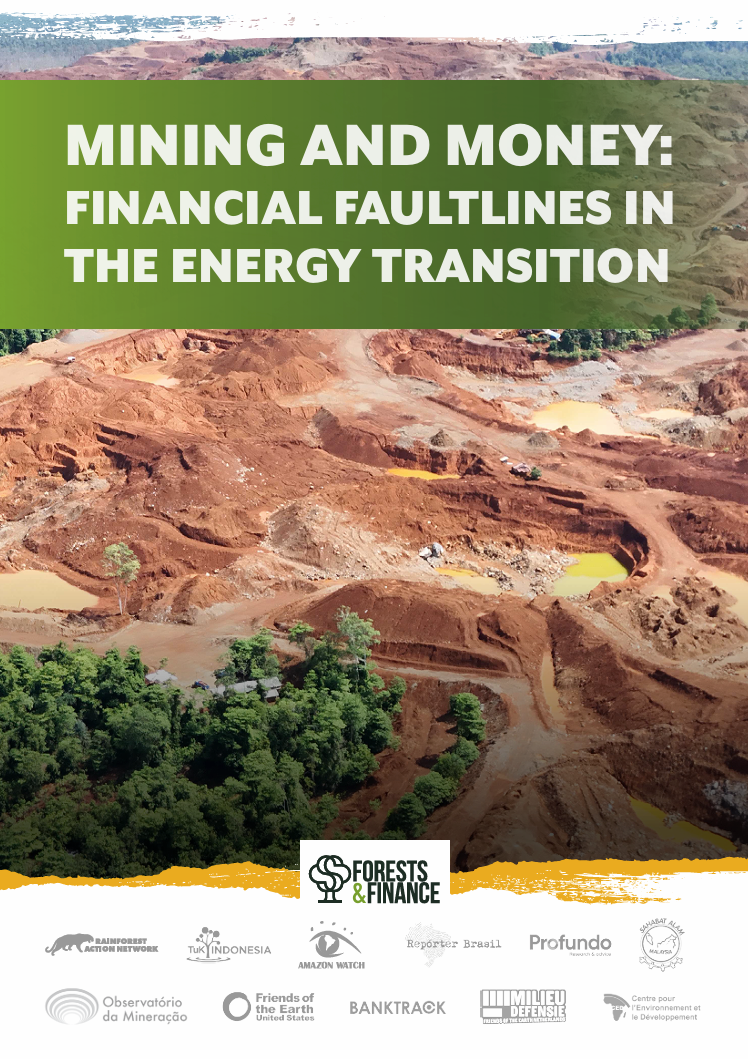
Mining and money: Financial fault lines in the energy transition
This report analyses global financing of transition mineral mining, showing concentrated capital flows, weak financial institution policies, and material environmental and human rights risks. It links bank and investor finance to mining harms across key regions and calls for stronger regulation and safeguards to enable a just energy transition.

Systems-informed stewardship part II: Bringing a systems perspective to stewardship
This article applies a systems lens to stewardship, arguing that fragmented intermediation and entrenched short-term time horizons undermine sustainability outcomes. It calls for recognising these structural barriers as a critical step toward more effective, systems-informed stewardship.

Climate Engagement Canada
Climate Engagement Canada is an investor-led collaborative initiative supporting corporate climate action in Canada. It engages companies on net-zero alignment, climate governance and transition planning, using benchmarks, dialogue and public reporting to drive accountability, manage climate risk and support a just transition.

Climate Engagement Canada
Climate Engagement Canada is a public database that tracks and analyses climate-related engagement activities by Canadian institutional investors. It provides company-level information on engagement themes, progress, and outcomes to support transparency, accountability, and informed assessment of investor stewardship practices.
A path to post-growth pensions: How rethinking retirement savings could help us ensure wellbeing for all
This report examines how pension systems reliant on perpetual economic growth face systemic financial, social and environmental risks. It proposes reorienting pensions towards a post-growth framework, emphasising wellbeing and multicapital outcomes over financial returns alone, and outlines pathways and barriers for pension fund reform.

Women’s equality in the workplace series
The Gender Equality Report & Ranking is an annual benchmark series, first launched in 2017, that assesses corporate gender equality across publicly listed companies using Equileap’s proprietary scorecard. It enables investors and finance professionals to compare company performance, monitor progress and incorporate gender equality considerations into investment analysis.
Nature-related risk and financial implications for investors
This investor briefing examines how nature-related physical, transition and system-level risks translate into financial risks for investors. It outlines macroeconomic and company-level impacts, and describes how institutional investors can integrate nature considerations into investment strategies, stewardship and policy engagement.
Sustainability disclosure landscape report for risk management: Insights from climate-focused case studies
This report reviews sustainability disclosure standards and regulatory uptake, focusing on climate-related risk management. Using case studies, it examines IFRS S1 and S2 implementation, materiality assessments and transition plans, highlighting disclosure gaps, data challenges and practical approaches to improve decision-useful climate risk reporting.
IFRS S1: General requirements for disclosure of sustainability-related financial information
IFRS S1 sets general requirements for sustainability-related financial disclosures, requiring entities to report material sustainability risks and opportunities affecting cash flows, access to finance and cost of capital, using consistent governance, strategy, risk management, and metrics disclosures.
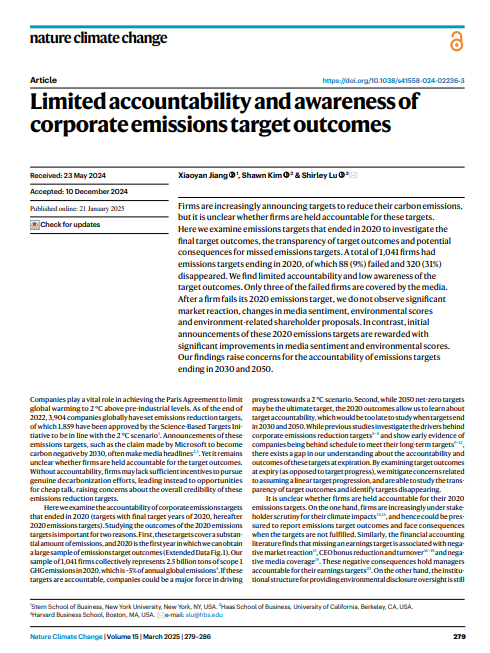
Limited accountability and awareness of corporate emissions target outcomes
The study analyses 1,041 corporate emissions targets ending in 2020, finding limited accountability. Thirty-one per cent of targets disappeared and 9% failed, with minimal disclosure, media attention or market penalties. By contrast, target announcements improved media sentiment and ESG scores, raising concerns for future climate targets.
Net Zero Asset Managers' target disclosures series
The Net Zero Asset Managers Target Disclosures is a reporting series that tracks how participating asset managers set, disclose, and update net zero targets over time. It provides a consistent, initiative-wide view of commitments, disclosure practices, governance arrangements, and methodological approaches across reporting years.
Plastic promises scorecard series
The Corporate Plastic Pollution Scorecard is a benchmark series that assesses how large consumer-facing companies address plastic packaging responsibility. It reviews corporate policies, commitments, disclosures, and practices across key areas of packaging design, reuse, recycled content, transparency, recycling support, and producer responsibility, enabling consistent comparison over time.

Sustainable Finance Roundup January 2026: Geopolitics, Energy Transitions, and Systemic Risk
This month’s sustainable finance article roundup examines a landscape increasingly shaped by geopolitics and climate risk, as near-term fragmentation, energy security, and affordability pressures collide with intensifying long-term threats from climate change, biodiversity loss, and water stress. The works featured analyse how these dynamics are reshaping capital allocation, disclosure, and resilience planning, demonstrating the growing need for sustainable finance to integrate geopolitical risk with real-economy transition.
Corporate climate responsibility monitor series
The Corporate Climate Responsibility Monitor is a recurring research series that independently assesses the transparency, integrity and credibility of corporate climate strategies. It evaluates how major global companies set, disclose and implement emission reduction targets, using a consistent methodology to enable year-on-year comparison across sectors.


