
Library | Asset Class
Multi-Asset / General
Investment strategies that allocate across multiple asset classes (e.g., equities, bonds, real estate, alternatives) for diversification.
Refine
618 results
REFINE
SHOW: 16


Global landscape of climate finance series
Global Landscape of Climate Finance is a recurring benchmark series produced by Climate Policy Initiative that provides a consistent overview of global climate finance flows. It examines sources, instruments, uses, and geographic distribution of finance to track progress and comparability across years.
IQAir world air quality series
The World Air Quality Report is an annual research series assessing global air quality using ground-level PM2.5 monitoring data. It provides consistent country, regional and city-level comparisons, supported by transparent methodology and harmonised datasets to inform policy, research and investment analysis.
Benchmarking impact: Australian impact investor insights activity and performance series
Benchmarking Impact is a benchmark series that provides a structured, recurring assessment of Australia’s impact investing market. It examines investor activity, market practices, and product development to support comparability over time and inform understanding of how impact investing is evolving across the financial system.
The global tipping points series
The Global Tipping Points Report is a research series examining Earth system tipping points and positive tipping dynamics. It synthesises interdisciplinary evidence on systemic risks, governance considerations and pathways for transformation, supporting decision-makers in understanding non-linear climate and environmental change across global systems.
State of supply chain sustainability series
The State of Supply Chain Sustainability is an annual benchmark series that examines how organisations define, govern, and implement environmental and social sustainability across global supply chains. It provides a consistent research framework to track evolving practices, pressures, and management approaches over time.
Planetary health check series
The Planetary Health Check is an annual benchmark series providing a consistent, science-based assessment of the Earth system. It applies the Planetary Boundaries framework to monitor planetary stability, resilience, and life-support functions, supporting comparability over time and informing policy, finance, and strategic decision-making and Planetary Boundaries Science is a research lab within the Potsdam Institute for Climate Impact Research (PIK), focused on advancing scientific understanding of the planetary boundaries framework. It does not operate as an independent organisation and should be covered under PIK’s institutional profile.
Voices of Aotearoa: Demand for ethical investment in New Zealand series
This annual research series examines public attitudes, expectations and behaviours relating to ethical, responsible and impact investing in New Zealand. It tracks how consumers engage with investment choices, transparency, fund practices and adviser interactions, providing a consistent evidence base to monitor evolving demand over time.
State of global water resources series
The State of Global Water Resources is an annual benchmark series produced by the World Meteorological Organization. It provides a consistent, global overview of freshwater conditions across key components of the hydrological cycle, supporting comparative assessment and decision-making across regions and time.
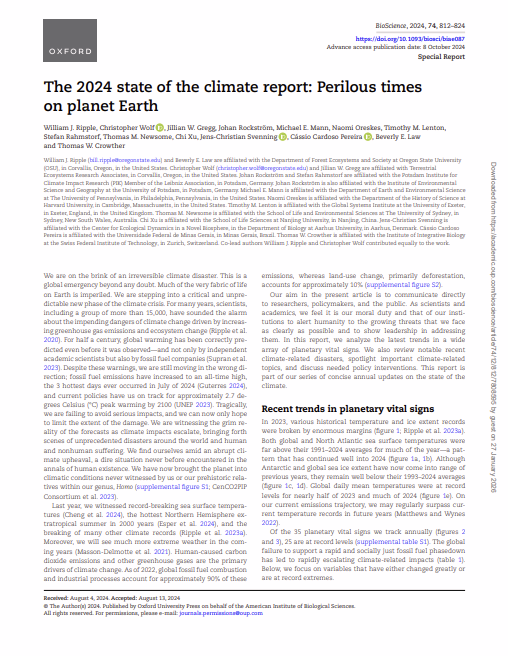
The state of the climate series
This benchmark series provides concise annual assessments of the global climate, using consistent scientific indicators to monitor environmental conditions, human pressures, and system responses. It is designed to support structured analysis and comparison over time for researchers, policymakers, and finance and sustainability professionals.
Peoples' climate vote series
The Peoples’ Climate Vote is a global survey series capturing public perspectives on climate change, policy priorities and collective action. Led by international institutions, it provides a consistent framework to understand how people experience climate impacts and how they expect governments, businesses and global actors to respond.
Endowment impact benchmark series
The Endowment Impact Benchmark is a benchmark series that provides a structured assessment and benchmarking framework for endowments and foundations. It evaluates policies, governance, management and transparency related to sustainable and impact investing, enabling consistent comparison and ongoing progress tracking across participating institutions.
State of the global climate series
The State of the Global Climate is an annual benchmark series produced by the World Meteorological Organization that synthesises authoritative observations across the climate system, including the atmosphere, oceans and cryosphere, to provide a consistent, comparable evidence base for global climate monitoring, policy analysis and long-term assessment.
State and trends of carbon pricing series
The State and Trends of Carbon Pricing series provides an annual, global overview of carbon pricing policies and carbon markets. It reviews the development and structure of carbon taxes, emissions trading systems, and crediting mechanisms to support policy, regulatory, and market analysis.
Measuring companies’ environmental and social impacts: An analysis of ESG ratings and SDG scores
This study compares ESG ratings with SDG scores across major providers. It finds little correlation. SDG scores align with investor exclusions and EU Taxonomy assessments, while ESG ratings largely measure financial risk exposure, not real-world environmental or social impacts.
Climate risk self-assessment survey series
This series presents APRA’s Climate Risk Self-Assessment Surveys, which review how APRA-regulated entities approach governance, risk management, metrics, targets and disclosure of climate-related financial risks. It provides a consistent, periodic view of industry practices and alignment with prudential guidance over time.

Climate fiduciaries: part II – the duty of even-handedness
This article explores the fiduciary duty of even-handedness and its implications for climate-aware pension fund investing, focusing on emerging legal challenges in Australia and Canada. It argues that unmanaged climate risk may breach trustees’ obligations to act equitably across generations, particularly where younger members bear disproportionate long-term harm.


