
Library | Asset Class
Private Equity
Ownership stakes in private companies (not listed on exchanges), often through buyouts, venture capital, or growth financing.
Refine
250 results
REFINE
SHOW: 16


The state of private impact investing in Canada
This report analyses the Canadian private impact investing market, which targets CA$17.7 billion in capital across 218 products. It examines market size, geographic distribution, and primary impact areas, noting a concentration in venture capital and highlighting the need for aggregation strategies and blended-finance models to scale investments.
RIAA Conference Australia 2026 - Companion Resources
Responsible investment has moved well beyond principles and pledges. Today’s challenges require practical capability and informed judgement. The RIAA Conference is a must-attend event for finance, sustainability and industry practitioners who want to focus on the key themes for responsible investment in 2026 and what implementation really looks like. Designed as an immersive, hands-on experience, the program focuses on the systems that underpin strong financial performance, and will help you understand how climate, nature, technology, governance and regulation intersect.
These specially curated companion resources have been recommended by the conference speakers and Altiorem team.
These specially curated companion resources have been recommended by the conference speakers and Altiorem team.
The EU Inc.: Half European, fully digital, and genuinely innovative
The paper analyses the European Commission’s proposed “EU Inc.” framework, a harmonised digital-first company structure for EU start-ups and scale-ups. It assesses governance, financing, codetermination, digital registration and cross-border legal integration within existing EU and national company law frameworks.
Forever wild series
This series outlines the Forever Wild Initiative’s approach to financing and managing large-scale wilderness landscapes through blended capital models, community co-design, and nature-based enterprises. It documents the development of equitable nature finance structures that integrate conservation, economic activity, and social outcomes across landscapes.

You Built This
This article argues that modern investment strategies fuel economic extraction while often underperforming simpler alternatives. It calls on investors to realign portfolios with productive, community-oriented investments that generate real economic and social value.
Sustainable Finance Roundup February 2026: Disclosure, Carbon Trade, and Transition Economics
This month’s sustainability roundup traces a rapidly evolving landscape in climate governance and industrial transition, highlighting the convergence of ISSB-aligned disclosure standards and emerging carbon trade measures alongside shifting cost curves in transport and critical minerals. It underscores how tighter emissions accounting and border policies are embedding carbon competitiveness into capital allocation, while advances in electrification, AI-driven power demand and expanding legal accountability are integrating climate and nature risk into mainstream financial decision-making.
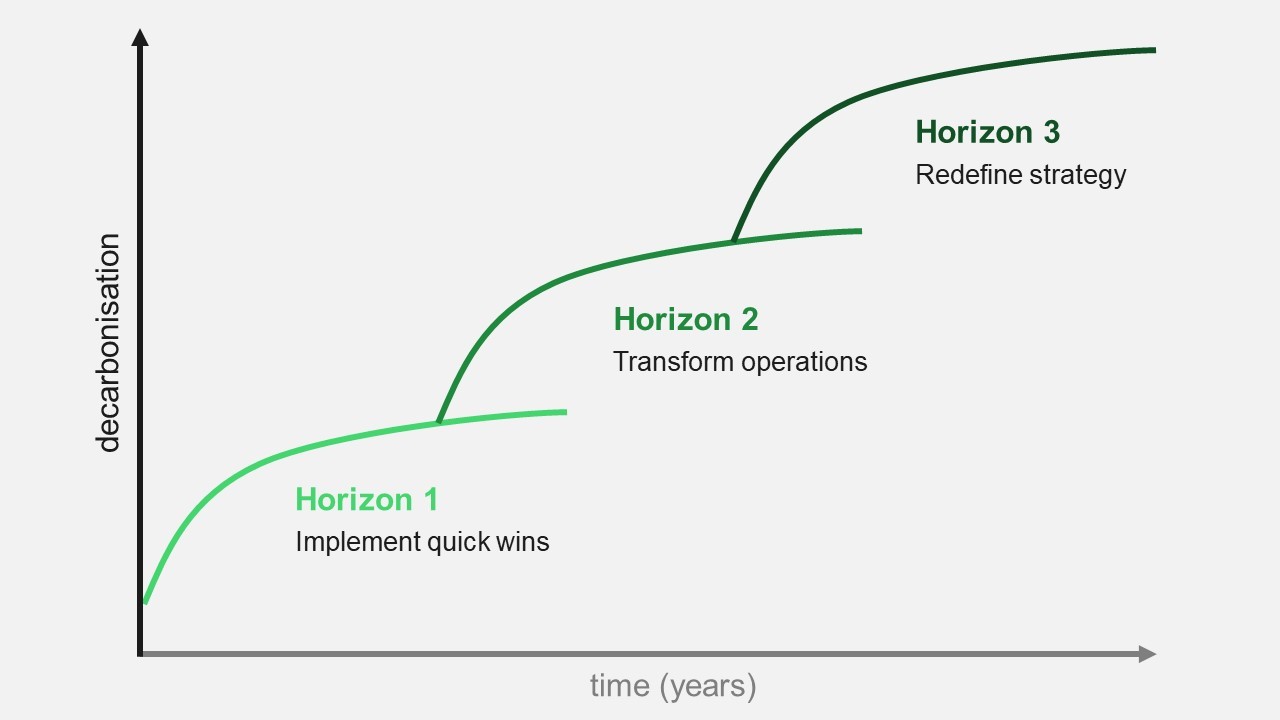
The Three Horizons of Decarbonisation
This article presents the Three Horizons of Decarbonisation framework, helping companies distinguish between short-term efficiency measures, operational transformation, and fundamental business model shifts. It explains how clear horizon identification improves capital allocation, stakeholder engagement, and the likelihood that net zero plans translate into meaningful action.
Benchmarking impact: Australian impact investor insights activity and performance series
Benchmarking Impact is a benchmark series that provides a structured, recurring assessment of Australia’s impact investing market. It examines investor activity, market practices, and product development to support comparability over time and inform understanding of how impact investing is evolving across the financial system.

Systems-informed stewardship part I: Reshaping sustainable and impact finance through systems thinking
This article introduces systems thinking and explains how it is reshaping sustainable and impact finance by addressing interconnected systemic risks like climate change and inequality. It outlines four emerging applications; from systemic risk management to systems-informed stewardship, highlighting the implications for investors’ roles, tools, and decision-making.
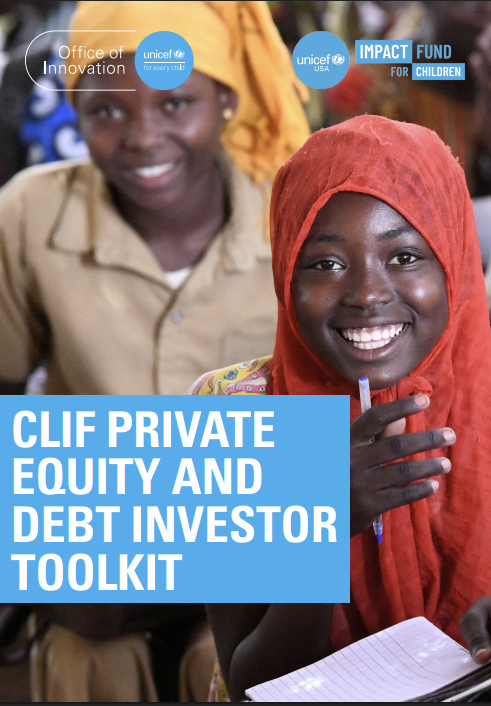
UNICEF USA’s child lens investing series
This series outlines UNICEF’s Child-Lens Investing approach, providing practical guidance for investors to integrate children’s rights and well-being into investment strategy, due diligence, contribution, and measurement across asset classes. It supports consistent application of a child lens alongside established impact and ESG practices.

Nature Enters the Boardroom: Why Directors Are Paying Attention
Drawing on Australia’s first national study of board-level engagement with nature, this article shows how directors are treating nature as a material governance and financial issue. It highlights how boards are extending climate governance systems to manage nature-related risks, adopt frameworks like TNFD, and build resilience and long-term value despite policy uncertainty.
Engaging the ICT sector on human rights series
This is a series of sector-wide risk assessment briefings for the Information and Communications Technology (ICT) sector. It examines salient human rights issues linked to ICT business models and technologies, providing a consistent analytical framework to support investor assessment, engagement, and governance analysis across multiple thematic areas.
Food systems investing in East Africa: The roles of funds in financing food systems transformation
This report analyses 23 impact funds investing in East African food systems, assessing their design, impact alignment, and financing roles. It identifies gaps, good practices, and recommendations to strengthen agroecological and regenerative food systems investing.
Responsible investing in defence, security and resilience
The NATO Innovation Fund advocates removing financial exclusions on defence to bolster European security. The report recommends reforming procurement for rapid dual-use technology adoption and implementing a ‘Responsible Use Framework’ to ensure ethical development of emerging capabilities like AI and autonomous systems.
Sustainable Lithium-ion batteries: Investor briefing
This investor briefing outlines sustainability risks and opportunities across the lithium-ion battery value chain. It examines mineral extraction, processing, manufacturing and end-of-life impacts, highlights supply-chain concentration and ESG risks, and provides guidance on disclosure, engagement, circularity and responsible investment strategies.
Mainstreaming impact investing report
The report examines the mainstreaming of impact investing, highlighting market growth, increasing institutional participation, evolving standards, and measurement challenges. It outlines barriers to scale and proposes actions to improve integration, transparency, and credibility across investment markets.


