
Library | Sustainable Finance Practices
Stakeholder engagement and advocacy
Stakeholder engagement and advocacy are components of effective stewardship. Resources promoting collaboration and advocacy efforts among financial institutions and their key stakeholders, with a focus on driving positive systemic change. Stakeholders include customers, regulators, policy-makers, other investors and industry groups, communities, First Nation peoples, unions, and civil society organisations.


Refine
267 results
REFINE
SHOW: 16


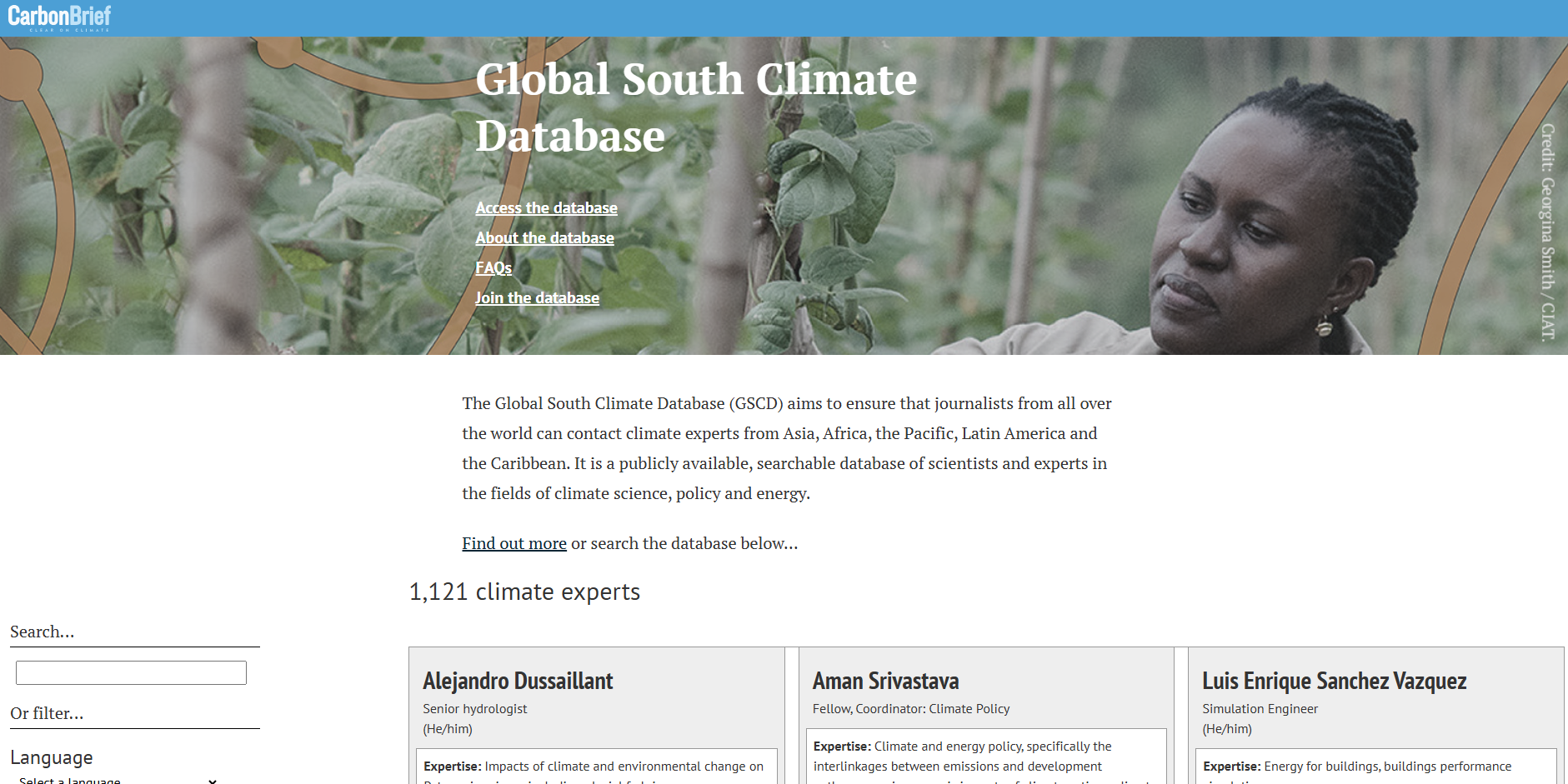
Global South Climate Database
A searchable database maintained by Carbon Brief providing access to over 1,100 climate experts from the Global South. It enables finance professionals to connect with specialists in carbon markets, climate policy, and regional environmental risks across Asia, Africa, and Latin America.
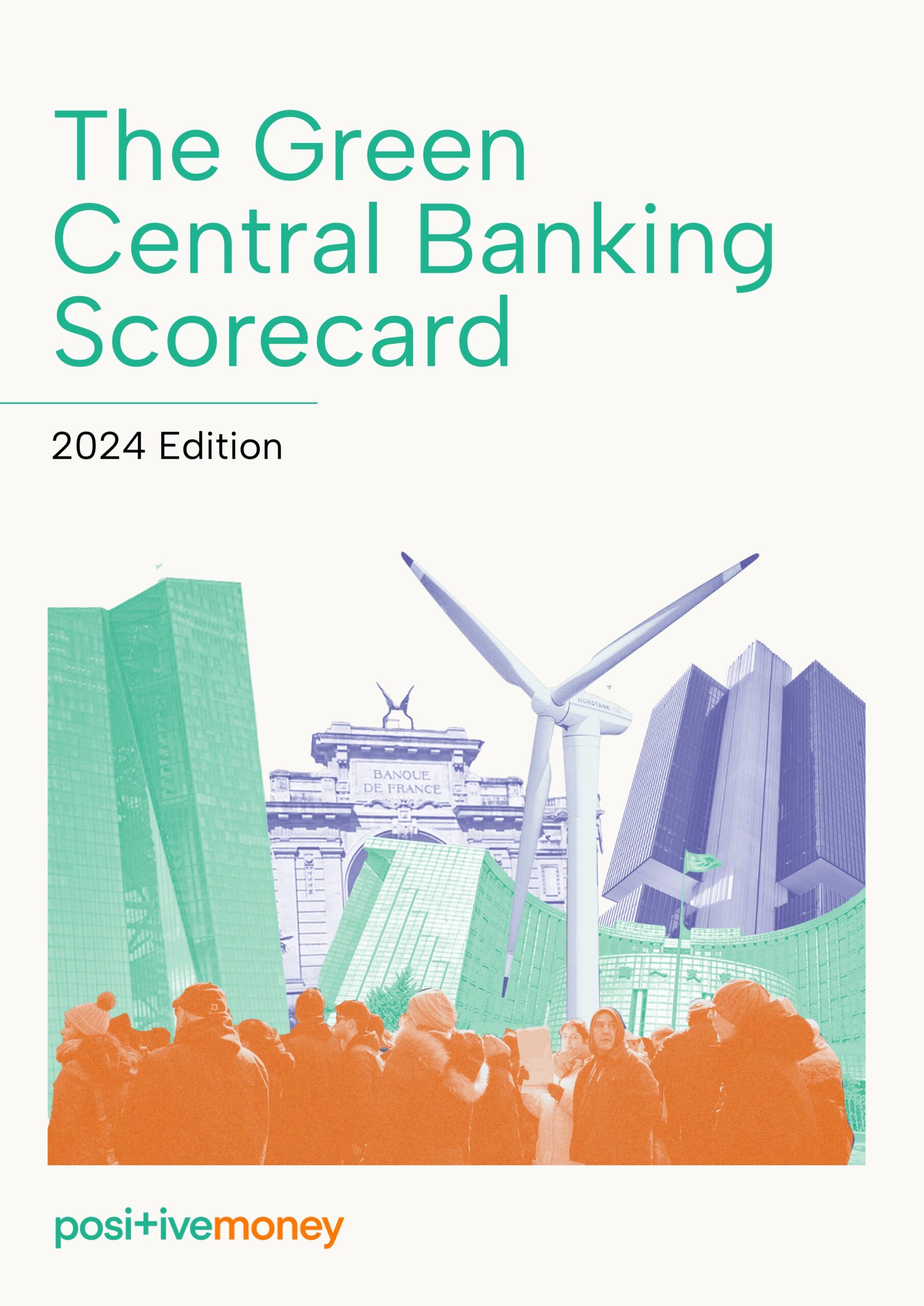
The green central banking scorecard series
The Green Central Banking Scorecard is a benchmark series that ranks G20 central banks and financial regulators on their progress in integrating environmental considerations into their operations. It assesses institutions across research and advocacy, monetary policy, financial policy, and leading by example categories to encourage a just green transition.
Oxford-GlobeScan global corporate affairs survey series
This benchmark series provides an overview of opinions, trends, and challenges within the corporate affairs function. Produced annually, the research captures insights from senior professionals globally to track the evolution of the corporate affairs agenda, focusing on reputation, sustainability, geoeconomics, and stakeholder engagement.
Systems stewardship: Managing interconnected climate risks for lasting value
This report examines how Australian investors apply systems stewardship to manage interconnected climate risks. It identifies key practices, such as collaborative engagement and policy advocacy, while highlighting barriers like resource constraints. Six recommendations are provided to help investors safeguard long-term returns and support a net-zero transition.
Empowering consumers as partners in sustainability: Case studies on financial regulation and implementation
This report by Fair Finance Asia examines financial regulation through case studies in Thailand, Pakistan, Indonesia, and Cambodia. It highlights systemic gaps in consumer protection, cybersecurity, gender-responsive inclusion, and ESG accountability. Recommendations are provided for regulators and banks to strengthen consumer engagement and promote sustainable finance practices across Asia.
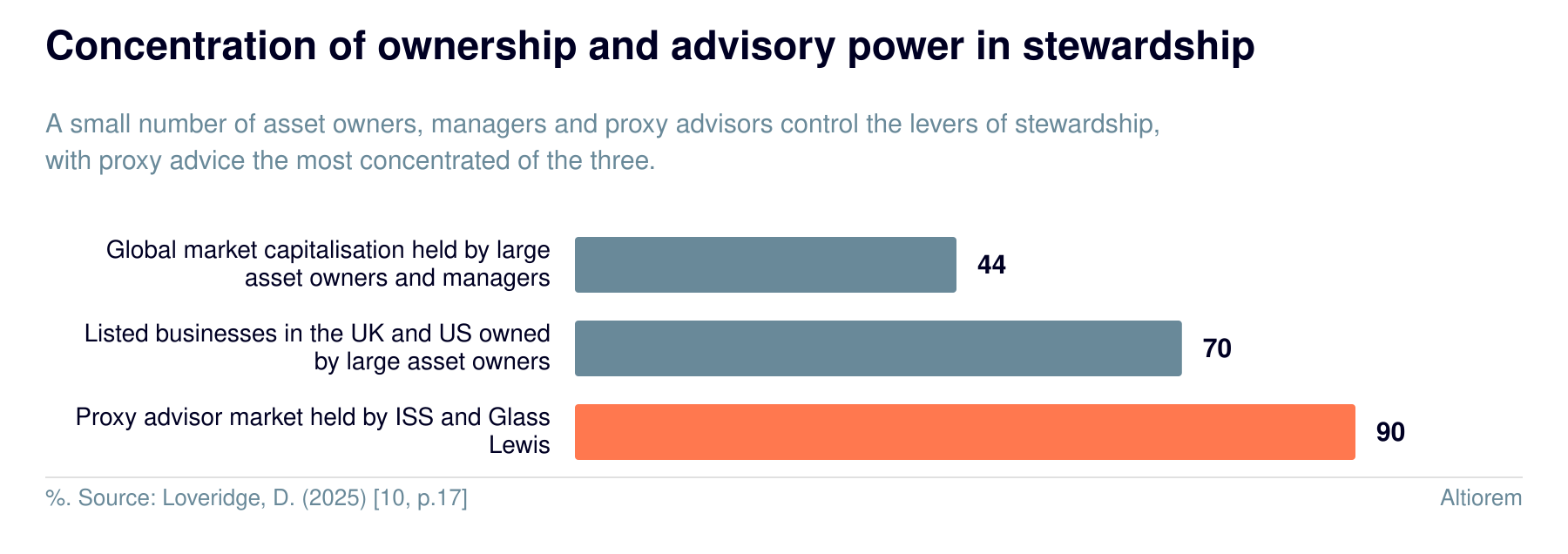
Does stewardship work in controversial sectors?
As at 2025 there were 56 stewardship codes worldwide, 49 of them jurisdiction-specific across 24 jurisdictions and six continents, yet the field has not agreed what stewardship is ultimately for. Codes and practitioner guidance converge on process: written policies, prioritisation by severity, escalation, contribution reporting. Legal scholarship published in 2026 questions whether shareholder pressure alone shifts corporate behaviour at all.
Stakeholder governance and corporate purpose in certified B Corps: Minimizing conflict and fostering collaboration
This research examines how Australian and New Zealand B Corporations implement stakeholder governance through corporate purpose. Based on 20 interviews, it identifies six roles for purpose in decision-making and signalling. The findings suggest that purpose-led models help attract supportive stakeholders and foster collaboration beyond mere conflict resolution.
An engaged market: The 2026 state of stewardship report, prepared by the Aotearoa New Zealand stewardship code
This report examines stewardship reporting across New Zealand's investment market for 2025. Representing 20 signatories with $3.8 trillion in assets, it highlights maturing practices in collaborative engagement, escalation, and voting transparency. The document notes increased integration of te ao Māori and provides guidance on strengthening stewardship and voting policies.
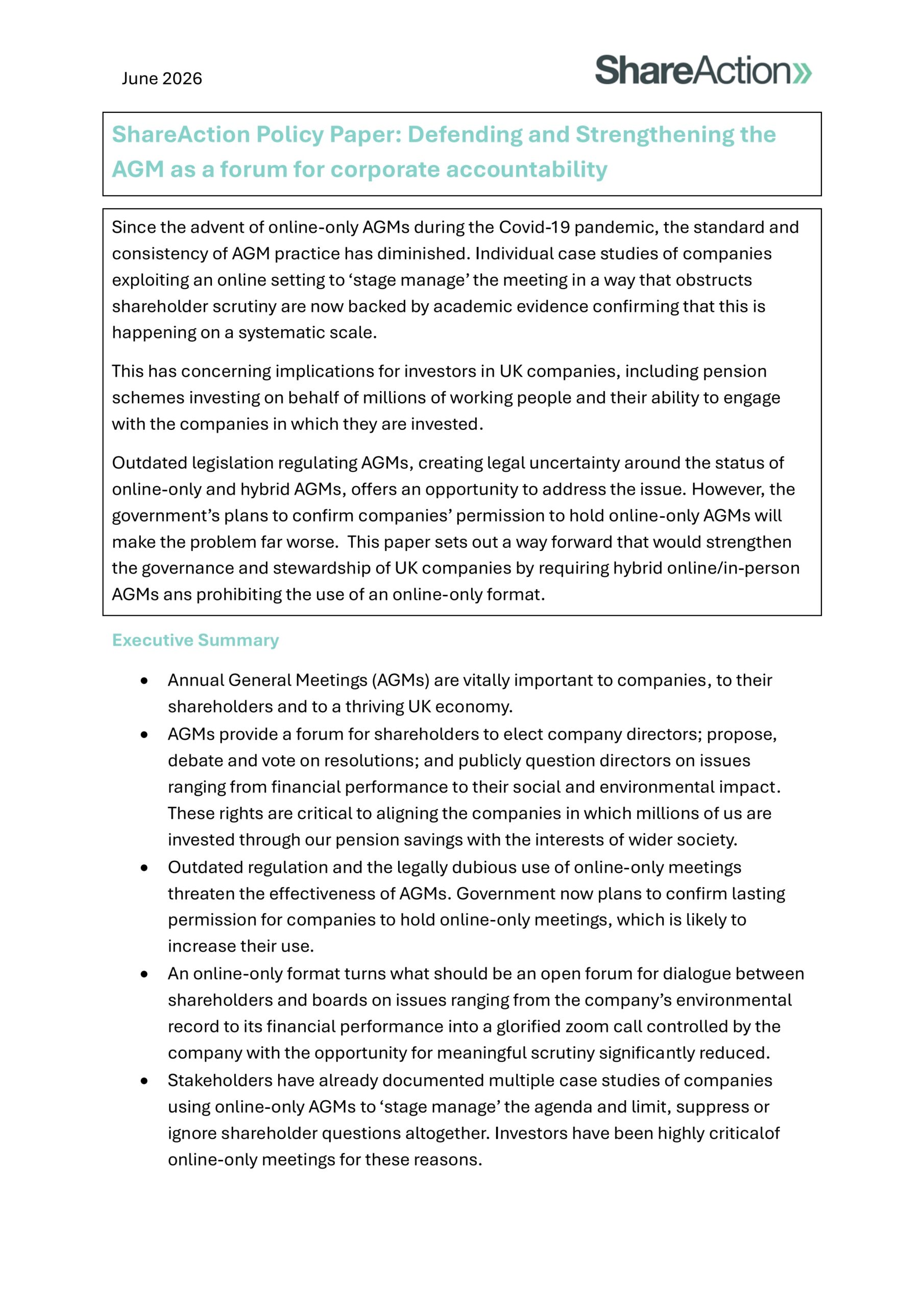
ShareAction policy paper: Defending and strengthening the AGM as a forum for corporate accountability
This ShareAction report advocates for mandatory hybrid AGMs to ensure corporate accountability. It argues that online-only formats diminish shareholder scrutiny and enable management to stage-manage proceedings. The document recommends amending the 2006 Companies Act and provides case studies of poor virtual AGM practices across several major companies.
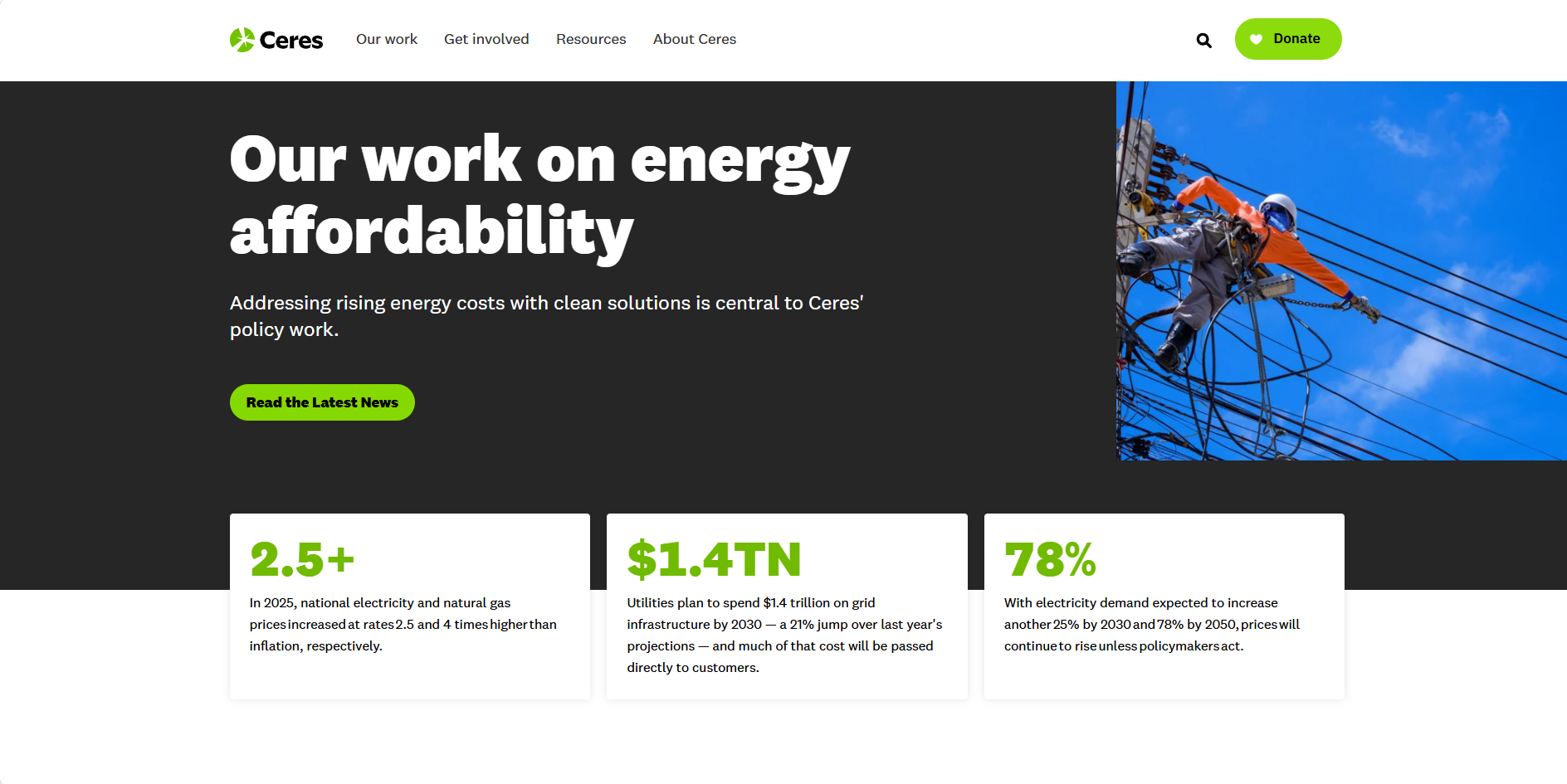
Ceres: Our work on energy affordability
A Ceres initiative and playbook focused on curbing rising energy prices through clean energy expansion, providing policymakers and investors with strategies for a modern, efficient, and affordable energy system.
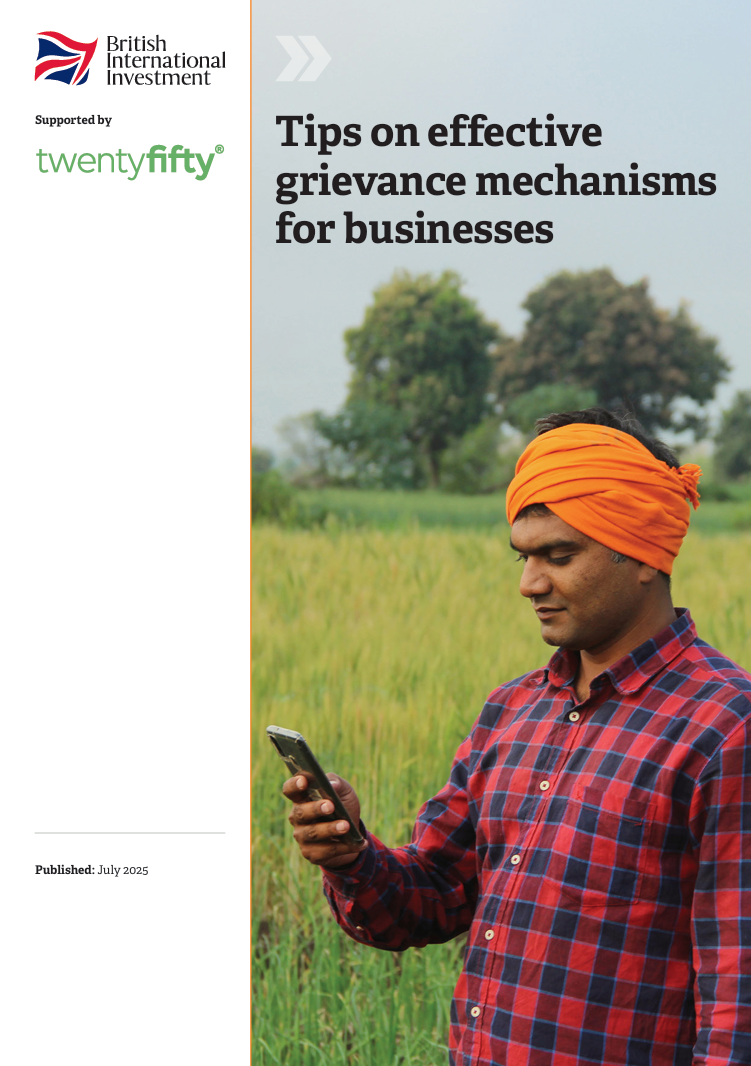
Tips on effective grievance mechanisms for businesses
This report outlines strategies for businesses to implement effective grievance mechanisms aligned with UN Guiding Principles. It highlights how robust engagement can prevent potential financial losses of $25-40 million. Guidance covers design, internal governance, and maintaining effectiveness in high-risk environments to build stakeholder trust and ensure human rights compliance.
Intentional Endowments Network (IEN)
IEN is a peer-learning network supporting endowments and foundations to integrate climate and social inequality considerations into investment strategies.
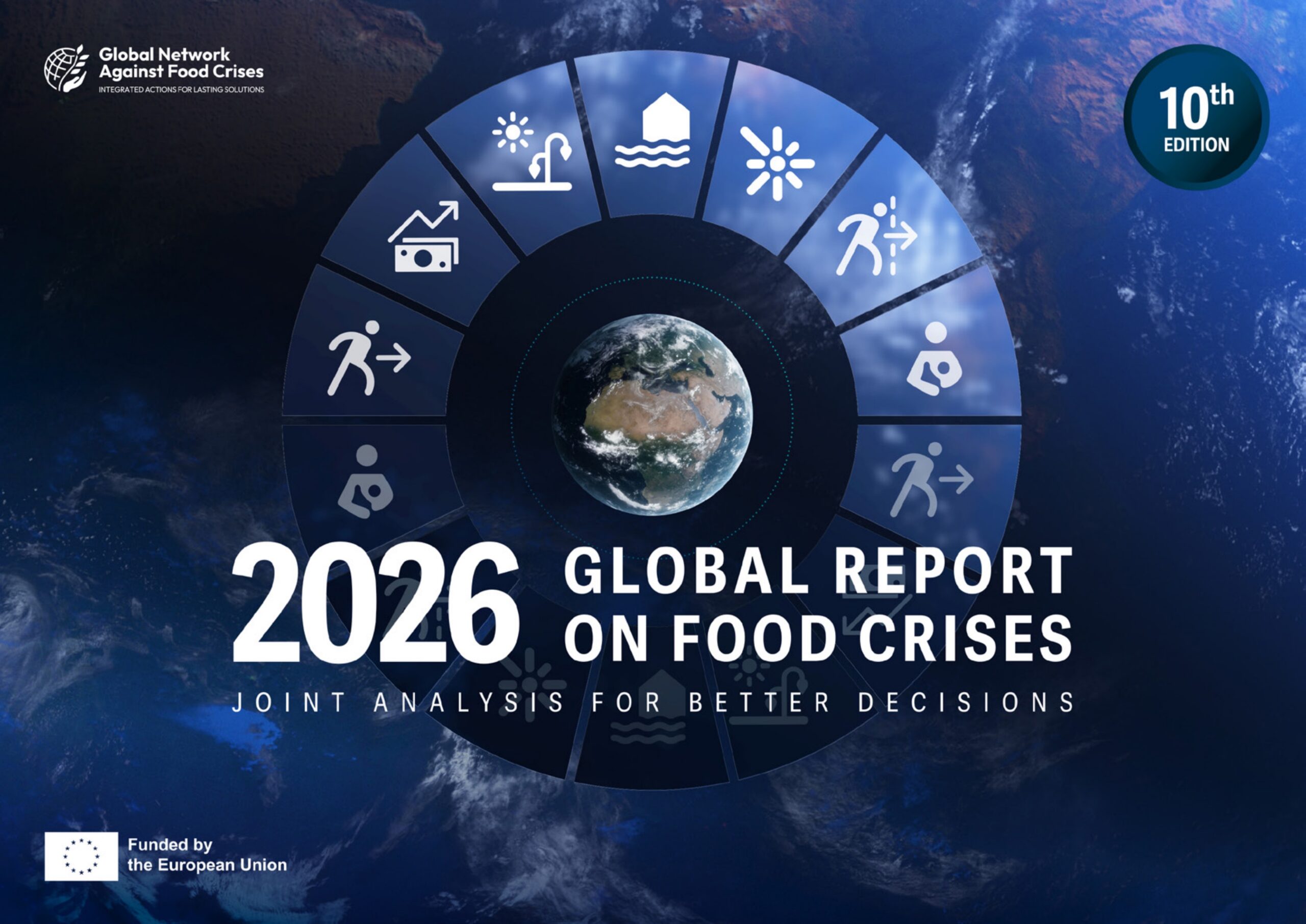
Global report on food crises series
The Global Report on Food Crises is an annual benchmark series tracking acute food insecurity, malnutrition and forced displacement in countries facing food crises. Produced by FAO, WFP and the Global Network Against Food Crises, it delivers consensus-based, multi-agency analysis to guide humanitarian and development decision-making globally.
Faith in RI
Faith in RI is a responsible investment platform offering thought leadership, stewardship resources, and networks for asset owners and the investment industry.
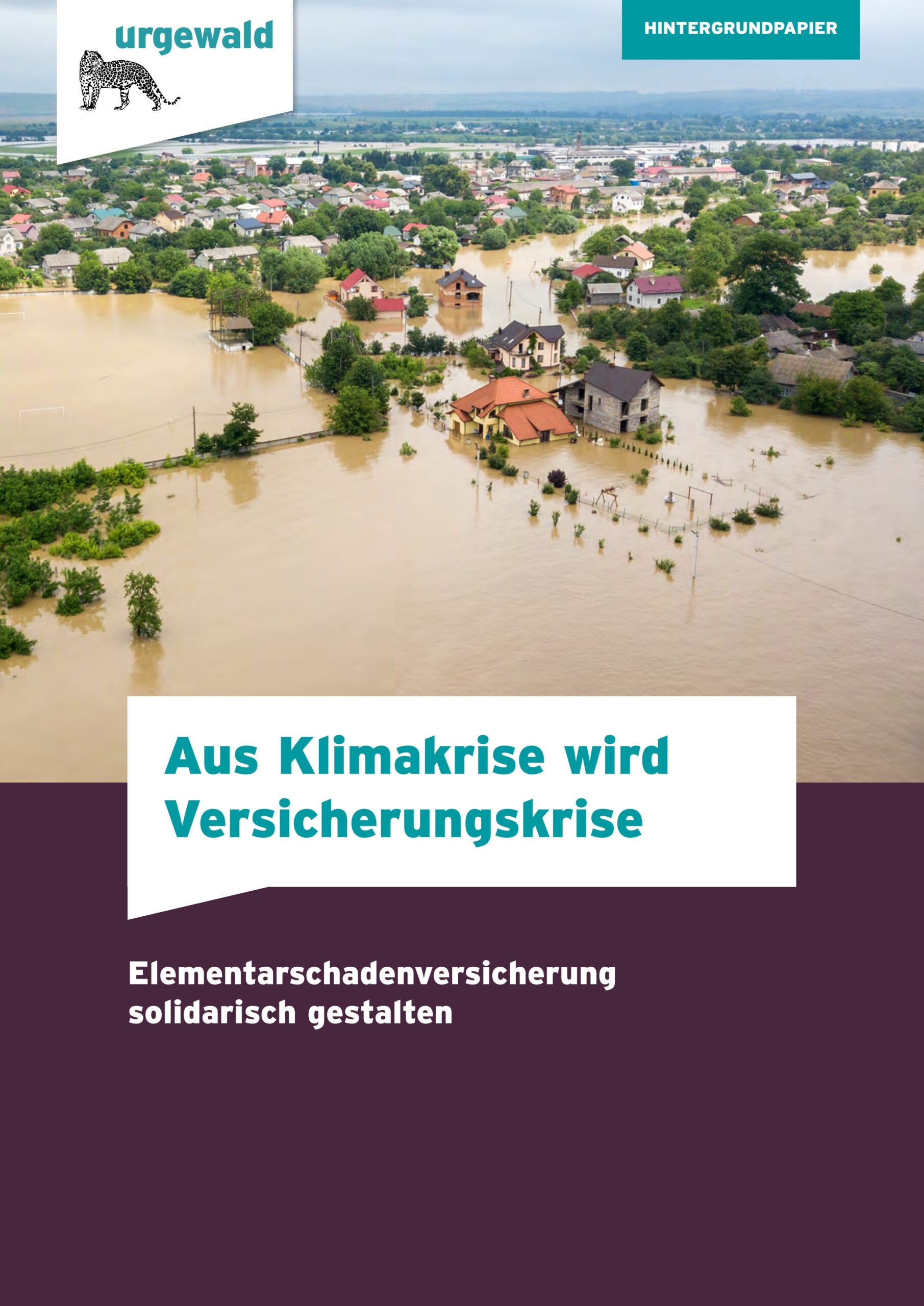
From climate crisis to insurance crisis: Designing solidarity-based natural disaster insurance
This report examines rising climate-related insurance losses and Germany's lack of comprehensive natural disaster coverage, with only 57% of residential buildings insured against such risks. It analyses international public-private insurance models — particularly France's CatNat system — and recommends a solidarity-based approach alongside measures to hold the fossil fuel industry financially accountable.
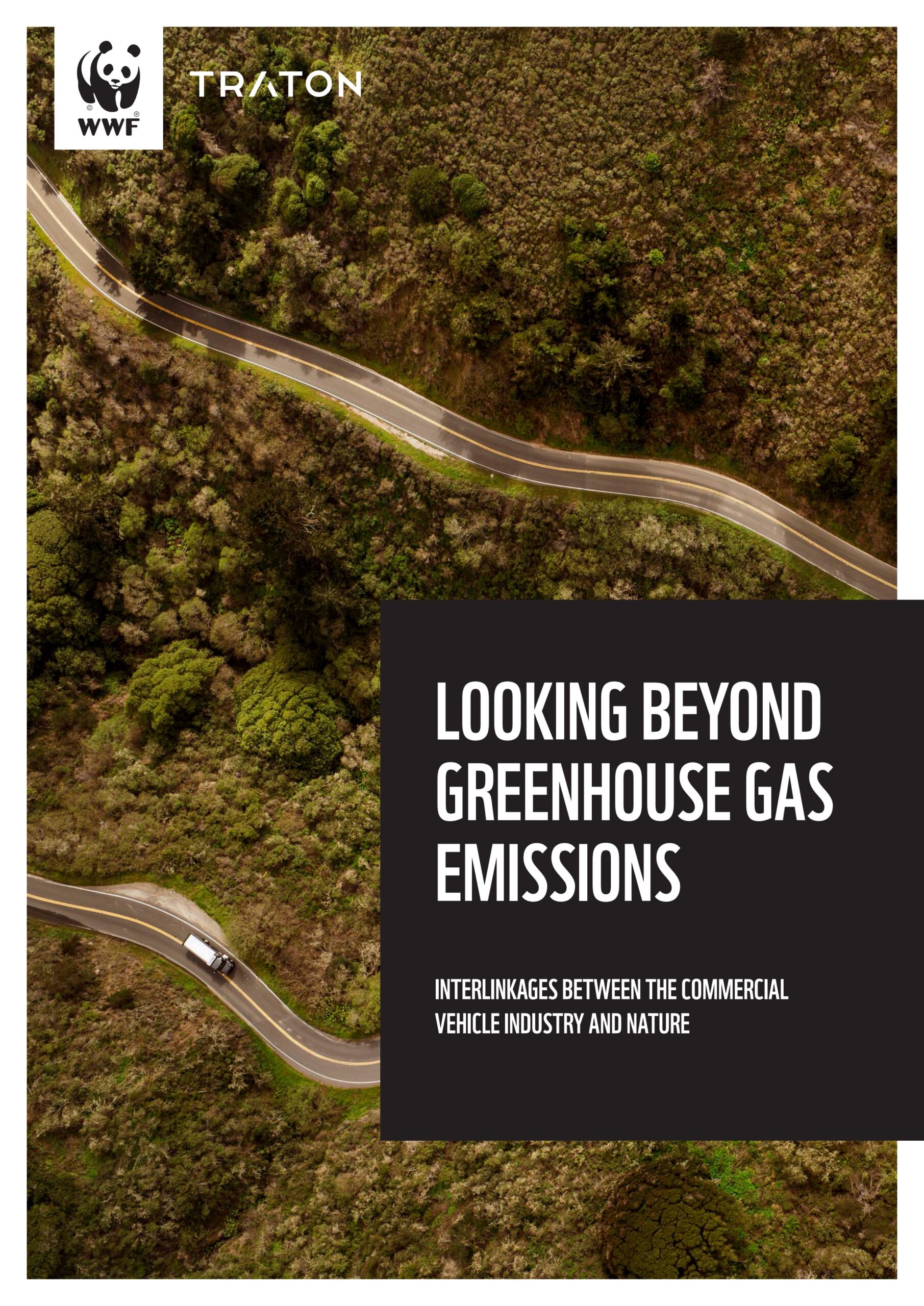
Looking beyond greenhouse gas emissions: Interlinkages between the commercial vehicle industry and nature
Published by WWF Sweden in collaboration with TRATON GROUP, this report examines the commercial vehicles sector's interlinkages with nature across its full value chain. It analyses six key commodities and value chain stages, identifies nature-related risks for businesses, and calls for sector-wide collaborative action towards a nature-positive future.


