
Library | Sustainable Finance Practices
Strategy and Organisational change
Guidance on embedding sustainability into organisational strategy, leadership, governance, culture, and systems to drive long-term transformation.
Refine
166 results
REFINE
SHOW: 16


Advancing gender equality and women’s empowerment: Target setting guidance for banks
This guidance outlines how banks can set and implement measurable targets to advance gender equality and women’s empowerment across leadership, portfolios, financial inclusion and ecosystems, aligned with the Principles for Responsible Banking and Women’s Empowerment Principles.
The visionary CEO’s guide to sustainability series
The Visionary CEO’s Guide to Sustainability is a series of annual research reports examining how senior executives integrate sustainability into core strategy, operations, and decision-making. The series explores leadership responses to evolving environmental, regulatory, technological, and market pressures, with a focus on practical execution and long-term business resilience.
State of supply chain sustainability series
The State of Supply Chain Sustainability is an annual benchmark series that examines how organisations define, govern, and implement environmental and social sustainability across global supply chains. It provides a consistent research framework to track evolving practices, pressures, and management approaches over time.

MIT Center for Transportation & Logistics
MIT Center for Transportation & Logistics (MIT CTL) is a research centre advancing supply chain management, logistics and transportation systems.Based at Massachusetts Institute of Technology, it produces applied research, executive education and industry partnerships focused on resilience, sustainability, digital innovation and global supply chain performance across sectors worldwide today.
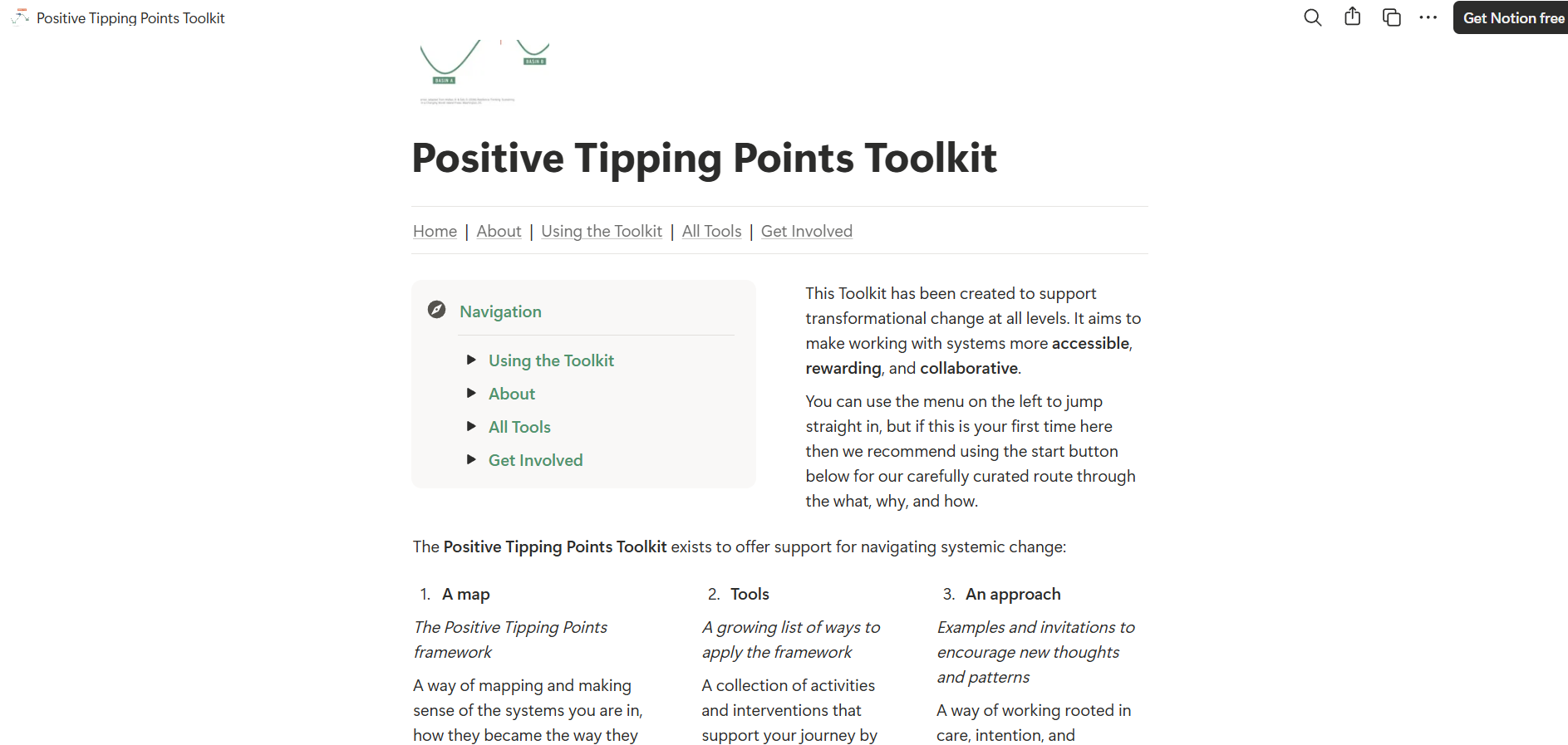
Positive Tipping Points Toolkit
The Positive Tipping Points Toolkit is an open-access, modular resource that supports analysis and application of positive tipping points in complex systems. It provides practical frameworks, examples and methods to identify leverage points and accelerate self-reinforcing change across social, environmental and economic contexts.

UNICEF USA’s child lens investing series
This series outlines UNICEF’s Child-Lens Investing approach, providing practical guidance for investors to integrate children’s rights and well-being into investment strategy, due diligence, contribution, and measurement across asset classes. It supports consistent application of a child lens alongside established impact and ESG practices.

Fair4All Finance
Fair4All Finance is a UK-based organisation focused on improving financial inclusion. It funds, researches, and supports affordable credit, savings, insurance, and financial resilience solutions for people in vulnerable circumstances, working with policymakers, charities, and financial service providers to scale social impact.

Nature Enters the Boardroom: Why Directors Are Paying Attention
Drawing on Australia’s first national study of board-level engagement with nature, this article shows how directors are treating nature as a material governance and financial issue. It highlights how boards are extending climate governance systems to manage nature-related risks, adopt frameworks like TNFD, and build resilience and long-term value despite policy uncertainty.
Tools for circularity
This report outlines practical tools to help mining and metals companies integrate circular economy principles. It explains business drivers, regulatory context, metrics, and case studies, supporting financial and non-financial business cases for improved resource efficiency, value retention, and responsible production.

Can you be the change you’d like to see? Three US philosophers aim to offer hope
This review examines Somebody Should Do Something, a timely book arguing that individuals can spark meaningful social change by acting collectively rather than alone. It assesses the authors’ hopeful framework alongside contemporary political realities, questioning whether grassroots agency is sufficient amid concentrated power and rising authoritarianism.

ADS group: UK defence ESG charter
The UK Defence ESG Charter sets a voluntary, sector-wide framework for defence companies, covering climate transition, societal impact, and governance and ethics. It promotes decarbonisation, supply chain responsibility, skills development, ethical conduct, and collaboration, while allowing signatories to retain individual ESG strategies.
Heterogeneity in corporate sustainability initiatives and stock returns
The study shows only transformative sustainability initiatives predict higher future profitability and generate positive abnormal stock returns. Advocacy, preparation and standard ESG ratings do not. Markets initially mispriced transformative actions, but learning gradually eliminated the alpha by 2022.
A review of the link between sustainability performance and company valuation
The report reviews recent evidence on links between sustainability performance and company valuation, finding growing but uneven market recognition. Strong strategies can improve resilience, EBITDA and capital costs, while inaction raises long-term financial risk amid evolving disclosure and regulation.

Still or sparkling?: Approaches to changing portfolio compositions in long-term stress-tests and scenario analyses
The report reviews approaches to modelling portfolio changes in long-term climate stress tests, comparing static portfolios with macro, ex ante, and ex post adjustments. It outlines trade-offs, shows results are sensitive to assumptions, and argues approach choice should match supervisory objectives.
The insurability imperative: Using insurance to navigate the climate transition
This report argues that insurability is a strategic indicator of financial viability in a climate-disrupted economy. It explains how insurance, risk modelling, resilience investment, and policy alignment shape access to capital, asset values, and transition finance, urging leaders to embed insurability into decision-making.
Building resilient supply chains: Getting the most out of supplier engagement
The report outlines how climate-related risks threaten supply chains and presents seven practical steps to strengthen resilience through supplier engagement. It stresses clear objectives, data use, prioritisation, incentives and cross-functional collaboration to drive emissions reduction, improve transparency and align procurement with long-term sustainability and risk-management goals.


