

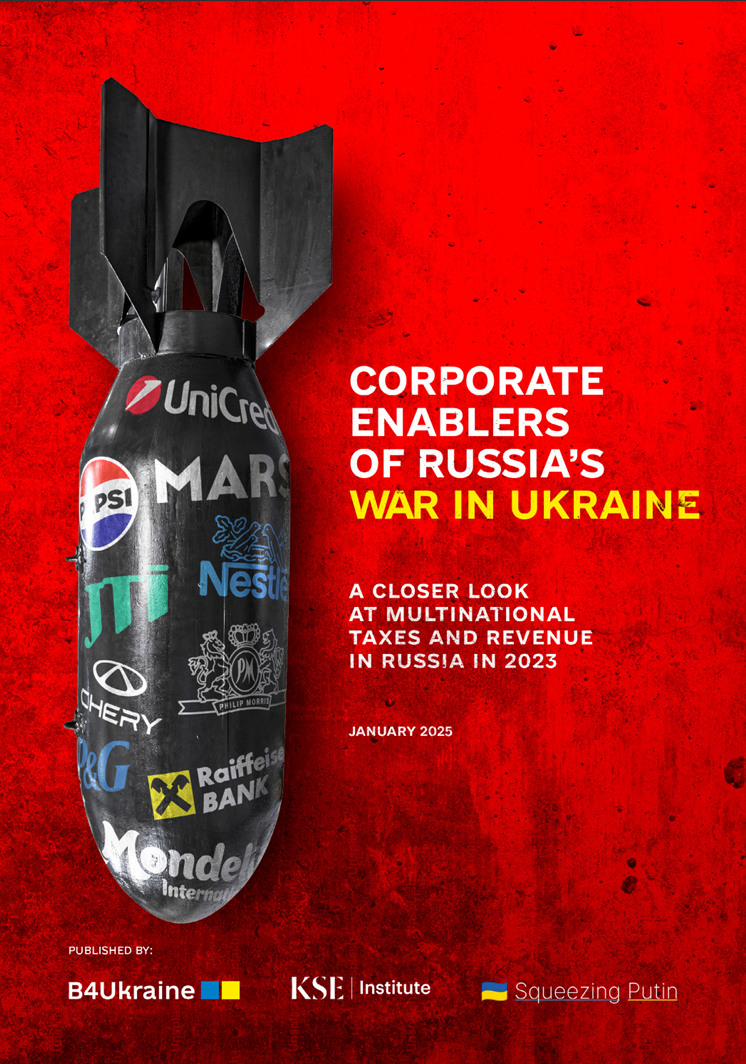
Corporate enablers of Russia’s war in Ukraine: A closer look at multinational taxes and revenue in Russia in 2023
Examines multinational companies’ revenues and taxes in Russia (2021–2023), showing continued corporate activity generated significant tax contributions supporting the Russian state. Highlights sectoral drivers, limited exits, and rising fiscal pressures, concluding that ongoing operations pose financial, legal, and human rights risks.
Please login or join for free to read more.

OVERVIEW
About the authors
The report is produced by B4Ukraine with the Kyiv School of Economics (KSE) and Squeezing Putin. It uses KSE’s database and public sources to analyse multinational corporate activity in Russia and its financial contribution to the war economy.
Methodology
The study focuses on multinationals with Russian subsidiaries, analysing revenues, profits and profit taxes from 2021–2023. Data is drawn from Russian company registers and public disclosures, with estimates applied where 2023 data is missing. It excludes other taxes such as VAT and payroll taxes.
Key findings and recommendations
In 2023, around 1,600 multinational firms generated US$196.9 billion in revenue and US$16.8 billion in profit in Russia, paying an estimated US$21.6 billion in taxes. Since 2022, total taxes reached US$41.6 billion, close to one-third of Russia’s projected 2025 military budget.
G7 and EU companies remain major contributors despite supporting Ukraine, with roughly US$1 in taxes paid to Russia for every US$10 of aid provided. The report recommends that companies exit Russia responsibly, increase transparency on financial contributions, and align with human rights standards. Governments should strengthen sanctions and clarify “essential goods”, while investors should undertake enhanced due diligence.
Introduction
Nearly three years into the invasion, over 2,000 foreign companies continue operating in Russia, contributing to state revenues and the war economy. Only 28% of firms with subsidiaries have exited. Continued operations expose firms to legal, reputational and financial risks, including potential complicity in human rights violations.
Company profit tax and revenue in 2021-23 by country of HQ
In 2023, multinational revenues declined from US$245.5 billion to US$196.9 billion, while profits rose to US$16.8 billion. Profit tax payments increased slightly to US$6.4 billion.
US firms remain the largest contributors, paying US$1.2 billion in profit taxes. EU firms generated US$55.8 billion in revenue and paid around US$2.3 billion in taxes. Chinese firms increased revenues but contributed less in taxes. G7 and EU companies collectively remain the largest profit taxpayers.
Which sectors are profiting from remaining?
Consumer goods sectors dominate, generating US$58.5 billion in revenue and US$1.5 billion in profit taxes in 2023. Automotive ranks second in revenue, while finance and banking contributed the highest profit tax at US$1.15 billion. These sectors maintain strong positions despite exits, often citing “essential goods” to justify continued operations.
Top 20 significant tax contributors
The largest contributors include Raiffeisen Bank (US$491 million in profit tax), Philip Morris, Japan Tobacco International and Chery Automobile. Most top revenue-generating companies have remained in Russia, including major consumer brands such as PepsiCo, Nestlé and Mars, continuing to generate substantial revenues and tax payments.
Excuses for staying and the need for a quick exit
Companies commonly justify remaining by citing essential goods, employee welfare and regulatory complexity. However, evidence supporting “essentiality” is limited. Firms also comply with local laws requiring support for mobilisation, increasing risks of complicity in human rights abuses.
The report stresses that sanctions compliance alone is insufficient. Companies are expected to conduct heightened human rights due diligence and exit where harms cannot be mitigated. A swift exit reduces financial and legal exposure and aligns with international standards.
Conclusion
Many multinationals continue operating in Russia, sustaining state revenues despite increasing risks. The report concludes that a responsible and timely exit is the most appropriate course, aligning with human rights principles, reducing exposure to regulatory pressures and supporting long-term corporate resilience.




