

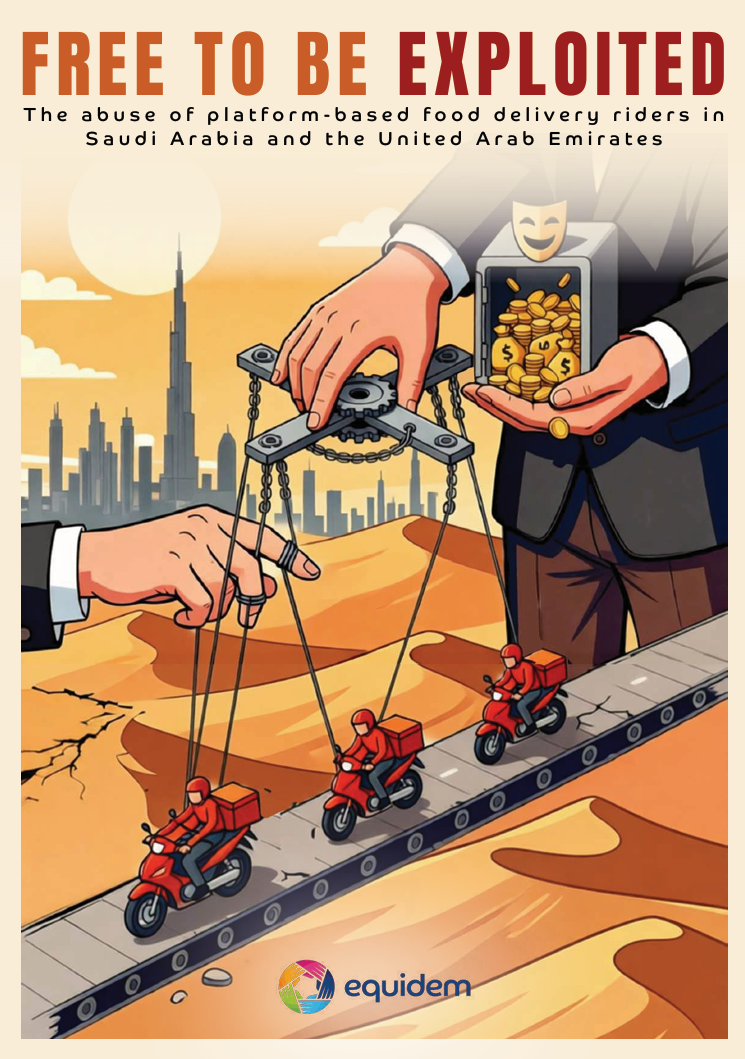
Free to be exploited: The abuse of platform-based food delivery riders in Saudi Arabia and the UAE
Report finds migrant delivery riders in Saudi Arabia and UAE face systemic exploitation via third-party logistics, including coercive employment, wage abuses, unsafe conditions, and restricted mobility. Weak enforcement and outsourcing obscure accountability. Recommends stronger regulation, corporate oversight, and international labour standards.
Please login or join for free to read more.

OVERVIEW
Part 1: Regulating the digital platform economy
The report examines platform-based food delivery models where algorithms allocate work and manage performance. These systems often classify workers as independent contractors, limiting labour protections. In Gulf markets, this intersects with restrictive migration regimes, increasing vulnerability. The growth of third-party logistics (3PL) outsourcing complicates accountability and weakens regulatory oversight.
Part 2: Gulf markets in the digital platform economy: Growth and corporate governance
Major firms including Delivery Hero, Uber, and DoorDash operate extensively across the region, generating significant global revenues (e.g. Uber USD 42.6 billion in 2024). Market expansion has relied on subcontracting via 3PLs. While companies publish human rights commitments, governance gaps persist between stated policies and operational practices, particularly in subcontracted labour chains.
Part 3: 3PLs in platform-based delivery markets in Saudi Arabia and the UAE
3PLs function as the primary employers, managing recruitment, wages, and working conditions. This outsourcing diffuses responsibility, creating a fragmented system where platforms retain control through algorithms but avoid direct employment obligations. Riders often work across multiple platforms, further complicating accountability and enforcement.
Part 4: Migrant worker exploitation in Saudi Arabia and the UAE
The study draws on interviews with 108 migrant riders from multiple countries. Most are employed under the kafala system, tying residency to employers and limiting mobility. Workers reported coercive conditions, including inability to change jobs, fear of deportation, and restricted access to legal protections. Delays in job commencement averaged 4–8 months, often without pay, increasing financial precarity.
Part 5: Rights violations
Evidence indicates widespread labour abuses. Forced labour indicators include passport retention, debt-linked recruitment, and restricted movement. Riders reported wage deductions, unpaid earnings, and penalties for rejecting orders or taking leave.
Occupational risks are significant, including extreme heat exposure, traffic accidents, and long working hours. Workers also face inadequate housing, poor nutrition, and limited healthcare access.
Grievance mechanisms are largely ineffective. Although companies provide reporting channels, riders reported barriers including lack of awareness, fear of retaliation, and employer-controlled processes. Threats included job loss, visa cancellation, and blacklisting, limiting complaint uptake. Data collected through surveys may understate violations due to these constraints.
Part 6: Conclusions and recommendations
The report concludes that exploitation is structurally embedded within the platform-3PL model. Weak enforcement of labour laws and reliance on subcontracting allow firms to externalise risks.
Corporate accountability measures should include stronger oversight of 3PLs, transparent algorithmic management, and independent grievance mechanisms. Firms are encouraged to eliminate illegal wage practices, ensure safe working conditions, and consider direct employment models.
State-level reforms in Saudi Arabia and the UAE require improved enforcement, regulation of subcontractors, and accessible legal remedies for migrant workers. Enhancing protections against forced labour, wage theft, and unsafe conditions is critical.
At the international level, the development of binding International Labour Organization standards is identified as essential to address regulatory gaps. These should clarify employment status, enforce fair pay and safety standards, and strengthen protections for migrant workers across platform economies.




