

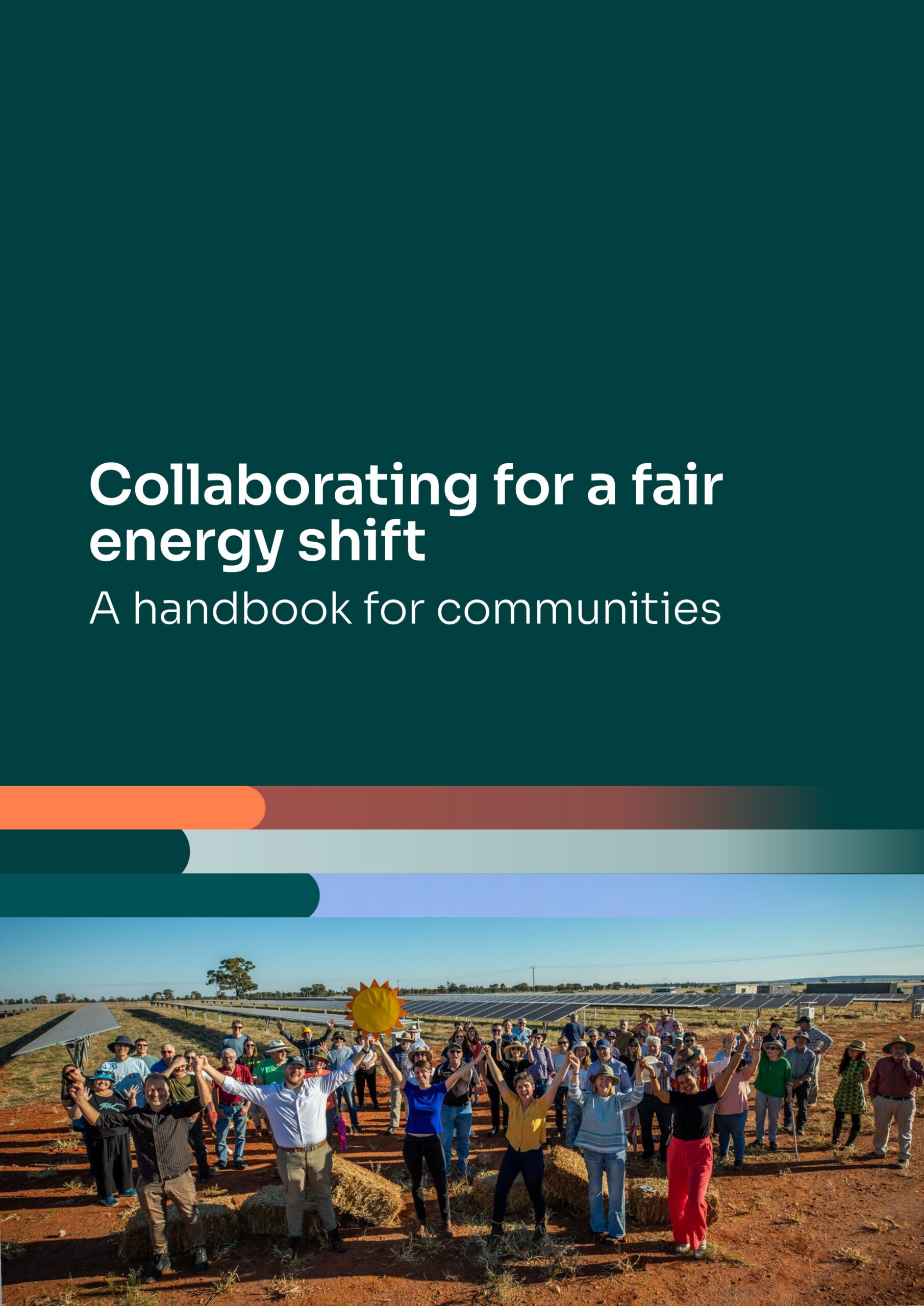
Collaborating for a fair energy shift: A handbook for communities
This handbook provides Australian communities with a framework for navigating the clean energy transition. It outlines strategies for community-led collaboration, focusing on agriculture, biodiversity, regional jobs, housing accessibility, and First Nations’ rights to ensure the shift to renewable energy is fair, inclusive, and beneficial for regional prosperity.
Please login or join for free to read more.

OVERVIEW
Introduction
Australia is currently undergoing a once-in-a-generation shift towards clean energy, involving the development of wind, solar, batteries, and hydropower projects alongside new transmission infrastructure. This national effort requires significant coordination and expertise. The handbook asserts that the best outcomes occur when communities are involved in shaping this change. By leveraging local knowledge and insight, communities can maximise regional benefits and ensure that energy projects support local aspirations. The document is designed for community members, leaders, and connectors navigating this transformation.
Background
The introduction of large-scale clean energy development brings dramatic social and environmental change, particularly in designated Renewable Energy Zones (REZs). These areas have been identified by governments as having the sun, wind, and resources necessary to power the country. However, these developments often create significant impacts for host communities. The report emphasises that understanding local histories, cultures, and values is essential to identifying root causes of community concern. Proactive collaboration can transform these concerns into a sense of connection and empowerment, helping manage the shifts posed by large-scale grid developments.
Understanding our regional context
Foundational knowledge is critical for community-led collaboration. This involves building a ‘context narrative’ based on three key factors: Place (geography, history, and environment), Policy (government projects and planning processes), and People (stakeholders and relationships). Mapping these elements helps identify potential collaborators and understand how clean energy might affect affordable housing, local services, and demographics. Identifying common impact themes—such as biodiversity, agriculture, culture, transport, and benefit-sharing—is a critical first step in shaping project outcomes for the better.
Finding our shared goals
Establishing shared goals helps bring people together and clarifies regional aspirations. These goals are often broad, such as wanting regional areas to thrive or ensuring everyone gets a fair go. Intended outcomes are the smaller, practical steps required to reach these goals, such as local businesses benefitting from new income streams or ensuring workforce opportunities flow to local residents. Collaborative methods to define these include community workshops, ‘kitchen table’ conversations, surveys, and pop-up stalls. Engaging a diverse array of stakeholders ensures that outcomes are grounded in local needs.
Organising collaborations
Successful community-led initiatives often require a ‘backbone’ organisation to provide coordination, facilitation, and administration. This role can be filled by local councils, development bodies, or sustainability groups. Effective collaboration is built on key principles including transparency, inclusivity, consistency, accountability, and adaptability. These processes create a foundation of respect and trust, making it easier to resolve conflicts and share responsibilities fairly. Strong facilitation skills are necessary to ensure all voices are heard and to support group problem-solving during workshops and meetings.
Taking action on what matters
The report identifies several priority themes where communities can take direct action. In agriculture, it is vital that clean energy and farming grow together. Large-scale wind and solar projects are estimated to deliver between $9.7 billion and $11.7 billion in landholder payments and council contributions between 2024 and 2034. Strategies like agrisolar, which allows grazing under solar panels, can help maintain farm productivity while generating new income streams.
Regarding biodiversity, early collaboration with developers can strengthen environmental planning. Nature-positive approaches, such as introducing pollinator-friendly native plantings or habitat corridors, go beyond simple impact mitigation. For jobs and skills, the electricity sector is expected to provide an estimated 52,900 jobs by 2051. Communities can work with training providers and industry to build local employment pathways, specifically for underrepresented groups.
Housing accessibility is another critical issue, as the influx of construction workers can pressure local markets. Collaborative strategies include planning for worker accommodation that transitions into long-term housing and amending local zoning to increase housing density. Community benefit funds represent a significant opportunity, with regional and remote areas potentially receiving up to $1.9 billion between 2024 and 2050. Pooling these funds for long-term regional goals, rather than small ad hoc projects, is recommended. Finally, respecting First Nations people and their right to self-determination through Free, Prior and Informed Consent (FPIC) is essential for any fair energy shift.
Reflecting on our work
Reflection and review processes help communities understand what is working and what needs adjustment. Regular check-ins and news monitoring allow groups to adapt their strategies to wider shifts in policy or local politics. Strategic planning tools, such as SWOT analyses, help refine collective efforts over time. Embedding these processes ensures that community collaborations remain effective, celebrate achievements, and recognise the contributions of individual members as circumstances change.
Conclusion
The clean energy shift offers a once-in-a-generation opportunity for regional and remote communities to shape a healthy and just future. While the scale of change may be overwhelming, local voices and actions are central to achieving lasting positive outcomes. By working together, communities can foster an energy shift that is fairer, sustainable for the environment, and beneficial for generations to come.




