
Library | Location
Europe (EU)
Refine
493 results
REFINE
SHOW: 16



Social and Economic Council (SER)
Social and Economic Council of the Netherlands (SER) is an independent advisory body where employers, employees and independent experts collaborate to advise Dutch government and Parliament on social and economic policy, sustainable growth, labour market and inclusive prosperity. SER also facilitates national agreements and covenants on socio-economic issues.
Corporate manual: For setting science-based targets for nature
This manual provides practical guidance for companies to set science-based targets for nature, outlining a structured, science-led process to assess impacts, prioritise actions, and set targets across land, freshwater, climate, and biodiversity, supporting credible, transparent corporate sustainability action.
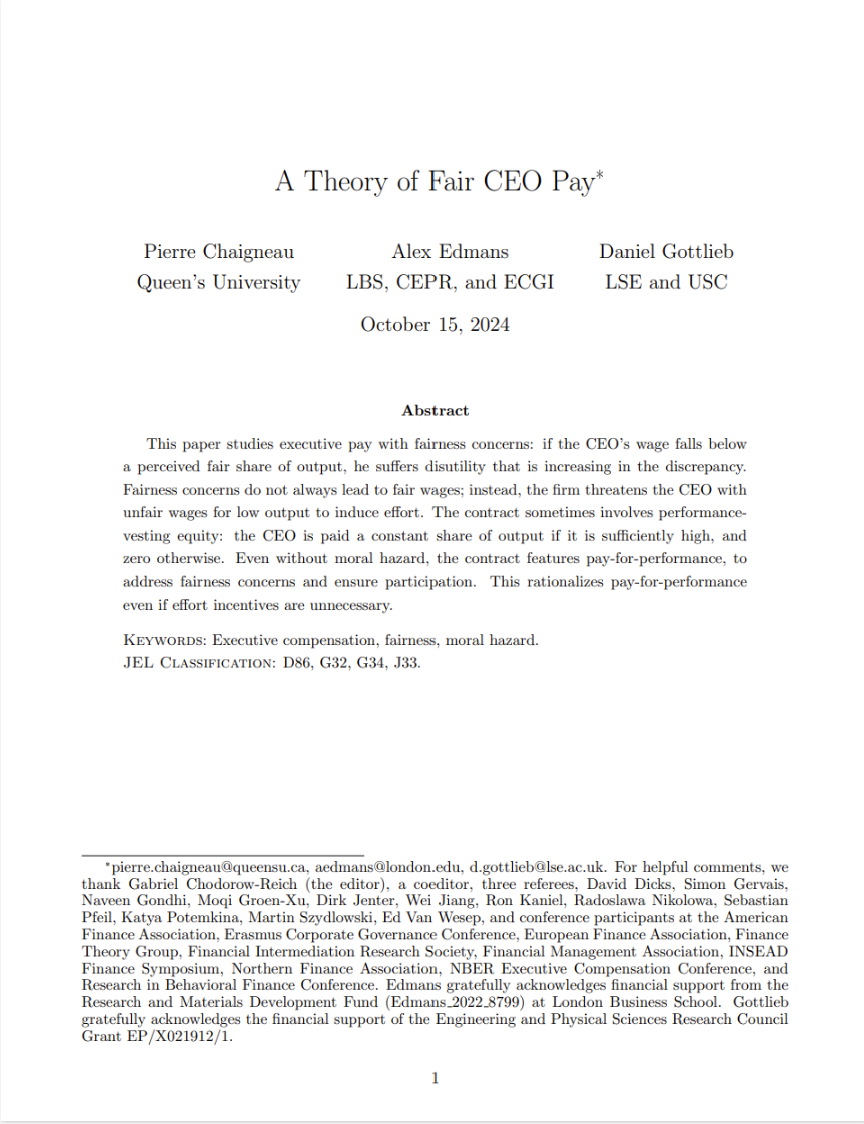
A theory of fair CEO pay
This research models executive pay where CEOs suffer disutility from 'unfair' wages. Firms motivate effort by threatening zero pay for poor performance, offering a fair output share only above a threshold. This rationalises performance-vesting equity and pay-for-performance structures even without traditional moral hazard incentives.
International round table: Financing climate action at city level
This report synthesises discussions from an international round table on financing city-level climate action, highlighting how local governments overcome fiscal constraints through tailored funding scales, partnerships, innovative revenue mechanisms, and long-term approaches to deliver major decarbonisation programmes across Europe and North America.
A legal framework for impact: Sustainability impact in investor decision-making
The report analyses how legal frameworks across major jurisdictions shape investors’ ability to pursue sustainability impact. It clarifies when impact-focused approaches are permitted or required and outlines policy options to support them. It provides guidance for aligning investment decisions with sustainability goals while maintaining financial objectives.
The Silicon Six and their enduring global tax gap
This Fair Tax Foundation report analyses the decade-long tax conduct of six major technology firms—Alphabet, Amazon, Apple, Meta, Microsoft, and Netflix. It finds a persistent global tax gap, with an average effective tax rate of 18.8% versus global norms of 27%. The report urges stronger transparency and fairer international tax reform.
Navigating diversity, equity and inclusion: An asset owner perspective
This report summarises how asset owners integrate diversity, equity and inclusion (DE&I) into organisational policies, investment management and stewardship. Drawing on interviews with 21 organisations, it highlights varying maturity levels, regulatory developments, data challenges and best practices shaping DE&I implementation across the pensions and investment industry.
The future of emissions
This report proposes using firm-level emission futures contracts to better measure and incentivise real environmental impact from ESG investing. It finds that current backward-looking ESG ratings fail to predict emission reductions and may misallocate capital to higher-polluting firms. Market-based, forward-looking emission futures could improve measurement, incentives, and investment impact.
ESG and financial performance: Uncovering the relationship by aggregating evidence from 1,000 plus studies published between 2015 – 2020
This report summarises over 1,000 studies (2015–2020) and finds that most show a positive relationship between ESG and financial performance. ESG integration and long-term strategies tend to enhance returns and risk management, while disclosure alone has limited financial impact.
Outsourcing active ownership in Japan
This report summarises private shareholder engagements in Japan by Governance for Owners Japan between 2009 and 2019. Findings show high success rates and positive abnormal returns, with quiet activism proving more effective than public campaigns. Evidence indicates such private engagements support Japan’s governance reforms and long-term shareholder value.

Research Institute of Economy, Trade and Industry (RIETI)
Research Institute of Economy, Trade and Industry (RIETI) is a Japanese policy think tank founded in 2001. RIETI conducts theoretical and empirical economic research, bridges academe and government, and offers evidence-based trade, industry and economic policy recommendations.

Government Pension Investment Fund (GPIF)
Government Pension Investment Fund (GPIF) is an independent administrative institution in Japan. It manages and invests pension reserve funds under Japan’s Employees’ Pension Insurance and National Pension Acts. GPIF seeks long-term, diversified returns while emphasising ESG investment and stewardship in public pension finance.
ESG shareholder engagement and downside risk
This study analyses whether investor engagement on environmental, social, and governance (ESG) issues reduces firms’ downside risk. Using data from 1,443 engagements with 485 global firms (2005–2018), it finds that successful engagements, particularly on environmental and climate issues, significantly lower downside risk and related environmental incidents.
Coordinated engagements
This report summarises analysis of 31 PRI-coordinated investor engagements on environmental and social issues between 2007 and 2015. It finds that leadership structures, particularly two-tier models with lead and supporting investors, enhance engagement success, improve target company performance, and are associated with higher subsequent fund flows for participating investors.
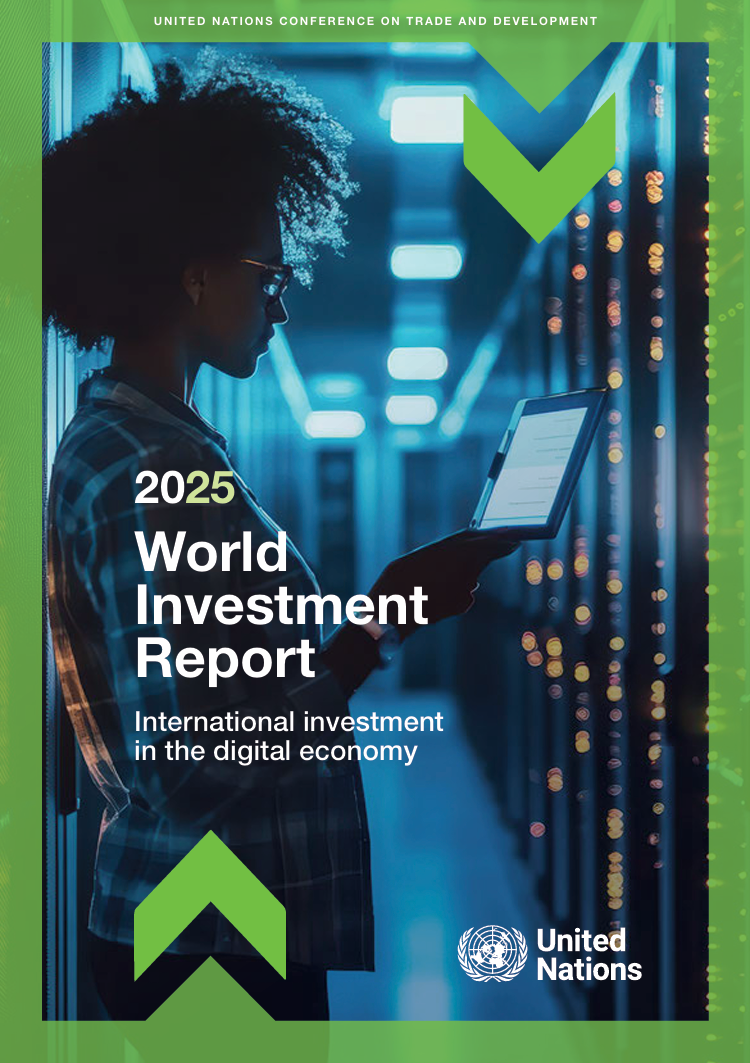
2025 World investment report: International investment in the digital economy
This report summarises international investment trends in the digital economy, focusing on data, digital infrastructure, and technology services. It highlights uneven global distribution, the role of multinational enterprises, and policy implications for sustainable development, emphasising the need for balanced regulatory frameworks and equitable access to digital opportunities worldwide.
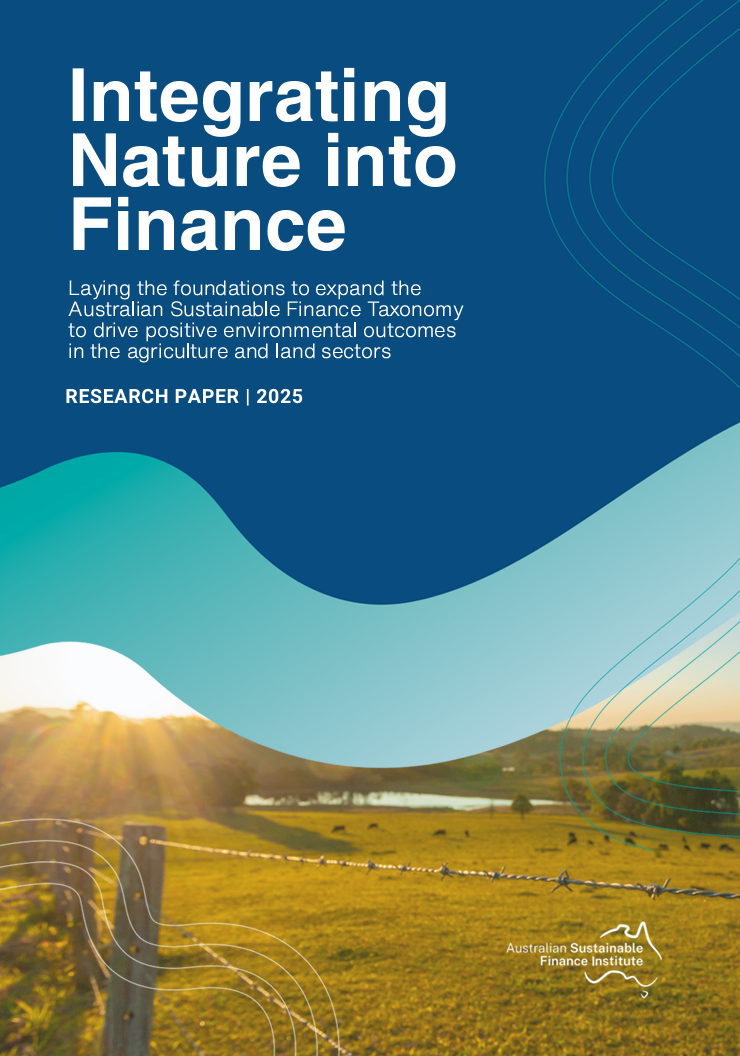
Integrating Nature into Finance: Laying the foundations to expand the Australian Sustainable Finance Taxonomy to drive positive environmental outcomes in the agriculture and land sectors
This report summarises how Australia’s Sustainable Finance Taxonomy could be expanded to agriculture, forestry and land management, proposing draft criteria for biodiversity protection, sustainable water use, and pollution control. It aligns with global biodiversity goals to guide investment and lending that support nature-positive outcome.


