
Library | Location
Global
Refine
1526 results
REFINE
SHOW: 16


The accountability framework operational guidance series
The Accountability Framework Operational Guidance series provides practical guidance for companies on implementing responsible agricultural and forestry supply chains. The series covers environmental protection, human rights, workers’ rights, Indigenous Peoples’ and local communities’ rights, supply chain management, reporting, remediation, and compliance with voluntary commitments and applicable law.

Accountability Framework initiative
The Accountability Framework initiative (AFi) is a coalition of NGOs promoting ethical supply chains by providing guidance and support to help companies eliminate deforestation, land conversion, and human rights abuses in the agriculture and forestry sectors.
Navigating global risks in the Pacific 2026
A Pacific-focused commentary drawing on the World Economic Forum's Global Risks Report 2026, examining how geopolitical fragmentation, digital transformation, climate volatility and workforce pressures are reshaping operating environments across Australia, New Zealand and the broader Pacific region.

State of the Industry: Cultivated meat, seafood, and ingredients series
This benchmark series is an annual State of the Industry series that provides a global overview of the cultivated meat, seafood and ingredients sector. It tracks commercial developments, investment activity, scientific and technological progress, consumer insights, and government and regulatory developments, assessing the sector’s progress towards large-scale commercialisation and adoption.
Boom and bust coal series
The Boom and Bust series is an annual research series that tracks the global coal plant pipeline using data from the Global Coal Plant Tracker. It examines trends in coal power development, construction, commissioning, retirements and policy developments across countries and regions, providing an overview of changes in the global coal sector.

Passing the baton: Creating value through CEO succession at family businesses
This McKinsey report analyses CEO succession at family-owned businesses, drawing on 200 publicly traded and 170 private FOBs globally. It finds that succession on average erodes shareholder value, but top-performing FOBs can achieve the opposite by applying 11 critical practices spanning five foundational and six distinctive areas.
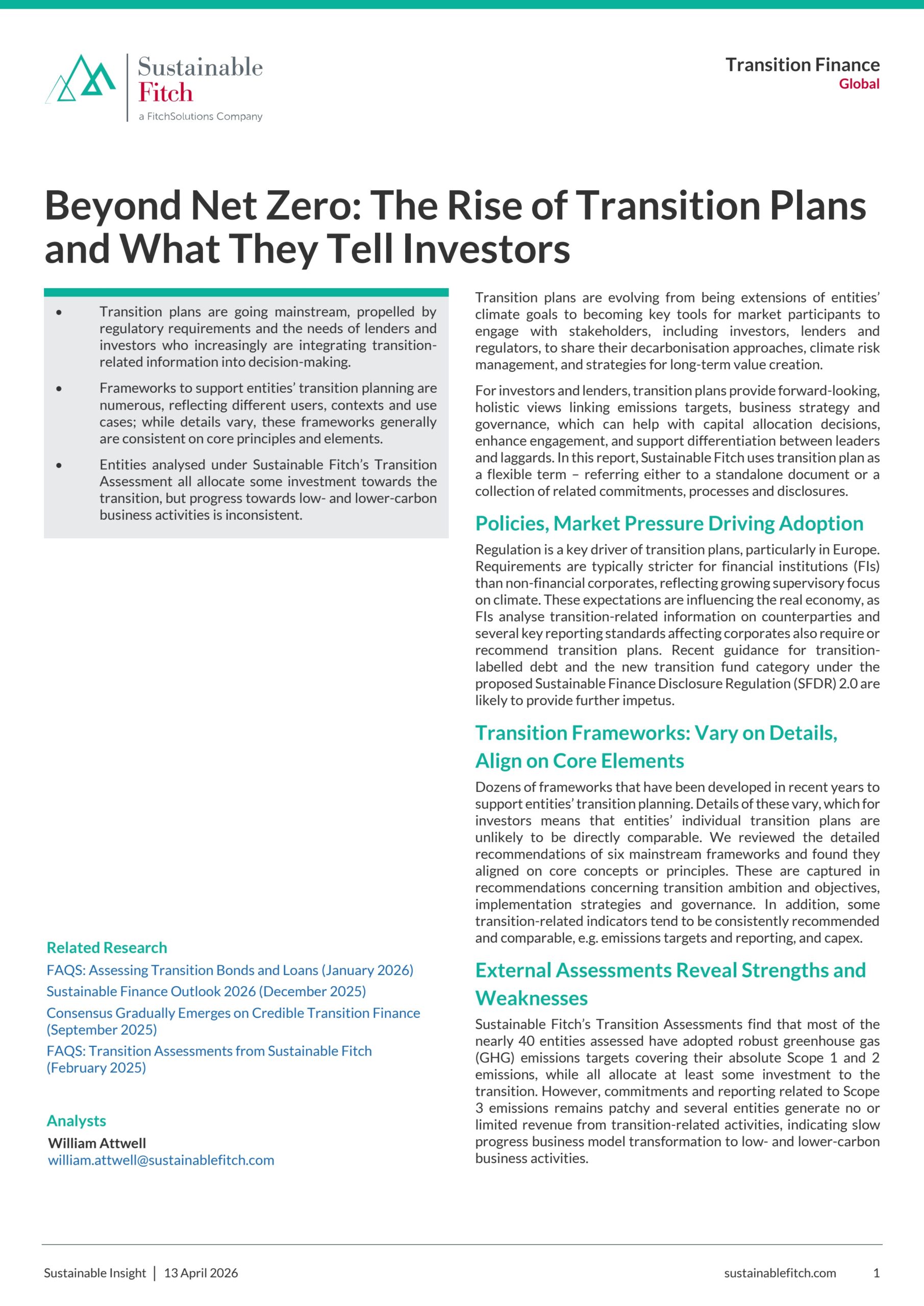
Beyond net zero: The rise of transition plans and what they tell investors
This Sustainable Fitch report examines the rise of corporate transition plans, driven by regulatory requirements and investor demand. It reviews six mainstream transition planning frameworks, finding alignment on core principles but variation in detail, and analyses around 40 entities, revealing strong Scope 1 and 2 targets but patchy Scope 3 commitments and limited transition revenue.
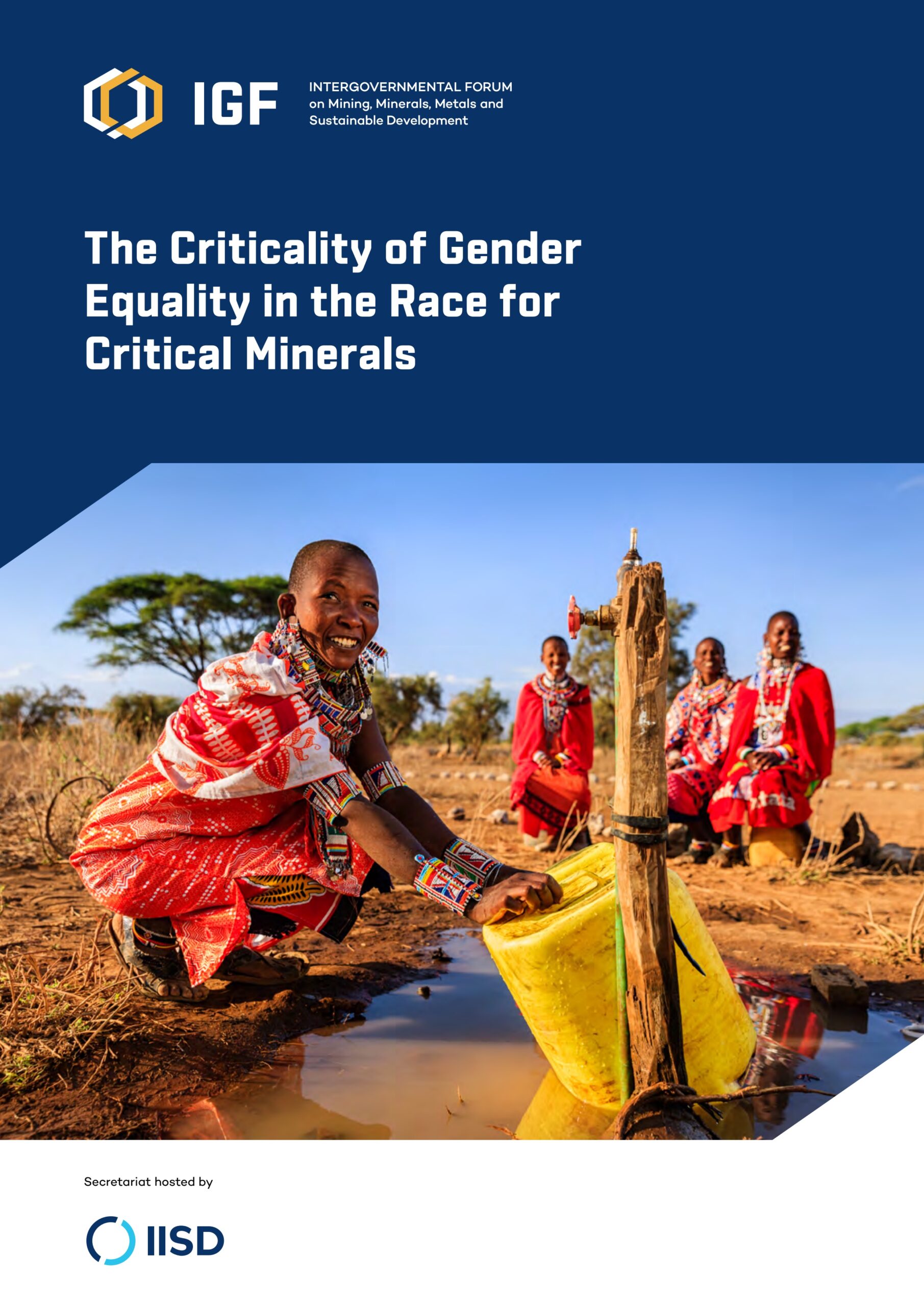
The criticality of gender equality in the race for critical minerals
This report explores how the rising demand for critical minerals risks exacerbating long-standing gender inequalities within the mining sector. It provides factual recommendations for governments and organisations to implement gender-responsive impact assessments, inclusive consultation, and equitable benefit-sharing mechanisms to safeguard women's rights globally.
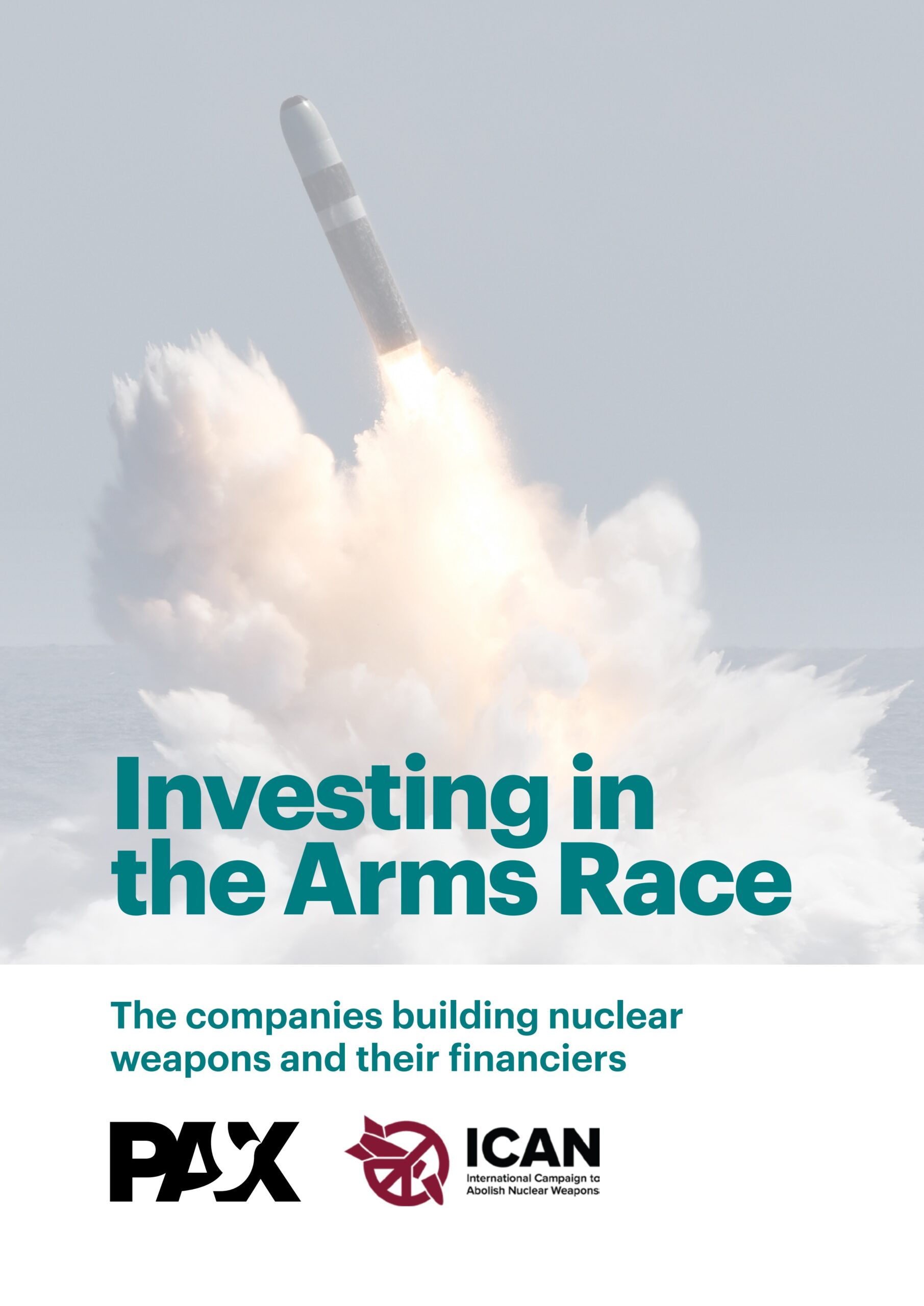
Investing in the arms race: The companies building nuclear weapons and their financiers
This report analyses 25 companies producing nuclear weapons and their financial backers. Highlighting over $1 trillion in total investments and financing from 301 institutions, it urges the financial sector to use its leverage to reject nuclear armament and make choices that benefit global security and humanity.
From fragmentation to insight: Why data convergence matters for scaling impact
This report examines the need for data convergence in impact investing to address fragmentation. It advocates adopting a structured, Theory of Change-based data model to standardise information across portfolios. Such a structure enhances interoperability, streamlines data management, and enables advanced analytics, ultimately improving decision-making and scaling impact effectively.
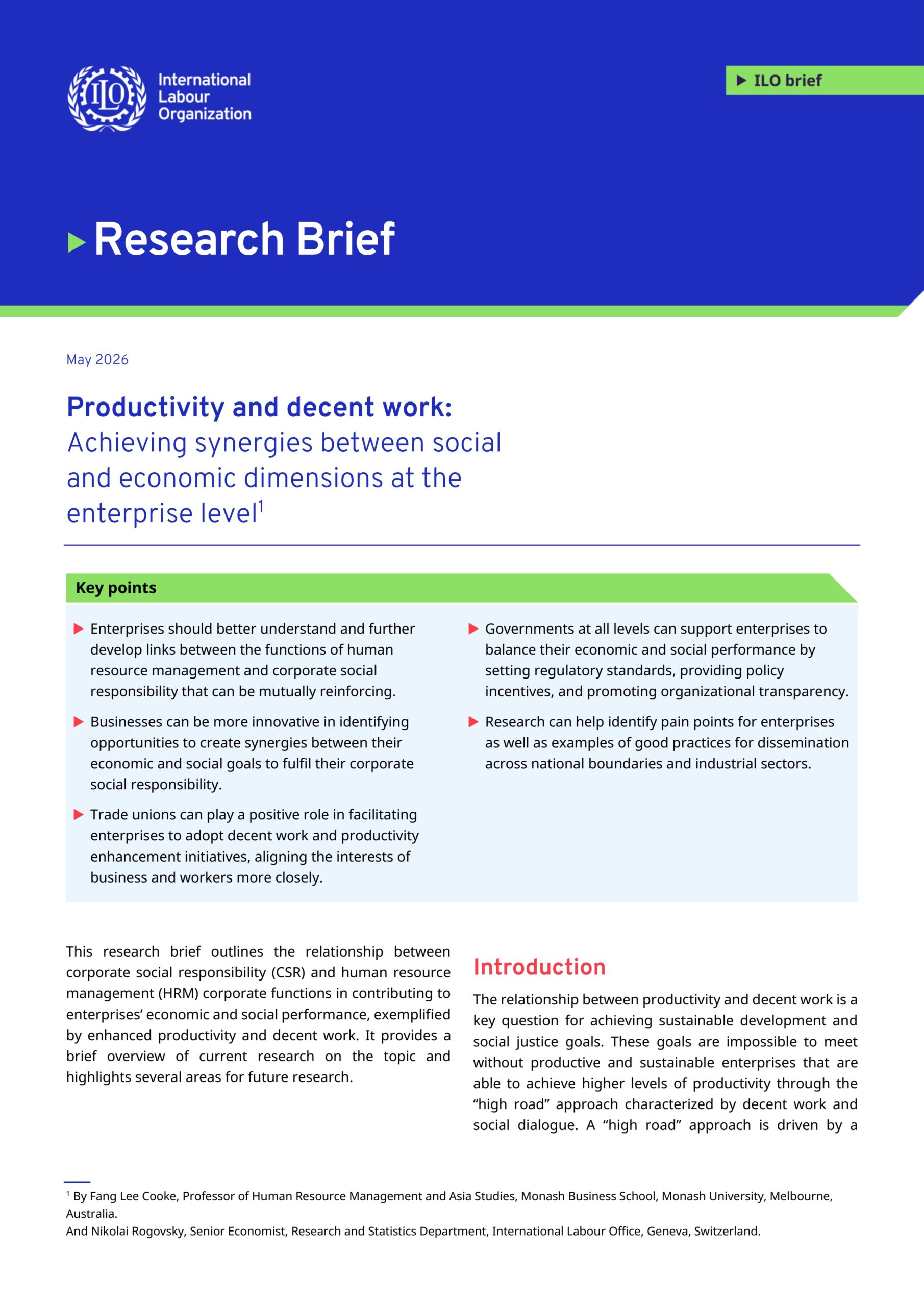
Productivity and decent work: Achieving synergies between social and economic dimensions at the enterprise level
This research brief examines the relationship between corporate social responsibility and human resource management in enhancing enterprise productivity and decent work. It provides an overview of current literature, explores how aligning social and economic dimensions creates synergies, and identifies key gaps for future research to support sustainable development.
Forging a global clean steel economy: Leveraging trade to reduce the green premium
This report examines how decarbonising the global steel industry requires separating ironmaking from steelmaking. By leveraging international trade, countries can co-locate energy-intensive processes in resource-rich regions like Brazil, Australia, and India. This strategic approach reduces production costs and helps lower the green premium for clean steel.
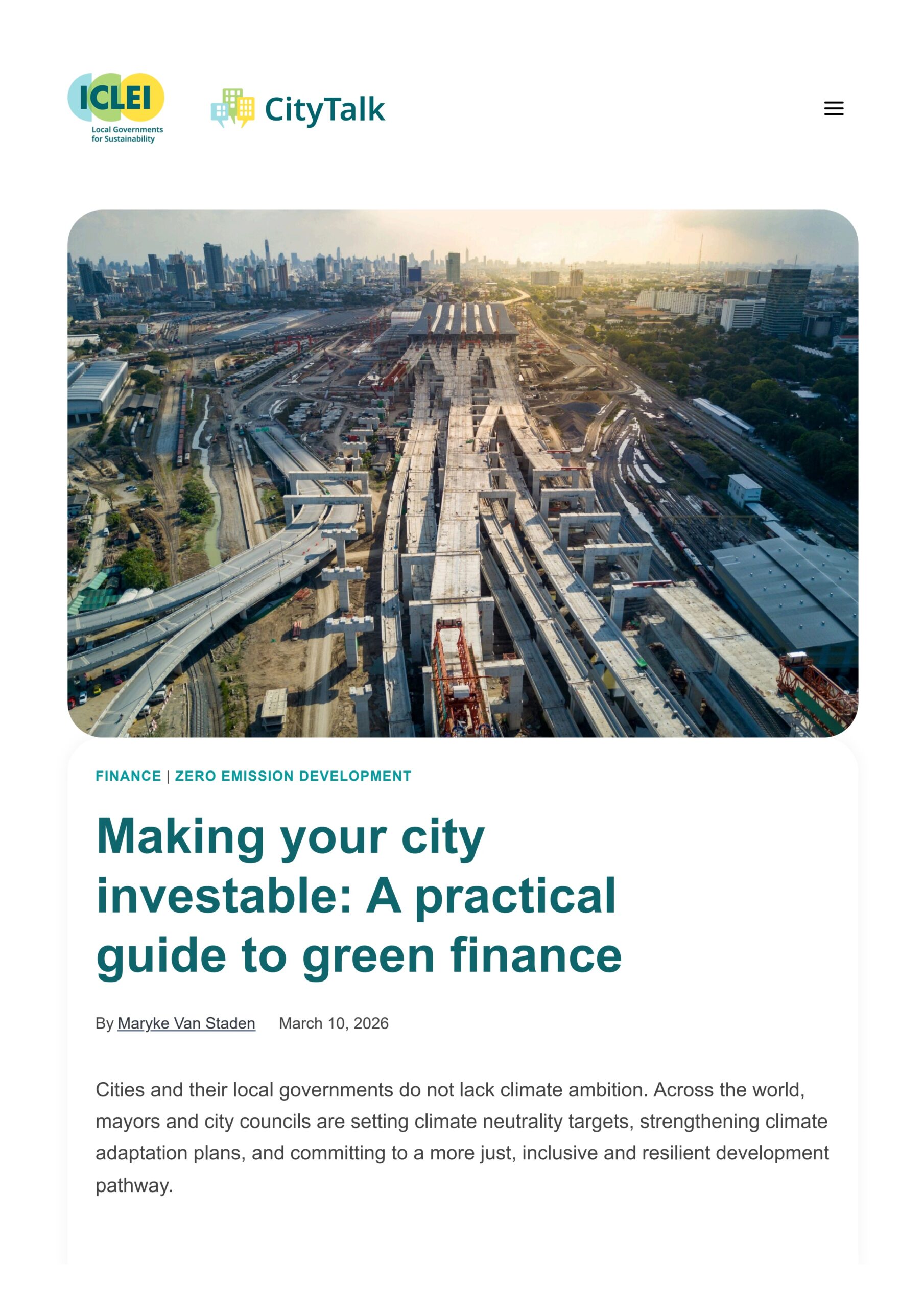
Making your city investable: A practical guide to green finance
This guide outlines how local governments can access green finance by shifting from ad hoc initiatives to embedded institutional strategies. Highlighting successful international examples, it emphasises the importance of transparent governance, predictable project pipelines, and standardised reporting to build investor confidence and secure long-term climate capital.
The battle over energy security: Challenging the fossil fuel playbook
This report by InfluenceMap analyses how the fossil fuel industry uses geopolitical instability to promote energy security narratives. It highlights the industry's historical playbook of delaying the renewable transition and outlines current counter-arguments from renewable sectors advocating for electrification to ensure genuine energy independence and affordability.
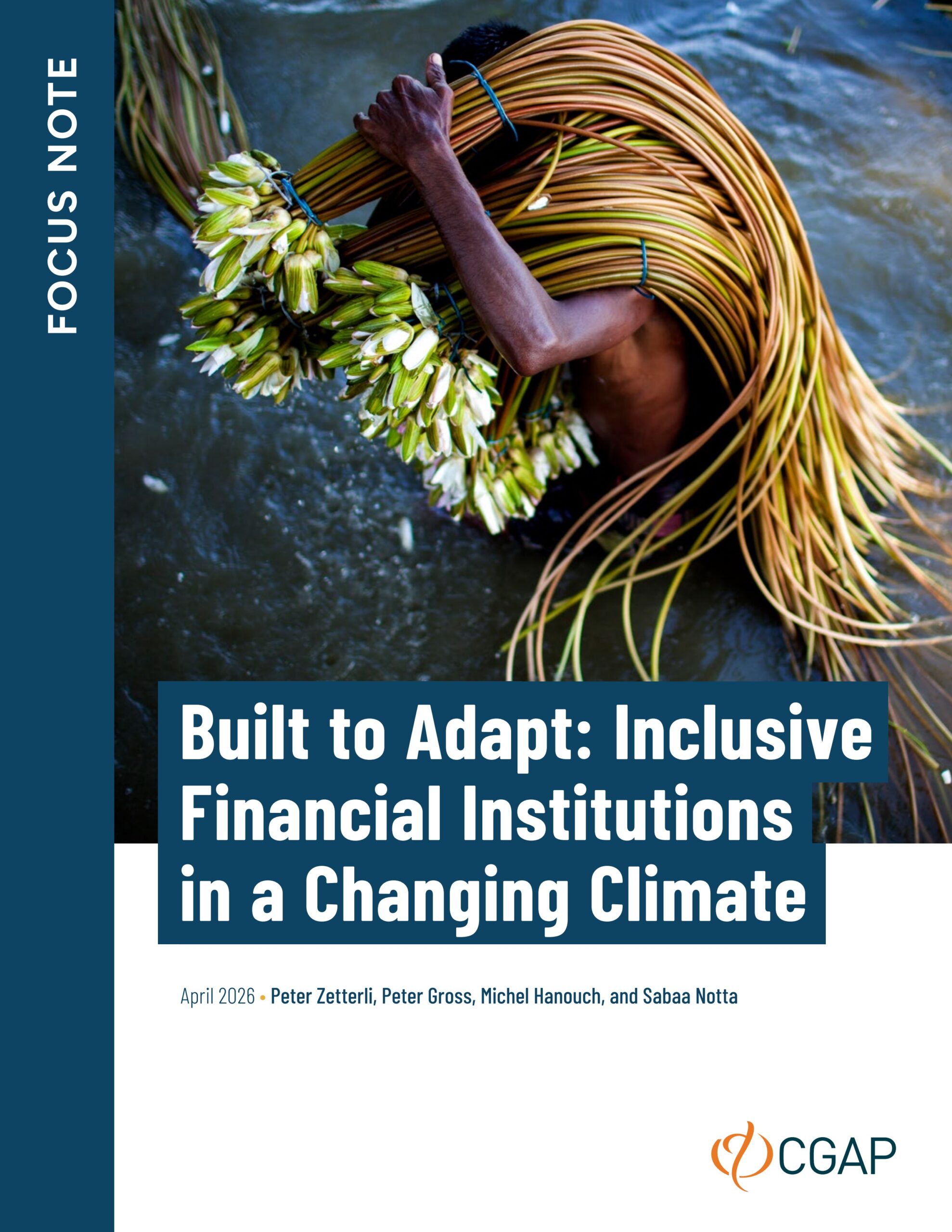
Built to adapt: Inclusive financial institutions in a changing climate
This report explores how inclusive financial institutions can build climate resilience for themselves and their clients. It outlines strategies for risk assessment, innovative risk financing, and adapting product offerings. By adopting a mutually beneficial approach, providers can maintain their social mission while navigating intensifying climate impacts.
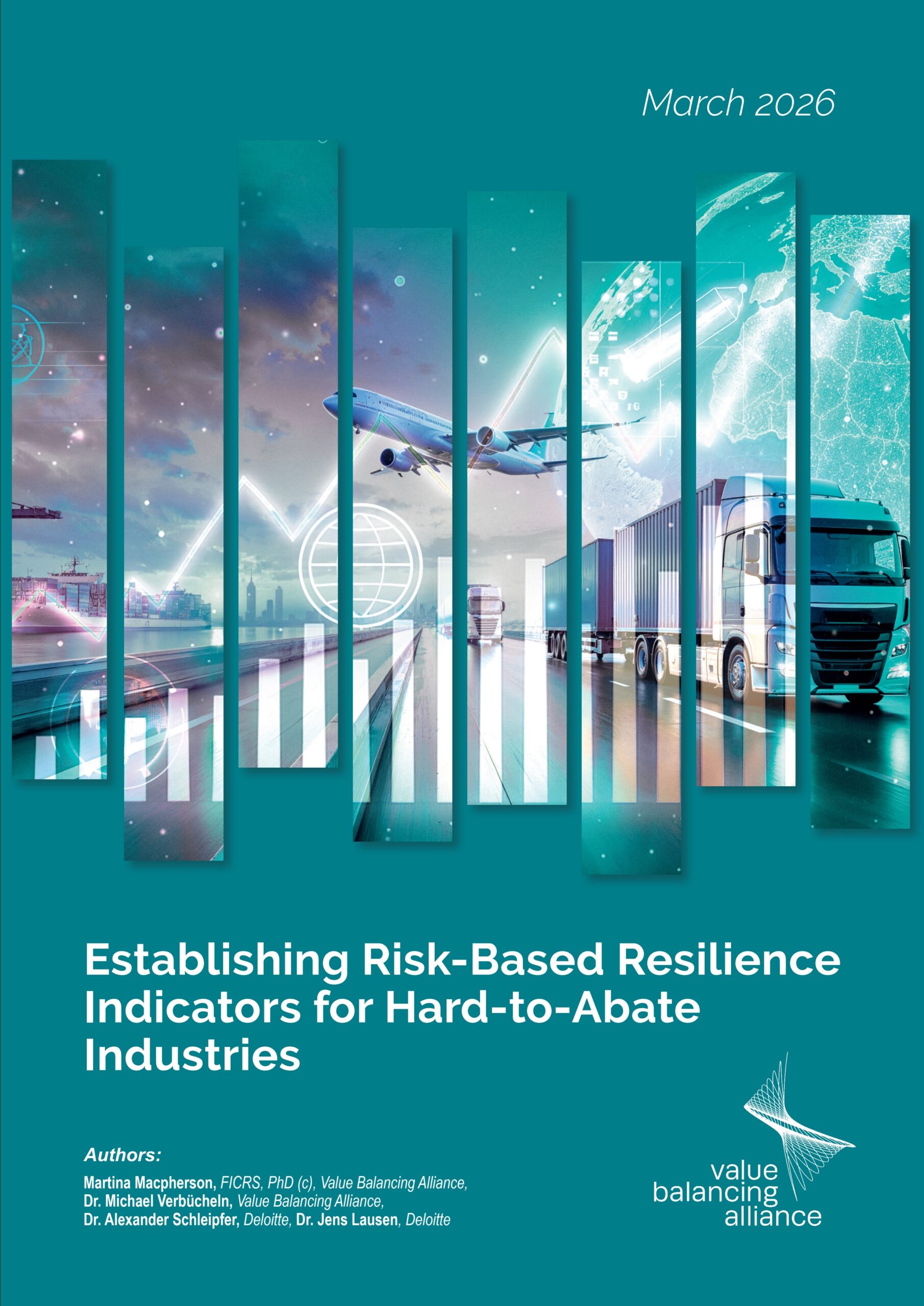
Establishing risk-based resilience indicators for hard-to-abate industries
This report develops a Resilience Indicator for hard-to-abate sectors, evaluating transition and physical climate risks. It offers a transparent, risk-based tool for investment decisions, focusing on cash-flow stability and adaptive capacity, to provide more actionable insights than generic ESG scores.


