
Library | Location
Global
Refine
1526 results
REFINE
SHOW: 16


The Climateworks guide to credibility for corporate climate transition plans
Provides an Australian-focused framework for assessing the credibility of corporate climate transition plans, outlining principles, criteria and disclosure expectations. It supports companies, investors and regulators in evaluating emissions targets, governance, strategy alignment and risk management within mandatory climate reporting and net zero transition planning.
Governing for net zero: The board's role in organisational transition planning
This report guides Australian boards on integrating net zero transition planning into strategy, governance, disclosure and stakeholder engagement. It outlines directors’ legal duties, mandatory climate reporting requirements, and practical oversight questions to help organisations manage climate-related risks, opportunities and implementation.
Guidance for applying absolute environmental sustainability assessment on activities at different scales (BETA version)
Provides beta guidance for applying Absolute Environmental Sustainability Assessment, comparing activities’ environmental burdens against planetary boundaries. It outlines a three-phase, nine-step framework, supported by case studies (buildings, cement, EU consumption), and aligns with existing accounting standards while addressing methodological gaps in allocating environmental limits.
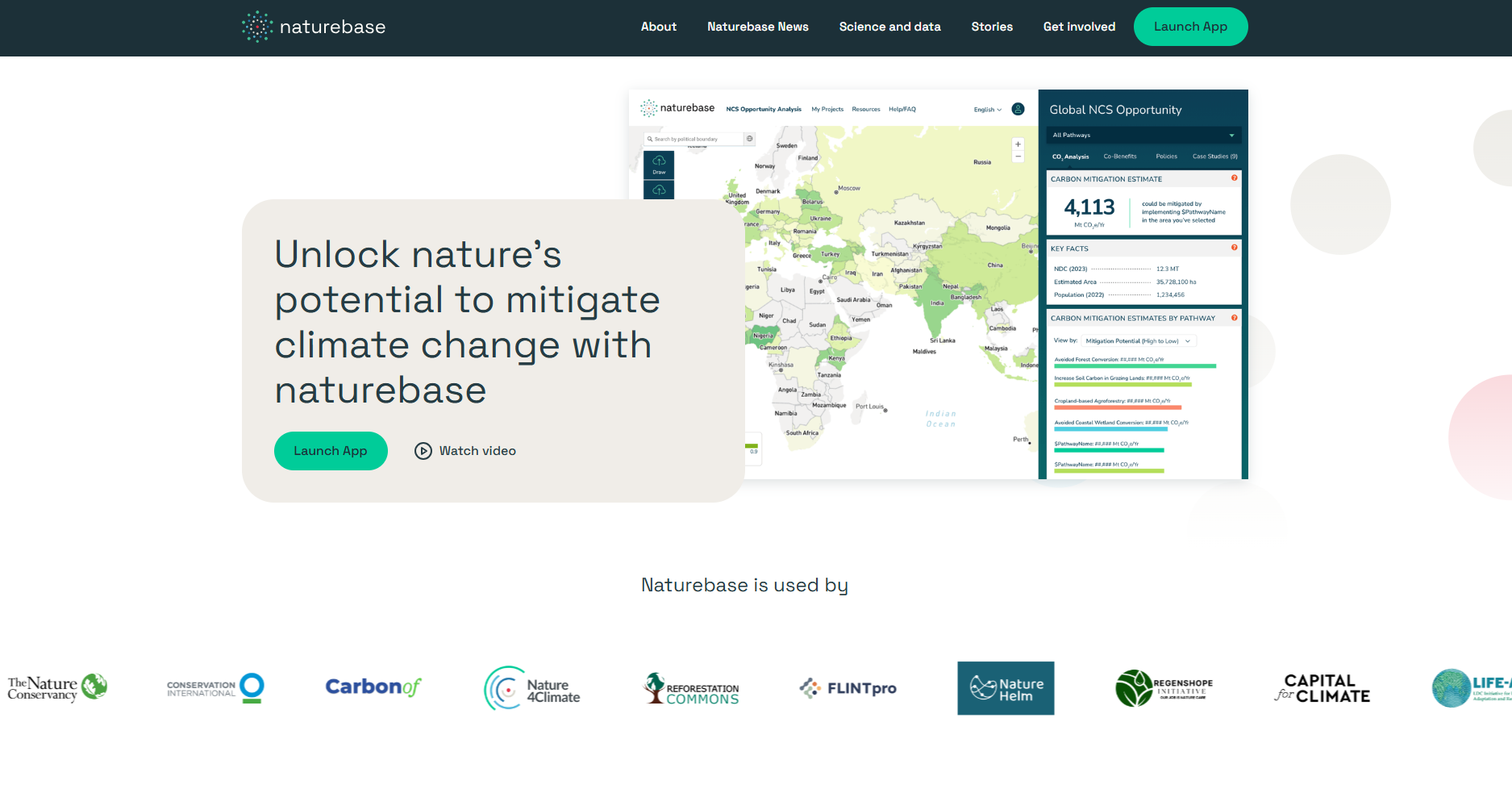
Naturebase
Naturebase is a free, science-based platform that maps where and how to implement nature-based solutions. It provides data on carbon mitigation potential, biodiversity and social benefits, alongside policy guidance and case studies, enabling investors and policymakers to identify, assess and finance high-integrity climate and nature projects.

Heightened human rights due diligence
UNDP’s training guide explains heightened human rights due diligence for companies in conflict-affected contexts, outlining frameworks, legal expectations and practical steps to assess, mitigate and remedy impacts on human rights and conflict, supported by case studies and tools to guide implementation.
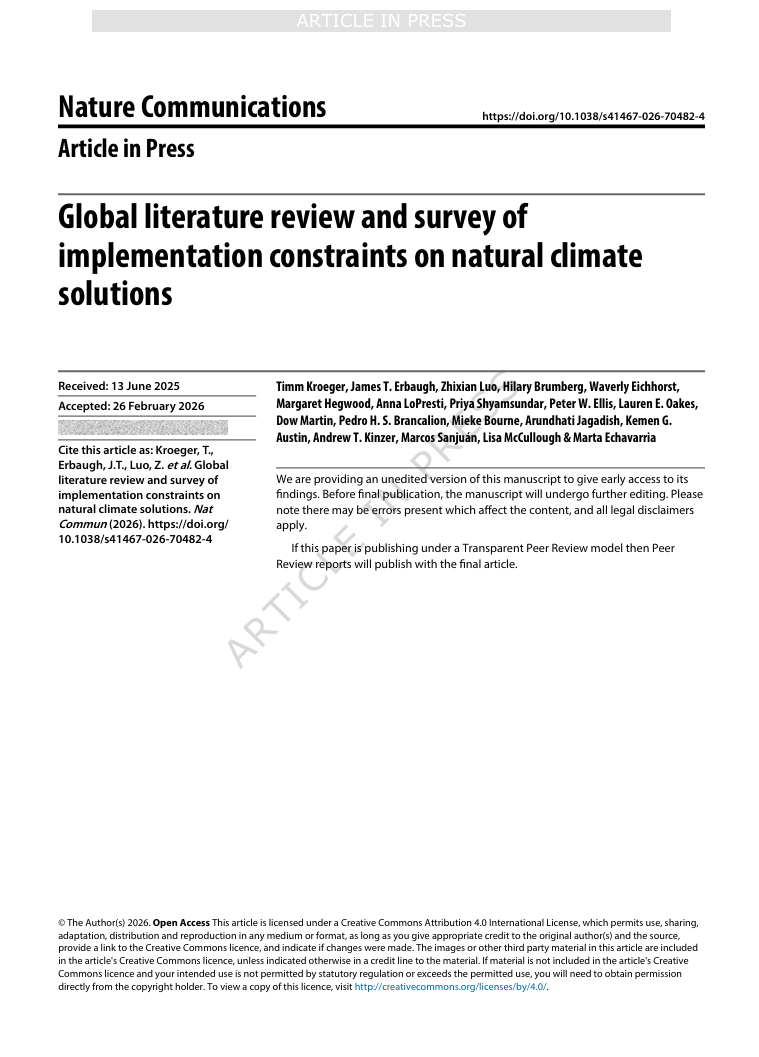
Global literature review and survey of implementation constraints on natural climate solutions
Global review and project survey of natural climate solutions across 137 countries finds implementation is constrained mainly by social-behavioural, knowledge, and government or organisational barriers, especially weak policy coordination and implementation capacity. Without targeted enabling measures, near-term mitigation will remain below biophysical potential.
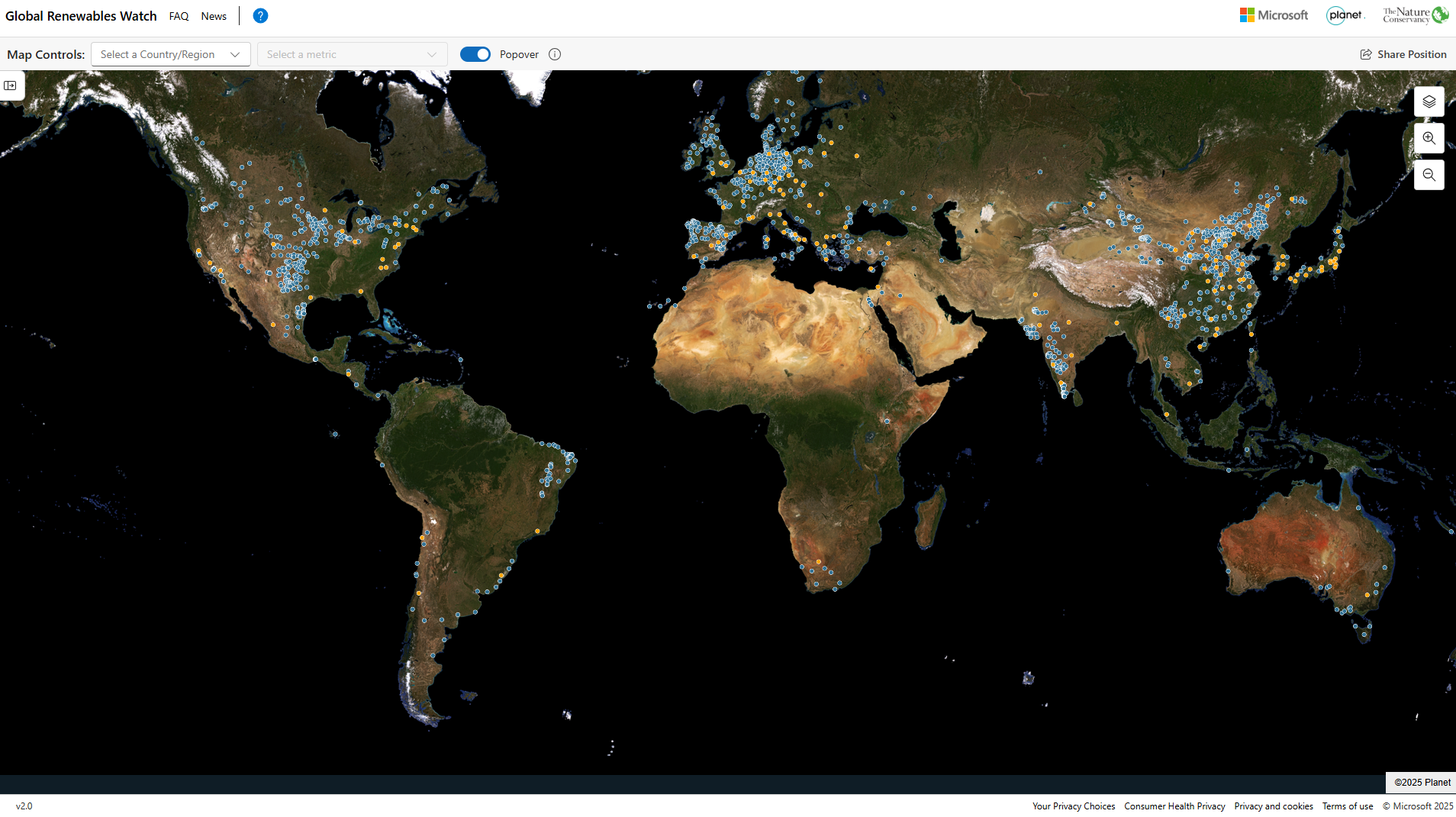
Global Renewables Watch
Global Renewables Watch Atlas is an interactive platform mapping utility-scale solar and wind installations worldwide using AI and satellite imagery. It provides regularly updated geospatial data to track deployment trends, estimate capacity, and assess progress in the energy transition, supporting analysis by policymakers, researchers, and finance professionals.

The Nature Conservancy
The Nature Conservancy (TNC) is a global environmental non-profit organisation focused on conserving lands, waters and biodiversity. It uses science-based conservation, partnerships and sustainable finance approaches to address climate change and habitat loss, supporting nature-based solutions that benefit ecosystems, communities and long-term environmental resilience worldwide.
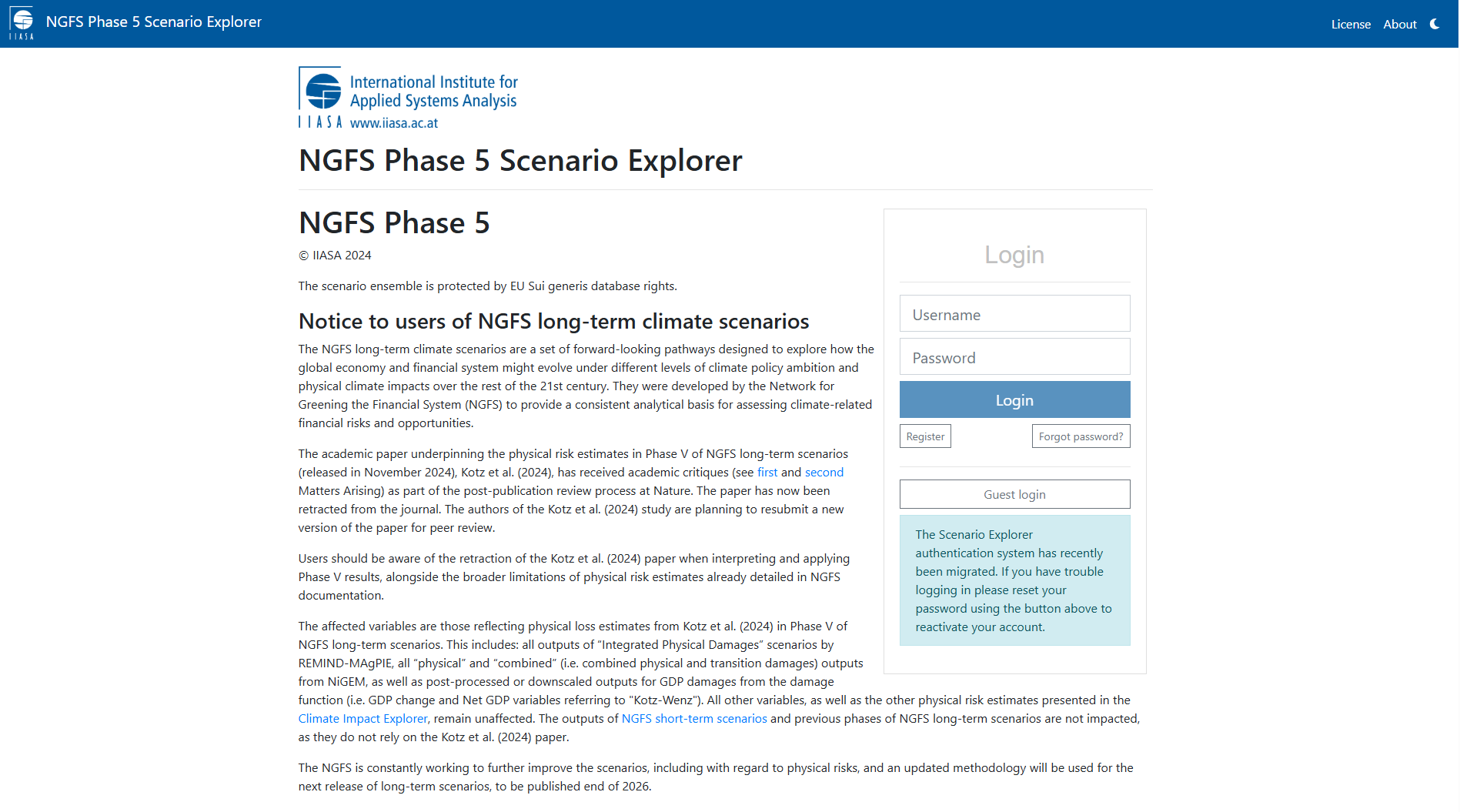
NGFS Phase 5 Scenario Explorer
Web-based platform by NGFS and IIASA providing access to climate scenario data. It enables users to visualise, compare and download time-series data on transition pathways, physical risks and macroeconomic impacts, supporting climate risk analysis, stress testing and financial modelling. Data can be accessed via workspaces, bulk downloads or APIs.
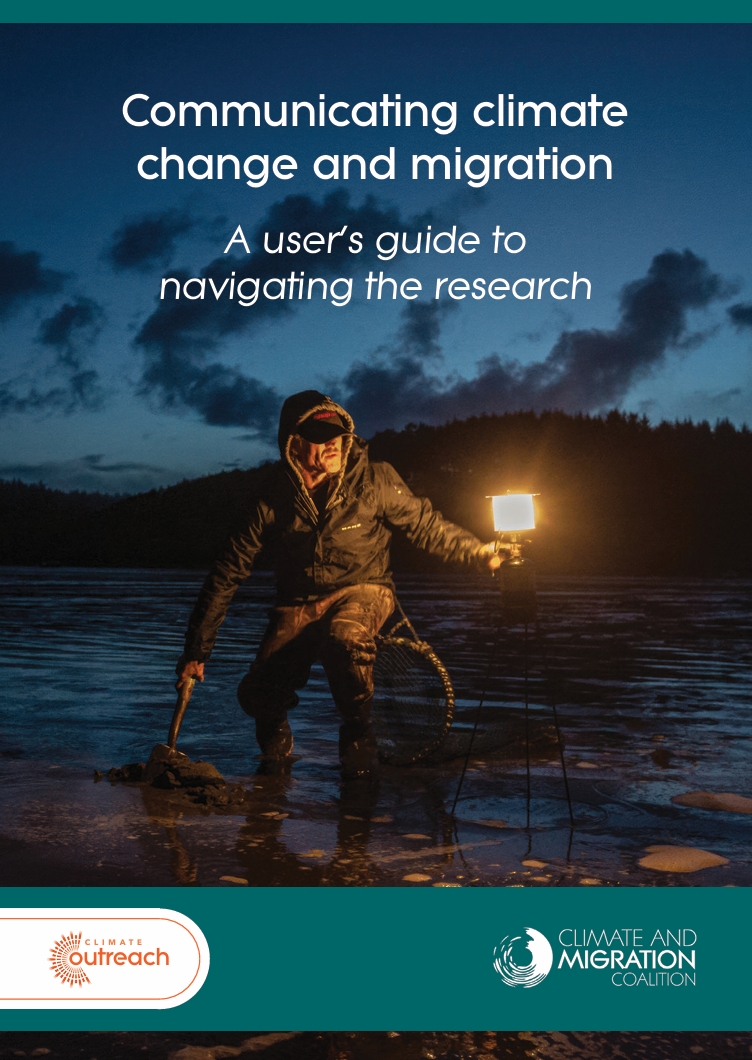
Communicating climate change and migration: A user’s guide to navigating the research
This report guides practitioners on communicating climate-linked migration, highlighting research gaps, biases and limited diversity. It emphasises critical engagement with academic literature, improved representation of affected communities, and the need for nuanced, interdisciplinary approaches to inform effective, ethical communication strategies.
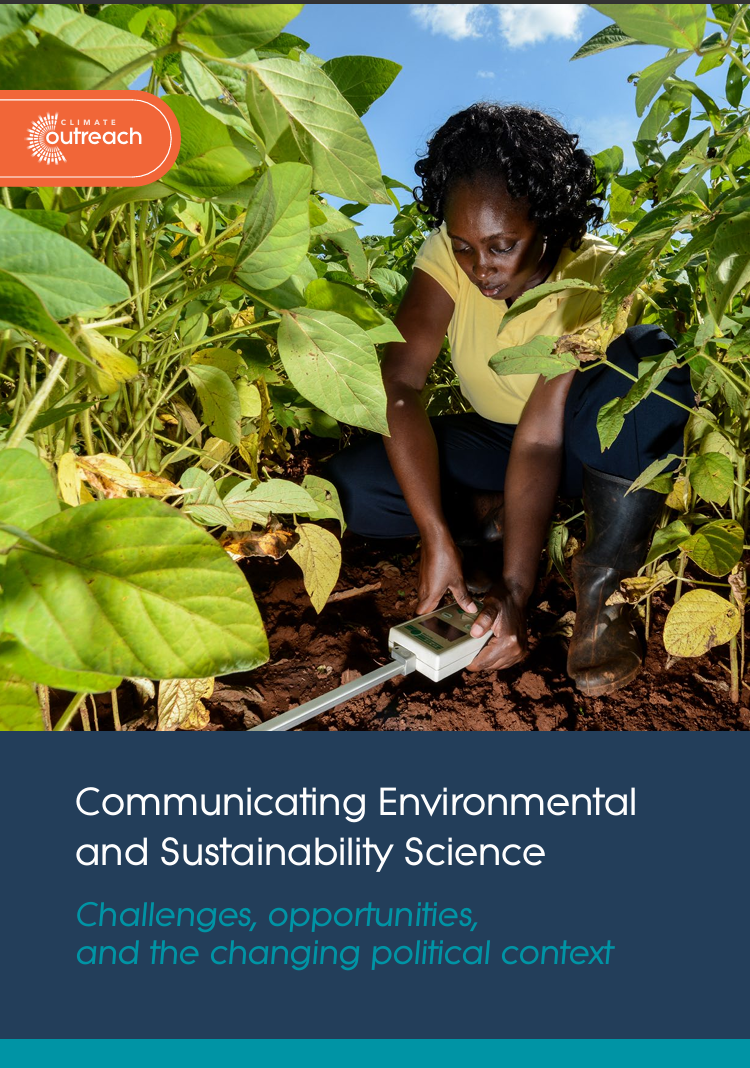
Communicating environmental and sustainability science: Challenges, opportunities, and the changing political context
Synthesises research on communicating environmental and sustainability science, highlighting a shift from one-way information to dialogue. Identifies challenges including political polarisation, trust, and misinformation, and emphasises values-based framing, narratives, and audience engagement as critical for effective public communication and future research priorities.
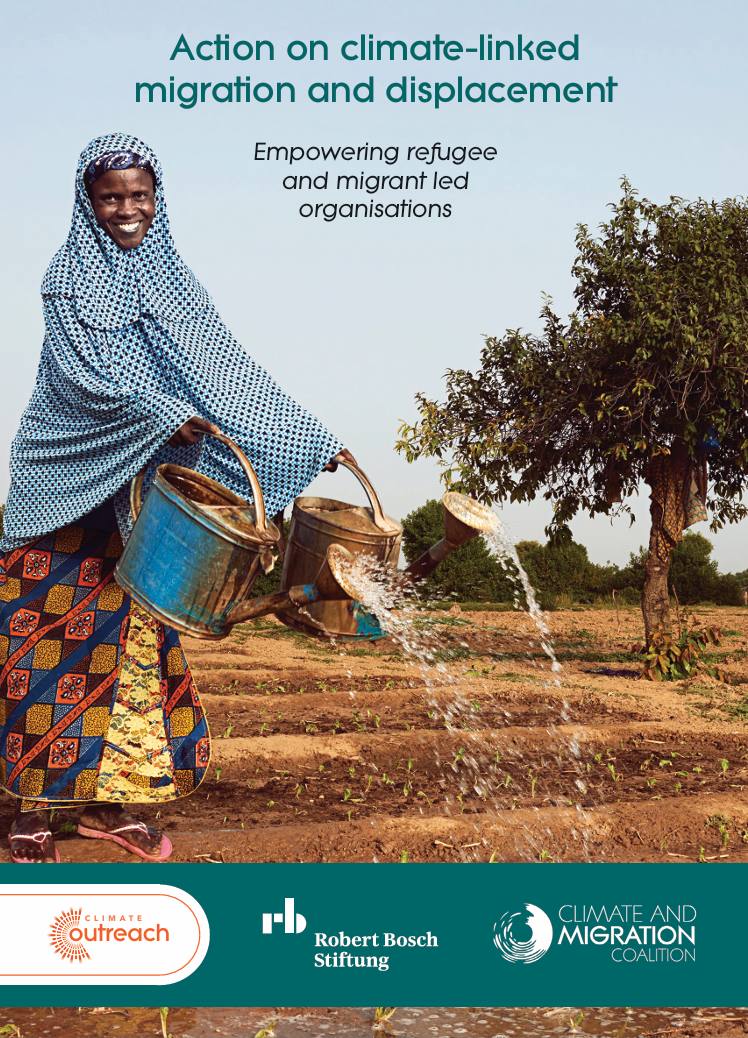
Action on climate-linked migration and displacement: Empowering refugee and migrant led organisations
Analyses climate-linked migration, highlighting impacts on displacement patterns and vulnerabilities. Evaluates roles, motivations and barriers for refugee- and migrant-led organisations, and proposes funding and policy interventions to strengthen their engagement in climate advocacy and support adaptive, rights-based responses.
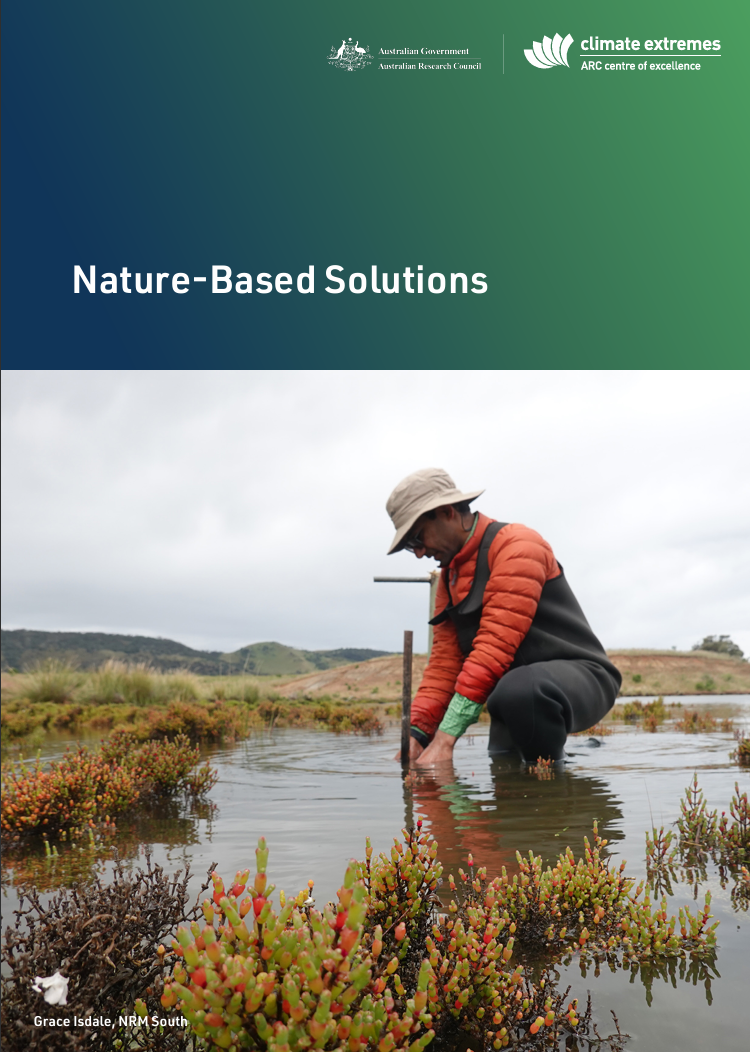
Nature-based solutions
This report explains nature-based solutions as ecosystem protection, restoration and management measures that can support climate mitigation, adaptation and biodiversity. It stresses their carbon-storage limits, vulnerability to disturbance, and the risk of overreliance in net-zero claims without deep emissions cuts.
Investor climate action plans series
This series provides guidance for investors on developing and assessing climate action plans using the ICAPs Expectations Ladder. It outlines approaches across investment, corporate engagement, policy advocacy, disclosure and governance to support alignment with net zero pathways and improve management of climate-related risks and opportunities.
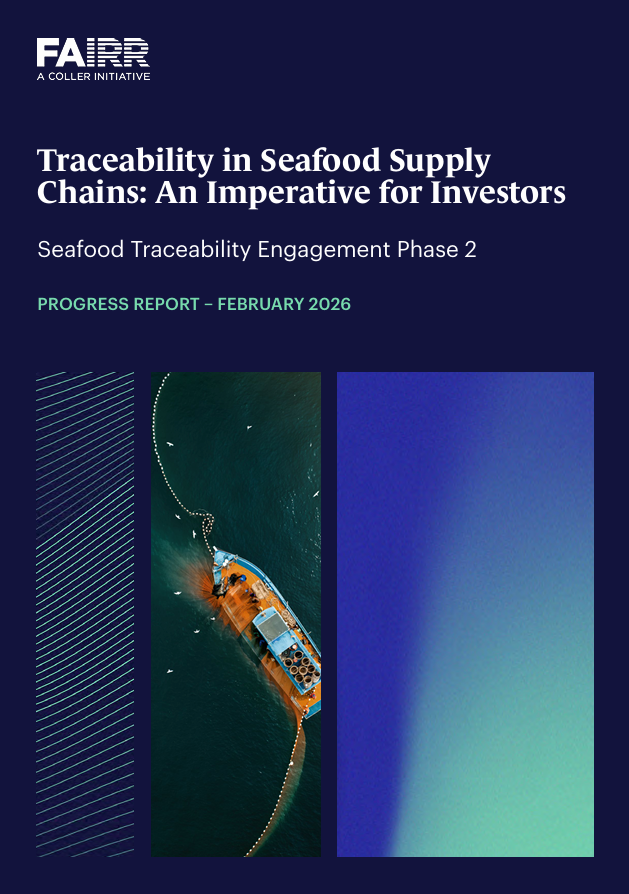
Seafood traceability engagement series
This series examines how investor engagement can drive improved traceability in global seafood supply chains. It focuses on assessing company progress, encouraging adoption of traceability systems, and supporting investors in identifying and managing environmental and social risks within complex seafood value chains.
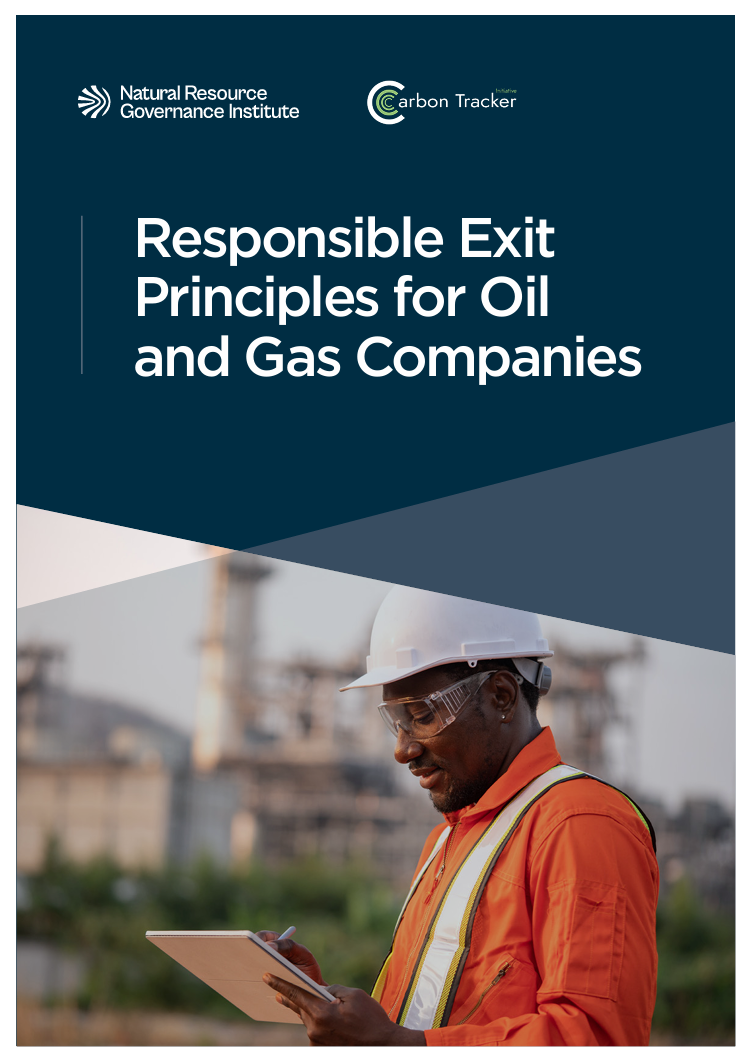
Responsible exit principles for oil and gas companies
Sets out voluntary principles for responsible oil and gas asset exits, focusing on decommissioning, buyer due diligence, transparency and stakeholder engagement to reduce climate, financial, legal and social risks from asset transfers and support an orderly transition.


