
Library | Location
Global
Refine
1526 results
REFINE
SHOW: 16


Building trust in sustainability reporting and preparing for assurance: Governance and controls for sustainability information
This guide outlines governance, internal controls and assurance readiness for sustainability reporting. It explains board, management and audit roles, extending financial reporting controls to sustainability data, and an annual cycle covering materiality, misstatement risk, control design, monitoring and external assurance under emerging standards
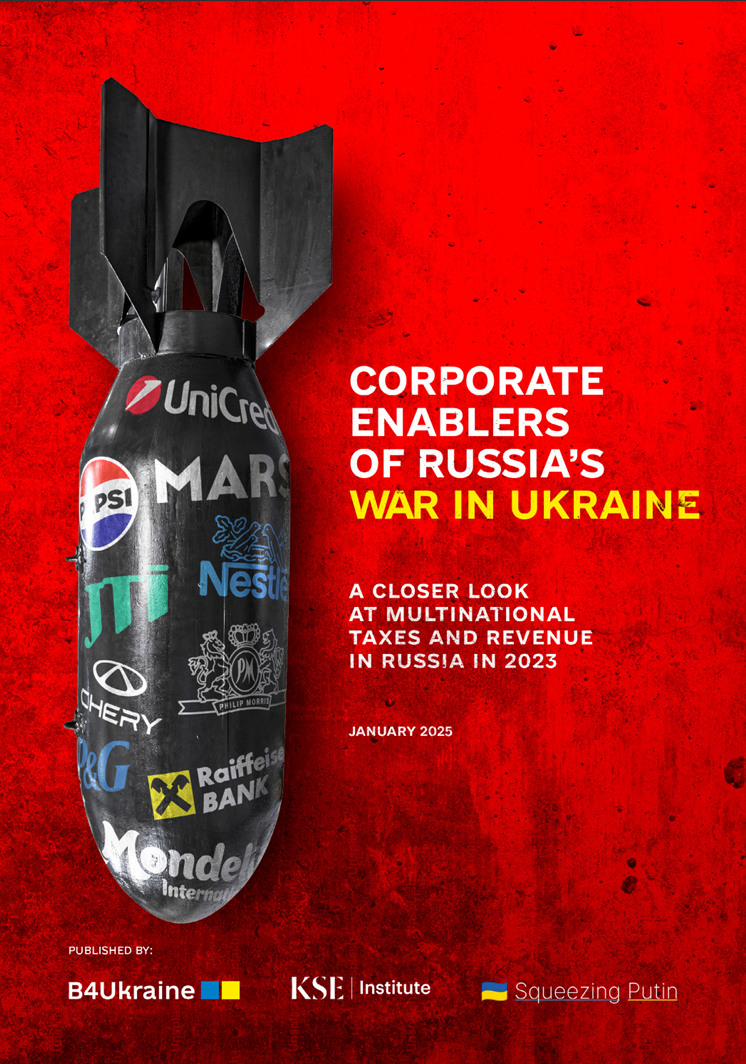
Corporate enablers of Russia’s war in Ukraine: A closer look at multinational taxes and revenue in Russia in 2023
Examines multinational companies’ revenues and taxes in Russia (2021–2023), showing continued corporate activity generated significant tax contributions supporting the Russian state. Highlights sectoral drivers, limited exits, and rising fiscal pressures, concluding that ongoing operations pose financial, legal, and human rights risks.
Open Society Foundations (OSF)
Open Society Foundations (OSF) is a global philanthropic network founded by George Soros that funds civil society organisations, research, and advocacy to promote human rights, democratic governance, and justice. Through grants, impact investing, and policy engagement, it supports initiatives advancing equity, transparency, and accountable institutions across more than 120 countries worldwide.
Climate-nature scenario development for financial risk assessment
This report develops integrated climate-nature scenarios for financial risk assessment, showing that combined climate and nature policies provide a fuller view of agricultural, biodiversity and ecosystem-service risks than separate approaches, with implications for central banks, supervisors and future stress-testing frameworks.
Untapped potential: Asset owners and climate policy influence
Assesses major asset owners’ influence on climate policy, finding limited stewardship and advocacy despite significant potential. Most score poorly on climate lobbying oversight and transparency, with few aligning engagement to net zero goals. Highlights gaps in managing asset managers and industry associations, and calls for stronger, coordinated policy engagement.
How does climate risk affect global equity valuations? A novel approach
The report presents a probabilistic, state-dependent valuation framework for global equities under climate risk, finding that strong abatement could limit revaluation losses to 5–10%, while continued weak abatement could imply declines of around 40%, with tipping points worsening losses.
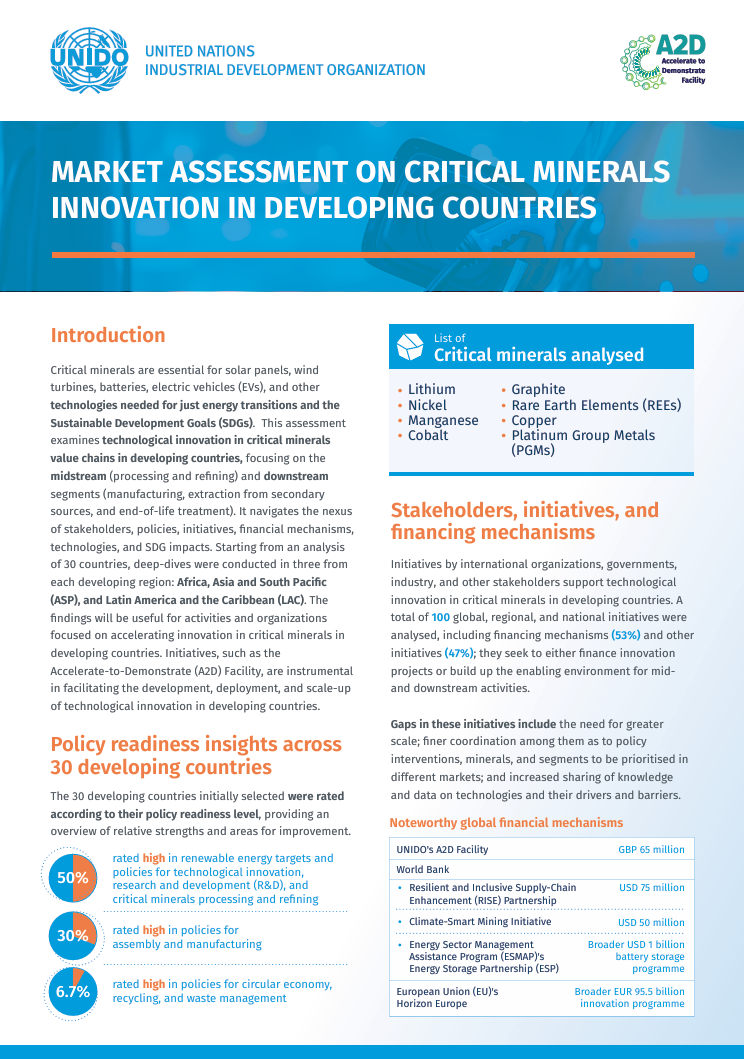
Market assessment on critical minerals innovation in developing countries
This report assesses critical minerals innovation in developing countries, focusing on midstream processing and downstream manufacturing, recycling and end-of-life treatment. It reviews 30 countries, highlights policy and financing gaps, and recommends stronger infrastructure, coordination, technology transfer and support for innovation ecosystems.
Sustainable and responsible investment for central banks
NGFS reports outline how central banks can integrate sustainable and responsible investment into corporate, sovereign and broader portfolio management, using climate metrics, risk and impact frameworks, governance arrangements and practical implementation guidance, while recognising data gaps, methodological limits and trade-offs with mandates and core investment objectives.
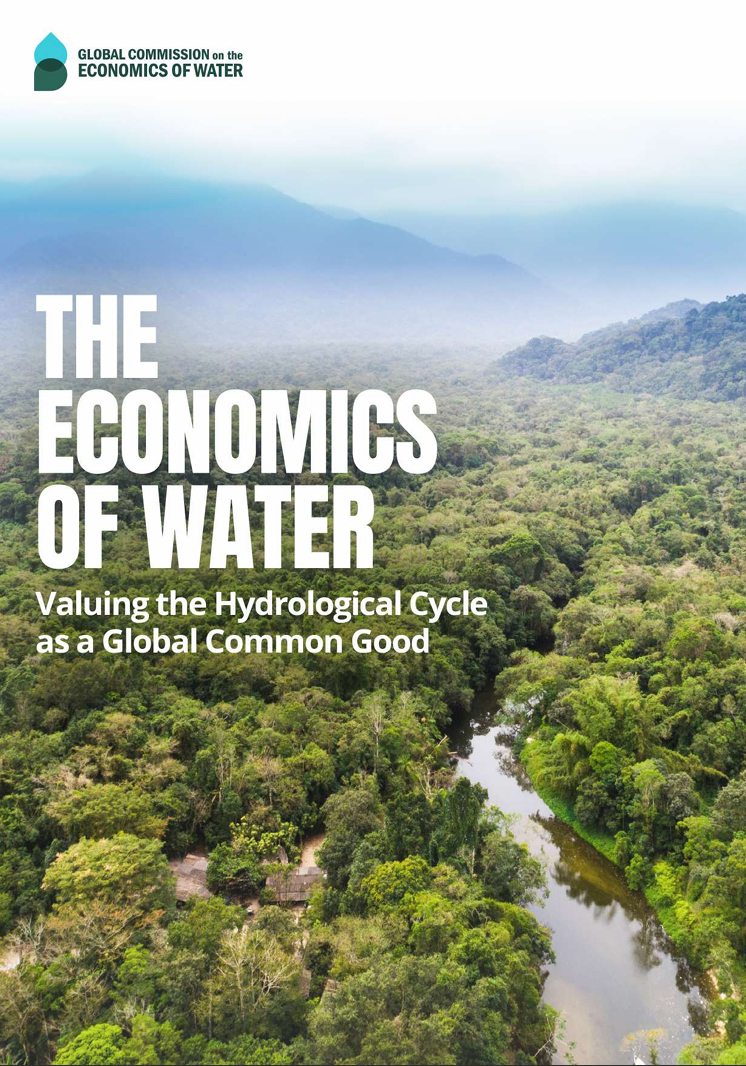
The economics of water: Valuing the hydrological cycle as a global common good
The report argues the hydrological cycle should be governed as a global common good, with water valued more accurately and managed for efficiency, equity and environmental sustainability, supported by five missions spanning food systems, ecosystems, circular water use, lower water-intensity industry, and universal safe water access. The report is produced by the Global Commission on the Economics of Water, supported by the OECD.
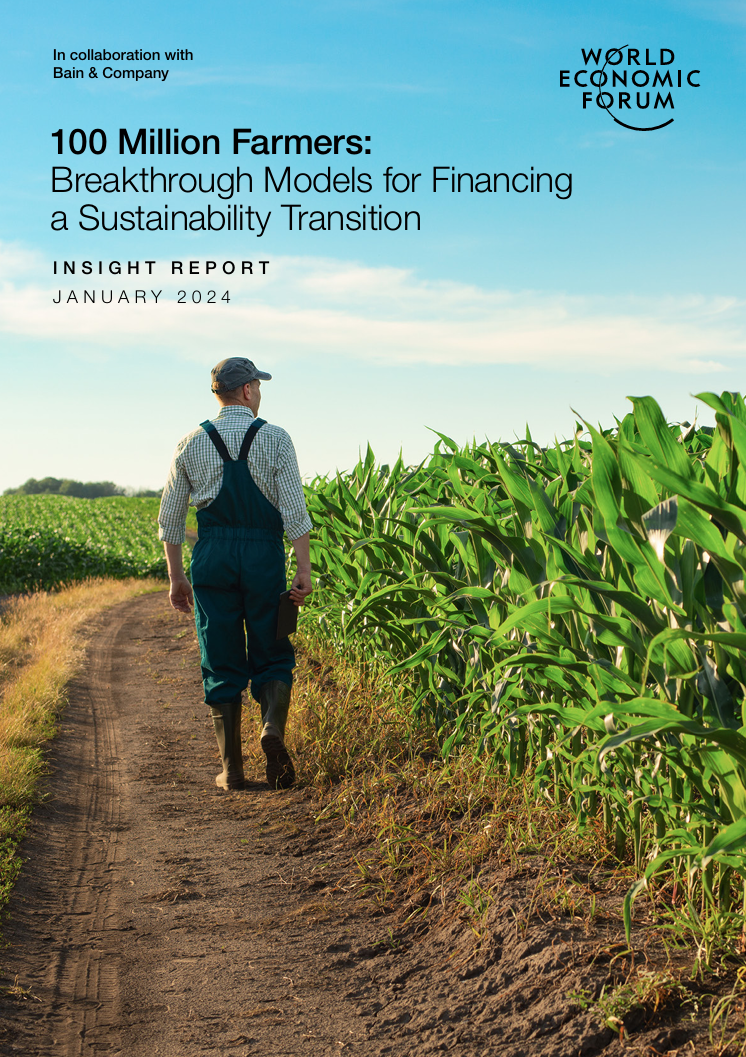
100 million farmers: Breakthrough models for financing a sustainability transition
Report proposes financing and collaboration models to accelerate adoption of regenerative agriculture. It identifies economic, technical and social barriers farmers face and outlines coordinated mechanisms—combining ecosystem-service monetisation, blended capital and multi-actor partnerships—to scale sustainable food production and support farmers’ transition.
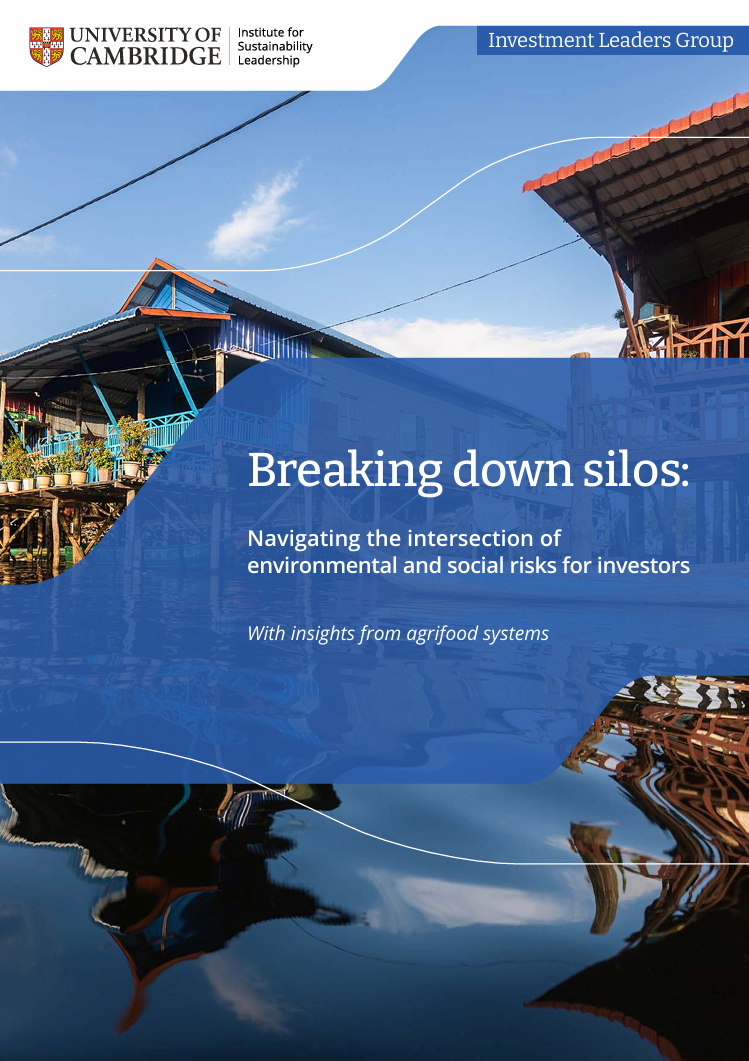
Breaking down silos: Navigating the intersection of environmental and social risks for investors
Examines how environmental and social risks interact to create compounding financial impacts for investors. Presents a systems-based framework and agrifood case study illustrating portfolio volatility, credit risk and supply disruptions. Recommends integrated risk assessment, value-chain finance, stewardship and blended finance to strengthen portfolio resilience.
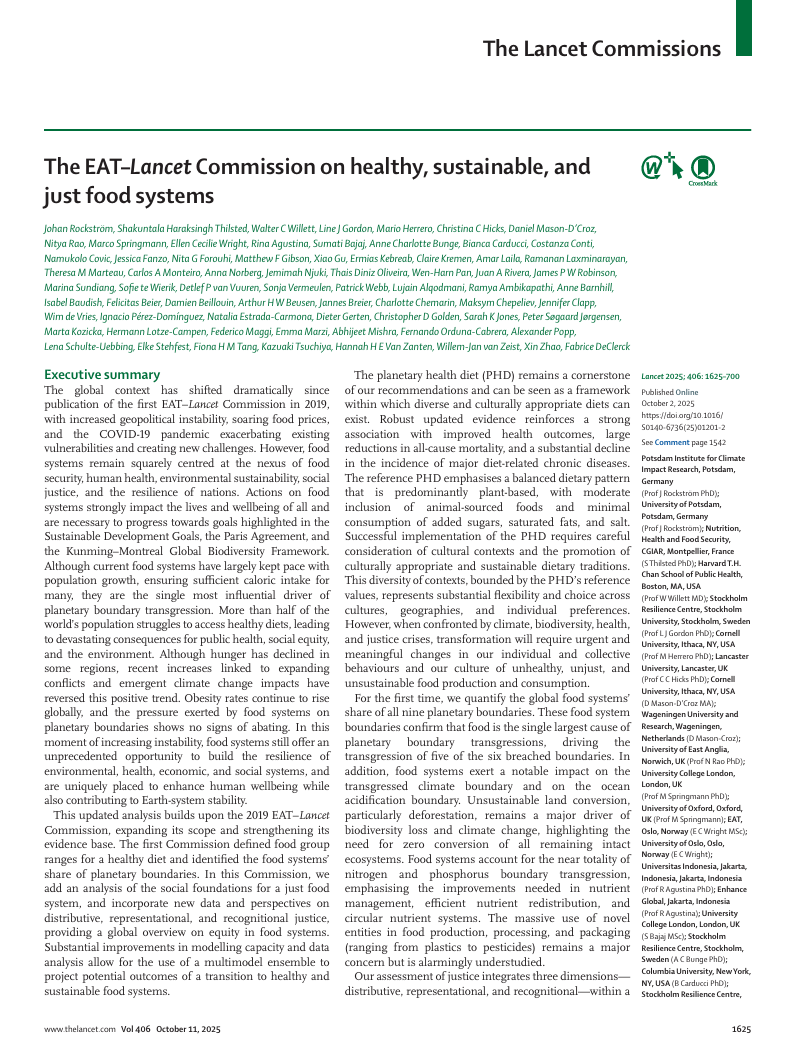
The EAT-Lancet Commission on healthy, sustainable, and just food systems
This report assesses how transforming global food systems can improve health, sustainability, and equity. It updates evidence on the planetary health diet, quantifies food systems’ pressures on planetary boundaries, and analyses justice in food access and production, recommending coordinated policy, dietary shifts, and sustainable agricultural practices to support healthy diets within environmental limits.
Thriving workplaces: How employers can improve productivity and change lives
World Economic Forum report examining how employer investment in employee health and well-being improves productivity, retention and economic value. It analyses global workforce health data, identifies demographic disparities in burn-out and holistic health, and proposes measurement frameworks and organisational strategies to build healthier, more productive workplaces.
Science in the courtroom: Evidentiary needs in climate litigation
This guide outlines how climate science evidence is used in climate litigation. It explains evidentiary standards, types of scientific evidence and litigation strategies, and provides guidance for courts and litigants on presenting and assessing climate science to support legal claims related to climate change impacts and responsibility.
Emissions gap report series
UNEP's annual assessment of the gap between countries' climate pledges and emission reductions needed to meet the Paris Agreement's temperature goals, with 2025 focus on new NDCs and 2035 targets.
Climate-related risks and opportunities and the disclosure of material information
This educational material explains how entities apply AASB S2 to identify and disclose material information on climate-related risks and opportunities affecting cash flows, access to finance and cost of capital. It outlines concepts such as value chains, dependencies and impacts, and provides a four-step process for assessing and reporting material climate-related information.


