Overview
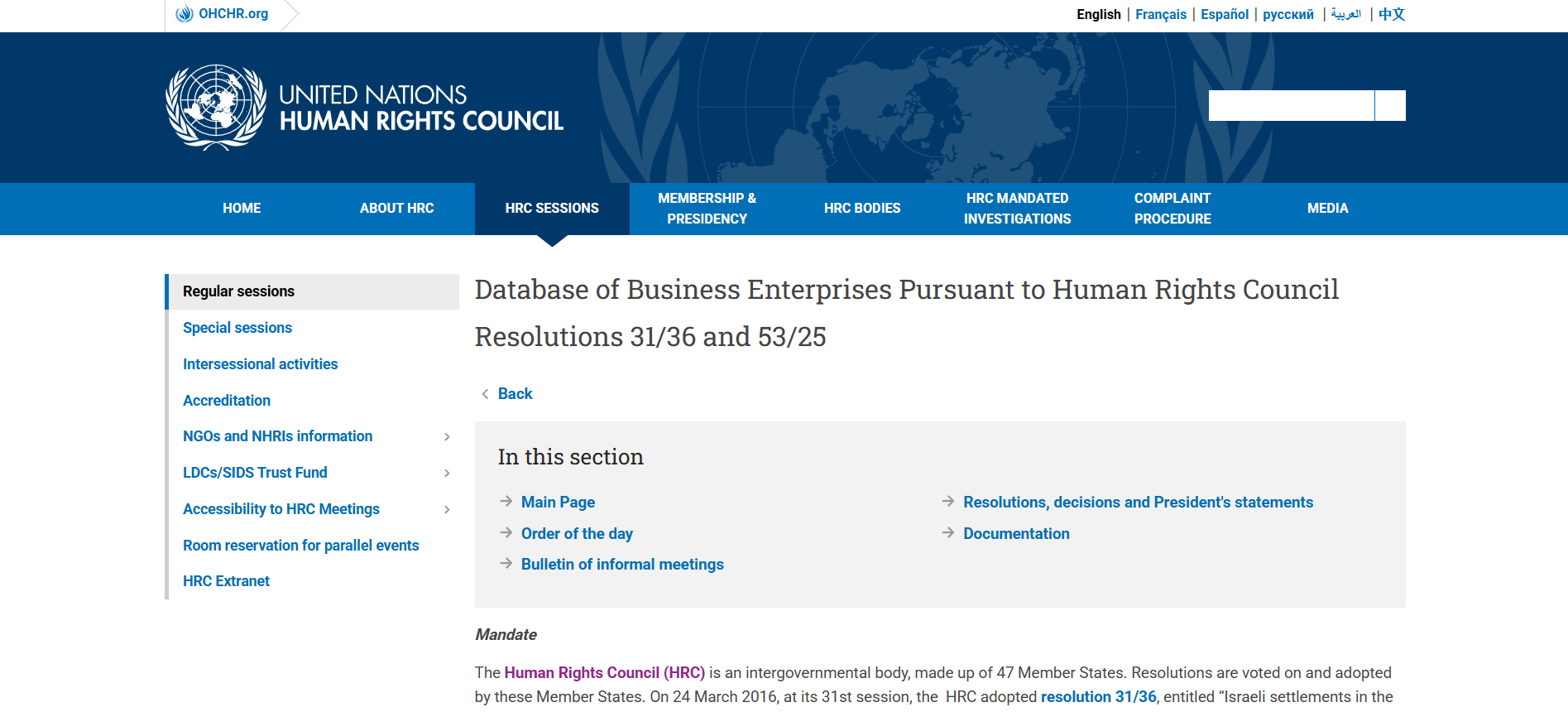
This is an online document database providing structured access to official records of the United Nations Human Rights Council (HRC) from sessions 31–36. Its primary purpose is to enable users to retrieve resolutions, reports, and meeting documentation. Finance professionals may find it relevant for assessing regulatory, social, and human rights contexts linked to country, sector, or project-level risks.
Organisation behind the tool
The database is developed and maintained by the Office of the United Nations High Commissioner for Human Rights (OHCHR), which serves as the secretariat for the Human Rights Council. OHCHR is responsible for publishing and archiving official HRC documentation as part of its mandate to support international human rights mechanisms.
What the tool does
The database provides access to official Human Rights Council documentation, including:
- Resolutions and decisions adopted during HRC sessions 31–36
- Reports from Special Rapporteurs, working groups, and commissions of inquiry
- Agenda items, meeting records, and session-related documents
- Search and filtering by session, document type, country, or mandate
- Documents are available for online viewing and download in standard formats.
Target audience
The primary users are policymakers, diplomats, legal practitioners, and human rights professionals. It is also used by researchers, academics, civil society organisations, and analysts requiring authoritative UN documentation. The general public can access the database without restriction.
Relevance to finance professionals
For finance professionals, the database can support contextual and risk-based analysis, including:
- Risk assessment – identifying human rights-related risks associated with specific countries, regions, or sectors.
- ESG analysis – informing social and governance assessments, including labour rights, community impacts, and state-level human rights performance.
- Investment context – supporting due diligence for sovereign debt, infrastructure, or long-term investments exposed to regulatory or reputational risks.
- Policy and compliance insight – understanding evolving international norms that may influence regulation, disclosure requirements, or stakeholder expectations.
The database serves as a reference source rather than an analytical or modelling tool.