

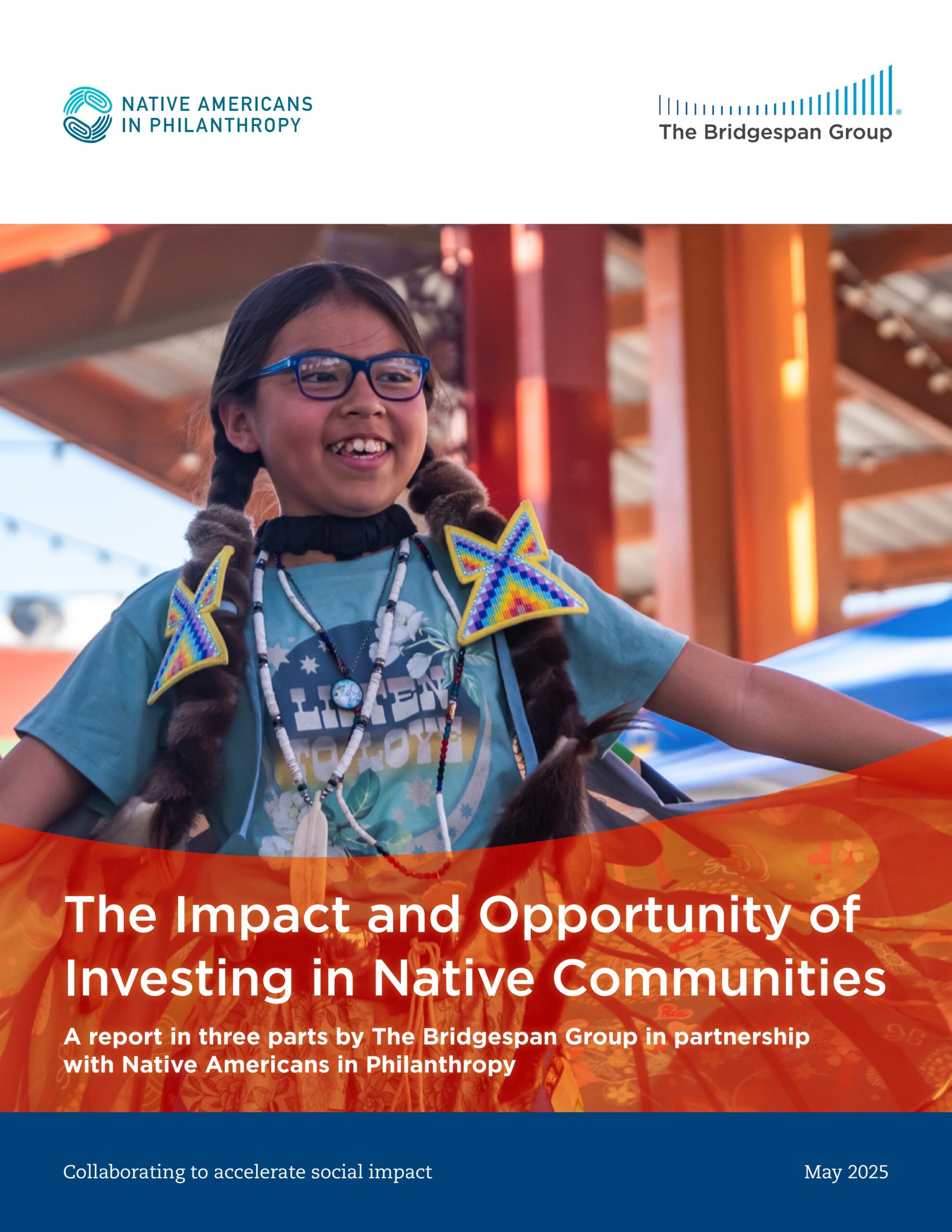
The impact and opportunity of investing in Native communities
This research explores philanthropic opportunities within US Native communities. It introduces the ‘Five Rs’ framework—Respect, Reciprocity, Responsibility, Relationships, and Redistribution—to guide engagement. The report highlights Native economic strengths and ‘indigenuity’, providing entry points for funders to support Tribal sovereignty, prosperity, and narrative change through authentic partnerships.
Please login or join for free to read more.

OVERVIEW
A letter from Native Americans in Philanthropy
Native Americans in Philanthropy (NAP) has worked for over 30 years to increase philanthropic investment in Native communities. The organisation aims to guide the sector in building relationships grounded in mutual respect, reciprocity, and responsibility. Central to this work are the ‘Five Rs’ of Indigenous Philanthropy: Respect, Relationships, Responsibility, Reciprocity, and Redistribution. These values are practices that define how the organisation shows up and listens to Tribal communities. This research, conducted with The Bridgespan Group, involved listening sessions and interviews with over 60 Native leaders to ensure the process centered Indigenous values and relational accountability.
Introduction
Native communities across the United States were disproportionately affected by the COVID-19 pandemic, with positive case rates in some states reaching more than three times the Native population percentage. In response, leaders like Alvin Warren helped establish the Native American Recovery Fund, raising $2 million for long-term recovery efforts including food sovereignty and youth leadership. This report highlights that opportunities for impact are abundant when philanthropy invests in Native-led organisations or Tribal Nations. Native institutions have long implemented innovative solutions for universal problems, from education to climate change, fueled by a tradition of ingenuity and resilience.
Understanding the strengths of Native communities
Nearly 7.4 million people in the United States identify as Native, living in Tribal, rural, and urban areas. While the federal government recognises 574 Tribal Nations, approximately 400 additional Tribes remain unrecognised. Native communities have kept 167 languages alive and control approximately 56 million acres of land. Tribal Nations are significant regional economic engines, employing almost 350,000 workers and indirectly supporting 600,000 additional jobs, generating $40 billion in annual wages. For funders, engaging authentically requires acknowledging that historical poverty was caused by settler colonialism and resource extraction, rather than an inherent lack of capability.
The five Rs | values of Indigenous philanthropy
The ‘Five Rs’ framework provides a guide for philanthropy to embrace Indigenous ways of being. ‘Respect’ involves honouring cultural values and understanding the historical effects of colonialism. ‘Reciprocity’ focuses on balanced exchanges of resources and knowledge, reframing wealth to include cultural and linguistic strength. ‘Responsibility’ encourages funders to make funding decisions accountable to communities through long-term commitments, such as the 10-year partnerships established by the Northwest Area Foundation. ‘Relationships’ involves sharing power and decision-making, while ‘Redistribution’ asks funders to reckon with the origins of wealth derived from the exploitation of Native lands and labour.
Entry points for funders to support Native communities
Research identified five ready entry points for non-Native philanthropy. The ‘People’ entry point involves serving existing target populations, such as Casey Family Programs’ child welfare initiatives. The ‘Program’ entry point focuses on advancing issue-area objectives like the South Dakota Native Homeownership Coalition’s work in securing $25 million in home loans. ‘Place’ encourages place-based funders to support reservation and urban communities within their target geographies. ‘Values’ involves grappling with the origins of wealth, such as the Bush Foundation’s recognition of its mining history. Finally, ‘Innovation’ focuses on elevating practices based on Indigenous knowledge, as seen in the Wy’east Medicine Pathway, which helps Native students become physicians.
Just do it | pathways to get started right now
Funders are encouraged to prioritise immediate engagement even before a full strategy is developed. Effective pathways include partnering with intermediaries like the Decolonising Wealth Project to move resources efficiently. Investing in cultural cultivation through organisations like the First Peoples Fund is also critical. Economic prosperity can be supported through Native-led community development financial institutions (CDFIs); notably, in December 2024, MacKenzie Scott’s Yield Giving awarded over $103 million to such institutions. Other immediate actions include funding urban Indian organisations and investing in Native rights and power-building infrastructure for legal advocacy and movement building.
Next-level opportunities to support Native communities
For funders seeking deeper systemic change, several bolder opportunities exist. These include ‘Change the Narrative’ initiatives to end misconceptions and bias. Funders can also partner directly with Tribal Nations through unrestricted grants for broad nation-building work, as state or local governments often lack the same taxing authority. Elevating ‘indigenuity’—the application of Indigenous wisdom to modern problems—can provide solutions for climate resilience and wildfire management. Furthermore, philanthropy can support land return initiatives, indigenise education systems, and promote Native language resurgence. Bolstering data infrastructure is also essential to address current inaccuracies in grantmaking data regarding Native-led activity.
Expanding what’s possible for shared abundance
Transformative change begins when philanthropy embraces Indigenous values and joins Native people in their projects. A landmark example is the Winnemem Wintu Tribe regaining control of 1,080 acres of ancestral homeland in October 2023. This project, supported by the Kataly Foundation, represents a shift from conventional ‘help’ to authentic partnership. By joining Native communities as rightful stewards of their land, philanthropy can move toward a model shaped by respect, reciprocity, and shared relationships, ultimately benefiting the broader ecosystem and future generations.




