
Library | ESG issues
Bribery, Fraud & Corruption
Bribery, fraud, and corruption involve the misuse of power for personal gain. These practices pose investment risks and undermine corporate governance. Addressing these risks maintains financial integrity, investor confidence, and regulatory compliance, while also enhancing corporate transparency, risk management and trust.

Refine
60 results
REFINE
SHOW: 16


Good Jobs First
Good Jobs First (GJF) is a nonprofit organisation dedicated to promoting accountability and transparency in economic development. By analysing public subsidies and incentives, GJF helps communities understand the impact of corporate subsidies on local economies. Their tools and resources support informed decision-making for sustainable economic growth and responsible investment.
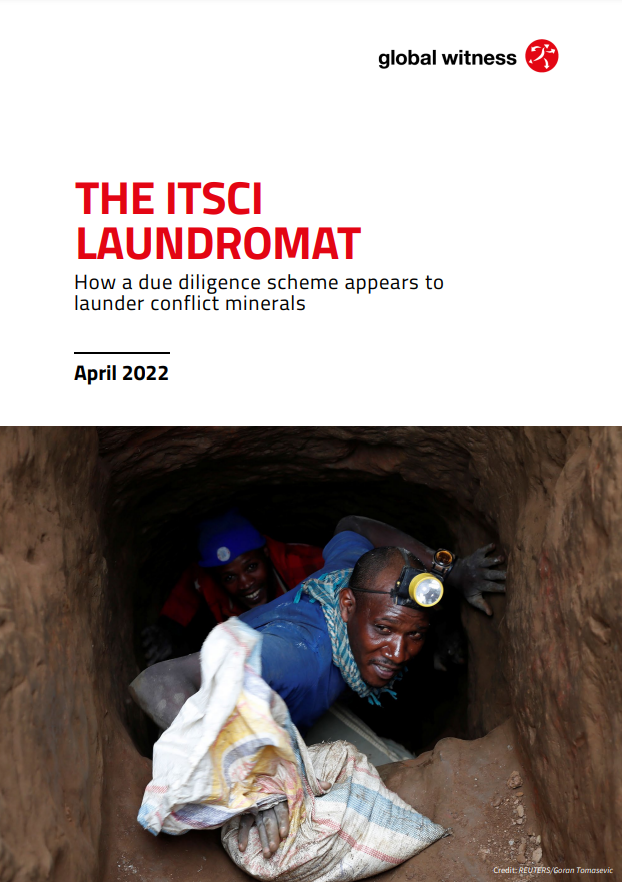
The ITSCI laundromat: How a due diligence scheme appears to launder conflict minerals
This report investigates how the International Tin Supply Chain Initiative (ITSCI) allegedly launders conflict minerals from mines in the Democratic Republic of Congo. It highlights serious failings in the traceability system, enabling smuggling, militia involvement, and child labour in the mineral trade. Recommendations include structural reforms and stricter enforcement by governments and companies.

Standard for Responsible Mining and Mineral Processing 2.0
The IRMA Standard for Responsible Mining and Mineral Processing 2.0 (Draft Version) outlines best practices for mining, mineral development, and processing to enhance environmental and social responsibility. It aims to improve industry standards, promote transparency, and support compliance with local and international regulations.

Material insights
Material Insights is a tool to help companies and stakeholders manage environmental, social, and governance (ESG) risks in mineral supply chains. It provides data-driven insights on specific minerals, supporting responsible sourcing and sustainability efforts in the raw materials sector.
Evaluating due diligence programs for conflict minerals: A matched analysis of 3T mines in eastern DRC
This report evaluates the impact of due diligence programs (DDP) on 3T mines (tin, tantalum, and tungsten) in Eastern DRC. It finds reductions in interference by armed forces, increased state presence, but no significant changes in child labour rates. Economic improvements are noted, but DDP does not eliminate all mining-related harms.

International Peace Information Service (IPIS)
IPIS Research (International Peace Information Service) is an independent research institute focusing on conflict mapping, natural resources, and business and human rights in sub-Saharan Africa. Through in-depth analysis and field research, IPIS provides valuable insights for policymakers, NGOs, and businesses seeking to understand complex issues in these regions.

Financial crimes and land conversion: Uncovering risk for financial institutions
This report outlines the risks financial institutions face due to land conversion and related financial crimes. It emphasises the convergence of land conversion with crimes like money laundering and corruption, highlighting the need for robust due diligence and risk assessment. It introduces an Environmental Crimes Financial Toolkit to aid institutions in mitigating these risks.

The Investment Integrated Project (TIIP)
The Transparency International Initiative Project (TIIP) is dedicated to enhancing transparency and integrity in global finance. TIIP focuses on combating corruption, promoting ethical business practices, and providing resources for financial institutions to integrate ESG (environmental, social, and governance) criteria.

We know our lives are in danger: Environment of fear in South Africa's mining-affected communities
This report highlights how mining has affected South African communities and examines the legal framework and community engagement procedures relating to mining activity. It discusses the impacts of mining on communities in terms of health, environment, livelihoods and social cohesion, as well as the high levels of violence in these communities.

Leaders or laggards? Tax and revenue transparency of ASX listed mining, gas and oil companies
This report investigates the tax and revenue transparency disclosure policies of 20 ASX listed mining, gas and oil companies. It examines indicators deemed as "best practices" for conformity to standards, such as country-by-country reporting, mandatory disclosure legislation and The Extractive Industries Transparency Initiative. Recommendations are to move towards mandatory regulation and better disclosure.

On purpose: Towards a unified theory of responsible investment
This paper presents a framework for evaluating responsible investment (RI) approaches that re-align investment practice with purpose. It unifies the field, generates a coherent framework for designing quality RI offerings, and supports meaningful comparison of diverse RI offerings. It is essential reading for investors interested in RI.

Opportunity NOCs: How investors can jumpstart energy transitions in national oil companies
This report outlines how national oil companies (NOCs) must begin decarbonising to meet the goals of the Paris Agreement, and how investors can influence and incentivise the energy transition. It shows that NOCs constitute half of the world’s oil and gas production and control two-thirds of global reserves, making them of great interest to investors.

Investor ESG guide on private security and human rights
This investor guide highlights that private security-related adverse human rights impacts are common and typically include excessive use of force, unfair working conditions and sexual exploitation. As fiduciaries, institutional investors are obligated to identify and mitigate these potential adverse impacts.

Financial crime compliance to fight modern slavery and human trafficking
This blueprint urges financial institutions to tackle human trafficking and modern slavery, suggesting that both are a financial crime and compliance risk, and warns against wholesale de-risking. This report outlines strategies for detecting financing of such illegal activities, reducing risk, and government action towards AML/CFT risk assessments, ahead of regulatory fines and sanctions in jurisdictions worldwide.
Stocktake of financial authorities’ experience in including physical and transition climate risks as part of their financial stability monitoring
This report examines the extent to which financial authorities consider climate-related risks in their financial stability monitoring and contains information on the channels that the authorities use to manage the risks and the quantification of climate-related risks to financial stability.

Survival of the richest: How we must tax the super-rich now to fight inequality
This briefing paper highlights how taxing the super-rich is crucial in fighting inequality and addressing the multiple crises we are currently facing. The report provides practical solutions to raise taxes, while showcasing how decreasing economic inequality leads to decreasing gender, race, and colonial inequality.


