
Library | ESG issues
Diversity, Equity & Inclusion
Diversity, equity, and inclusion (DEI) are interconnected principles aimed at fostering fair treatment and full participation within organisations. Diversity refers to the presence of differences among people, including race, ethnicity, gender, age, and other attributes. Equity involves ensuring impartiality and fairness in processes and programs, striving to provide equal possible outcomes for every person. Inclusion is the practice of creating environments where all people feel a sense of belonging, ensuring they are comfortable and supported in being their authentic selves. Effective DEI practices enhance organisational performance, productivity and employee retention.



Refine
214 results
REFINE
SHOW: 16


Converging on disclosure
This research examines the shifting landscape of corporate racial disclosures, noting a recent trend towards retrenchment. It argues that mandatory disclosure remains politically viable through interest-convergence. While progressives and conservatives disagree on racial equity goals, both can converge on the utility of transparency to monitor or challenge corporate behaviour.

Key figures on European living conditions series
This benchmark series provides a comprehensive overview of European living conditions using statistical indicators. Produced by Eurostat, it covers income distribution, inequality, household characteristics, health, and disability across EU and EFTA countries. The series supports socio-economic analysis and policy development through clear visualisations and factual data.
Disability employment quotas: Lessons for Indonesia from ASEAN and East Asia
This report analyses disability employment quota systems across Indonesia, ASEAN, and East Asia. It identifies five legal models, ranging from binding levy-subsidy architectures to voluntary incentive-based approaches. Recommendations for Indonesia include clarifying calculation methodologies, establishing structured incentive frameworks, and implementing graduated compliance pathways to improve inclusive employment outcomes.
Mobile internet and employment: Evidence from 52 countries
This report analyses the impact of 3G expansion on employment across 52 countries from 2004 to 2023. It finds that while connectivity increases participation in low-income regions, it is associated with declining employment in mature economies. Gender gaps remain persistent, particularly regarding youth disengagement in poorer contexts.
Ready-to-Fund Resilience Toolkit
A framework and diagnostic tool developed by the American Society of Adaptation Professionals to help climate projects move from planning to investment-ready status. It provides criteria for assessing project maturity, equity, and financial feasibility.
Firm pay, amenities, and inequality
This research assesses firm-specific amenity valuations using discrete choice experiments linked to German administrative records. It finds that amenities widen between-firm inequality by 20% in variance terms. Furthermore, gender differences in valuations contribute to female sorting into lower-wage firms, as women prioritise non-wage attributes more highly.
Preference for explainable AI
This research investigates the demand for explainable AI in high-stakes credit settings. It finds that decision-makers strategically avoid explanations that reveal racial or gender bias to preserve moral wiggle room. Additionally, behavioural biases cause individuals to undervalue explanations even when they complement private information and improve decision accuracy.
Women's empowerment principles series
This series examines how businesses integrate women’s empowerment and gender equality across leadership, workplaces, marketplaces and communities. It uses the Women’s Empowerment Principles Gender Gap Analysis Tool to assess corporate policies and practices, support benchmarking and identify opportunities for businesses to strengthen gender equality approaches over time.
Profits and social impacts: Complements vs. tradeoffs for lenders in three countries
This research examines the tradeoff between lender profits and social impact using machine learning across three countries. It demonstrates that algorithmic targeting significantly boosts profit margins in South Africa and the Philippines but may reduce financial inclusion for women and low-income borrowers unless balanced strategies are implemented.
Ethical & impactful usage of AI
This report by Do Harvey outlines an ethical framework for AI usage, highlighting environmental impacts, security risks, and bias concerns. It advocates for transparent, client-opt-in adoption underpinned by human oversight, and summarises five modes of AI use to guide teams in making values-aligned, informed decisions.
DAX-AEX Futureproof Index Report
The DAX-AEX Futureproof Index Report is a benchmark series that ranks DAX and AEX-listed companies using an Integrated Value framework combining financial, social, and ecological value. It produces a Futureproofing Ratio to assess long-term corporate value creation and transition risk across sectors and economies.
Anti-harassment policy and the startup labor market
This paper studies the effects of state-level NDA-weakening laws on hiring in over 50,000 U.S. VC-backed startups from 2014–2022. Anti-harassment reforms reduce female hiring by approximately 8%, concentrated among junior women and small startups, while also triggering internal restructuring including more female promotions and male manager departures.
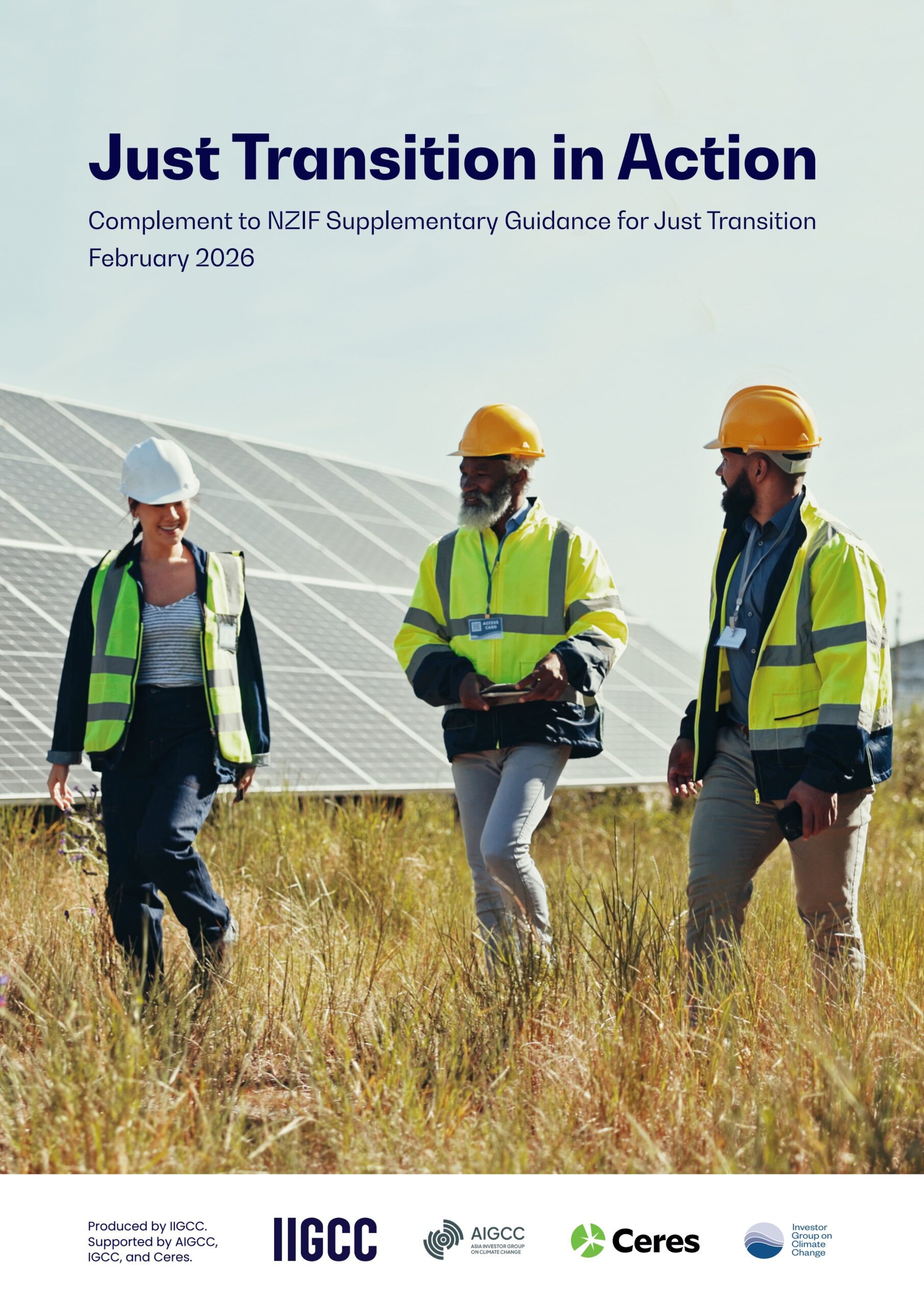
Just transition in action: Complement to NZIF supplementary guidance for just transition
Produced by IIGCC with support from AIGCC, IGCC, and Ceres, this report complements the NZIF Supplementary Guidance on Just Transition. It provides practical case studies and frameworks to help investors integrate social equity considerations into climate-aligned investment strategies across internal direction, asset alignment, and external engagement.
Voice without influence? Global investor voting rationale disclosures in Korea
This study examines whether global institutional investors’ voting rationale disclosures influence Korean firms’ gender diversity and climate-related policies. It finds stronger investor focus on board gender diversity than climate risk, limited influence on large firms, greater impact on smaller firms’ emissions reductions, and evidence that voting rationales affect the credibility of sustainability reporting.
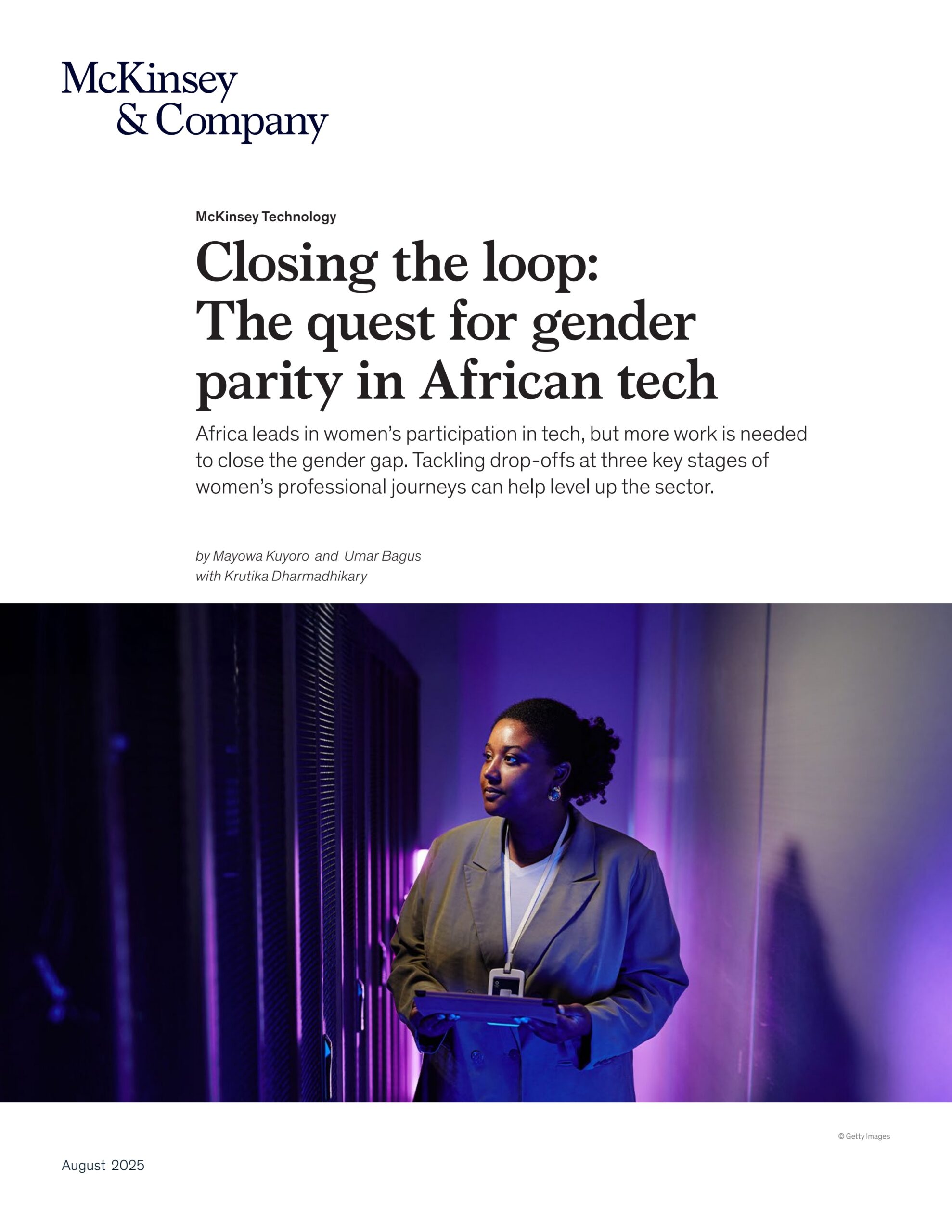
Closing the loop: The quest for gender parity in African tech
This report examines gender parity in Africa's technology sector. While Africa leads in women's STEM representation globally, significant drop-offs occur at key career stages. The research identifies barriers such as biases and funding gaps, offering actionable strategies to enhance recruitment, support career progression, and increase access to start-up financing.
Indigenous wisdom and co-creation towards decolonisation: A review of Indigenous inclusion in management education
This review finds Western business schools have often excluded Indigenous knowledge, and argues decolonising management education requires Indigenous self-determination, truth-telling, trust-building, co-created curricula and relational pedagogies grounded in Indigenous wisdom and communities.


