
Library | ESG issues
Energy Solutions & Decarbonisation
Energy solutions and decarbonisation refer to strategies and technologies that reduce carbon emissions while ensuring reliable and sustainable energy supply. This includes renewable energy sources like wind, solar, and hydropower, energy efficiency measures, electrification, carbon capture, and clean energy innovations. Decarbonisation is essential for mitigating climate change, enhancing energy security, and transitioning industries toward low-carbon operations.




Refine
586 results
REFINE
SHOW: 16


Green subsidies with demand distortions
This research evaluates green subsidies for induction stoves in Kenya, finding that demand distortions like credit constraints significantly enhance subsidy efficacy. While usage subsidies had no impact, purchase price subsidies achieved carbon abatement at just US$12 per ton. Contexts with high distortions offer highly cost-effective climate mitigation opportunities.
A global, proxy-based assessment of building climatization vulnerability
This research assesses global building energy efficiency, identifying vulnerable populations living in aged or poorly shaped structures. It reveals that 48 million people are currently at risk, with vulnerability likely shifting towards heat-prone regions by 2100. Disparities in building codes and income levels significantly affect global climate adaptation efforts.
Renewable electrification as a means of transitioning away from fossil fuels: From commitment to implementation at COP31
This report evaluates renewable-based electrification as a pillar for transitioning away from fossil fuels. It proposes the ‘35 by 35’ target, analyses progress in five key countries, and outlines action priorities for COP31. The focus is on integrating renewables, efficiency, and equitable finance to accelerate global decarbonisation.

Survey of Aotearoa New Zealand investors: Climate policies and actions series
This benchmark series examines the climate-related investment policies and actions of institutional investors in Aotearoa New Zealand. It monitors progress in embedding climate risks into financial decision-making, target setting, and investment in climate solutions, providing transparency and accountability across the local investment sector.
The GIIN Climate Solutions Investing Framework: A resource for asset owners to move from ambition to allocation
This research provides a framework for asset owners to evaluate climate mitigation investment strategies. It outlines foundational concepts and four criteria for selection: identifying climate theses, quantifying decarbonisation contributions, understanding prioritisation, and managing uncertainties. The resource aims to help investors transition from climate ambition to effective capital allocation.

Green trade, regional value chains and new partnerships for cooperation: Accelerating green industrialisation through partnerships with a focus on Africa
This briefing paper examines how green trade and regional value chains can accelerate African industrialisation. It outlines opportunities within the AfCFTA and the African Green Industrialisation Initiative, emphasising the need for de-risking instruments, institutional capacity building, and new partnership frameworks to align international capital with Africa’s sustainable development goals.
Landscape of Climate Finance in Latin America and the Caribbean
The report assesses climate finance across Latin America and the Caribbean from 2020–2024. Finance doubled to US$108 billion but remains well below estimated needs and unevenly distributed. It examines public and private flows, mitigation and adaptation investment, financing constraints, and measures to mobilise capital and strengthen climate resilience.
Top-down Climate Finance Needs Data Dashboard
Developed by the Climate Policy Initiative, this dashboard provides interactive visualisations of the global financial requirements for climate mitigation and adaptation, helping finance professionals quantify the investment gap.
Climate resilience, desertification and applied innovation report: A strategic framework for applied innovation in arid and climate-vulnerable regions
This 2026 report establishes a strategic framework for climate resilience in arid regions. It examines technological solutions in water, agriculture, and energy, highlighting Israel's innovation ecosystem and Azerbaijan's renewable energy transition. The document advocates for integrated systems, cross-border cooperation, and robust governance to combat global desertification and land degradation.
Embracing carbon uncertainty in portfolio construction
This research introduces a framework for decarbonising sovereign bond portfolios using 'carbon returns'—treating emissions as random variables rather than deterministic values. By applying a modified Hierarchical Risk Parity algorithm with Expected Shortfall, it effectively balances financial and environmental goals, mitigating climate-related tail risks both in-sample and out-of-sample.
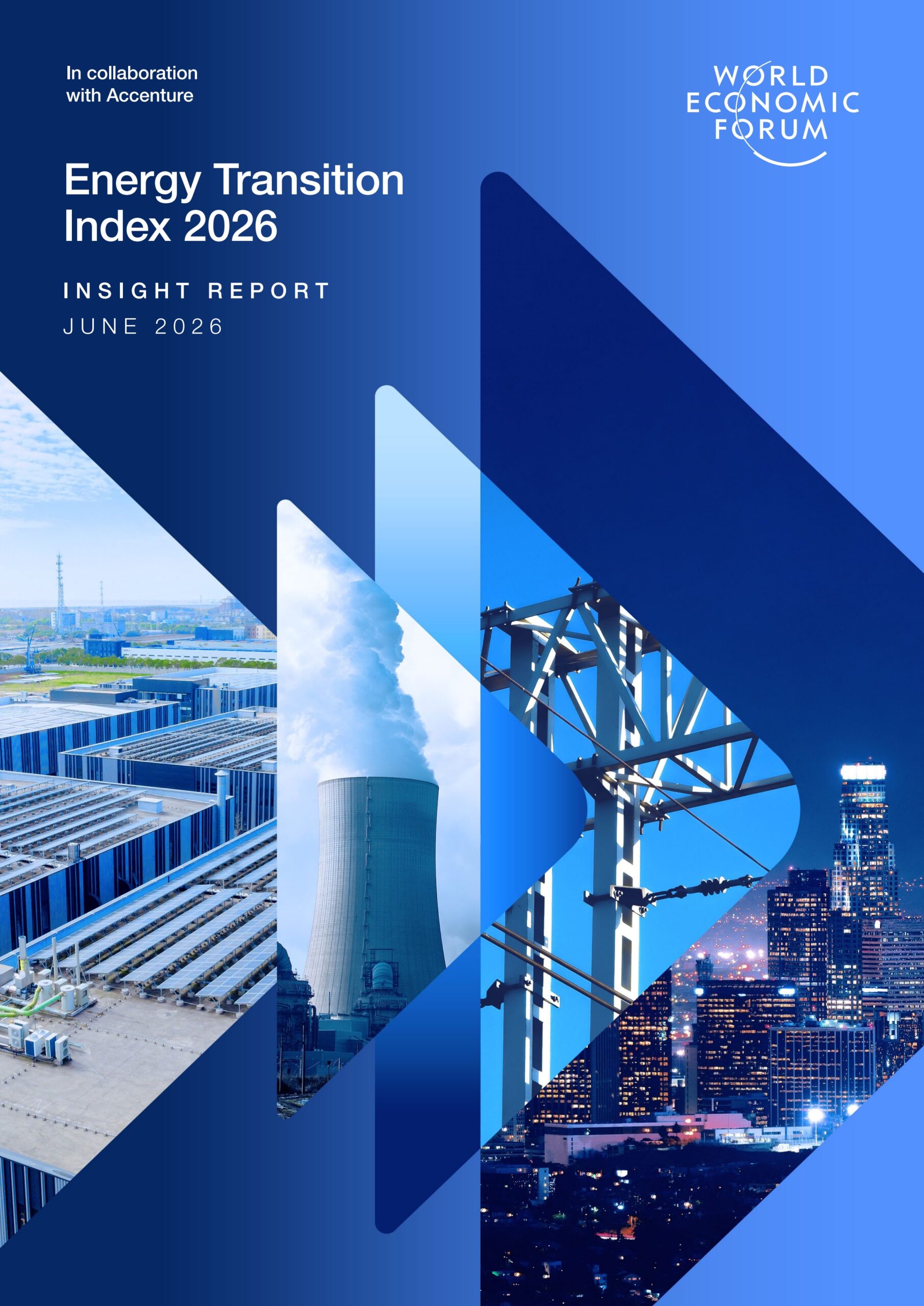
Energy transition index series
The Energy Transition Index is a benchmark series providing a structured, data-driven framework to assess national energy systems and track transition progress across 120 countries. It evaluates performance through security, equity, and sustainability lenses, alongside transition readiness factors, helping decision-makers identify gaps and understand the conditions required for resilience.
Innovation, business cycles, and the climate transition
This research documents that non-green innovation is procyclical, while green innovation is countercyclical. This divergence is driven by green technologies' backloaded profit structures and the reduced cost of skilled R&D labour during downturns. The study highlights that innovation subsidies are significantly more effective when implemented during economic contractions.
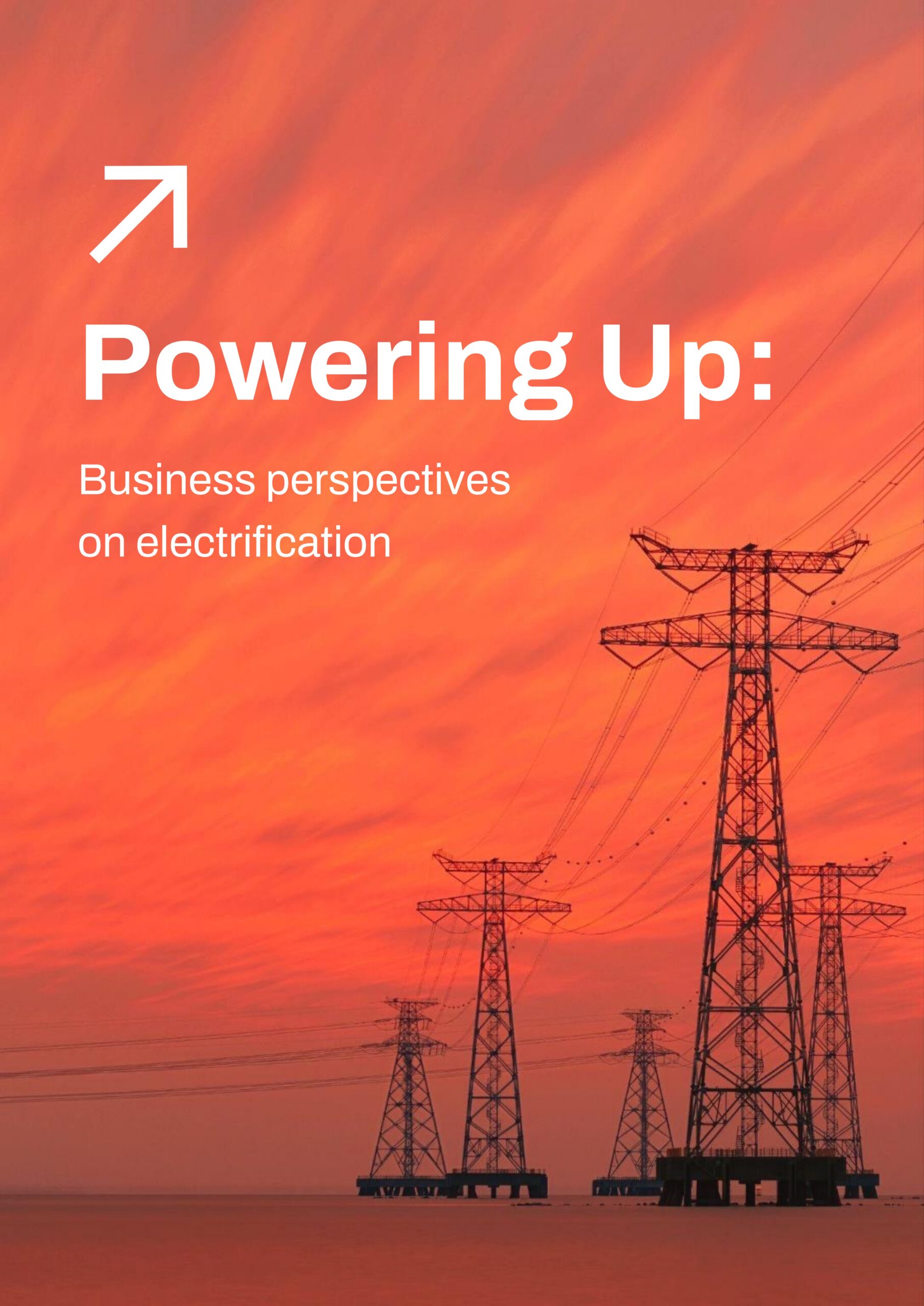
Powering up: Business perspectives on electrification
A global survey of 1,994 business leaders across 18 markets reveals overwhelming support for clean electrification. While 90% expect largely electric operations by 2035 to improve energy security and competitiveness, 72% believe government policy is moving too slowly, citing grid constraints and high upfront costs as significant barriers.
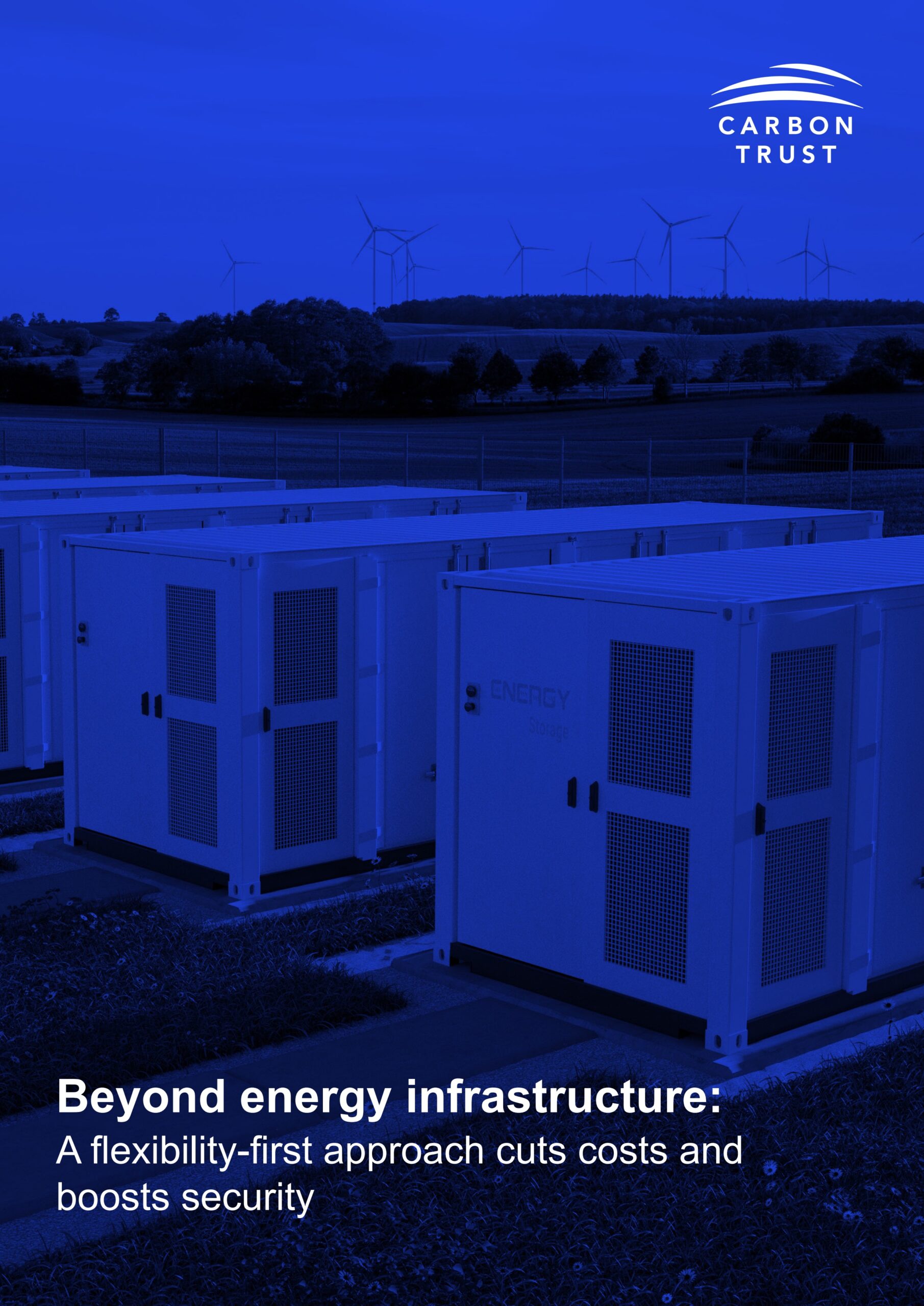
Beyond energy infrastructure: A flexibility-first approach cuts costs and boosts security
This report argues that power system flexibility is core infrastructure essential for energy security and affordability. It demonstrates how quantifying flexibility can reduce costs, citing potential annual savings of £9.6–£16.7 billion in Great Britain by 2050. Policymakers are encouraged to prioritise flexibility-first design over traditional infrastructure-heavy build-out.
Stewarding a just transition: Frontiers of practice in listed equities
This report analyses just transition practices among 25 investment managers in listed equities. While policy recognition is high, active engagement remains a low priority concentrated in energy and mining. The research identifies barriers such as geopolitical headwinds and provides recommendations for investors, governments, and regulators to mainstream practice.
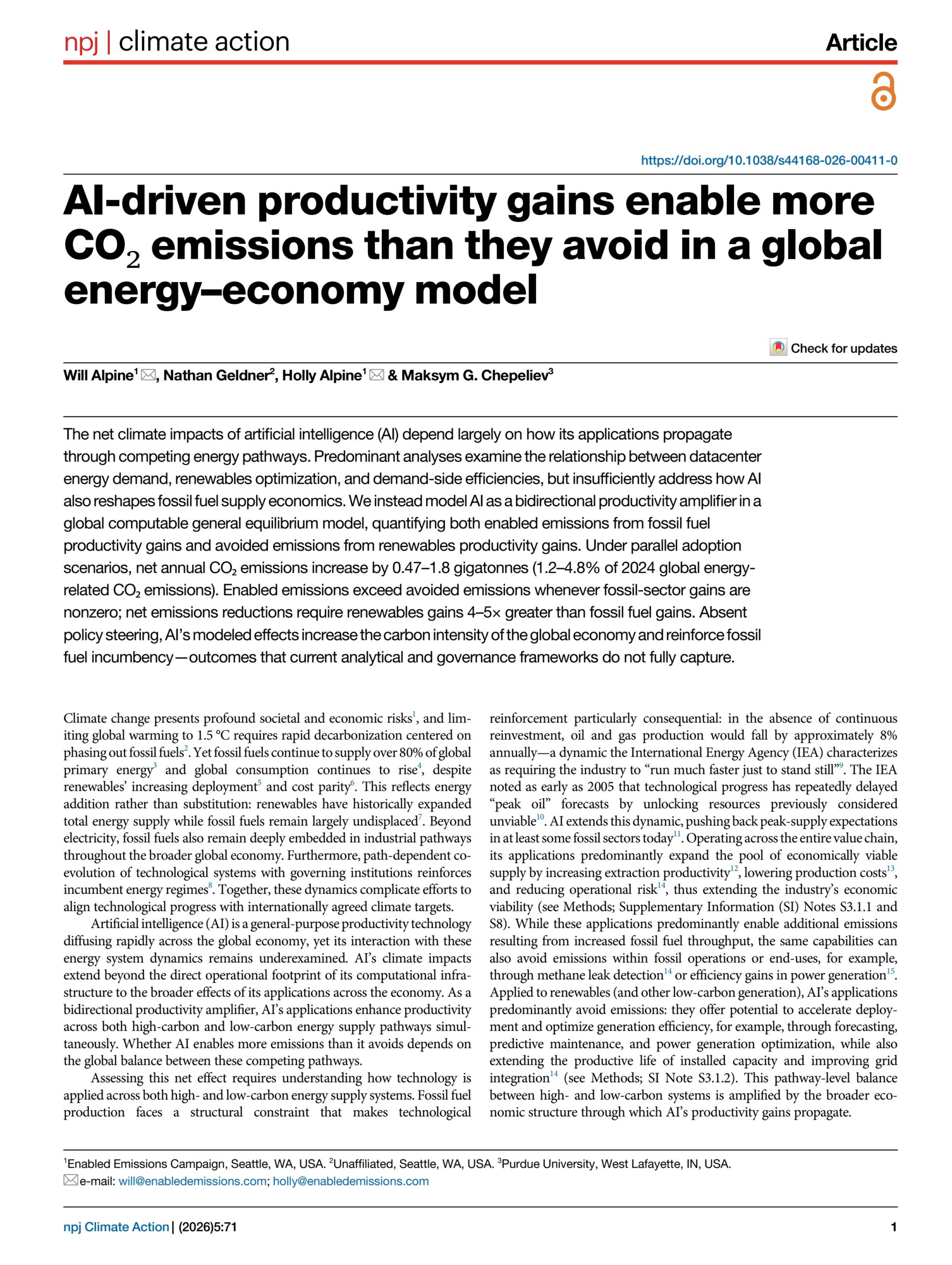
AI-driven productivity gains enable more CO₂ emissions than they avoid in a global energy–economy model
Research using a global energy-economy model indicates that AI-driven productivity gains increase net annual CO2 emissions by 0.47–1.8 gigatonnes under parallel adoption. Enabled emissions from fossil sectors consistently exceed avoided emissions from renewables. Achieving net reductions requires renewable productivity gains to be four to five times greater than fossil gains.


