
Library | ESG issues
Greenhouse Gas Emissions
Greenhouse Gas (GHG) Emissions, including carbon dioxide and methane, trap heat in the atmosphere and drive climate change. Reducing emissions is vital to mitigating global warming risks and aligning with climate targets like the Paris Agreement, influencing long-term corporate and investment strategies.

Refine
519 results
REFINE
SHOW: 16


Sustainable aviation fuel policy in the European Union (EU)
The EU is developing a policy framework for sustainable aviation fuels (SAFs) to achieve net zero aviation. The ReFuelEU Aviation Initiative mandates SAF blending, with targets rising to 70% by 2050. Supporting measures include the Net Zero Industry Act and the EU Emissions Trading Scheme. Significant investment is required for this transition.

Lifetime emissions from aircraft under a net-zero carbon budget
The report evaluates the aviation sector's ability to meet net-zero CO2 emissions by 2050. It projects that current fleet emissions will exhaust half the sector's carbon budget by 2032, necessitating zero-emission aircraft by the mid-2030s to achieve climate goals.
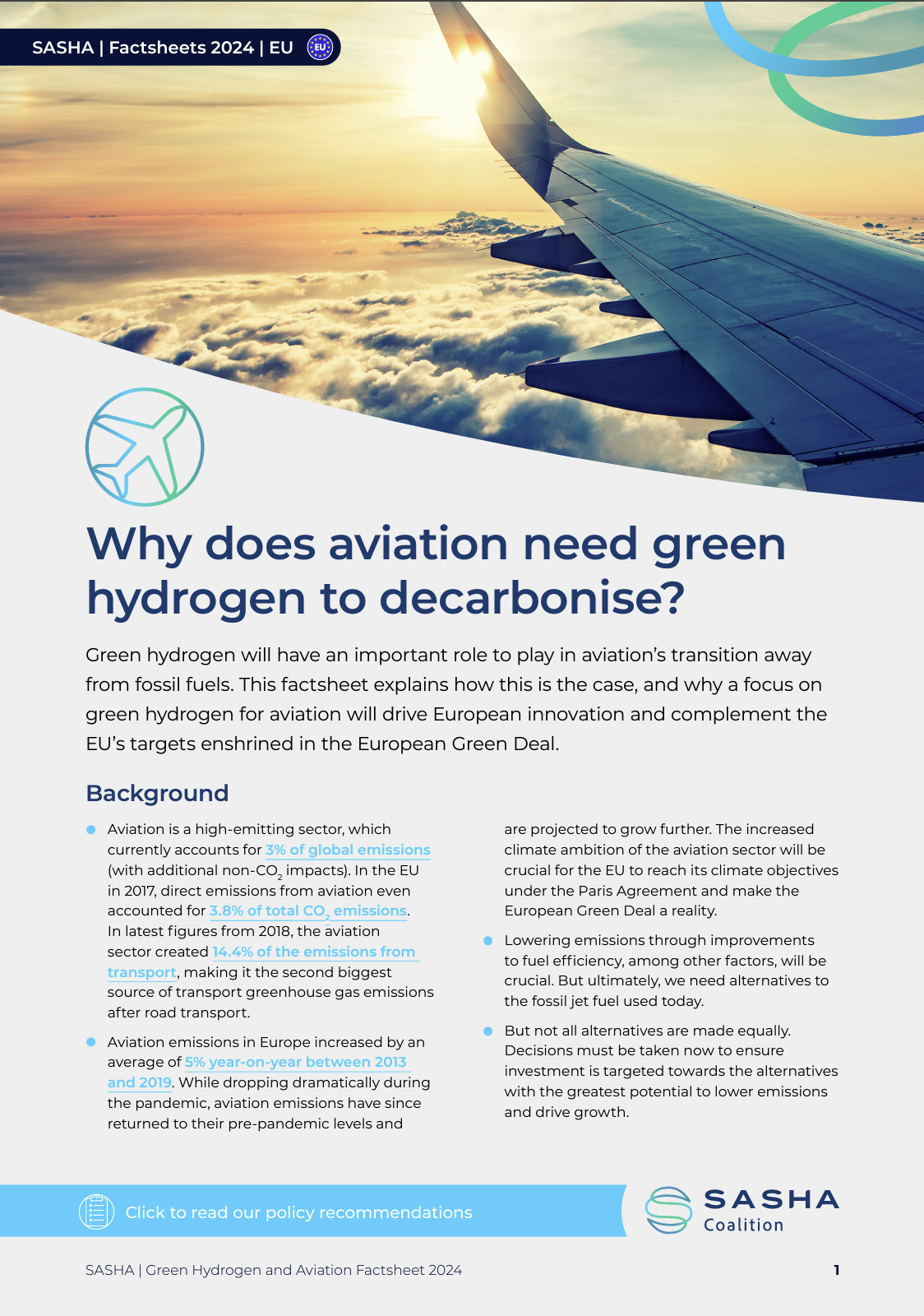
Why does aviation need green hydrogen to decarbonise?
This benchmark series on green hydrogen in aviation explores the UK's and EU's efforts to decarbonise the sector. It covers policy landscapes, innovation, and sustainable growth recommendations, providing essential insights for finance professionals in sustainable finance.

Global sector strategies: Investor actions to align the aviation sector with the IEA's 1.5°C decarbonisation pathway
The report outlines investor actions needed to align the aviation sector with the IEA's 1.5°C decarbonisation pathway, emphasising sustainable aviation fuels, significant investment in new technologies, demand management, and avoiding carbon offsets. It aims to accelerate the sector's transition to net-zero emissions, ensuring climate goals are met by 2050.

The high-integrity sustainable aviation fuels handbook
The handbook provides introduction to sustainable aviation fuels (SAF) and guidance for the development and deployment SAF. It emphasises the need for robust sustainability criteria, transparent accounting systems and a life-cycle assessment approach to ensure significant emissions reductions compared to conventional jet fuel. It also offers policy recommendations to support the growth of SAF in the aviation industry.

Briefing for finance: Climate action
Climate change poses a significant risk to businesses, with potential for financial and operational disruption. However, addressing climate change also presents opportunities for innovation, resilience, and improved reputation. Organisations can mitigate these risks and capitalise on these opportunities by setting net-zero targets, developing transition plans, and integrating climate considerations into decision-making processes.

Making net-zero aviation possible: An industry-backed, 1.5°C-aligned transition strategy
The report outlines a 1.5°C-aligned transition strategy for decarbonising the aviation sector by 2050. It provides tools and milestones, to guide public and private sector decision-makers in achieving net-zero greenhouse gas emissions through sustainable aviation fuels, novel propulsion technologies, and efficiency improvements. The strategy emphasises collaboration across the aviation value chain to meet the ambitious climate targets.

Mission Possible Partnership (MPP)
Mission Possible Partnership (MPP) is dedicated to accelerating the decarbonisation of heavy industry and transport sectors. MPP brings together stakeholders to develop actionable pathways, enabling companies to achieve net-zero emissions. Focused on practical solutions, MPP supports industry collaboration for sustainable development.

The role of e-fuels in decarbonising transport
This report examines the role of e-fuels in decarbonising transport, focusing on their potential for aviation and shipping. It provides a techno-economic assessment of e-fuel technologies, evaluates necessary cost reductions and infrastructure investments, and highlights policy considerations. E-fuels, derived from electrolytic hydrogen, could diversify decarbonisation options and complement existing biofuels, especially in sectors less amenable to electrification.

Sustainable finance roadmap 2024
The Australian Government's 2024 Sustainable Finance Roadmap outlines a plan to mobilise private capital towards achieving net-zero emissions. It focuses on improving transparency in climate and sustainability reporting, enhancing financial system capabilities, and demonstrating government leadership. Key initiatives include mandatory climate-related financial disclosures, developing a sustainable finance taxonomy, and issuing sovereign green bonds.

Sustainable aviation fuels (SAF) sustainability guide for corporate buyers
This guide assists corporate buyers in purchasing sustainable aviation fuels (SAF) to reduce their environmental impact. It covers key considerations such as feedstocks, origin, price, emissions calculations, certification, and availability. The guide also highlights different purchasing schemes and best practices for selecting and investing in SAF to ensure genuine sustainability benefits.

Scaling up sustainable aviation fuel supply: Overcoming barriers in Europe, the US and the Middle East
The report explores the challenges and key actions needed to scale sustainable aviation fuel (SAF) production in these regions. It highlights technological advancements, regulatory frameworks, and strategic collaborations necessary to achieve 10% SAF by 2030 and sector decarbonisation by 2050. The report emphasises the importance of investments, policy support, and public awareness to drive the adoption of SAF globally.

Net Zero Investment Framework 2.0
The Net Zero Investment Framework (NZIF) 2.0, updated in June 2024, provides guidelines for investors to align their portfolios with the Paris Agreement goals. It includes detailed methodologies for various asset classes, governance, strategic asset allocation, and policy advocacy, focusing on achieving real economy emissions reductions through independent fiduciary decisions.

How corporate climate change mitigation actions affect the cost of capital
This study explores how corporate climate change mitigation actions influence the cost of capital for Japanese firms from 2017-2021. It finds that higher carbon intensity increases the cost of equity, debt, and overall capital. Climate-related disclosures lower the cost of equity and overall capital, despite raising debt costs.

Making things (that don’t exist) count: A study of Scope 4 emissions accounting claims
This report investigates the implications of 'Scope 4' emissions accounting claims, which refers to greenhouse gas emission reductions or removals due to a decision or action. This study suggests that extant Scope 4 assessments do not fit the established framework for scope-based emissions accounting, and calls for cautious claims of this nature and the need for more research.

Public to private divestment in Asia: trends and best practice
The database of Asian mergers and acquisitions (M&As) in high-emission sectors reveals a steady, not increasing, trend from 2020 to April 2024. This shift of high-emission assets from public to private ownership, totalling USD 5-9 billion annually, raises concerns about reduced transparency and accountability in emissions reporting. While not accelerating, this trend has negative implications for investor stewardship and emissions disclosure.


