
Library | ESG issues
Law, Regulation & Compliance
The evolving legal and regulatory landscape financial organisations regarding Environmental, Social, and Governance (ESG) considerations comprises both voluntary frameworks and mandatory regulations. Voluntary initiatives, such as the Task Force on Climate-related Financial Disclosures (TCFD), provide guidelines for companies to disclose climate-related financial risks and opportunities. In contrast, mandatory regulations like the European Union’s Sustainable Finance Disclosure Regulation (SFDR) require financial market participants to disclose how they integrate ESG factors into their investment decisions.

Refine
715 results
REFINE
SHOW: 16



Sustainable Finance Roundup December 2025: Nature, Regulation, and the Hardening of Risk
This month’s sustainable finance roundup traces the shift from ambition to enforcement, as climate and nature risks become financial, regulatory and legal realities. It covers Australia’s environmental law reforms, the embedding of climate and nature risk through prudential supervision, disclosure and shareholder pressure, and insurer warnings on the limits of insurability. It also highlights how markets are responding to deforestation and biodiversity risk, and how litigation and regulation are reshaping governance and long-term financial resilience.
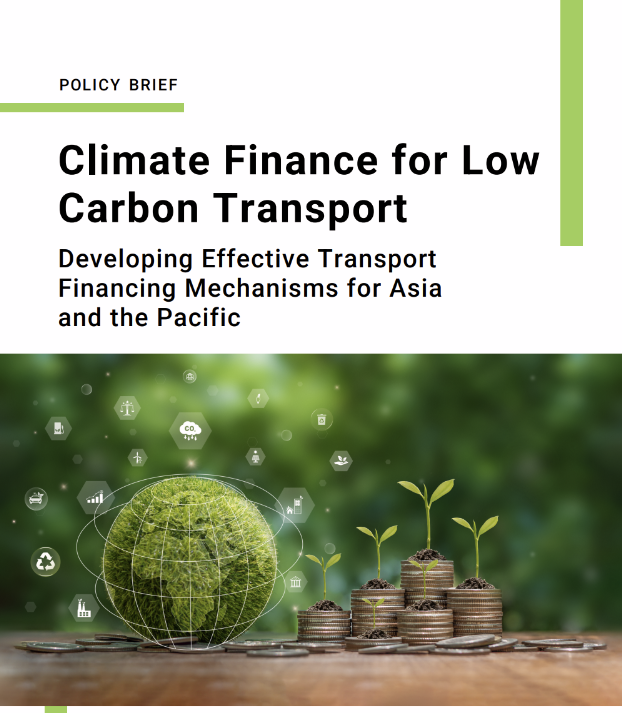
Climate finance for low carbon transport: Developing effective transport financing mechanisms for Asia and the Pacific
This ESCAP policy brief examines climate finance options for scaling low-carbon transport in Asia–Pacific. It assesses funding gaps, barriers, and mechanisms—including subsidies, carbon pricing, green bonds, PPPs, and international finance—and recommends policy alignment, capacity building, investor matching, and diversified financing to accelerate investment.
ICMA DLT bonds reference guide
ICMA’s DLT Bonds Reference Guide outlines practical considerations across the lifecycle of distributed ledger technology-based debt securities. It addresses legal, regulatory, operational, trading, settlement and investor issues, aiming to support consistent market practice and wider adoption while reducing fragmentation in global bond markets.
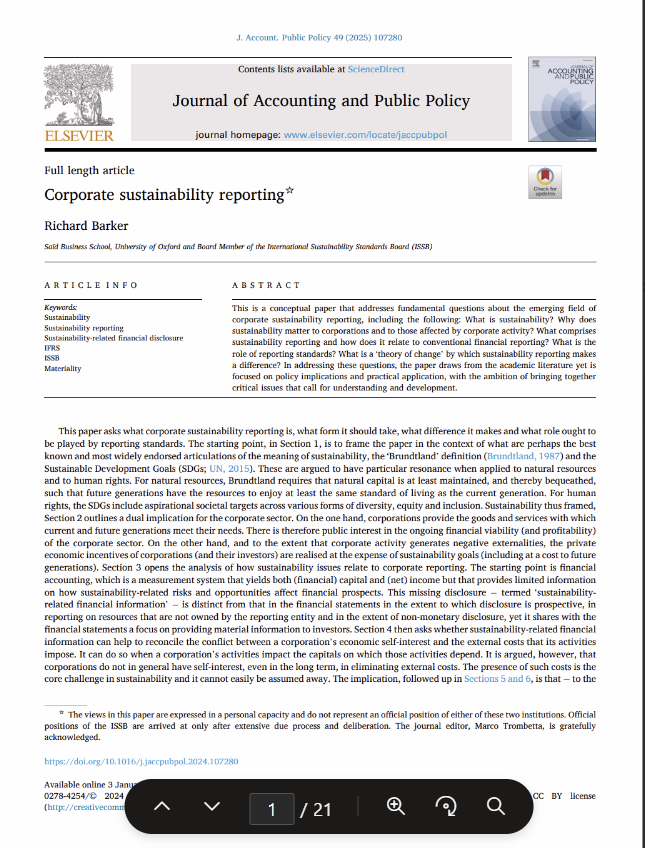
Corporate sustainability reporting
This conceptual paper examines corporate sustainability reporting, distinguishing investor-focused sustainability-related financial disclosure from broader impact reporting. It argues investor interests are imperfectly aligned with societal goals and concludes that complementary financial and impact reporting standards are needed to support accountability, capital allocation and sustainability transition.
Private capital, public good: Building shared prosperity to create a resilient and inclusive economy
The report outlines bipartisan US federal policy recommendations to mobilise private capital for shared prosperity. It focuses on strengthening economic competitiveness, scaling community investing, and improving impact transparency to support inclusive growth, underinvested communities, and long-term economic resilience.

Preparing for next-generation information warfare with generative AI
The report analyses how generative AI reshapes information warfare by enabling scalable manipulation, behavioural influence and dual-use knowledge diffusion. It highlights heightened risks to civilians, military operations and international law, stressing gaps in protection and the need for anticipatory, whole-of-society resilience strategies.

Sustainability-related risks and opportunities and the disclosure of material information
This educational material explains how entities identify and disclose material sustainability-related risks and opportunities under IFRS S1 and S2, focusing on impacts on cash flows, access to finance and cost of capital, and applying consistent, entity-specific materiality judgements.
Escalation: The destructive force of Australia's fossil fuel exports on our climate
The report finds Australia’s fossil fuel exports significantly escalate global warming and domestic climate risks. It highlights missing policy restrictions, growing harms to people and systems, and urges an orderly, cooperative and just phase-out with regulatory reforms and international engagement.
AI governance behind the scenes: Emerging practices for AI impact assessments
The report outlines emerging organisational practices for AI impact assessments, highlighting common process steps, information gathering challenges, evolving risk-assessment methods, and difficulties evaluating mitigation effectiveness. It notes increasing cross-functional governance, reliance on third-party transparency, and the need for stronger metrics, education, and executive support.
From ‘conflict minerals’ to peace? reviewing mining reforms, gender, and state performance in eastern Democratic Republic of Congo
The review assesses how 3T mining reforms in eastern DRC affected state governance and gender inclusion. Findings show mixed results: limited improvements in demarcation, revenue collection and oversight, persistent armed interference, weak accountability, elite-captured cooperatives, and ongoing marginalisation of women.
Briefing paper: The fiduciary duty case for climate justice
The report argues that climate justice is integral to fiduciary duty, as climate and inequality risks threaten long-term value. It outlines definitions, system-level investment frameworks, and practical tools that help investors manage systemic risks and support a just low-carbon transition.
Integrating ESG and AI: A comprehensive responsible AI assessment framework
The report introduces an ESG-AI framework enabling investors to assess AI-related environmental, social, and governance risks. Drawing on insights from 28 companies, it provides use-case materiality analysis, governance indicators, and deep-dive assessments to support transparent, responsible AI evaluation and investment decisions.
AI in anti-financial crime: The state of adoption in 2025
The report surveys senior leaders on AI adoption in anti-financial crime, finding limited current use but rapid expected uptake. It highlights technology shortcomings, emerging AI use-cases, leadership awareness, and barriers including cost, skills and regulatory uncertainty, outlining opportunities for more efficient, integrated and adaptive AFC capabilities.
Responsible Digital Finance Ecosystem (RDFE): A conceptual framework
The report outlines a framework for a Responsible Digital Finance Ecosystem, urging holistic, collaborative consumer protection amid rising digital finance risks. It defines ecosystem actors and four pillars—customer centricity, collaboration, capability, and commitment—to strengthen regulation, improve outcomes, and reduce harms in rapidly evolving digital financial services.
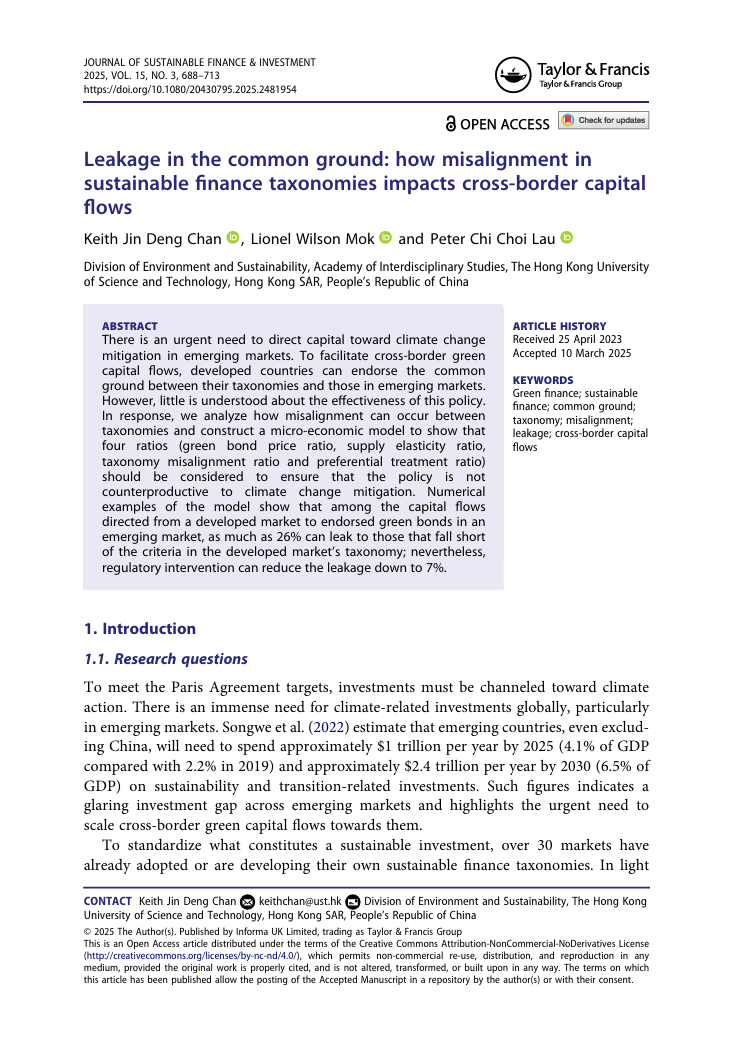
Leakage in the common ground: How misalignment in sustainable finance taxonomies impacts cross-border capital flows
The paper models how misaligned sustainable finance taxonomies can cause cross-border capital leakage, reducing alignment with developed-market standards. It identifies four ratios determining whether endorsing common ground improves outcomes and shows leakage can be significant without regulatory measures to differentiate and prioritise higher-quality green bonds.
Governance of AI adoption in central banks
This BIS report outlines central banks’ AI use cases, associated strategic, operational, cyber and reputational risks, and advocates adapting existing risk-management and three-lines-of-defence frameworks, supported by an adaptive AI governance model and ten practical actions, to balance innovation with security, compliance, data privacy and organisational resilience.


