
Library | ESG issues
Law, Regulation & Compliance
The evolving legal and regulatory landscape financial organisations regarding Environmental, Social, and Governance (ESG) considerations comprises both voluntary frameworks and mandatory regulations. Voluntary initiatives, such as the Task Force on Climate-related Financial Disclosures (TCFD), provide guidelines for companies to disclose climate-related financial risks and opportunities. In contrast, mandatory regulations like the European Union’s Sustainable Finance Disclosure Regulation (SFDR) require financial market participants to disclose how they integrate ESG factors into their investment decisions.

Refine
715 results
REFINE
SHOW: 16


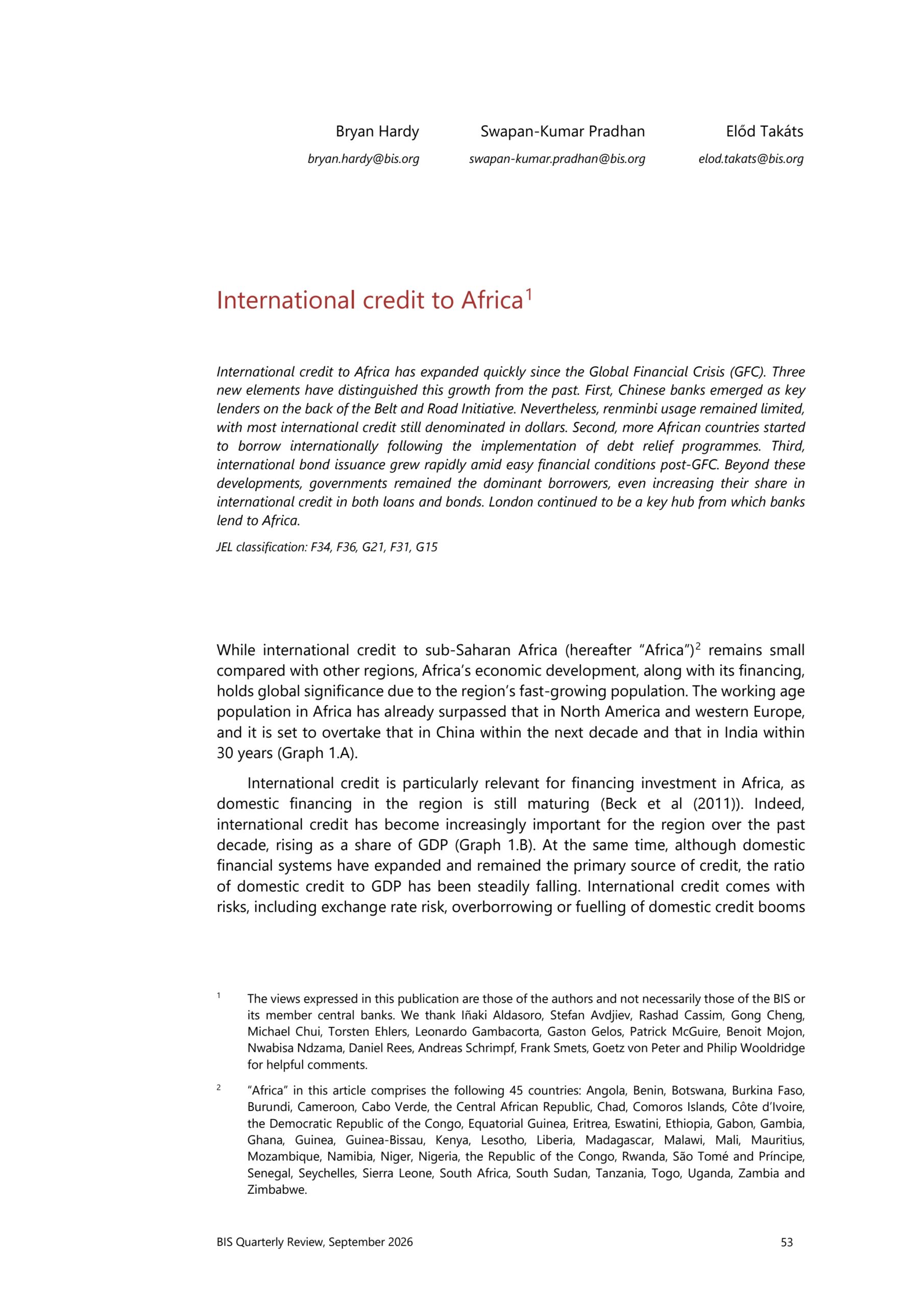
International credit to Africa
This research examines the rapid expansion of international credit to Africa since the Global Financial Crisis. It highlights the rise of Chinese lending under the Belt and Road Initiative, the dramatic growth of international bond issuance, and the continued dominance of governments as borrowers in US dollar-denominated markets.
Spillover effects of regulatory inspections: Evidence from OSHA
Occupational Safety and Health Administration inspections significantly reduce injuries at nearby, uninspected workplaces. An inspection reduces injuries at same-ZIP-code establishments by 11 per cent, preventing six times more injuries through spillovers than direct effects. These findings suggest conventional evaluations substantially understate the social returns to regulatory enforcement.
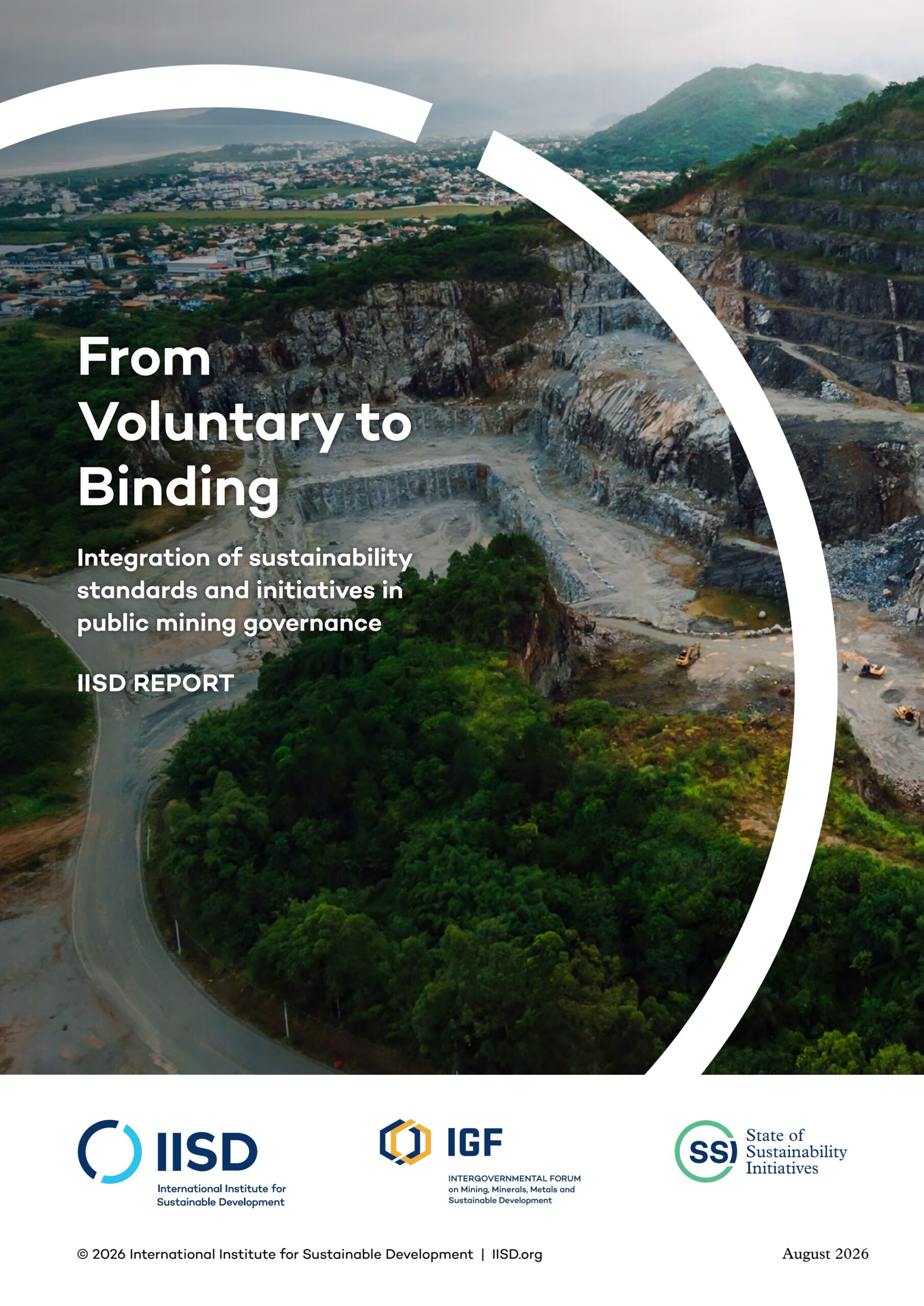
From voluntary to binding: Integration of sustainability standards and initiatives in public mining governance
This report examines the integration of sustainability standards and initiatives (SSIs) into public mining governance. Through surveys and case studies in Brazil, Madagascar, and Sweden, it demonstrates how voluntary standards complement mandatory regulations to address environmental, social, and governance risks, supporting policy formulation, implementation, and transparent reporting.
The impact of patient capital
This research examines how investor patience influences venture capital strategies and startup outcomes. Using a 2014 Chinese reform and a survey experiment, it demonstrates that longer-horizon investors, such as insurers, lead funds to adopt longer holding periods and earlier-stage investments, significantly improving portfolio innovation and successful exit rates.
Administrative and market frictions in the choice between green and conventional bonds
This research investigates how administrative frictions and institutional environments influence corporate green bond issuance. Using global data from 2013–2024, it finds that bureaucratic complexity reduces green labelling probability, particularly outside transition-intensive sectors. Mandatory sustainability disclosure significantly increases issuance, highlighting the importance of efficient implementation for sustainable finance policies.
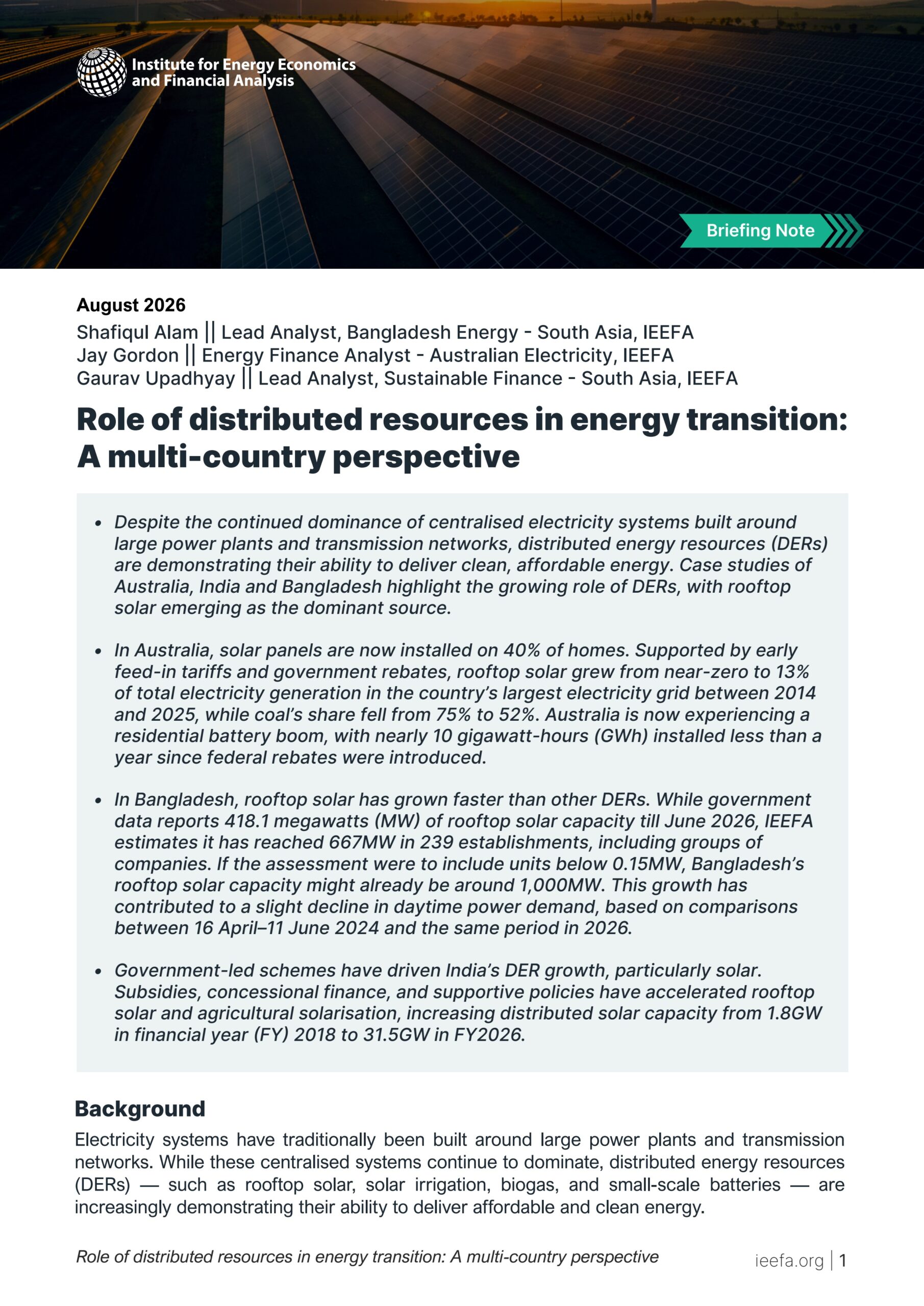
Role of distributed resources in energy transition: A multi-country perspective
This report evaluates distributed energy resources across Australia, India and Bangladesh. It examines rooftop solar and battery uptake, highlighting their role in reducing fossil fuel reliance and grid demand. The analysis provides country-specific recommendations to overcome regulatory barriers, improve financing access and ensure an equitable energy transition.
Sustainability assurance: Frequently asked questions: The application of materiality under ISSA 5000
This IAASB publication provides guidance on applying materiality under ISSA 5000. It explains concepts such as double materiality, performance materiality, and aggregation risk. The FAQs assist practitioners in planning and reporting on sustainability assurance engagements, clearly distinguishing between an entity's reporting process and a practitioner's assurance application.
Powering aviation resilience: SAF and PtX policy design choices for Australia in a shifting global energy system
This briefing examines policy choices for scaling sustainable aviation fuels (SAF) and Power-to-X (PtX) in Australia. It highlights the need for integrated policy packages, robust sustainability certification, and cross-portfolio coordination to transition from bio-based fuels to synthetic alternatives, ensuring long-term decarbonisation and fuel security.
A price on carbon: Building towards an Asian CBAM
This report advocates for an Asian Carbon Border Adjustment Mechanism (CBAM) to harmonise carbon pricing across Asia-Pacific. Focusing on steel, aluminium, and cement, it proposes international collaboration between Australia, China, Japan, Singapore, and South Korea to accelerate industrial decarbonisation, address carbon leakage, and unlock green commodity trade.
Enabling framework conditions assessment for subnational climate finance in Indonesia
This report evaluates Indonesia's enabling framework conditions for subnational climate finance. It identifies critical gaps in institutional capacity, financial architecture, and data accessibility. Recommendations focus on expanding urban-specific incentives, leveraging blended finance, and synchronising digital platforms to improve local climate governance and bridge the national investment gap.
Pollution pricing in equilibrium: Production, reallocation, and aggregate impacts
NBER research into the EU-ETS reveals that carbon pricing reduces emissions primarily through market reallocation and long-run technology adoption, rather than short-run input substitution. Doubling permit prices reduces aggregate emissions by 31% over five years, with moderate impacts on total output and employment across the production network.

War and corruption: Corruption’s role in Russia’s full-scale invasion of Ukraine
This report examines how corruption enabled Russia’s invasion of Ukraine and explores its escalation during the conflict. It details growth in criminal convictions, systemic theft within the military, and the erosion of procurement transparency. It further analyses the impact of sanctions on Russian oligarchs and the emergence of war beneficiaries.
Disability employment quotas: Lessons for Indonesia from ASEAN and East Asia
This report analyses disability employment quota systems across Indonesia, ASEAN, and East Asia. It identifies five legal models, ranging from binding levy-subsidy architectures to voluntary incentive-based approaches. Recommendations for Indonesia include clarifying calculation methodologies, establishing structured incentive frameworks, and implementing graduated compliance pathways to improve inclusive employment outcomes.
Too little too late? Nationwide carbon trading in China
This study evaluates China's rate-based National Emissions Trading Scheme using satellite imagery. It finds high-efficiency plants increased electricity generation and carbon emissions by approximately 5% relative to low-efficiency plants. The programme incentivised production without significantly reducing emission intensity, leading to an estimated aggregate increase in carbon dioxide emissions.
Anti-woke corporate governance
This research explores the emergence of partisan corporate governance, focusing on Texas as a conservative competitor to Delaware. It examines legislative changes to limit shareholder litigation and influence, the regulation of proxy advisors, and the resulting legal and political risks for corporations navigating an increasingly politicised regulatory environment.
Stakeholder engagement and ESG in China
This research analyses China’s state-led stakeholder empowerment model for ESG integration. It identifies economic, policy, compliance, and sustainability drivers while examining channels such as shareholder activism and representative litigation. The article proposes a tiered institutionalisation framework to resolve procedural indeterminacy and strengthen collective action infrastructure within concentrated ownership structures.


