
Library | ESG issues
Law, Regulation & Compliance
The evolving legal and regulatory landscape financial organisations regarding Environmental, Social, and Governance (ESG) considerations comprises both voluntary frameworks and mandatory regulations. Voluntary initiatives, such as the Task Force on Climate-related Financial Disclosures (TCFD), provide guidelines for companies to disclose climate-related financial risks and opportunities. In contrast, mandatory regulations like the European Union’s Sustainable Finance Disclosure Regulation (SFDR) require financial market participants to disclose how they integrate ESG factors into their investment decisions.

Refine
716 results
REFINE
SHOW: 16


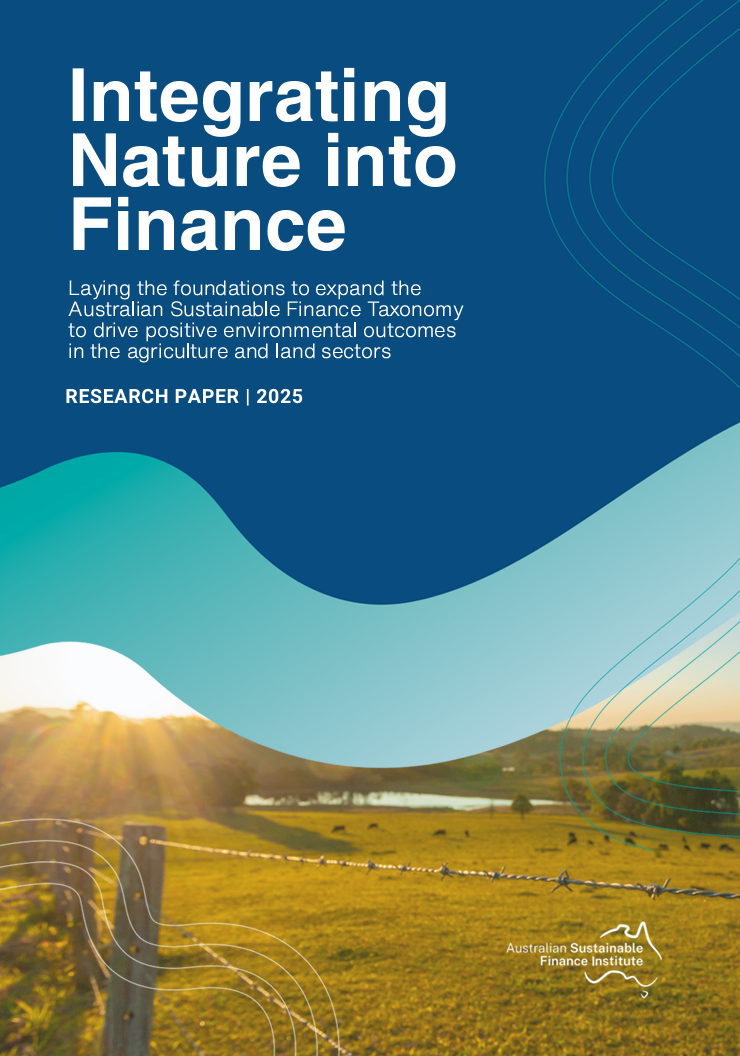
Integrating Nature into Finance: Laying the foundations to expand the Australian Sustainable Finance Taxonomy to drive positive environmental outcomes in the agriculture and land sectors
This report summarises how Australia’s Sustainable Finance Taxonomy could be expanded to agriculture, forestry and land management, proposing draft criteria for biodiversity protection, sustainable water use, and pollution control. It aligns with global biodiversity goals to guide investment and lending that support nature-positive outcome.
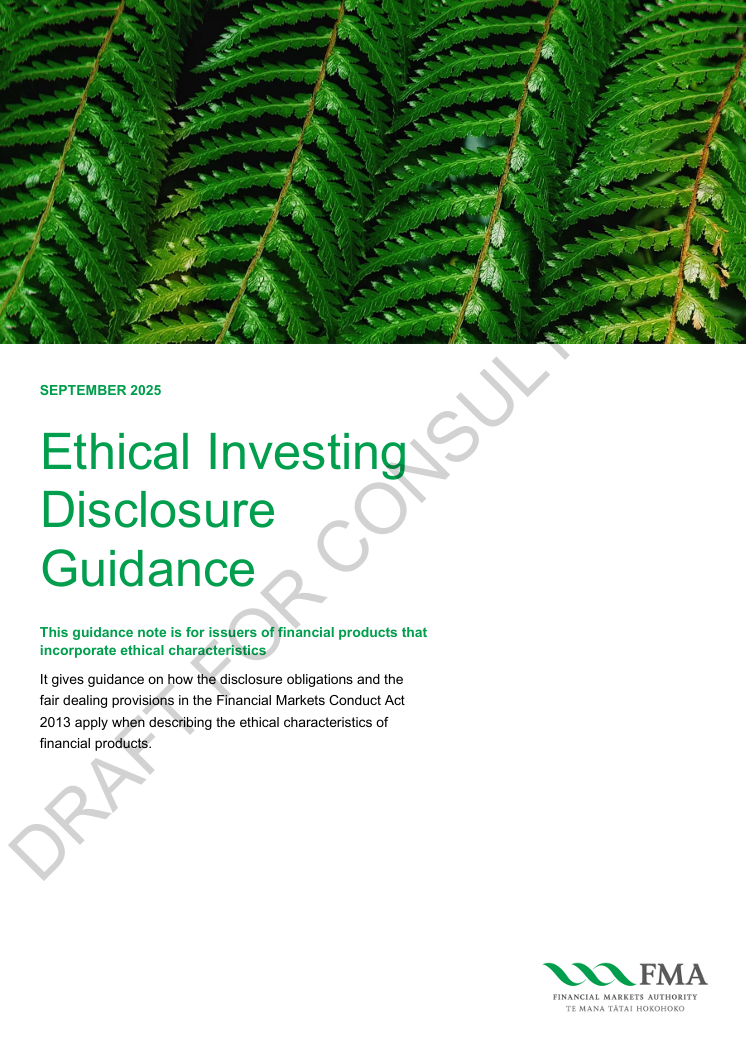
Ethical investing disclosure guidance
This report summarises draft guidance from New Zealand’s Financial Markets Authority on ethical investment disclosure. It sets expectations under the FMC Act, warns against greenwashing, and outlines principles of clarity, substantiation, consistency, and management of third-party involvement to improve transparency and accuracy for investors.

Financial Markets Authority (FMA)
Financial Markets Authority (FMA) is New Zealand’s independent regulator overseeing financial markets. It promotes fair, efficient and transparent markets, ensures quality financial advice and protects investors. FMA develops regulation, supervises licenced entities, enforces compliance, supports innovation and aims to enhance trust in NZ’s financial sector.
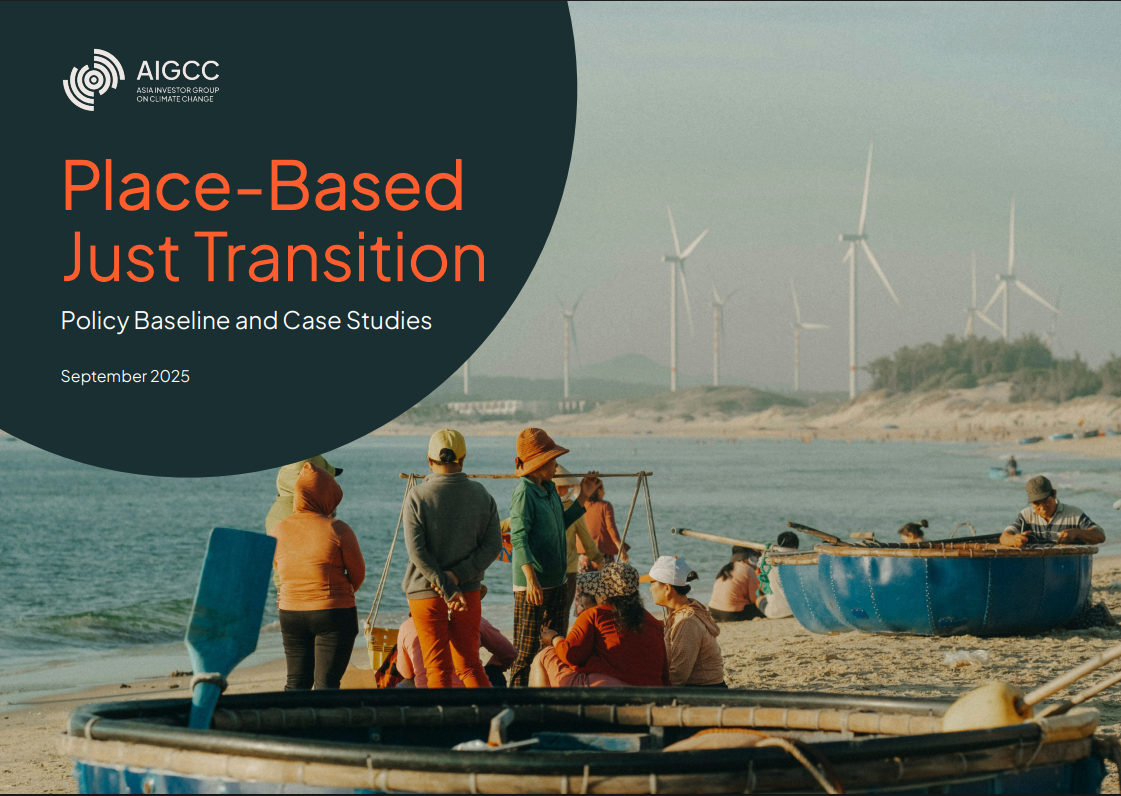
Place-based just transition: Policy baseline and case studies
This report from the Asia Investor Group on Climate Change analyses place-based just transition policies in India, Indonesia, Malaysia and Japan. It outlines market-specific policy baselines, labour and social dynamics, financing needs and case studies, providing investors and policymakers with insights into ensuring equitable low-carbon transitions in Asia.
InforMEA
InforMEA is a UN information portal giving central access to multilateral environmental agreements, including treaty texts, COP decisions, national reports, laws and court rulings. It also hosts a glossary, e-learning courses and tools linking MEAs to global goals.

Convention on International Trade in Endangered Species of Wild Fauna and Flora
Convention on International Trade in Endangered Species of Wild Fauna and Flora (CITES) is a global treaty regulating international trade in wildlife to ensure species survival in the wild. It enforces permit systems, categorises species under appendices, and supports cooperation among 185 Parties in biodiversity conservation.
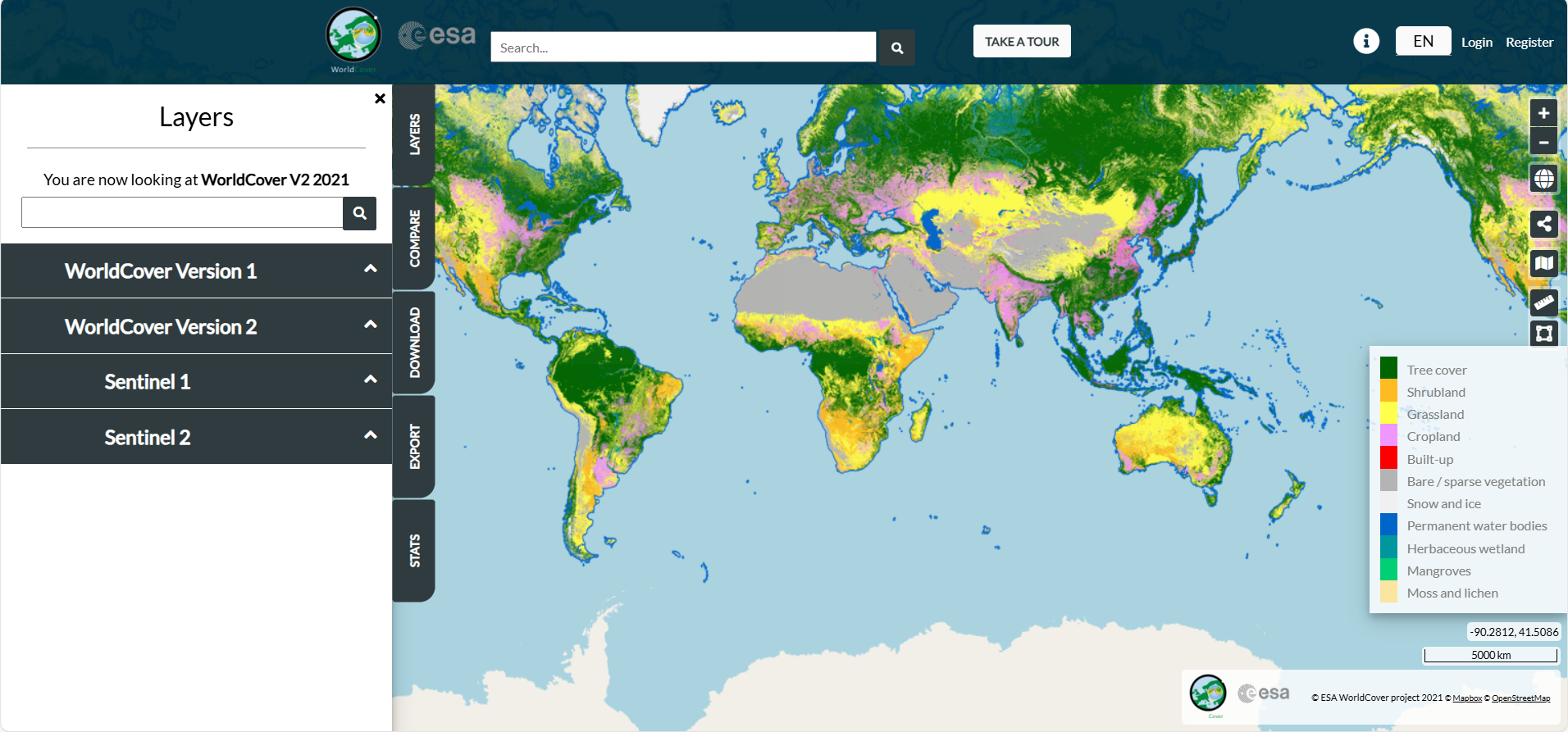
ESA WorldCover
The ESA WorldCover viewer offers an interactive web-map of global land cover at 10 m resolution, enabling overlay of Sentinel-1/2 composites, statistics by region, and download of data tiles, all without software installation.
Deutsche Rohstoffagentur (DERA)
German Mineral Resources Agency (DERA) is Germany’s national information and consultancy platform on mineral raw materials, hosted within the Federal Institute for Geosciences and Natural Resources (BGR).
DERA analyses global commodity markets, assesses supply-chain risks, and advises industry and government on raw material strategy and sustainable sourcing.
DERA analyses global commodity markets, assesses supply-chain risks, and advises industry and government on raw material strategy and sustainable sourcing.
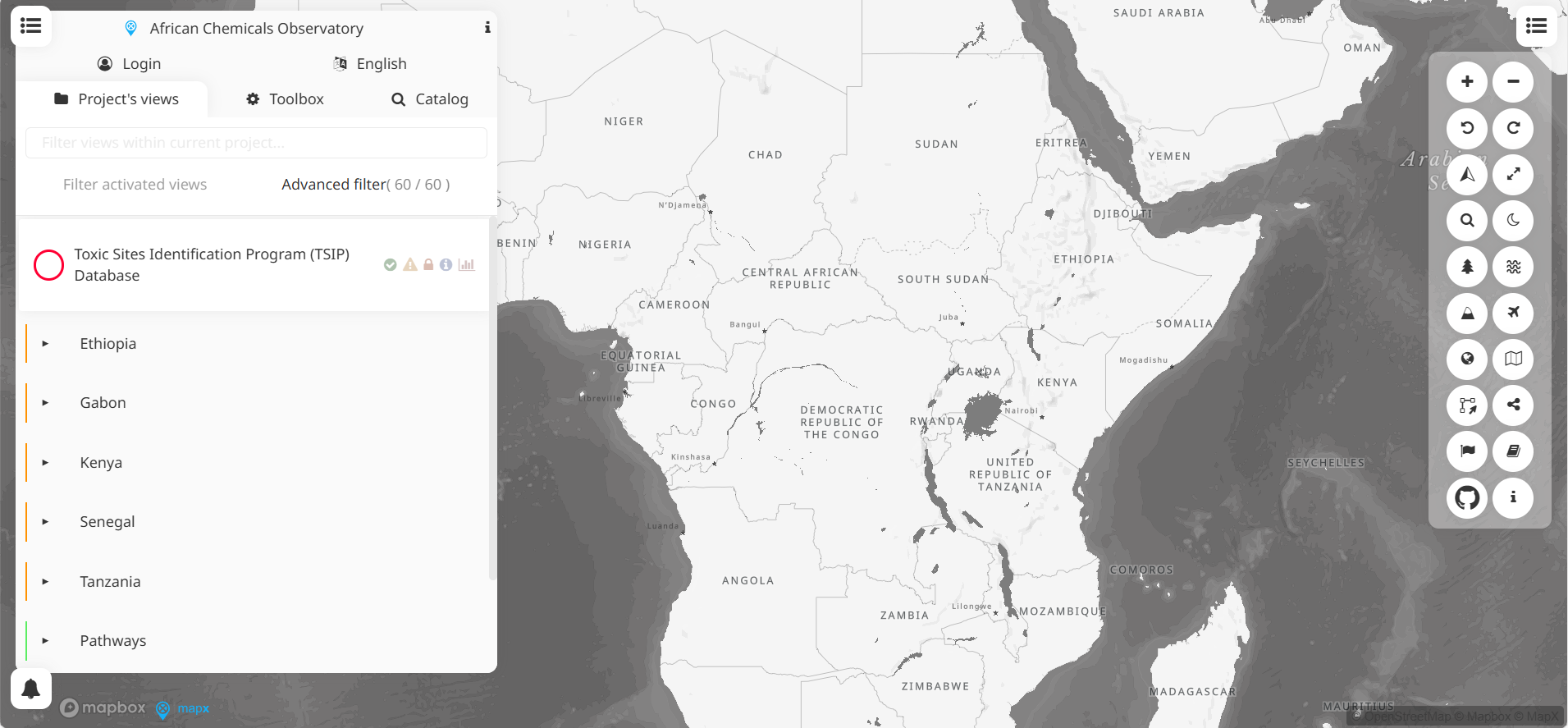
African chemical observatory
MapX is an open-source, cloud-based geospatial platform for visualising, analysing and managing environmental data. Developed by UNEP/GRID-Geneva, it supports decision-making in biodiversity, climate, land use and disaster risk, through map views, dashboards and storytelling tools.
Federal Institute for Geosciences and Natural Resources (BGR)
Federal Institute for Geosciences and Natural Resources (BGR) is Germany’s national geological survey, advising the federal government on geoscience and raw materials. It undertakes research in earth sciences, resource management, geodata systems and sustainability. Located in Hannover, BGR coordinates national geoscientific data infrastructure and policy.
Federal Ministry of Economic Affairs and Climate Action (BMWK)
Federal Ministry for Economic Affairs and Climate Action (BMWK) is a German government body responsible for economic policy, industrial strategy, energy transition, digitalisation, and climate action. It develops regulations, promotes innovation, supports businesses, and coordinates international cooperation to strengthen Germany’s economic growth while advancing sustainability and climate neutrality goals.

National Bureau of Economic Research (NBER)
National Bureau of Economic Research (NBER) is a US-based nonpartisan economic research organisation producing working papers, conferences, datasets and publications on macroeconomics, labour markets, health economics and public policy. It supports scholars and policymakers with in-depth empirical research.
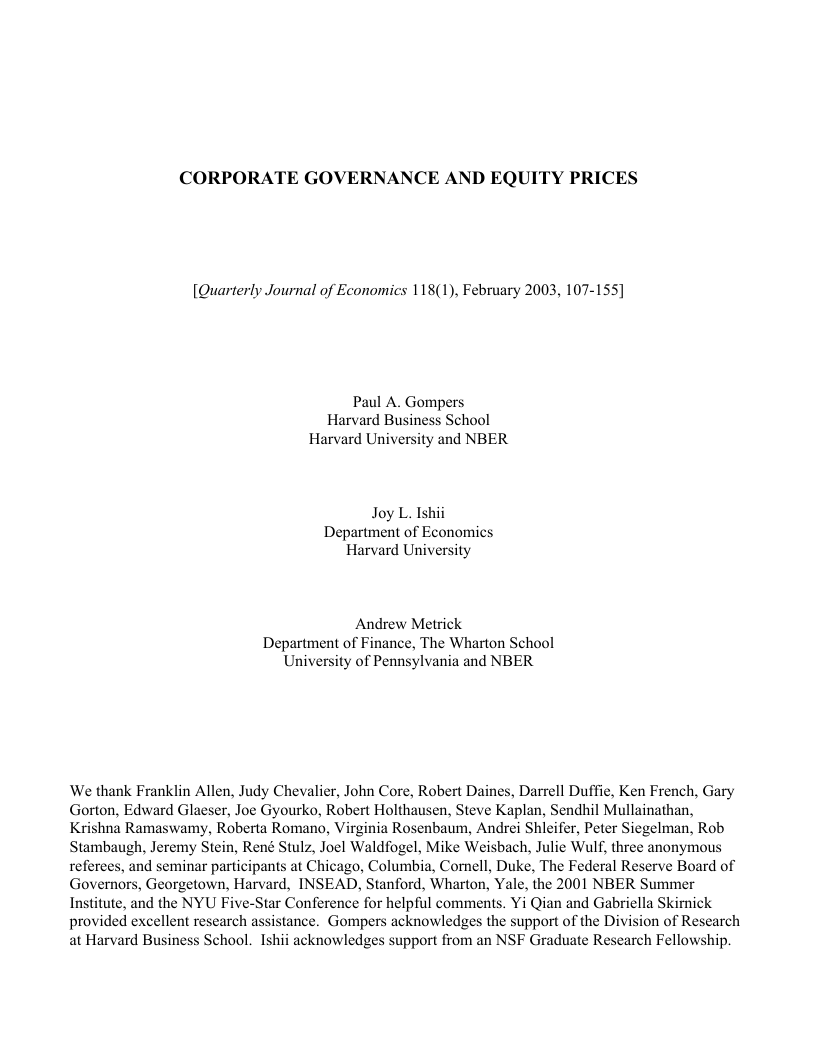
Corporate governance and equity prices
This report examines the link between shareholder rights and corporate performance in the 1990s. Using a Governance Index across 1,500 firms, it finds that stronger shareholder rights were associated with higher valuations, profits, and growth, while weaker rights correlated with lower performance and abnormal underperformance.
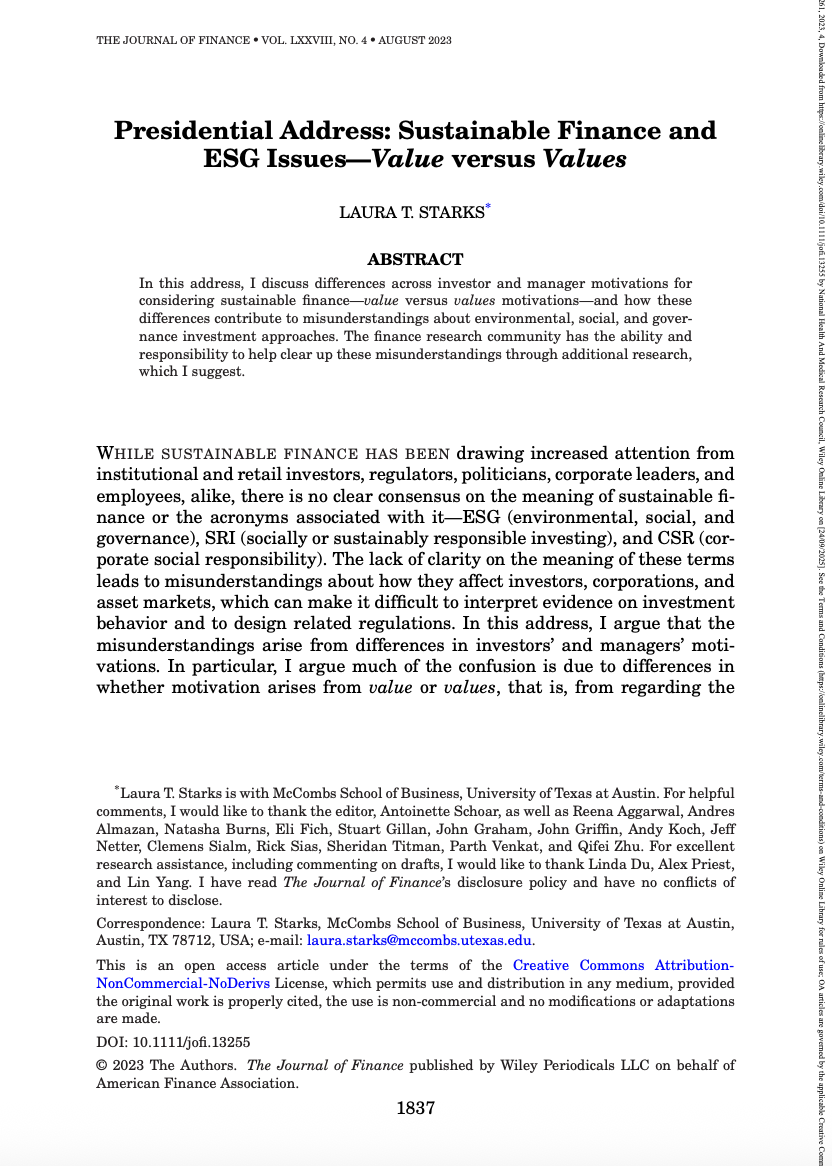
Presidential address: Sustainable finance and ESG issues: Value versus values
This report examines how investor and manager motivations—driven by either financial value or personal values—shape sustainable finance and ESG practices. It highlights definitional ambiguities, performance debates, and cultural differences, calling for clearer research to distinguish pecuniary risk-return considerations from non-pecuniary preferences in ESG investing.
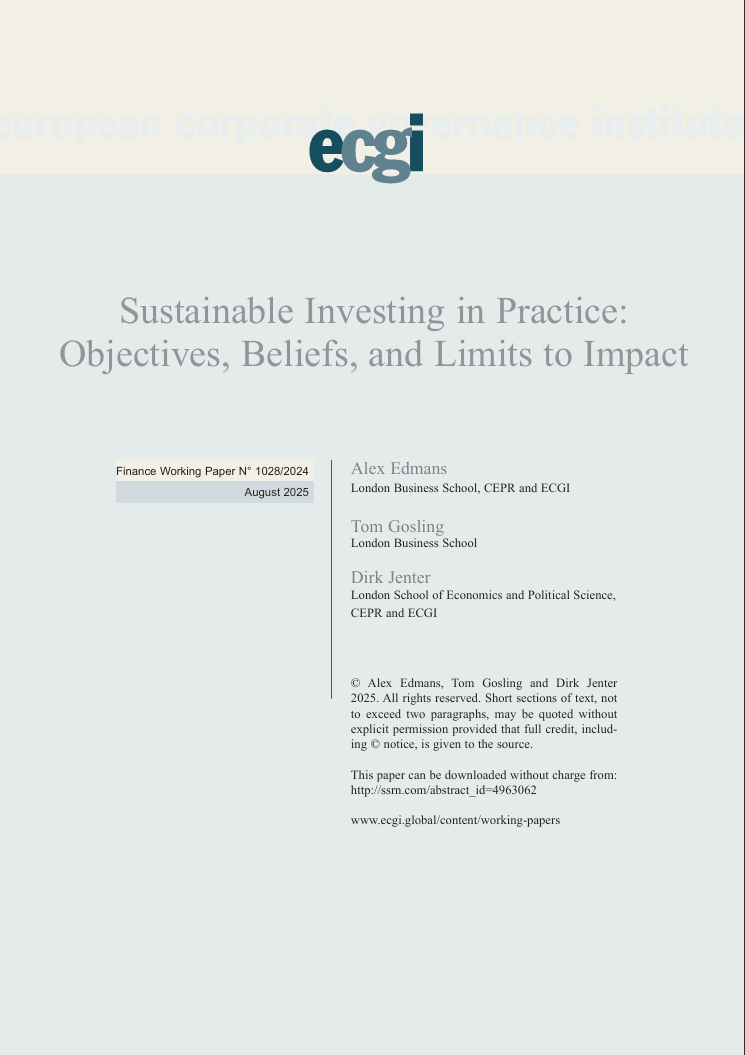
Sustainable investing in practice: Objectives, beliefs, and limits to impact
This paper surveys 509 equity portfolio managers on their treatment of environmental and social factors. Findings show most prioritise financial returns, with limited willingness to sacrifice performance. ES constraints from mandates, policies, and client values strongly influence decisions. Beliefs and constraints outweigh fund labels in shaping sustainable investing practices.

Tobacco tactics
Tobacco Tactics is a knowledge-exchange platform from the University of Bath’s Tobacco Control Research Group. It compiles rigorous academic research and monitoring on the global tobacco industry—its products, influences, themes and companies—in an accessible format.


